Young age, prior romantic relationship, differing statements: Delhi HC grants bail in POCSO case
The Court noted that the applicant and the prosecutrix were in a love relationship for a few months prior to the date of the incident.

Bringing you the Best Analytical Legal News


The Court noted that the applicant and the prosecutrix were in a love relationship for a few months prior to the date of the incident.
The Himachal Pradesh High Court granted bail, holding that a co-accused’s custodial disclosure is inadmissible against another accused, and that continued detention without a specific attributed role would amount to pre-trial punishment.
Delhi High Court granted regular bail to a woman accused in a murder case, taking note of her prolonged incarceration, lack of a specific role in the offence, absence of CDR material placing her at the crime scene and her status as a woman and mother of 3 minor children.
The Court asserted that continued incarceration of the applicants had to be balanced against their fundamental right to life and personal liberty guaranteed under Article 21 of the Constitution.
The High Court held that constitutional guarantees under Article 21 cannot be defeated by the gravity of allegations under the UAPA, and that the mandate of day-to-day trial under Section 19 of the NIA Act reflects a legislative intent that serious prosecutions cannot be allowed to linger indefinitely.
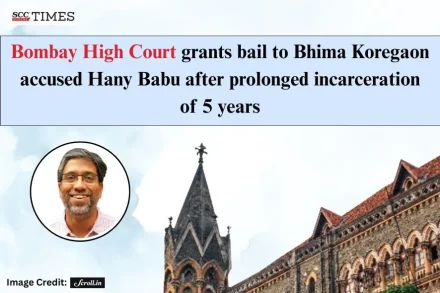
“Prolonged incarceration without trial amounts to infringement of right of an accused enshrined under Article 21 of the Constitution of India.”
“The WhatsApp chats recovered by the Cyber Forensic Laboratory from the mobile phones used by the applicant throw up evidence of his involvement in the smuggling syndicate of the contraband substance.”
The accused has spent more than six years in custody, despite which, the matter is still at the stage of examination of prosecution witnesses and only 11 out of 100 witnesses are examined till now.
“Bleak hope of any speedy trial in the matter.”

“Religious terrorism is a tragic and dangerous phenomenon that distorts the true teachings of faith and causes immense harm to individuals and societies. While the roots of religious terrorism are deep and complex, it is crucial to understand that no religion inherently supports violence or terror.”