Is moral policing a crime in India? What the BNS, POCSO and the Constitution say
No, moral policing is not a standalone offence, but restraint, intimidation, assault and POCSO provisions apply to the conduct.

Bringing you the Best Analytical Legal News


No, moral policing is not a standalone offence, but restraint, intimidation, assault and POCSO provisions apply to the conduct.
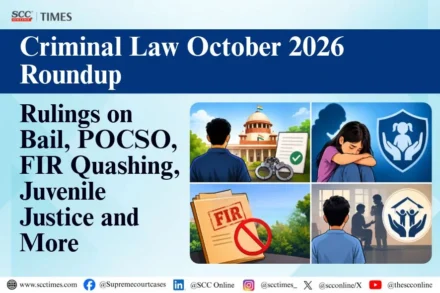
The October 2026 Criminal Law Roundup witnessed several significant judicial developments in criminal law, with various High Courts addressing important questions concerning individual liberty, criminal liability, procedural safeguards, juvenile offenders, POCSO-related offences, bail, contempt of court and the quashing of criminal proceedings.
Taking note of the appellant’s incarceration for more than 1 year and the time likely to be consumed in conclusion of the trial, the Court opined that a case for bail was made.
A quick roundup of important legal developments and cases this week.
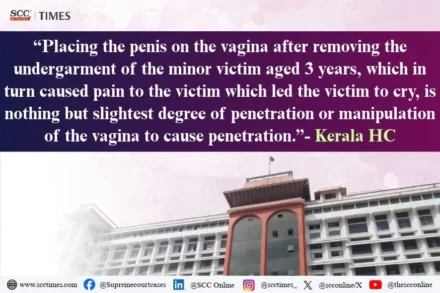
Answering whether placement of penis on vagina constitutes penetrative sexual assault, the Kerala High Court held that where a 3-year-old victim stated that the accused removed her undergarment, placed his penis on her vagina, and she immediately experienced pain and cried, the act could not be reduced to a mere touch under Section 7, POCSO Act.
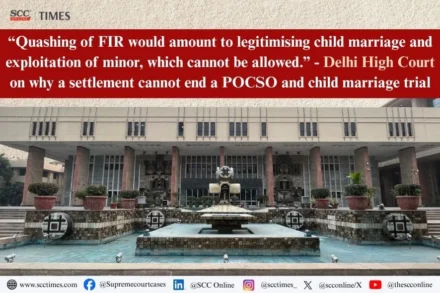
The Delhi High Court held that quashing the FIR would legitimise child marriage and the exploitation of a minor.
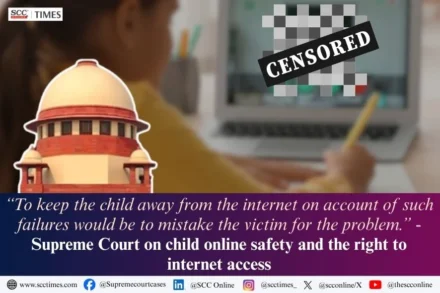
Supreme Court calls for a stronger accountability for social media intermediaries and proportionate safeguards to protect children’s online safety while recognising the fundamental right to internet access.
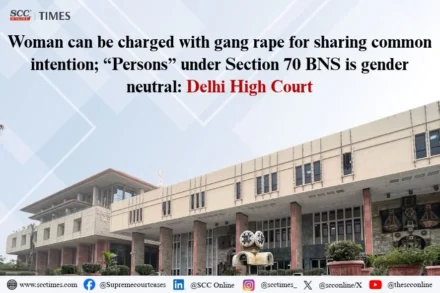
Delhi High Court dismissed a petition challenging an order on charge in a case involving offences under the POCSO Act, holding that the word “persons” in the gang rape provision under Section 376-D IPC/Section 70 BNS is gender neutral, so as a woman who forms part of a group or acts in furtherance of a common intention to have rape committed on the victim can be charged with the offence, though a woman alone cannot be charged.
Watch Law Made Easy by SCC Times new episode which examines the legal framework under the Bharatiya Nyaya Sanhita, 2023, the Protection
The Court noted that the applicant and the prosecutrix were in a love relationship for a few months prior to the date of the incident.
Supreme Court permits mother to relocate minor children to the UK, holds that frequent changes of employment cannot be termed “nomadic life” and considers pending POCSO prosecution while determining custody.
Supreme Court observed that while the accused being a teacher, needed to be more sensitive when dealing with young students, particularly girl students, his inappropriate conduct or use of corporal punishment, in the absence of the requisite sexual intent, could not by itself justify prosecution under the stringent provisions of the POCSO Act.
The Kerala High Court upheld the conviction of an accused under the Protection of Children from Sexual Offences Act, 2012, holding that intentional application of the mouth to the private part of a child squarely falls within the ambit of Section 3(d) of the Act and constitutes penetrative sexual assault.
The case depicts the tragic plight of a minor girl, aged 17 years, who was repeatedly subjected to sexual exploitation by her own father.
The Allahabad High Court quashed FIR under the POCSO Act, holding that continuation of the criminal proceedings would serve no fruitful purpose in the peculiar facts of the case.
Kerala High Court held that in cases involving child victims, expressions used to describe the act of sexual assault must be interpreted in the factual context rather than through strict anatomical distinctions.

the High Court observed that there can never be more shocking heinous crime when a father is charged for committing sexual assault on his own daughter.
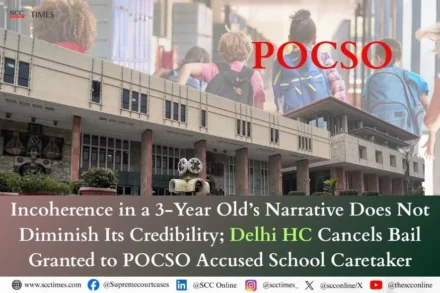
The Court held that absence of external injuries or pending forensic reports cannot, by themselves, justify grant of bail if the trial court had overlooked material circumstances bearing upon the gravity of the offence and the vulnerability of the victim.

The Kerala High Court upheld the conviction of a Madrassa teacher for offences under the POCSO Act, IPC, and Juvenile Justice Act, holding that a child survivor’s reliable and consistent testimony can independently sustain a conviction.

The Court clarified that the guidelines issued herein are not intended to be understood as exhaustive or inflexible guidelines to be applied mechanically in every case. The determination of such application was left to the sound discretion of the Court concerned, to be exercised on a case-to-case basis.