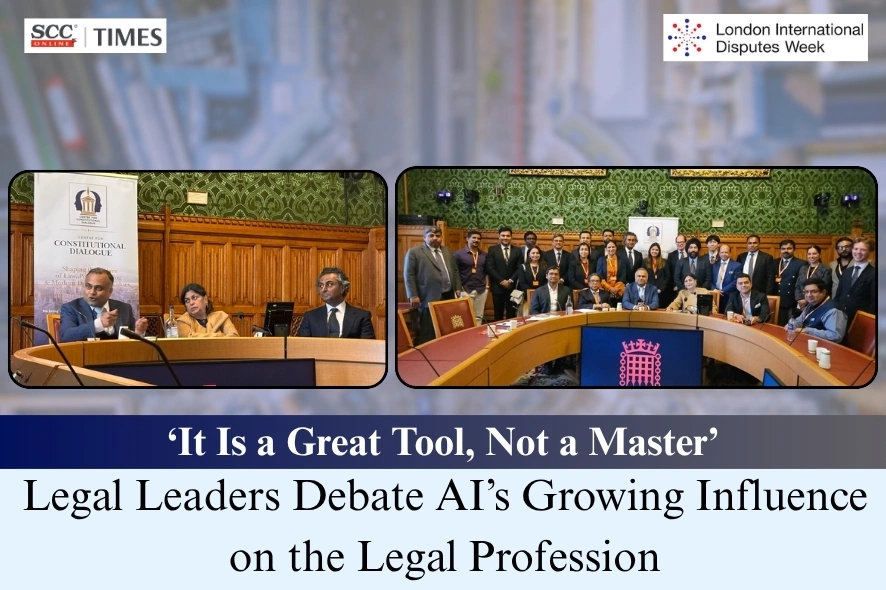
At a panel discussion hosted at the House of Lords by the Centre for Constitutional Dialogue, Oxford India Society and legal practitioners, policymakers and technology leaders examined the opportunities and risks presented by artificial intelligence and its growing impact on the legal profession. The discussion, titled “From Precedent to Prediction: How AI Is Reshaping the Legal Profession”, explored how AI is transforming legal research, drafting and decision-making, while raising important questions concerning professional responsibility, privacy, confidentiality, access to justice and the future of legal work.
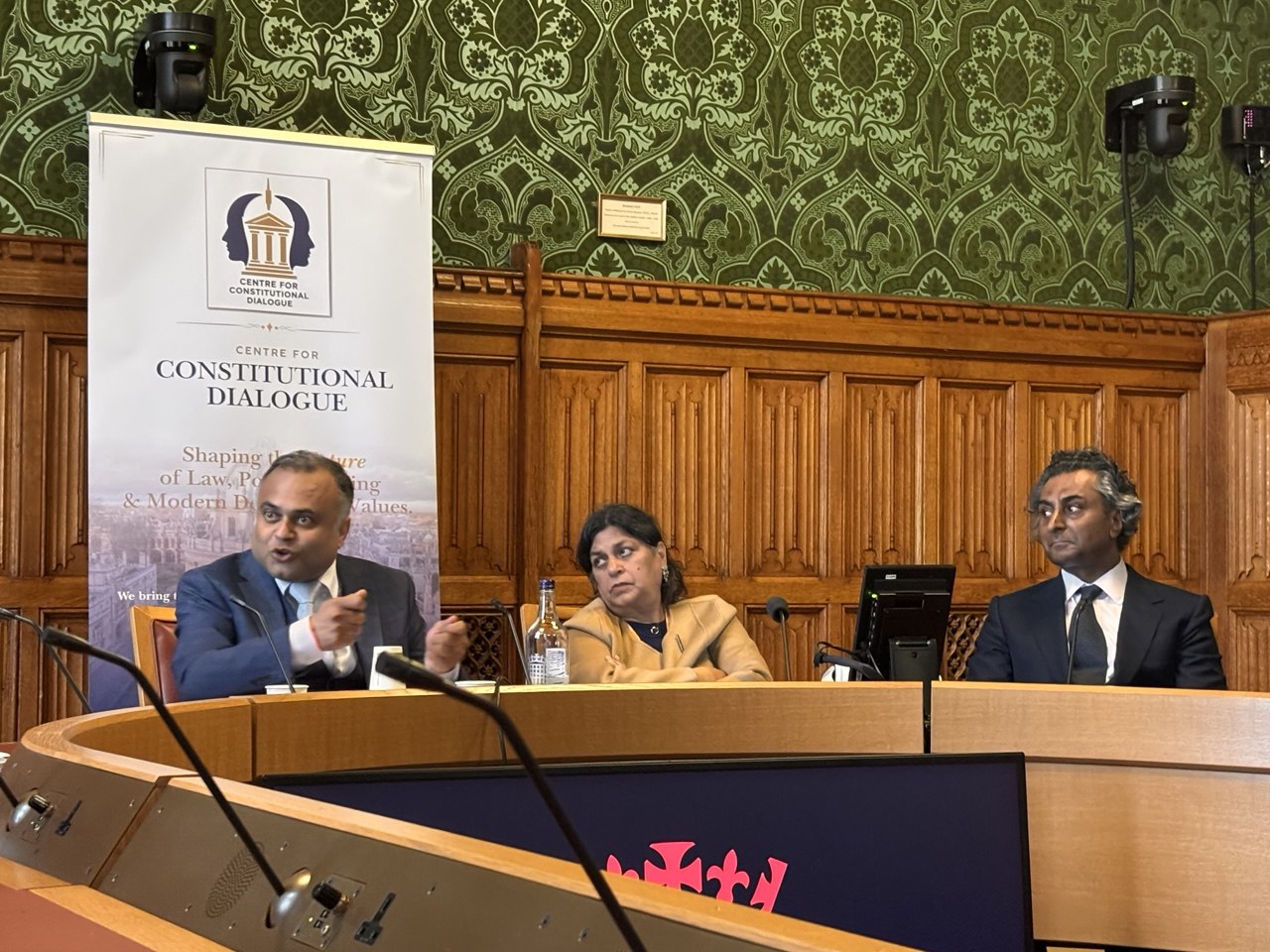
Moderated by Ms. Tanvi Dubey, Advocate-on-Record, Supreme Court of India and India Chair of the Centre for Constitutional Dialogue, the panel brought together Lord Uday Baron Nagaraju, Member of the House of Lords, Ms. Geeta Luthra, Senior Advocate, Mr. Mohit Saraf, Managing Partner, Saraf & Partners and Mr. Hamish Lal, Managing Partner, Hamish Lal Partners UK, to discuss the opportunities, limitations and long-term implications of artificial intelligence for lawyers, law firms and judicial institutions.
AI Is Improving Drafting, But Judgment Still Matters
Opening the discussion, Ms. Tanvi Dubey noted that while artificial intelligence has emerged as a catalyst for innovation and reform, its growing adoption also raises concerns relating to privacy, confidentiality and responsible usage.
Responding to questions regarding the use of AI in legal practice, Ms. Geeta Luthra explained that although she personally uses AI sparingly, lawyers who prepare and brief her have increasingly integrated AI into their workflows.
Drawing from her experience with junior lawyers and associates, she observed that AI has noticeably improved the quality and presentation of legal drafting. However, she cautioned that a well-written document does not necessarily reflect strong legal reasoning.
Ms. Luthra recalled noticing a marked improvement in the drafting quality of an associate who was intellectually capable but struggled to express ideas effectively. Over time, she realised that AI tools were contributing significantly to the improved presentation of the work.
At the same time, she noted that there were occasions when the same associate produced drafts that appeared polished but lacked adequate intellectual engagement and original thought.
According to Ms. Luthra, experienced lawyers can usually distinguish between work that reflects genuine analysis and work that merely appears impressive because it has been generated or refined through AI.
As she remarked:
“It is a tool, it’s not a master.”
She emphasised that senior lawyers must continue to evaluate whether associates have genuinely applied their minds to legal issues and should not allow polished drafting to substitute careful legal analysis.
Why AI Is Different from Previous Technological Revolutions
Lord Uday Baron Nagaraju placed the discussion within a broader social and technological context, arguing that artificial intelligence differs fundamentally from previous waves of innovation.
Comparing AI with earlier industrial revolutions, he observed that technologies which once took years or even decades to spread geographically can now become accessible across the world almost immediately.
Using the example of a farmer in a remote Indian village, he explained that modern AI tools can now be accessed and built upon regardless of location, enabling individuals far from traditional centres of innovation to participate in technological advancement.
According to Lord Nagaraju, three factors distinguish the current AI revolution: speed, scale and accessibility.
He noted that innovations which once required years to diffuse can now be adopted and improved upon within days, dramatically accelerating the pace of technological development.
As he observed:
“Earlier, it was at a rickshaw pace. Now it’s a rocket pace.”
Lord Nagaraju further explained that AI has removed many traditional barriers associated with geography, expertise and access to information. Individuals equipped with curiosity, ideas and the ability to use available tools can now participate in innovation at a level previously reserved for major institutions and technology hubs.
He also reflected on broader societal implications, questioning how AI may affect future generations, professional development and human behaviour.
Referring to younger generations growing up alongside artificial intelligence and algorithm-driven technologies, he noted that society is still in the early stages of understanding the long-term consequences of these developments.
At the same time, he emphasised that nations cannot afford to ignore AI. While concerns regarding ethics and human values remain important, countries must also embrace technological innovation to remain competitive in a rapidly changing world.
Lord Nagaraju further raised questions about the potential role of AI within legal systems, including whether it could help address large case backlogs and how it may affect future generations of lawyers entering the profession.
From Scepticism to Daily Usage
Providing a law firm perspective, Mr. Mohit Saraf discussed how AI adoption has evolved within legal practice over the last two years.
He explained that when his firm first introduced AI tools, many lawyers remained unconvinced of their usefulness. To address this, the firm conducted regular sessions focused on helping lawyers understand how to effectively use the technology.
According to Mr. Saraf, the transformation in usage has been remarkable. Where approximately 70 per cent of lawyers used AI only occasionally two years ago, he stated that nearly 90 per cent of lawyers at the firm now use AI tools every day.
Describing AI as an extremely effective professional tool, he explained that many tasks which previously required hours can now be completed in minutes. He noted that AI allows lawyers to continuously refine their analysis through iterative questioning, enabling significantly greater efficiency in legal research and problem-solving.
The Importance of Asking the Right Questions
A significant theme emerging from Mr. Saraf’s remarks was the importance of prompt engineering and effective interaction with AI systems. According to him, lawyers who know how to ask the right questions can use AI to substantially improve their productivity and analytical capabilities.
He explained that AI can increasingly function like an assistant capable of responding to a series of targeted questions, helping lawyers move progressively toward solutions. Mr. Saraf suggested that successful use of AI depends not merely on access to technology but on understanding how to engage with it effectively.
Human Oversight Remains Essential
Despite his enthusiasm for AI adoption, Mr. Saraf repeatedly emphasised that lawyers must continue to exercise professional judgment. Responding to concerns regarding errors generated by AI systems, he observed that reviewing and correcting work has always been a central part of legal practice.
“So why are we thinking that this AI will become perfect? And I hope it does not become perfect so that we stay relevant.”
Democratising Access to Legal Knowledge
One of the most striking observations made during the discussion concerned the changing nature of professional expertise. According to Mr. Saraf, the legal profession has traditionally benefited from significant barriers to entry, with knowledge and experience accumulated over many years. Artificial intelligence, however, is beginning to reduce those barriers by making sophisticated information and analytical capabilities more accessible. He explained that individuals who are willing to learn, ask the right questions and understand how legal arguments develop can increasingly access information that previously required substantial professional experience.
Nevertheless, he stressed that technology alone is insufficient. Lawyers must still understand legal strategy, anticipate opposing arguments and appreciate the questions likely to concern judges and decision-makers.
Balancing Innovation and Professional Responsibility
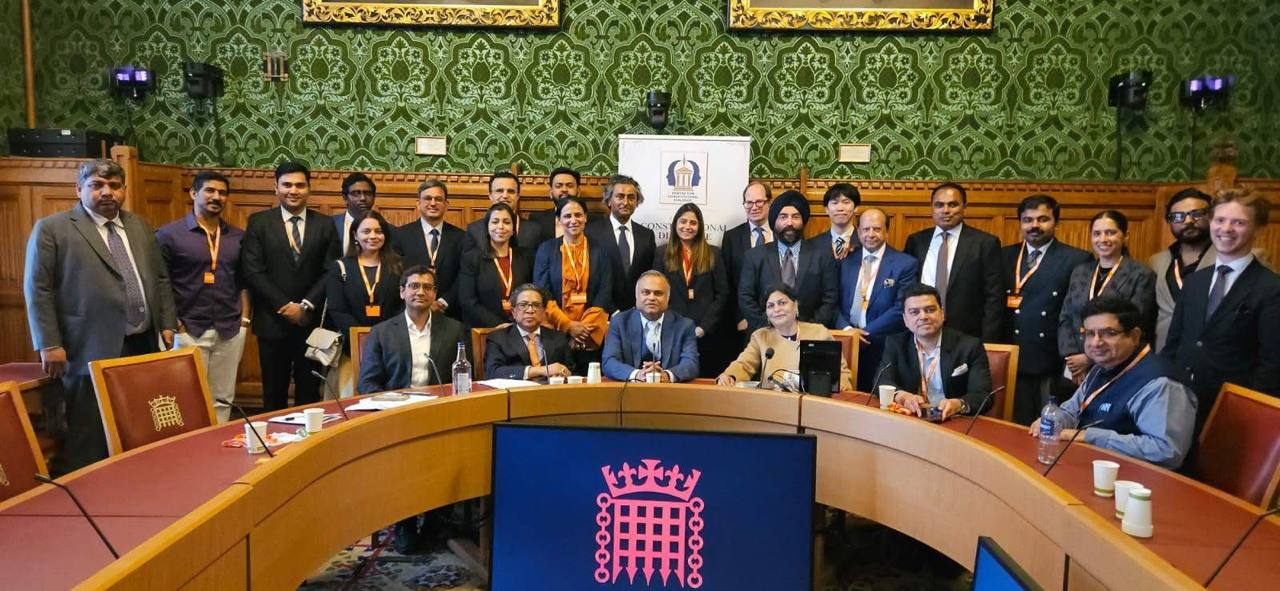
Throughout the discussion, speakers recognised the significant opportunities presented by artificial intelligence while simultaneously cautioning against over-reliance on technology. The discussion ultimately reflected a common theme: artificial intelligence is becoming an increasingly powerful part of legal practice, but professional judgment, critical thinking and accountability remain responsibilities that lawyers cannot delegate to technology.
This report forms part of SCC Times’ special coverage of London International Disputes Week (LIDW) 2026. As a Media Partner for the event, SCC Times is reporting key conversations across the conference, highlighting emerging trends and perspectives from the international dispute resolution community.
SCC Times extends its appreciation to Zehra Naqvi, EBC—SCC Online Foreign Student Ambassador and Lawyer, for her on ground presence, valuable assistance and contribution to the reporting of this event.