As the Middle Corridor continues to develop into one of the world’s most significant trade and investment routes linking China, Central Asia, the Caucasus, and Europe, the legal frameworks underpinning cross-border commerce are facing increasingly complex challenges. Infrastructure megaprojects, energy investments, logistics networks, and multi-jurisdictional commercial contracts are generating disputes that require not only robust arbitral institutions but also greater regional cooperation, legal certainty, and multidisciplinary expertise.
Against this backdrop, a panel at Eurasia Arbitration Week 2026 examined whether the region’s dispute resolution ecosystem is evolving quickly enough to support this transformation. Under the theme, “Resolving Complex Disputes in the Middle Corridor & Silk Road: An Integrated Approach,” the discussion explored how arbitration institutions, courts, governments, practitioners, and experts can work together to strengthen dispute resolution across one of Eurasia’s fastest-growing trade corridors.
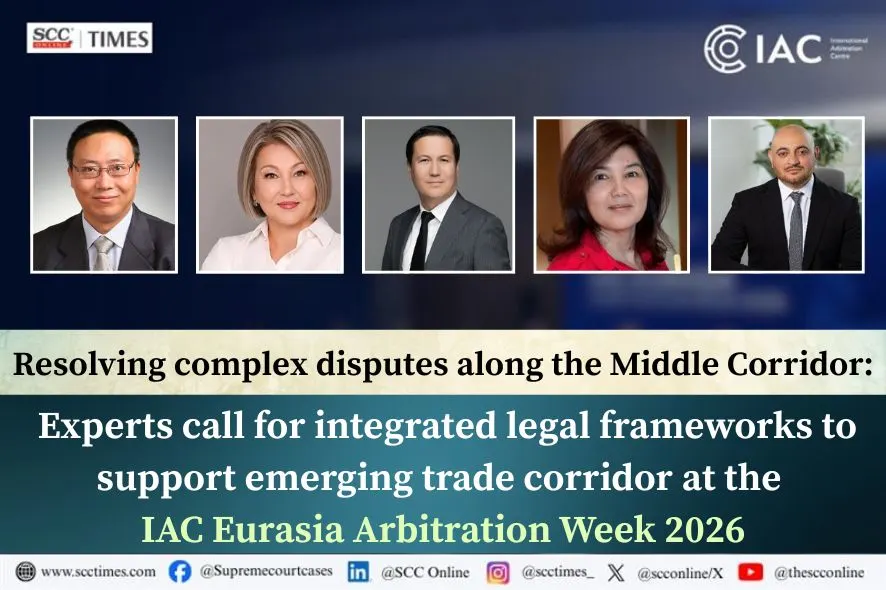
The session was moderated by Dr. Kabir Duggal, Lecturer at Columbia Law School and Partner at Akin Gump Strauss Hauer & Feld LLP. The panel featured Dr. Mukhit Yeleuov, Partner at ADL Disputes; Prof. Zhiyong Zhang, Professor of Law and Director of the Center for International Business and Tax Law at Peking University; Dr. Saltanat Imanova, Associate Professor at the American University of Central Asia and Chairman of the Supervisory Board of ICA CCI KR; Zhanna Temirbayeva, Managing Director at Ankura; and Ruslan Bayramov, Founding Partner at Legalize.

Opening the discussion, Dr. Duggal observed that the panel brought together practitioners and academics from across the Middle Corridor to provide regional perspectives on the opportunities and challenges facing dispute resolution. As commercial connectivity across Eurasia continues to deepen, he noted, arbitration frameworks and supporting legal institutions must evolve alongside growing economic integration.
Kazakhstan well positioned to become a regional dispute resolution hub
Opening the substantive discussion, Dr. Mukhit Yeleuov examined whether Kazakhstan is well positioned to become a leading dispute resolution hub for the Middle Corridor, answering the question with a confident “yes.”
He observed that arbitration institutions in Kazakhstan could broadly be viewed in three groups: smaller captive institutions, established domestic institutions such as KEMUA, and the International Arbitration Centre (IAC). Referring to the performance of established institutions, Dr. Yeleuov noted that successful judicial challenges to arbitral awards remain relatively uncommon. Citing KEMUA’s statistics, he explained that of more than 300 arbitral awards rendered during the previous year, only two were initially challenged successfully before trial courts, while both awards were subsequently upheld on appeal. In his view, this demonstrates that awards issued by established institutions are likely to withstand judicial scrutiny.
Dr. Yeleuov identified the IAC’s dedicated supervisory court, staffed by world-class English judges, as one of its principal competitive advantages. He noted that few arbitration institutions in the region possess a comparable judicial framework, making the IAC particularly attractive for international commercial disputes.
Beyond its institutional framework, Dr. Yeleuov argued that Kazakhstan already possesses many of the practical attributes required of a regional arbitration centre. These include visa-free access for citizens of numerous countries, established infrastructure, experienced lawyers and arbitrators, and access to technical, engineering, and quantum experts capable of supporting complex commercial disputes.
Nevertheless, he emphasised that further development remains necessary if Kazakhstan is to strengthen its position as a regional dispute resolution hub.
Among the priorities he identified was the development of a stronger third-party funding market. While he considered the legal framework to be sufficient, he suggested that greater participation by litigation funders would enable financially constrained parties to pursue meritorious claims and could increase the number of disputes administered in Astana.
Dr. Yeleuov also highlighted the importance of expanding arbitration education through advanced postgraduate programmes at local universities. He suggested that such programmes would help build alumni networks and cultivate future arbitration practitioners with long-term connections to Kazakhstan’s dispute resolution institutions.
He further emphasised the importance of continued government investment in the Astana International Financial Centre and the International Arbitration Centre, observing that internationally competitive institutions require sustained funding to maintain efficient registries, attract experienced personnel, and manage a growing caseload.
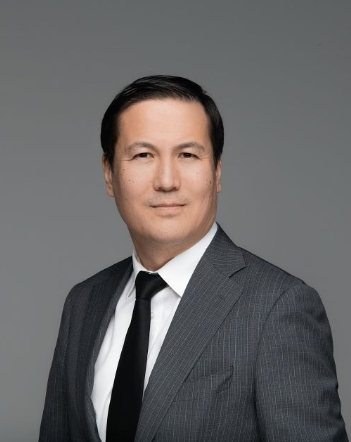
“We will never become probably Singapore or London or Paris, but we can become and remain a hub for the region.” - Dr. Mukhit Yeleuov
Building the right arbitration ecosystem
Following Dr. Yeleuov’s presentation, Zhanna Temirbayeva, Managing Director at Ankura, shifted the discussion from arbitral seats to the broader arbitration ecosystem.
Speaking from the perspective of an expert witness, she observed that while lawyers often focus on the seat of arbitration, experts are more concerned with whether a jurisdiction possesses the institutional and professional capacity to support large, multidisciplinary disputes involving multiple legal systems.
Responding, Dr. Yeleuov agreed that the overall ecosystem is ultimately what attracts international disputes. While he said Kazakhstan already has capable arbitrators, experienced counsel, and the necessary infrastructure, he acknowledged that several areas warrant further development.
These include the growth of third-party funding, greater availability of technical expertise in specialist sectors such as construction and mining, improved international air connectivity to Astana, and enhanced legal certainty through the publication of more judgments, precedents, and legal commentary.
According to Dr. Yeleuov, as the body of decisions issued by the AIFC Court and arbitral tribunals continues to expand, Kazakhstan’s legal framework will become increasingly predictable, enabling its arbitration ecosystem to compete more effectively with established international arbitration centres.
Azerbaijan’s emerging arbitration framework aims to become a trusted regional hub
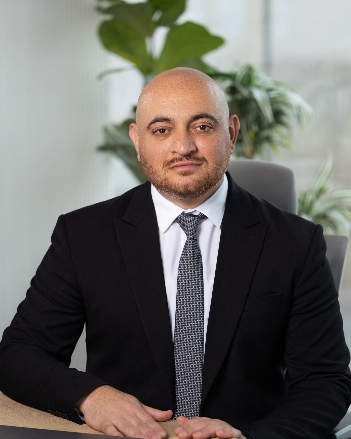
Turning to Azerbaijan, Ruslan Bayramov examined the country’s evolving role in dispute resolution under the theme, “From missing link to trusted hub: Azerbaijan’s emerging role in dispute resolution along the Middle Corridor.”
Ruslan observed that, for many years, Azerbaijan remained largely absent from the region’s alternative dispute resolution landscape despite significant developments elsewhere along the Middle Corridor. He pointed to China’s mature arbitration framework, Kazakhstan’s International Arbitration Centre, Kyrgyzstan’s long-established arbitration institution, Uzbekistan’s ongoing reforms, and Türkiye’s successful development of the Istanbul Arbitration Centre (ISTAC) as examples of jurisdictions that had made significant progress in developing arbitration-friendly environments.
By contrast, he explained, Azerbaijan had until recently operated under what he described as a “one-page legislation” on arbitration, supported by an institution that never developed into an effective case-administering body.
According to Ruslan, this position changed significantly with the adoption of Azerbaijan’s new arbitration legislation in 2023. Modelled on the UNCITRAL Model Law and international best practices, the legislation established a modern legal framework for commercial arbitration.
He also highlighted the inauguration of the Baku Arbitration Centre at the end of 2025. The Centre’s procedural rules incorporate modern features, including emergency arbitration and expedited proceedings. Demonstrating early market confidence, he noted that the Centre received its first case within two months of commencing operations.
Ruslan further pointed to recent judicial developments that reinforce Azerbaijan’s arbitration-friendly trajectory. In particular, he referred to two decisions of the Supreme Court of Azerbaijan supporting the recognition and enforcement of arbitral awards, including one involving an award rendered against a state-owned enterprise. In his view, these decisions provide reassurance to investors that arbitration agreements involving state entities will receive meaningful judicial support.
Another significant milestone, he noted, was Azerbaijan’s accession to the Singapore Convention on Mediation in April 2026, completing another important element of the country’s alternative dispute resolution framework.
While acknowledging that Azerbaijan remains at an early stage of its development as an arbitration jurisdiction, Ruslan expressed confidence in its future prospects. He pointed to the country’s infrastructure, internationally trained legal professionals, multilingual young practitioners, government support for reform, and growing international cooperation as foundations for continued growth.
“We’ve got the necessary infrastructure to organise this. We’ve got human capital to be part of it… We’ve got a government that initiates a prioritisation agenda. And we’ve got friends from all over the world who can actually help us achieve this,” - Ruslan Bayramov
Competition drives institutional development
Responding to Ruslan Bayramov’s presentation, Prof. Zhiyong Zhang welcomed Azerbaijan’s recent reforms and observed that the success of an arbitration jurisdiction depends less on the size of a country than on the quality of its legal institutions.
He emphasised that effective arbitration systems are built upon sound arbitration rules, high-quality awards, judicial support, and adherence to the rule of law. In his view, jurisdictions seeking to attract foreign investment increasingly share these objectives.
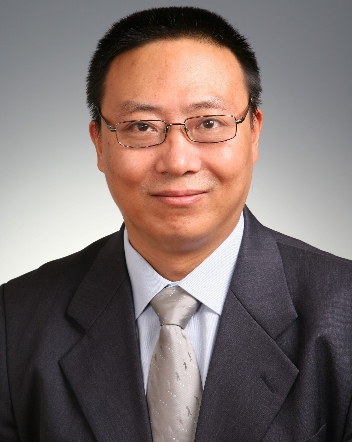
Prof. Zhang also characterised arbitration as an industry in which competition should be viewed positively. Drawing on economic theory, he suggested that arbitration institutions can learn from one another by adopting successful international practices, ultimately contributing to the gradual development of a more harmonised international arbitration framework.
Concluding his remarks, Prof. Zhang expressed confidence that Azerbaijan is well placed to become an important dispute resolution hub for neighbouring jurisdictions while supporting broader regional economic development.
Infrastructure development must be matched by legal capacity
Shifting the discussion to Central Asia more broadly, Dr. Saltanat Imanova addressed the question: “Are we building infrastructure faster than legal capacity? A Central Asian perspective on the Middle Corridor.”
Drawing on the historical significance of the Silk Road, Dr. Imanova observed that the modern Middle Corridor represents a revival of long-standing commercial connections across Eurasia. While the region is re-establishing historical trade routes, she noted, it is also creating new forms of economic cooperation that require equally sophisticated legal infrastructure.

Turning to contemporary developments, Dr. Imanova explained that expanding trade links between China, Kyrgyzstan, Uzbekistan, Kazakhstan, Azerbaijan, Türkiye, and Europe are giving rise to increasingly complex commercial relationships and, inevitably, increasingly complex disputes.
Using the China—Kyrgyzstan—Uzbekistan railway project, construction of which began in 2024, as an example, she explained that major infrastructure projects typically involve multiple interconnected contractual layers. These include intergovernmental agreements, financing arrangements, security documents, construction contracts, and numerous subcontracting arrangements.
As a result, disputes arising from a single issue may trigger claims across multiple contractual relationships. Rather than involving a single contractor and employer, future proceedings are likely to encompass parallel arbitrations, multiple parties, counterclaims, and overlapping jurisdictions.
Dr. Imanova noted that some commentators have proposed establishing a dedicated arbitration institution for disputes arising under the Belt and Road Initiative. She expressed support for a different approach, arguing that the region should instead strengthen existing arbitration institutions through closer cooperation and the exchange of expertise.
In her view, Central Asia already possesses capable arbitration centres and experienced practitioners. The priority, she suggested, should be to build institutional capacity rather than create new institutions.
She also pointed to recent institutional developments across the region, including the establishment of common law-based institutions in Astana, Tashkent, and Kyrgyzstan, together with continuing efforts by regional arbitration centres to strengthen professional communities through education, training, and international cooperation.
Emphasising that arbitration exists to serve the needs of business, Dr. Imanova concluded:
“The Middle Corridor would create definitely the complex disputes. And we should be ready, should discuss, and react to these complex disputes.”
Dr. Saltanat Imanova
Predictability matters more than uniformity
Responding to Dr. Imanova’s presentation, Ruslan Bayramov agreed that physical infrastructure is developing more rapidly than legal capacity across the region. While acknowledging that complete harmonisation of legal systems may not be achievable, he argued that investors are primarily concerned with predictability, efficiency, and confidence that court judgments and arbitral awards will circulate effectively across jurisdictions.
According to Ruslan, the diversity of legal systems along the Middle Corridor, including common law institutions operating alongside civil law jurisdictions, should not be regarded as an obstacle. Instead, arbitration institutions, courts, and practitioners should continue exchanging experience and sharing best practices to strengthen regional dispute resolution.
He cited collaborative academic initiatives involving contributors from different Middle Corridor jurisdictions as an example of how legal professionals are already fostering greater regional cooperation. Conferences such as Eurasia Arbitration Week, he added, provide an important forum for institutions and practitioners to learn from one another as their arbitration frameworks continue to develop.
Summarising the discussion, moderator Dr. Kabir Duggal observed that the need for greater dialogue had emerged as a recurring theme throughout the panel. Bringing together practitioners from across the region, he noted, plays an important role in strengthening arbitration along the Middle Corridor.
China’s revised arbitration law broadens scope for Ad Hoc arbitration
Turning to China, Prof. Zhiyong Zhang presented on “The legal status of Ad Hoc arbitration in China,” examining how recent legislative reforms are reshaping the country’s arbitration framework.
He explained that under China’s 1994 Arbitration Law, ad hoc arbitration conducted within mainland China generally lacked legal recognition because arbitration agreements were ordinarily required to designate an arbitration institution. Although awards rendered in ad hoc arbitrations seated outside mainland China could be recognised and enforced under the New York Convention, parties could not generally conduct ad hoc arbitration with a seat in mainland China.
Prof. Zhang noted that an important development occurred in 2016, when the Supreme People’s Court issued a judicial opinion recognising ad hoc arbitration for disputes involving parties established in China’s Free Trade Zones. However, because the opinion did not have the status of legislation, uncertainty remained.
That position has now changed following the adoption of China’s revised Arbitration Law in 2025.
Prof. Zhang explained that Article 82 of the revised law provides a statutory basis for ad hoc arbitration in certain categories of foreign-related disputes, including maritime disputes and disputes involving enterprises established in Free Trade Zones and Hainan Province. In his view, the reform gives commercial parties greater flexibility in selecting dispute resolution mechanisms.
He cautioned, however, that several practical issues remain unresolved.
One concerns the meaning of a “foreign-related dispute.” Prof. Zhang observed that Chinese courts have gradually adopted a more liberal approach when determining whether a dispute contains a sufficient foreign element. He referred to a case involving two companies incorporated in Shanghai’s Free Trade Zone that were treated as having the necessary foreign characteristics because both were wholly foreign-owned, notwithstanding their incorporation in China.
Another issue concerns proceedings in which parties designate a Chinese arbitral institution while simultaneously adopting ad hoc procedural rules. Prof. Zhang noted that the prevailing judicial view treats such proceedings as institutional arbitration. In his opinion, however, the characterisation should depend on the role actually performed by the institution and should therefore be assessed on a case-by-case basis.
Drafting arbitration clauses involving Chinese counterparties
During the discussion, Dr. Mukhit Yeleuov asked what practical guidance Prof. Zhang would offer lawyers from Central Asia when drafting arbitration clauses involving Chinese counterparties.
In response, Prof. Zhang emphasised that there is no universal solution and that dispute resolution clauses should be tailored to the particular transaction.
Depending on the circumstances, he suggested that parties might consider selecting English law, Hong Kong law, or internationally recognised commercial principles as the governing law where appropriate. He also observed that arbitration is not necessarily the most suitable dispute resolution mechanism in every case. For some disputes, particularly those where summary judgment procedures may be available, court litigation could prove more efficient than arbitration.
Ultimately, Prof. Zhang concluded that the choice of governing law and dispute resolution mechanism should be made on a case-by-case basis, taking into account the nature of the commercial relationship and the needs of the parties.
Complex disputes require an integrated expert strategy
Concluding the panel presentations, Zhanna Temirbayeva examined the increasingly important role of expert evidence in disputes arising along the Middle Corridor.

While discussions on arbitration often focus on legal frameworks and arbitral institutions, she observed that the effective resolution of complex disputes depends equally on multidisciplinary expert teams capable of addressing technical, financial, and industry-specific issues.
According to Zhanna, the region is already witnessing an increase in sophisticated disputes arising from infrastructure, energy, logistics, finance, and construction projects. Looking ahead, she suggested that the continued expansion of artificial intelligence infrastructure and data centres is likely to generate a new category of technically complex disputes requiring specialised expertise.
She explained that projects spanning multiple jurisdictions present significant evidentiary challenges. Experts must often navigate differing accounting systems, technical standards, record-keeping practices, sanctions-related issues, inflation, currency fluctuations, and force majeure events. As a result, methodologies commonly employed in established arbitration centres such as London, Singapore, or Paris cannot always be applied without adaptation.
In her view, one of the most common mistakes made by parties is treating different categories of experts as isolated specialists rather than as members of a coordinated team.
Instead, she advocated an integrated approach in which delay experts, quantum experts, economists, forensic specialists, and technical experts work collaboratively from the earliest stages of a dispute. Their analyses, she said, should be based on a common factual foundation and present a consistent narrative to the arbitral tribunal.
Zhanna also emphasised the importance of carefully drafted expert instructions. Counsel should ensure that instructions are sufficiently comprehensive to address all relevant issues while remaining clear enough to avoid duplication of work between experts.
Referring to construction disputes, she observed that parties should appoint experts who not only possess technical expertise but also understand the operation of FIDIC contracts, which continue to be widely used in infrastructure projects across the region.
Summarising her recommendations, Zhanna encouraged parties to engage experts as early as possible, provide them with clear instructions, assemble multidisciplinary teams, and ensure effective coordination throughout the proceedings.
Early expert involvement can inform strategic decisions
Responding to Zhanna’s presentation, Dr. Saltanat Imanova observed that disputes arising from Middle Corridor projects are likely to become increasingly fragmented, with individual tribunals often considering only one aspect of a much larger commercial conflict.
She asked what practical advice Zhanna would offer clients and lawyers preparing for such disputes.
In response, Zhanna stressed the importance of involving experts before commencing arbitration. Early expert assessments, she explained, can provide parties with an objective evaluation of the strengths and weaknesses of potential claims, enabling more informed strategic decisions and, in some cases, helping parties avoid costly proceedings that are unlikely to succeed.
Rather than investing substantial resources in lengthy arbitrations, she suggested that parties first obtain preliminary expert opinions capable of informing decisions at the earliest stage of a dispute.
Regional cooperation and party autonomy will shape the future
During the audience discussion, a question was raised about whether the Middle Corridor should ultimately develop a single regional dispute resolution hub and, if so, what legal framework, arbitral seat, institution, and facilities would best serve the region.
Responding, Dr. Mukhit Yeleuov suggested that the legal framework of the Astana International Financial Centre (AIFC), together with the AIFC Court and the International Arbitration Centre (IAC), offers a particularly strong foundation because of its legal certainty and the oversight provided by its supervisory court. While acknowledging that the civil law systems across the region are developing rapidly, he observed that they continue to evolve and require greater legal certainty before they can consistently support the most complex international commercial disputes.
Offering a broader regional perspective, Dr. Saltanat Imanova emphasised that dispute resolution mechanisms should ultimately be designed around the needs of commercial parties rather than institutional competition. She noted that China remains a major source of investment across the region and referred to recent reforms that have expanded opportunities for foreign arbitrators to participate in arbitral proceedings, describing them as an example of increasing regional openness and cooperation.
Dr. Imanova reaffirmed the importance of party autonomy, observing that businesses should remain free to choose the arbitral institution that best suits their commercial relationship, whether in Kazakhstan, Singapore, or elsewhere. At the same time, she encouraged arbitration institutions across the Middle Corridor to continue exchanging experience, strengthening cooperation, and supporting one another in order to provide increasingly sophisticated dispute resolution services for international business.
Conclusion
The discussion demonstrated that the future of dispute resolution along the Middle Corridor will depend not on the emergence of a single dominant arbitration centre, but on the collective strength of the region’s legal and institutional ecosystem.
Across the panel, speakers identified several common priorities: strengthening arbitration institutions, enhancing judicial support for arbitration, improving legal certainty, investing in professional education, expanding technical and expert capacity, and fostering closer cooperation among jurisdictions. While Kazakhstan, Azerbaijan, China, and other jurisdictions are pursuing reforms tailored to their own legal systems, the panellists agreed that continued dialogue and the exchange of experience will be essential to building investor confidence and supporting the region’s expanding cross-border commerce.
As trade and investment continue to grow along the modern Silk Road, the Middle Corridor’s ability to provide predictable, efficient, and internationally credible dispute resolution will play an increasingly important role in its long-term economic development.