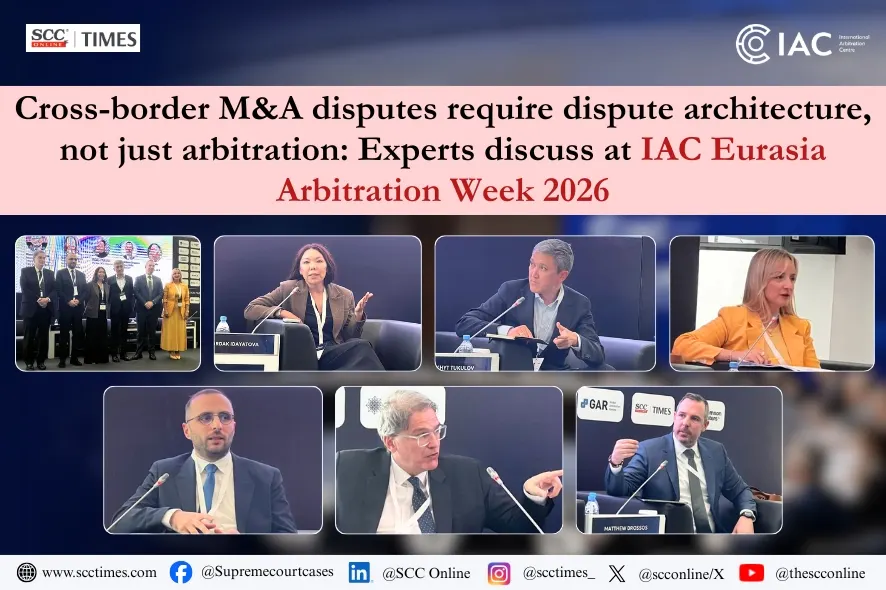
At the fourth International Arbitration Centre (IAC) Eurasia Arbitration Week 2026 (IAC EAW26), experts explored the growing complexities of cross-border mergers and acquisitions (M&A), highlighting how disputes arising from such transactions often span multiple jurisdictions, legal systems and dispute resolution forums. During a panel titled “Cross-Border M&A Disputes: Why They Arise & How to Resolve”, speakers discussed the common causes of post-acquisition disputes and stressed the need to incorporate robust dispute resolution mechanisms at the transaction stage itself.

The panel was moderated by Joe Tirado, International Arbitrator, Mediator and ADR Consultant, TiradoADR Ltd. The panel featured Davit Tabatadze, Head of Litigation at BLC Law Office and Chairman of the Georgian Association of Arbitrators, Ardak Idayatova, Partner and Head of Dispute Resolution Practice at Kinstellar, Bakhyt Tukulov, Partner at TKS Disputes, Matthew Drossos, Partner at White & Case LLP, and Anastasiia Dulska, Associate at Bär & Karrer.
Why M&A disputes arise
Opening the discussion, Ardak Idayatova explained that post-M&A disputes generally arise during or after completion of a transaction and typically concern “the value of the target company, the breach of the transaction documents, and the financial claims.”
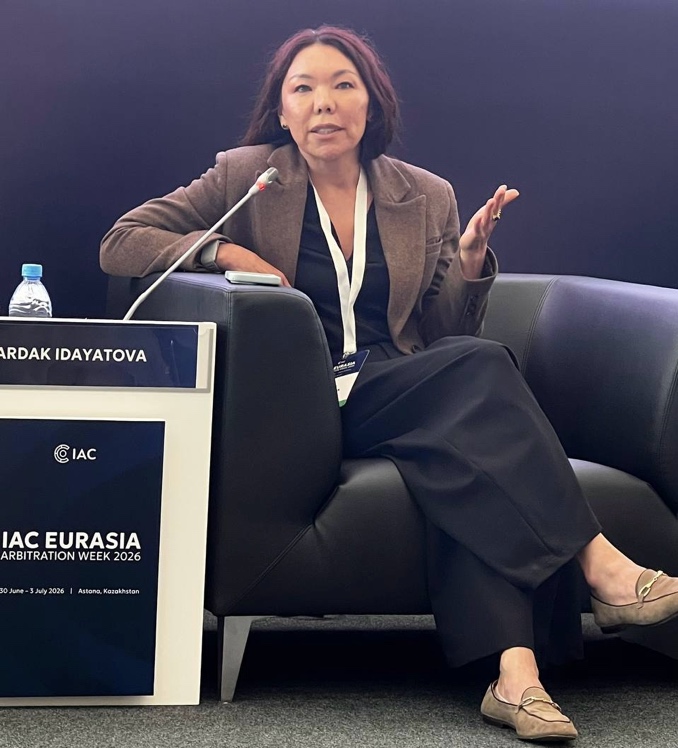
She identified four principal causes of M&A disputes. The first involves breaches of representations and warranties, where a buyer discovers that the financial or operational condition of the target company materially differs from what was represented during negotiations. She referred to a landmark decision in which a court upheld the buyer’s right to terminate an acquisition before closing after finding that regulatory compliance failures constituted a material adverse effect.
Describing the significance of the ruling, she observed:
“The court ruled in favour of the buyer and declared that indeed there was a material adverse effect.”
The second category concerns fraud and misrepresentation, where a seller intentionally misrepresents the financial condition of the target company. Idayatova explained that such disputes often arise after a buyer discovers accounting irregularities or misleading financial disclosures following completion of the transaction, resulting in substantial financial losses and litigation.
The third category comprises price adjustment disputes, where the final purchase price depends on post-signing calculations, such as net working capital. Disagreements over these financial adjustments can significantly alter the ultimate transaction value and frequently become the subject of post-closing disputes.
The fourth category involves earn-out disputes, where part of the purchase price depends on the future financial performance of the acquired business. Idayatova noted that disagreements commonly arise over whether the buyer has fulfilled contractual obligations, including the requirement to use “commercially reasonable efforts” to achieve agreed business milestones after completion of the transaction.
She further observed that, unlike many jurisdictions, Kazakhstan has witnessed relatively few publicly reported post-M&A disputes. Drawing from her transactional experience, she noted that parties generally act in good faith and often prefer negotiated settlements over litigation, reflecting a strong transactional culture within the jurisdiction.
Kazakhstan’s experience
Turning to Kazakhstan, Idayatova observed that relatively few post-M&A disputes become public despite an active transactional practice.
Drawing from discussions with colleagues involved in major M&A transactions, she remarked that parties generally perform their contractual obligations in good faith and frequently choose negotiated settlements over litigation.
She attributed this, at least in part, to local commercial culture, observing that “usually all M&A transactions proceed smoothly, and the parties act in good faith, and probably it is connected with our cultural peculiarity, meaning that the parties prefer to settle rather than to litigate.”
She nevertheless referred to a notable dispute following the acquisition of KazakhGold by the Russian mining company Polyus Gold in 2009. According to her, after completion of the acquisition, the buyer alleged that the company’s financial figures had been inflated and initiated proceedings before the English courts, claiming damages including alleged overpayment for shares. Although the matter was eventually settled, she said the dispute remained an important illustration of how post-acquisition claims emerge.
Moderator Joe Tirado praised the practical examples presented and added that poorly drafted transaction documents themselves often become the source of significant litigation.
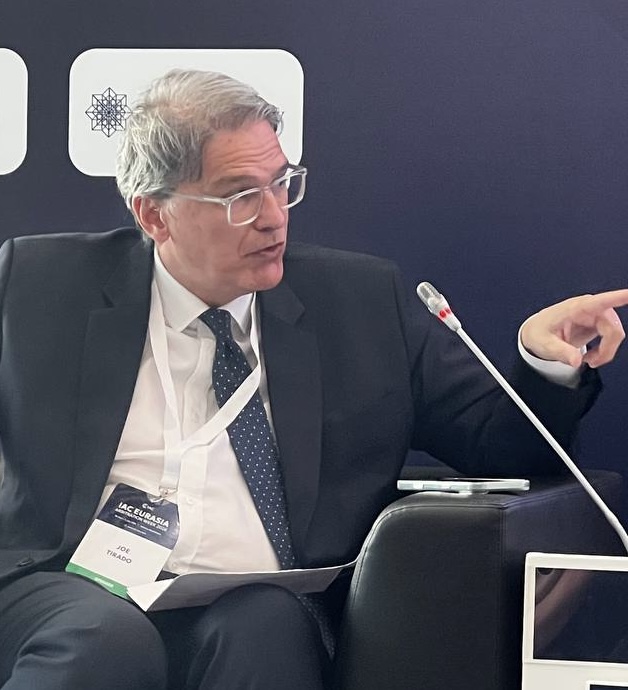
Recalling one of his own experiences, he remarked that disputes can arise even over apparently straightforward contractual provisions.
Speaking from his own practice, he observed that one dispute centred on who was liable to pay the tax, noting that although the issue initially appeared simple, “the drafting was sufficiently unclear that there was an enormous dispute that flowed from that.”
Culture, legal systems and governance differences
Building on Idayatova’s remarks, Bakhyt Tukulov argued that while fraud, economic conditions and regulatory intervention certainly contribute to disputes, many cross-border M&A conflicts originate from differences in legal and business culture.
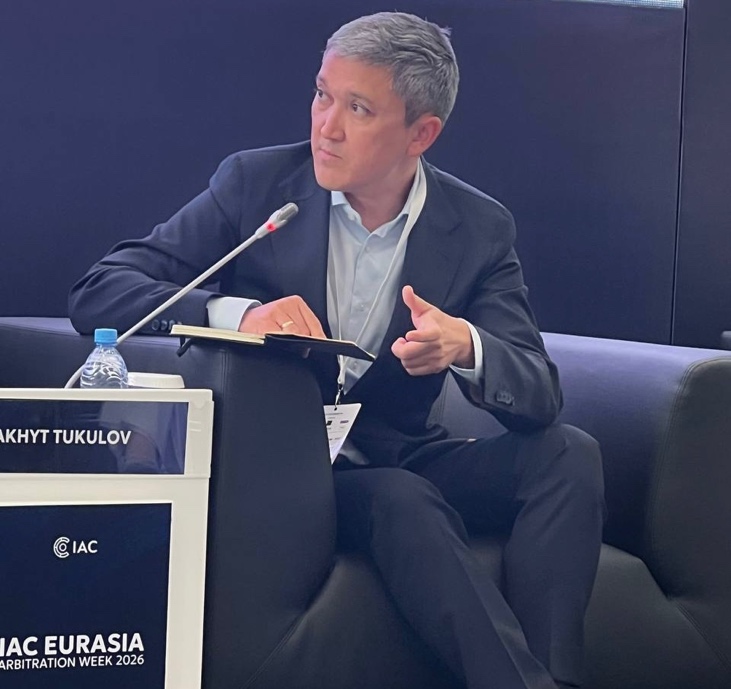
According to Tukulov:
“M&A disputes arise usually, if we remove fraud and dishonesty because of differences in culture, differences in law, regulations, and policies.”
He explained that shareholders from different jurisdictions often possess fundamentally different expectations regarding corporate governance, directors’ duties and commercial decision-making. These differences frequently produce conflict long after the transaction has closed.
Tukulov argued that institutions such as the International Arbitration Centre (IAC) operating within the Astana International Financial Centre (AIFC) help bridge those differences by offering internationally recognised legal structures and dispute resolution mechanisms.
He described the framework as enabling parties to operate within a legal environment that avoids unnecessary conflicts arising solely from unfamiliar domestic legal systems.
According to him:
“I think IAC is a breakthrough in our jurisdiction in Central Asia to try to modernise existing company law framework.”
He further explained that parties selecting the AIFC legal framework and arbitration rules can preserve their agreed choice of governing law more effectively, particularly where shareholders have chosen English law for their agreements.
Illustrating the practical importance of this approach, Tukulov referred to an ongoing arbitration in which one shareholder argued that mandatory provisions of Kazakh corporate law should override the parties’ contractual choice of English law.
He explained that by choosing the AIFC as the arbitral seat, parties strengthen arguments in favour of enforcing their contractual choice of governing law before the tribunal.
When asked what more could be done to strengthen the region’s dispute resolution framework, Tukulov emphasised legal education and greater international engagement.
He noted that Kazakhstan’s historical isolation from broader international legal exchange meant that increased training and exposure to international arbitration would encourage more businesses to participate confidently in global commercial transactions.
Designing dispute architecture instead of choosing a single forum
Turning to the second part of the discussion, Joe Tirado observed that after understanding why M&A disputes arise, the more practical question was how they should be resolved. He invited Anastasiia Dulska to address one of the central issues facing cross-border transactions: how parties should navigate multiple jurisdictions, parallel proceedings and the possibility that a failed transaction could ultimately lead to investment arbitration.
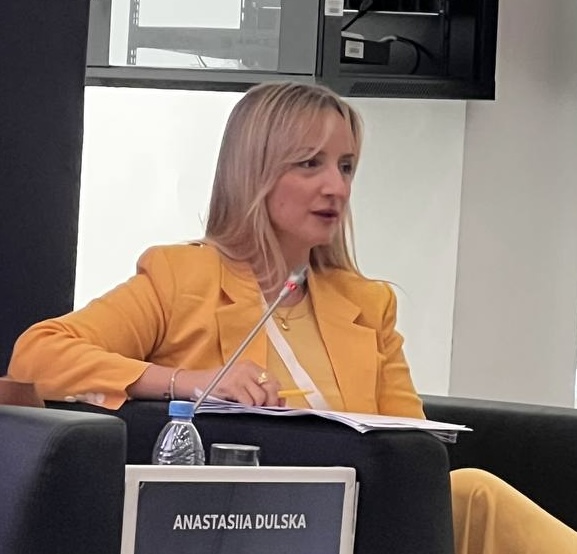
Beginning her remarks, Dulska cautioned against searching for a single perfect dispute resolution forum. According to her, successful dispute resolution depends less on selecting arbitration or litigation in isolation and more on carefully designing the overall dispute resolution framework from the outset of the transaction.
She stated:
“Cross-border M&A disputes are not resolved by choosing one perfect forum. They are resolved by designing a dispute architecture.”
Dulska emphasised that parties should begin thinking about dispute resolution while structuring the transaction itself rather than after disagreements arise. Although arbitration remains attractive because of party autonomy and the global enforceability of arbitral awards under the New York Convention, she argued that arbitration and litigation should not be viewed as competing mechanisms.
Instead, she observed:
“The choice between arbitration and state courts is not a dichotomy. It’s a choice of function.”
According to Dulska, arbitration is particularly well suited to deciding the merits of commercial disputes, but state courts continue to play an indispensable supporting role. She explained that courts are often essential where parties require urgent interim relief, including orders preserving assets, intellectual property rights or corporate control before an arbitral tribunal is constituted.
She warned that obtaining a successful arbitral award may ultimately prove meaningless if the opposing party has already stripped the company of its assets during the proceedings.
As she explained,
“If there is no assets left, arbitration award would make very little sense.”
Drawing from her own experience, Dulska described a complex shareholder dispute involving a multinational corporate structure where arbitration formed only one part of a much broader litigation strategy.
She explained that although arbitration was conducted under English law, the real contest unfolded simultaneously before domestic courts in several jurisdictions. Proceedings were necessary in Ukrainian and Russian courts where production facilities were located, in Cyprus where the holding company was incorporated, and in Liechtenstein where more than 1,500 intellectual property rights had been registered.
Those parallel proceedings, she explained, were necessary to preserve assets, maintain operational control and ensure that eventual arbitral decisions could be effectively implemented.
“The choice is how to design architecture to actually win the case,” she remarked.
Dulska further noted that effective interim measures granted by domestic courts can often create significant settlement leverage. Banks and other financial institutions, she observed, may respond more readily to enforceable court orders preserving assets than to interim measures granted by arbitral tribunals in certain jurisdictions.
She also highlighted situations where litigation may actually be preferable to arbitration.
According to Dulska, one of the greatest practical limitations of arbitration remains consent. Modern M&A transactions frequently involve multiple parties including shareholders, advisers, lenders, private equity funds and corporate affiliates. Many of these participants may never have agreed to arbitrate disputes.
Consequently, she observed that litigation sometimes offers the only realistic mechanism for compelling all necessary parties to participate in a single proceeding.
“You cannot compel a party who never agreed to arbitrate,” she said.
She added that litigation frequently becomes indispensable where allegations of fraud arise, particularly where disputes concern non-disclosure, fraudulent misrepresentation or other issues extending beyond purely contractual obligations.
Finally, Dulska discussed circumstances in which commercial disputes evolve into investment arbitration.
She explained that while such cases remain relatively uncommon, they can arise where foreign investors transact with state-owned enterprises or where governmental action obstructs completion or performance of the investment.
In those situations, interference by the State may amount to violations of protections available under international investment treaties, thereby transforming what began as a commercial disagreement into an investment arbitration claim.
Drafting arbitration clauses for complex M&A transactions
Continuing the discussion, Davit Tabatadze shifted attention from dispute resolution after disagreements arise to the drafting of transaction documents themselves.

According to Tabatadze, one of the most common mistakes is treating an M&A transaction as though it consists of a single contract.
He explained:
“In reality an M&A deal is not a single contract. It is a structure of contracts.”
He observed that a typical transaction includes shareholders’ agreements, articles of association, management agreements, board appointment documents and numerous ancillary arrangements. While parties often include an arbitration clause in the principal shareholders’ agreement, they frequently overlook corresponding provisions in the remaining transaction documents.
According to Tabatadze, this creates significant jurisdictional problems once disputes emerge.
He illustrated this through derivative actions brought on behalf of companies. Although shareholders may have agreed to arbitrate disputes under a shareholders’ agreement, the company itself often has not signed that agreement. Similarly, directors and officers whose conduct becomes the subject of litigation may never have consented to arbitration.
This creates opportunities for parties to challenge arbitral jurisdiction and force disputes into domestic courts. Referring to one case from his own practice, Tabatadze described proceedings that ultimately reached the Supreme Court because the company had not signed the shareholders’ agreement containing the arbitration clause.
Despite the fact that virtually every aspect of the corporate relationship had been regulated by the shareholders’ agreement, the court concluded that the company itself had never consented to arbitration.
“The court basically took a very conservative approach,” he explained, holding that because the company had not signed the shareholders’ agreement, it could not be compelled to arbitrate.
To minimise such risks, Tabatadze advised parties to develop what he described as a comprehensive arbitration agreement structure.
Rather than relying upon a single arbitration clause, parties should ensure that corresponding dispute resolution provisions appear throughout the transaction documents, including shareholders’ agreements, articles of association, management agreements and executive contracts.
He also stressed that those provisions should consistently refer to the same arbitral institution, the same arbitral seat and the same governing law wherever possible, thereby reducing the likelihood of fragmented proceedings and conflicting jurisdictional challenges.
Finally, he encouraged foreign investors to seek advice from experienced local counsel capable of identifying corporate law issues unique to the relevant jurisdiction before finalising transaction documents.
Practical drafting lessons and the growing role of mediation
Building upon Davit Tabatadze’s remarks, Joe Tirado observed that insufficient coordination between transactional lawyers and dispute resolution specialists remains a recurring problem across jurisdictions.
Reflecting on his own experience, he noted that sophisticated clients increasingly expect dispute lawyers to be involved at the transaction stage rather than only after disputes emerge.
According to Tirado, reviewing dispute resolution provisions before a transaction closes often adds significant value because lawyers are able to identify drafting gaps before they evolve into costly jurisdictional battles.
He remarked that although clients are understandably concerned about transaction costs, “to be able to cast your eye over the dispute resolution process, if it works, adds tremendous value.”
Consistency across transaction documents
Adding to the discussion, Bakhyt Tukulov shared several practical considerations from transactions involving foreign investment in Kazakhstan.
He explained that foreign investors frequently partner with influential local shareholders, making the choice of dispute resolution forum an important indicator of the parties’ willingness to cooperate.
According to him, reluctance to agree to arbitration before the AIFC Court or the International Arbitration Centre should itself be viewed as an early warning sign. Tukulov also highlighted the practical advantages of the AIFC dispute resolution framework. He noted that emergency arbitrator relief can generally be obtained within 14 days before the arbitral tribunal is constituted, allowing parties to secure urgent interim protection at the outset of a dispute.
He further pointed to the institution’s judicial record, observing that there had been no successful applications to set aside an arbitral award before the AIFC Court.
“There is no single case of the AIFC Court setting aside an arbitral award,” he remarked, adding that this provides commercial parties with greater confidence when selecting the jurisdiction for dispute resolution.
Anastasiia Dulska returned to emphasise that parties should think not only about dispute clauses, but about the architecture of the entire transaction.
She recommended that shareholders’ agreements, share purchase agreements, escrow arrangements, management agreements and warranty documents should all contain consistent dispute resolution provisions.
According to her, using the same arbitral institution, the same seat and the same governing law throughout the transaction substantially improves the prospects of consolidating disputes and joining related parties where necessary.
“It should be the same dispute resolution clause across the shareholders’ agreement, management, warranty and escrow,” she advised.
Transaction lawyers and dispute lawyers should work together
Offering another practical drafting lesson, Ardak Idayatova observed that transactional lawyers rarely consult dispute resolution practitioners while negotiating arbitration clauses.
She remarked that this often results in technical drafting mistakes capable of affecting the applicable procedural law governing the arbitration.
According to Idayatova, one recurring error concerns the designation of the arbitral seat.
She explained that parties sometimes refer disputes to arbitration before the International Arbitration Centre but incorrectly designate the seat simply as “Astana, Kazakhstan.”
In such circumstances, she warned, domestic Kazakh arbitration legislation may govern the proceedings rather than the procedural framework intended by the parties.
“My personal observation is that M&A lawyers rarely discuss the arbitration clauses with dispute resolution lawyers,” she said.
Tirado agreed, describing the lack of coordination between transactional and disputes teams as a recurring concern across jurisdictions.
He observed that the most sophisticated clients increasingly expect both teams to work together throughout the life of a transaction, ensuring that dispute resolution clauses are practical, enforceable and aligned with the commercial objectives of the deal.
Mediation emerging as an essential component of dispute resolution
The panel then turned to mediation and its growing role in cross-border commercial disputes.
Introducing the discussion, Tirado noted that mediation is increasingly being recognised not as an alternative to arbitration but as an important complement to it.
He invited Matthew Drossos to discuss recent developments driving the increased use of structured mediation in international commercial disputes.
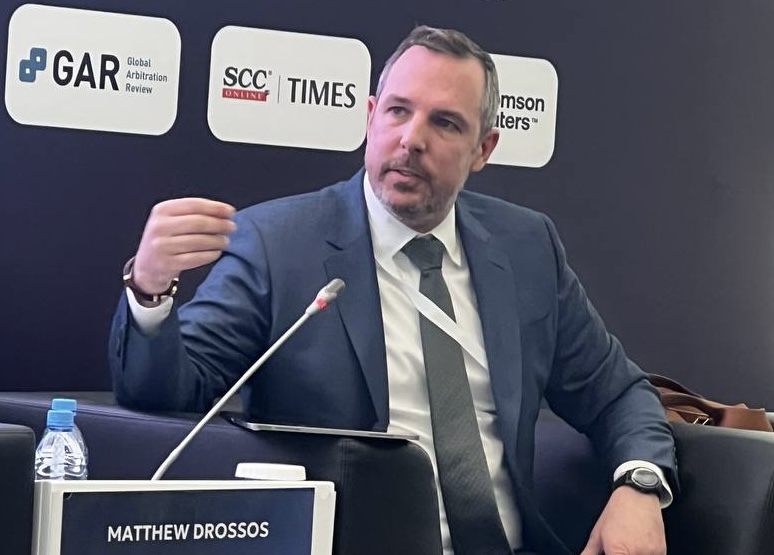
Drossos began by observing that cross-border M&A disputes need not always culminate in adversarial proceedings.
While arbitration and litigation remain indispensable, he argued that structured mediation increasingly offers parties an opportunity to resolve disagreements before relationships completely deteriorate.
He remarked:
“It does not always have to be a resolution that is adversarial.”
According to Drossos, mediation has gained renewed momentum because many of the institutional advantages historically associated with arbitration are now also available within structured mediation frameworks.
He explained that leading arbitral institutions now maintain formal mediation rules, accredited mediators and institutional procedures that allow parties to transition seamlessly from mediation to arbitration if settlement proves impossible.
One important development, he noted, has been the adoption of the Singapore Convention on Mediation, which strengthens the international enforceability of mediated settlement agreements in much the same way that the New York Convention supports the enforcement of arbitral awards.
“The Singapore Convention brings teeth to these agreements,” he observed.
Drossos also highlighted the importance of involving experts early in the dispute resolution process.
Referring to discussions held earlier during the conference, he noted that expert input obtained before arbitration can significantly narrow the issues separating the parties and increase the likelihood of settlement during mediation.
Drawing from his own practice, he described a long-running post-M&A shareholder dispute in which the parties had narrowed their disagreement to only a few million dollars. Yet settlement remained elusive because the mediation clause itself had been poorly drafted.
According to Drossos, this demonstrates why mediation clauses deserve the same careful attention as arbitration clauses.
He advised parties to make use of model mediation clauses published by institutions such as the International Arbitration Centre, the ICC, the American Arbitration Association and the International Centre for Dispute Resolution.
He also referred to international surveys, including research conducted by Queen Mary University of London and PwC, indicating that private equity investors, banks and commercial parties increasingly view mediation as an effective means of reducing costs and shortening the lifespan of complex commercial disputes.
“Mediation is something that I think is coming much more to the fore,” he concluded.
Closing the discussion, Tirado suggested that mediation itself may suffer from an image problem. He argued that describing mediation as merely an “alternative” form of dispute resolution understates its importance. According to him, mediation should instead be viewed as one of the essential tools available to commercial parties.
“It’s a tool we have in our toolbox that we just don’t use enough, and we don’t take it seriously,” he remarked.
Audience questions focus on due diligence, drafting and fraud
The session concluded with an interactive discussion in which participants raised practical questions on legal due diligence, indemnity clauses and the interaction between commercial disputes and criminal fraud.
One audience member asked whether law firms could face liability where legal due diligence fails to uncover fraud or material misrepresentations in an M&A transaction.
Responding to the question, Ardak Idayatova explained that, in one of the cases she had referred to earlier, proceedings had actually been brought against the audit firm responsible for valuing the target company and determining its financial figures. However, she was not aware of comparable litigation against law firms in those particular disputes.
She nevertheless acknowledged that legal advisers can incur professional liability in appropriate circumstances.
“I can say that there is a liability for the law firm and for the client,” she observed, adding that most law firms maintain professional indemnity insurance to cover potential claims arising from their legal services.
Bakhyt Tukulov added that such cases are highly fact-specific and depend upon whether lawyers were aware, or reasonably ought to have been aware, of fraudulent conduct.
According to him, questions of professional responsibility ultimately depend on the applicable regulatory framework and the factual circumstances of each transaction.
“It is highly factual whether lawyers are aware of potential fraud, whether they were misled by their client,” he said.
Indemnity clauses are not a complete solution
Another participant questioned why parties do not simply include extremely high indemnity or liquidated damages clauses to discourage breaches of representations and warranties altogether.
Addressing the issue, Davit Tabatadze explained that although indemnity clauses are widely used in commercial transactions, they frequently become disputes in their own right.
According to him, no contractual provision can entirely eliminate disagreements arising from commercial relationships.
He remarked:
“The lawyers sometimes include indemnification clauses, and they themselves become the subject matter of the dispute.”
Responding to a follow-up question regarding liquidated damages clauses, Tabatadze explained that their effectiveness depends heavily upon the governing law applicable to the transaction. In some jurisdictions, courts may refuse to enforce such clauses or may permit parties to pursue additional damages despite their inclusion.
“It totally depends on the applicable law,” he observed.
Matthew Drossos agreed that while carefully drafted liquidated damages provisions may resolve a significant number of disputes, they cannot eliminate high-value commercial conflicts altogether.
According to him, parties will inevitably litigate the transactions involving the greatest commercial stakes, making carefully designed dispute resolution mechanisms just as important as substantive contractual protections.
“You are inevitably going to get to the major disputes,” he remarked, emphasising the importance of structured dispute resolution procedures that can reduce tension before parties become fully entrenched in adversarial proceedings.
Handling fraud alongside arbitration
The final audience question addressed the relationship between fraud allegations, criminal proceedings and commercial arbitration.
Responding first, Bakhyt Tukulov noted that criminal investigations have sometimes been used strategically during corporate disputes, including measures such as freezing bank accounts or initiating proceedings against company management. Although he observed that such situations appear less common today, he acknowledged that they remain a practical challenge in some jurisdictions.
“It happens,” he said, explaining that management often needs to focus on preserving the business while criminal investigations continue.
Providing a broader international perspective, Anastasiia Dulska cautioned that criminal proceedings should never be initiated merely to obtain evidence for subsequent arbitration.
However, where genuine fraud amounting to criminal conduct exists, she considered parallel criminal proceedings entirely appropriate.
“If there is really merit in a criminal case, it is a very viable option,” she observed.
According to Dulska, serious fraud frequently requires immediate intervention through asset tracing, preservation measures and criminal investigations running alongside commercial arbitration. She also noted that approaches vary considerably between jurisdictions and that not every allegation of fraud justifies criminal proceedings.
Returning to the Kazakh context, Bakhyt Tukulov suggested that where criminal enforcement proves difficult, parties should also consider pursuing civil fraud claims before the AIFC Court where jurisdictional requirements can be satisfied.
Concluding remarks
Bringing the discussion to a close, moderator Joe Tirado thanked both the panellists and audience for an engaging exchange covering every stage of the M&A dispute lifecycle, from transactional drafting and dispute architecture to arbitration, litigation, mediation and fraud investigations.
Reflecting on the breadth of the discussion, the session demonstrated that effective dispute resolution begins long before disagreements arise. Throughout the panel, speakers repeatedly emphasised that carefully drafted transaction documents, consistent dispute resolution clauses, early consideration of governing law and seat, and the thoughtful integration of arbitration, litigation and mediation are essential to managing the legal and commercial risks inherent in cross-border M&A transactions.
Read more IAC Eurasia Arbitration Week 2026 coverage: