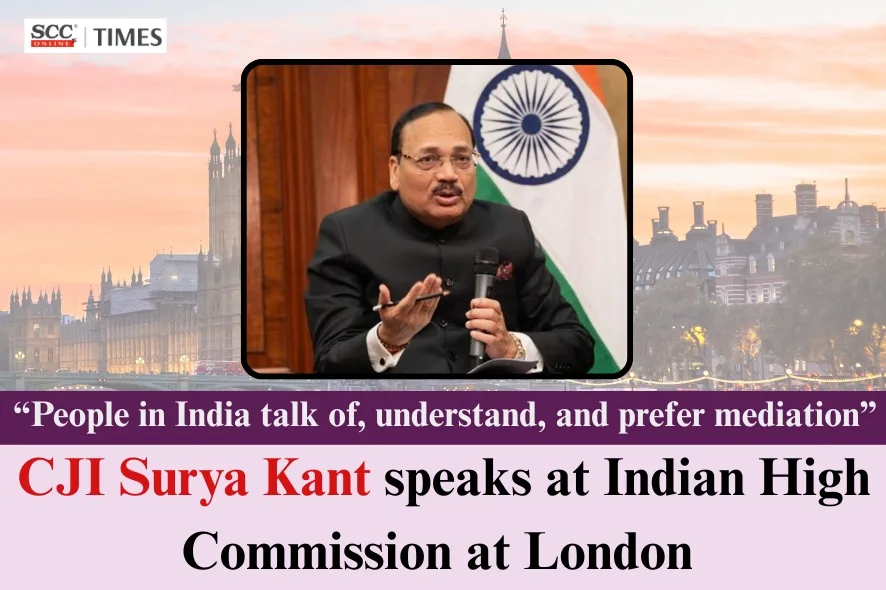
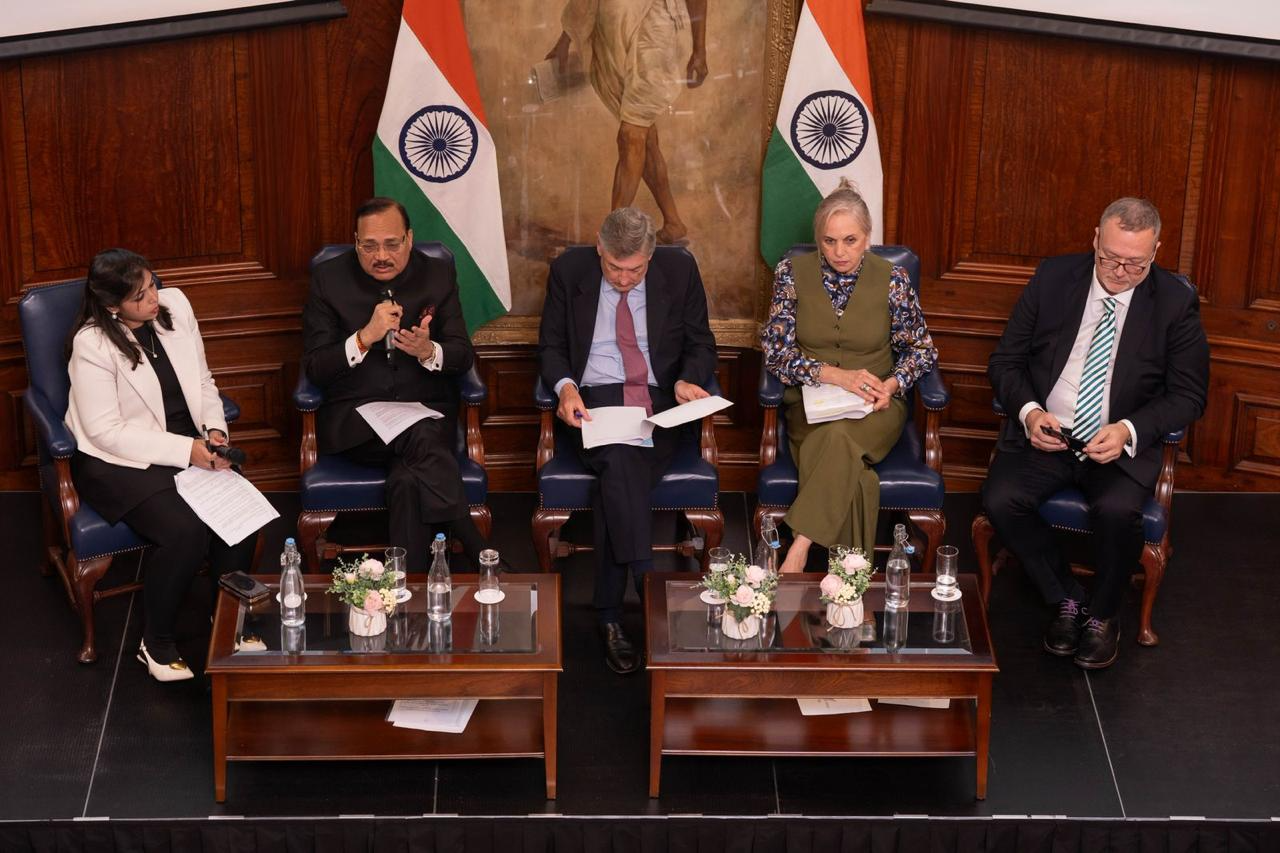
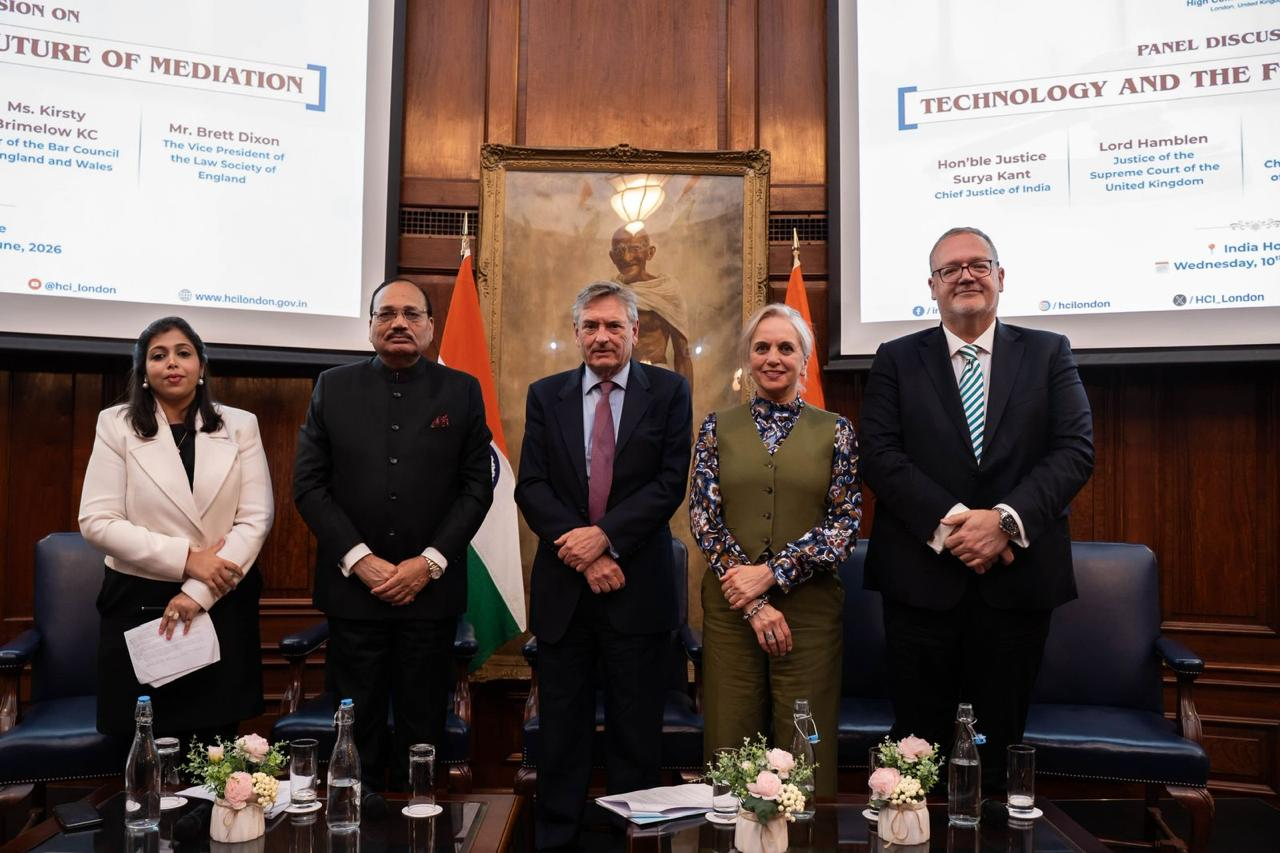
Following LIDW 2026, the Indian High Commission in London organized an event on 10 June 2026 at the India House. The event was graced by dignitaries, such as Justice Surya Kant, Chief Justice of India; Lord Nicholas Archibald Hamblen, Lord Hamblen of Kersey, Judge of the Supreme Court of the UK; Ms. Kirsty Brimelow KC, President of the Bar Council of England & Wales; and Mr. Brett Dixon, Vice President of the Law Society of England & Wales.
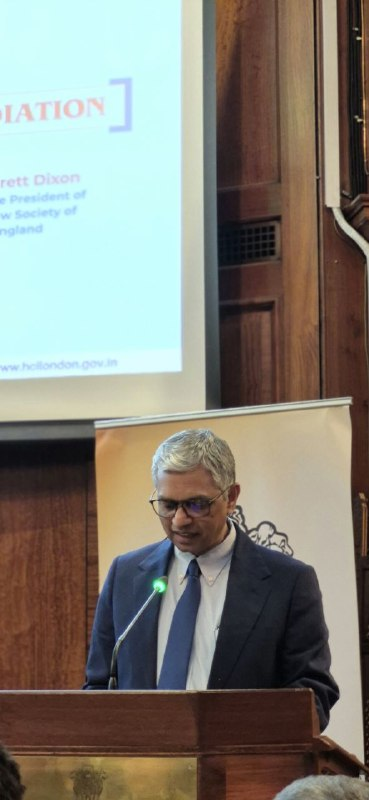
After the opening address was delivered by Indian High Commissioner Mr. Periasamy Kumaran, CJI Surya Kant delivered some opening remarks wherein he covered a detailed overview of steps taken by the judiciary, in addition to the mediation act, and the steps taken by the judiciary in promoting mediation in India. Thereafter, a panel discussion was conducted with the dignitaries as the panellists and Ms. Tanvi Dubey, Advocate on Record, Supreme Court of India, as the moderator.
Opening Address: Mr. P. Kumaran
At the outset, Mr. Kumaran reflected on the remarkable growth of the India-UK Economic and Investment Partnership. He stated that the future of the relationship sits at the intersection of three important frameworks we have agreed on, i.e., the India-UK Vision 2035, the Comprehensive Economic and Trade Agreements (CETA), the Technology Security Initiative (TSI), and several other joint working groups we have set up for enhancing cooperation on emerging technologies, joint research, and critical environments.
“These exchanges are emblematic of the strength, maturity, and growing strategic importance of bilateral relations.”
He noted that bilateral trade between India and the UK currently stands at approximately £48 billion and stated that the ambition of doubling trade by 2030 is now increasingly achievable. He emphasized that the recently signed Free Trade Agreement (FTA, i.e., the CETA) extends beyond tariff reductions to include digital customs systems, streamlines rules of origin, promotes regulatory alignment, enhances transparency, and enables businesses to move goods more efficiently and at lower cost. He added that it also included commitments on faster customs procedures, recognition of electronic authentication, protection against false source code transfer, and cooperation on emerging technologies. CETA’s emphasis on service market access, professional qualifications, and business mobility meant that it is also about building the legal and institutional grounding that makes higher-earning, faster-earning, cross-border business development.
On the investment front, Mr. Kumaran remarked that India and the United Kingdom were increasingly emerging as balanced and dynamic partners. Investment flows were becoming more reciprocal, reflecting growing confidence in each other’s markets and long-term economic prospects. Other institutional mechanisms, such as the India-UK Economic and Financial Dialogue, co-chaired by the Finance Ministers of both countries, continue to explore ways to deepen cooperation in financial services, fintech, and the digital economy.
“Through sustained economic and regulatory reforms, a new national logistics policy, expanded public-private partnership frameworks, asset privatisation initiatives, and reforms in taxation, labour codes, foreign investment, and trade policy, India is creating a more transparent, efficient, and investor-friendly ecosystem. These reforms are laying the foundation for sustained growth and deeper integration in global markets.”
Turning to dispute resolution, he argued that technological innovation is transforming mediation into a faster, more accessible, and data-driven process. Technologies such as virtual hearings, AI-assisted analysis, electronic contracts, secure document exchange, and online dispute resolution platforms are expected to become integral components of mediation.
“A robust risk-resolution framework provides a stable environment for international transactions, reinforces contractual confidence, and facilitates increasingly complex cross-border commercial activity.”
However, he stressed that artificial intelligence cannot replace human mediators because successful mediation fundamentally depends upon trust-building, emotional intelligence, and interpersonal communication. Thus, the real change was perhaps a shift from mediation as a purely interpersonal craft to a hybrid practice in which human judgement is augmented by digital tools.
Mr. Kumaran elaborated that mediators, counsel, and institutions will need stronger digital literacy, better cybersecurity practices, clearer rules on confidentiality, and more explicit safeguards around bias and transparency in AI systems. He concluded by emphasizing that if handled well, technology can widen access, shorten timelines, and improve settlement quality.
Mediation in India: Chief Justice of India, Justice Surya Kant
In his opening remarks, Justice Surya Kant explained the role of the Indian judiciary in promoting mediation. Dividing the same into two segments, pre- Mediation Act, 2023, and post-Mediation Act, he traced the development through several milestones:
1. Pre-Mediation Act:
- The Supreme Court introduced mediation as part of the judicial mechanism through the judgment in Salem Advocate Bar Assn. v. Union of India, (2003) 1 SCC 49.
- Introduction of Section 89 in the Civil Procedure Code, 1908, which encouraged courts to refer disputes for mediation.
- Establishment of mediation centres at district, trial court, and High Court levels beginning in the early 2000s.
-
The Supreme Court directed mandatory mediation training for judicial officers through the National and State Judicial Academies.
- Creation of Lok Adalats and Permanent Lok Adalats under the Legal Services Authorities framework.
“The idea was very simple. Not only were they trained mediators, but they also had a very rich experience of a judicially trained mind with them. So, they knew that what is the cause of a dispute, how and what kind of settlement they can offer and how the parties to be promoted and played for were going to resolve their dispute. So, this is how the Lok Adalat came to be created.”
He explained that though the Lok Adalat mechanism created a momentum for dispute resolution via mediation, issues arose regarding the execution of the settlements arrived at.
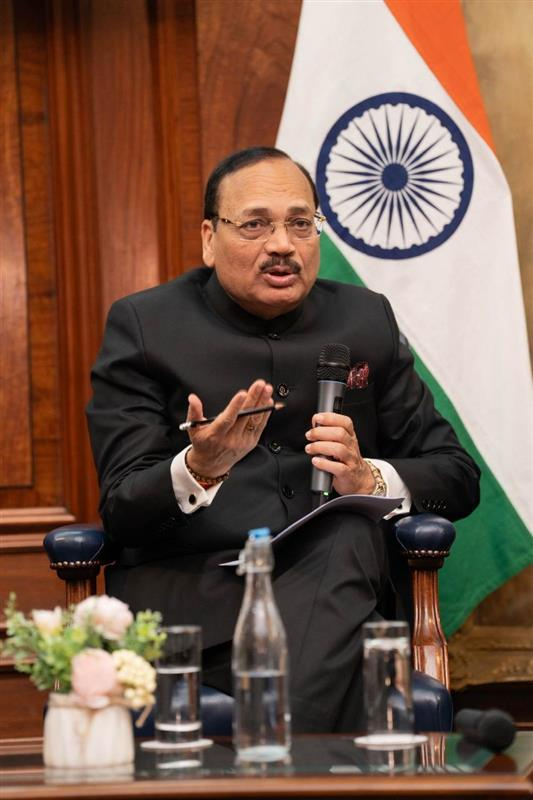
2. Post-Mediation Act: He explained that these developments led to the formulation of the Mediation Act. Justice Kant described the Mediation Act as a landmark reform because mediated settlements now possess the status and enforceability of a judicial decree passed by the Supreme Court. The legislation also:
- Recognizes online mediation,
- Prohibits the recording of mediation proceedings,
- Protects confidentiality,
-
Prevents parties from using mediation discussions against each other in subsequent litigation.
Expanding Mediation Capacity
Upon assuming leadership of the Supreme Court Legal Services Committee, Justice Kant identified a severe shortage of trained mediators. While India possessed less than 30,000 trained mediators despite training programmes, the estimated requirement exceeded 2,50,000. To bridge this gap:
- Online training programmes were launched
- Partnerships were formed with experienced mediation organizations
-
Thousands of additional mediators were trained
When he became the chairperson of the National Legal Services Authority, they introduced the national campaign: “Mediation for Nation”
According to the Chief Justice, mediation awareness has now reached every level of Indian society, with citizens increasingly preferring consensual dispute resolution.
“I can say proudly that in India, in every street, in every house, in every town, in every village, people talk of mediation, people understand mediation, people prefer mediation.”
Mediation versus Arbitration
Emphasising that though he did not wish to discourage arbitration, Justice Surya Kant explained how the commercial world was evolving and the evolution required resolution while keeping the commercial relationships intact. Mediation was a dispute resolution mechanism that provided not just preservation of commercial relationships, but also affordability and speed.
However, stating that mediation would not work for all disputes, Justice Kant emphasised that for such disputes there must be an equally competent and acceptable arbitration mechanism, particularly for international disputes. The international arbitration mechanism must respect party autonomy, be fair, be effective, be time-bound, and clearly define the jurisdiction. He argued that arbitration often marks the beginning of litigation because awards are frequently challenged in courts, whereas successful mediation concludes disputes permanently. In fact, the international arbitration mechanism was so complex that before the arbitration proceeding, the parties started litigating on preliminary issues.
UK’s Judicial Approach to Mediation: Lord Nicholas Archibald Hamblen
Lord Hamblen explained that mediation had long been embedded within the UK litigation landscape, as courts were always supportive of it. He mentioned that before 2023, courts would ask parties whether they had attempted mediation, and if the parties were adamant on not mediating, then the courts would not order it. However, following a decision in 2023 titled Churchill v Merthyr Tydfil County Borough Council,1 which held that ADR or mediation could be ordered by the court. This was followed by amendments to the UK Civil Procedure Rules to reflect this change. Thus, since October 2024, promoting ADR has become part of the overriding objective of civil procedure, and courts possess express authority to order mediation.
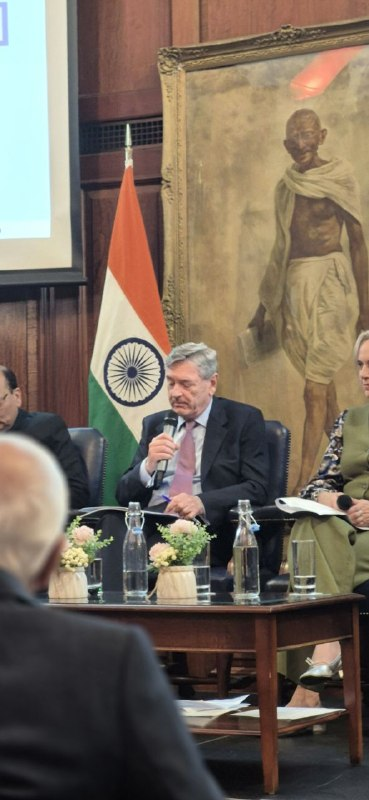
He emphasized that mediation’s principal advantages were lower costs, quicker resolution, confidentiality, procedural flexibility, and reduced burden on courts. Most importantly, mediation produces agreed solutions rather than imposed outcomes, increasing satisfaction and preserving relationships between disputing parties.
Barristers as Mediators: Ms. Kirsty Brimelow KC
At the outset, Ms. Brimelow opined that barristers possess exceptional skills suited to mediation, such as their duty towards the court, independence, habit of collaboration, detail-oriented, apt risk assessment, realistic approach, negotiation, multidisciplinary, forensic approach, etc.
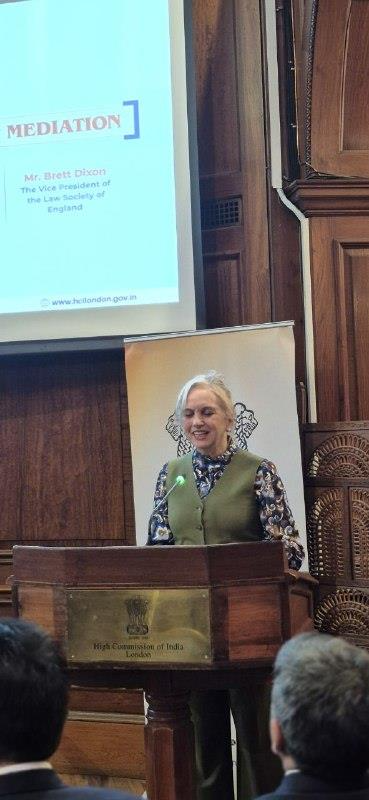
Quoting the UK Bar Council’s Guide to Mediation Advocacy, she explained that mediation advocacy differs fundamentally from courtroom advocacy because success depends upon persuading opposing parties rather than convincing a judge. She emphasized that mediation offers advocates a unique opportunity to communicate directly with both the opposing party and the mediator.
She concluded by appreciating that four of the ten Lexology Global Elite Thought Leaders in Commercial Mediation are barristers from England and Wales.
Law Society’s Support and Promotion of Mediation: Mr. Brett Dixon
From the perspective of the Law Society of England & Wales, Mr. Brett Dixon focused on the integration of mediation into digital justice systems. Using data from England and Wales, he mentioned that online civil money claims had a built-in mediation route in their civil procedure, as low-value claimants were given an opportunity, or rather steered towards mediation. In fact, such mediations had a 55% settlement rate. Successful mediation reduces trial waiting times by 37.6 weeks, significantly relieving pressure on courts. This also benefited the judicial pendency.
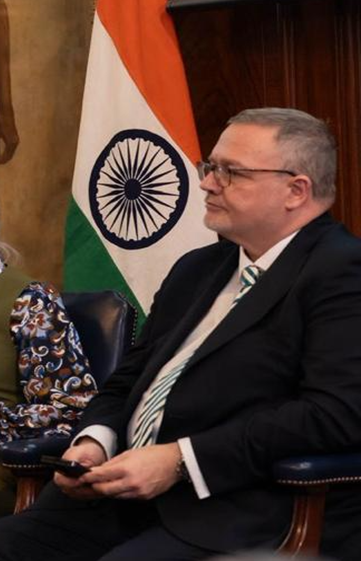
He also discussed that the Official Injury Claims Portal, which deals with most of the road traffic accident cases, was processing approximately 20,000—23,000 low-value claims every month using hybrid dispute resolution combining mediation with judicial oversight.
Mr. Dixon observed that despite simplified digital processes, 88% of claimants still seek legal representation, demonstrating the continuing importance of solicitors.
Regarding pre-litigation mediation, he explained that as a member of the Online Procedure Rule Committee, they had the power to make rules in this regard. Thus, the Law Society was engaged with digital change through its 21st Century Justice Programme to identify the needs of the system and develop mechanisms, principles, and soft rules that enable parties to resolve disputes in a variety of ways.
Highlighting the linguistic change in solicitors calling themselves litigators, he concluded that lawyers are problem solvers in society and in advocacy.
After these opening remarks, the panel proceeded towards a theme-based discussion.
1. [2023] EWCA Civ 1416