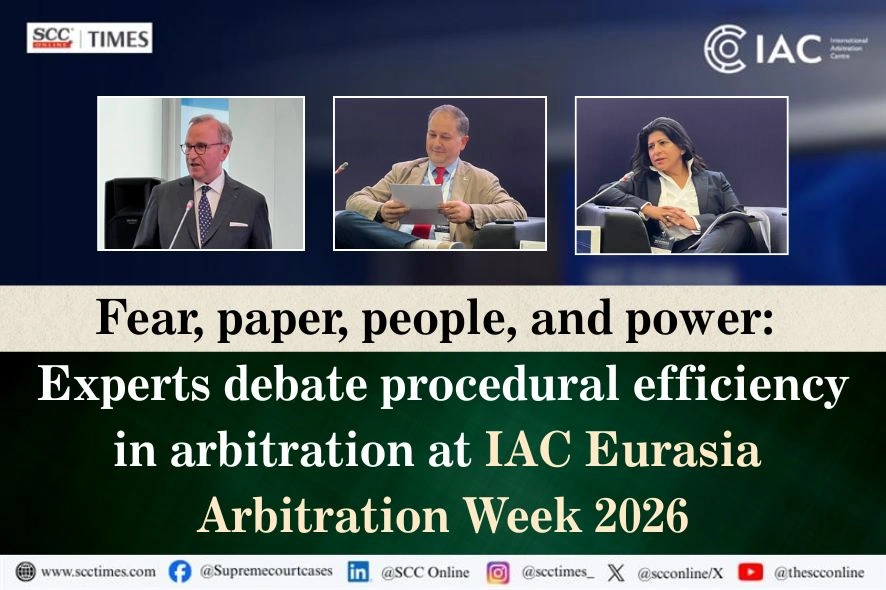
The International Arbitration Centre (IAC) is holding its fourth annual IAC Eurasia Arbitration Week 2026 (EAW26), from 30 June to 3 July 2026 in Astana, Kazakhstan.
In a debate titled “Procedural Efficiency in Arbitration: Myth, Mantra or Menace?”, the esteemed panellists examined some of the most contested procedural questions in international arbitration. Through four motions concerning due process paranoia, document production, live witness and expert evidence, and procedural treatment of States in arbitration. Artem Doudko, Partner, International Arbitration, Osborne Clarke LLP, and Mahnaz Malik, Arbitrator & Barrister, 20 Essex Street Chambers, presented competing visions of efficiency and fairness before an audience that ultimately served as the tribunal.
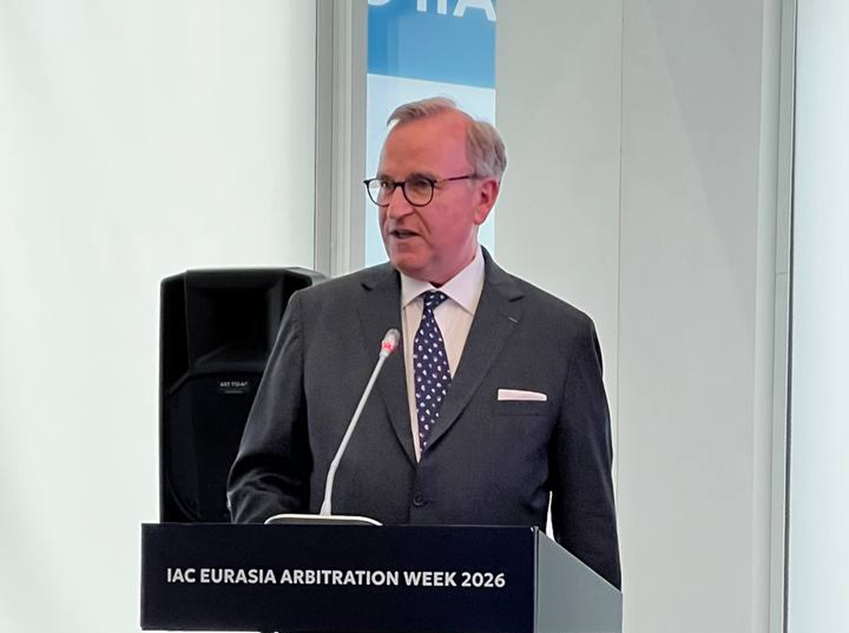
Moderated by IAC Chairman Thomas Krümmel, the debate entailed a four-round process wherein Artem Doudko and Mahnaz Malik spoke for and against each motion. The audience served as the tribunal.
At the outset, Thomas outlined the four topics of the debate:
-
Fear: Due Process Paranoia
-
Paper: Document Production
-
People: Witnesses and Experts
-
Power: Disputes involving states and public interest
He remarked, “procedural efficiency is a phrase everyone supports until it threatens something they want. Claimants want speed. Respondents want full opportunity to answer. Counsels want every stone to be turned over, especially the stones held by the other side. Tribunals want control but not a satisfied application. Institutions want efficiency but not complaints. Users want arbitration faster than litigation, cheaper than litigation, and more flexible than litigation, and somehow also more perfect than litigation.”
Thus, he underscored that the question was not whether efficiency was good, but rather when it becomes justice, and when it becomes a shortcut.
Round 1: Fear: Due Process paranoia as the enemy of efficiency
Contextualizing the topic, Thomas explained that the tribunal that grants every extension, allows every submission, hears every witness and at least every document, because somewhere in the back of its mind is the nightmare of challenge or non-enforcement, cannot run an efficient arbitration. On this topic, Artem Doudko spoke for the motion, and Mahnaz Malik spoke against the motion.
Artem Doudko: Paranoia Produces Uniformity, Not Flexibility
Starting the debate by supporting the motion, Artem argued that document production frequently generates disproportionate costs without materially advancing the resolution of disputes.
Drawing from his professional experience, he remarked that there had been cases wherein tribunals, to be cautious, were lenient towards parties. He illustrated a case wherein a party began participating in the proceedings with a few hearings before the final one, and the tribunal allowed it to file submissions and gave a substantive hearing, which increased the case duration by 3 years. Artem opined that such concessions were unacceptable, inefficient, disproportionate, and unreasonable. He remarked, “Situations like this give arbitration a bad reputation and make it appear inefficient. They are driven by the tribunals that fear challenge.”
He argued that paranoia produces uniformity, not flexibility. This causes arbitration proceedings to be similar rather than tailored to each dispute. According to the Queen Mary International Arbitration Survey 2025 (Queen Mary Survey), a lack of proactive case management for arbitrators was the second biggest complaint negatively impacting efficiency. This called for greater proactivity and courage from arbitrators.
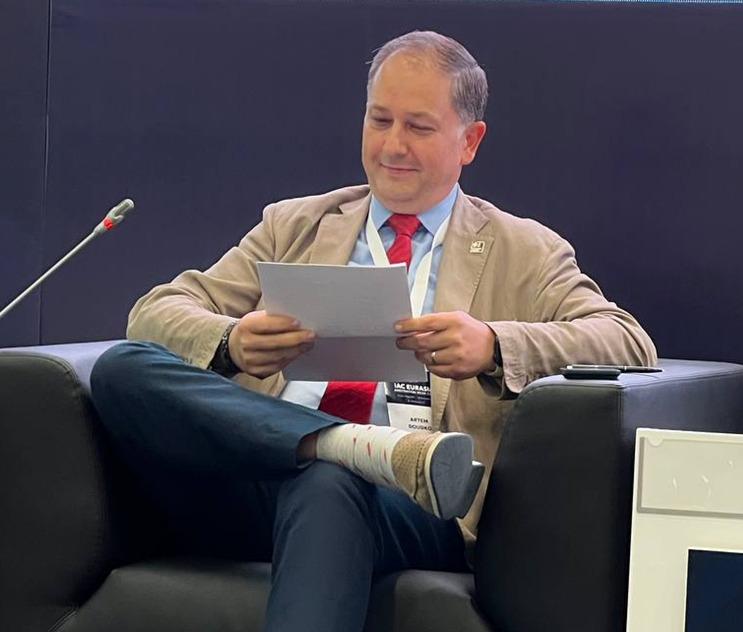
“The flexibility that makes arbitration valuable is being avoided. The inefficiency is self-defeating. Excessive due process undermines the very standard arbitral tribunals set out to safeguard by enabling parties to master delayed tactics behind due process requests.”
Reflecting on a case he presided over, Artem mentioned that in a pre-COVID-19 case, they had decided to conduct the proceedings virtually since both parties belonged to different countries. The more unusual step was that everyone agreed that it would be efficient and not impact the impartiality of the proceedings, that the arbitrator from Kazakhstan and the counsel representing the party from Kazakhstan would attend the hearing from the same location, and the arbitrator and the counsel from another country would do the same. Further, Artem would go in from the third location in London.
He stated that while this unusual approach might not have worked in every case, it worked in this case as they were able to maintain fairness and allow the dispute to be resolved impartially and efficiently.
Thus, he concluded by stating, “Be brave, don’t be afraid of challenges; instead challenge yourself by asking what can I do differently to make this arbitration more efficient without necessarily delaying the expense.”
Mahnaz Malik: Document production remains indispensable to uncovering the truth
Arguing against the motion, Mahnaz remarked that “A tribunal fears challenge is not an incapable one, it is a careful one.” She argued that fear of accountability was human and judicial in nature, and arbitrators needed it as challenge was their only source of accountability.
She opined that fear ensures fairness, which was crucial to the proceedings. Since an award can either be set aside or face refusal of enforcement, and the ground for refusal of enforcement was inability to be heard, the overarching duty of the tribunal was to grant an award where each party has had a right to be heard properly. The duty to be heard is paramount, but it should not come at the cost of unnecessary delay.
Mahnaz argued that an efficient tribunal will know where people are lying, where parties are overstepping their mark, and where procedural proficiency comes at the cost of unfairness, which can kill an award, unlike delay.
She concluded by referring to the Queen Mary Survey, which stated that 87 per cent parties cared the most about enforceability, which is damaged by taking shortcuts, as per Mahnaz.
Round 2: Paper: Document production is a search for truth worth its cost
Thomas began this round by providing context that some view document production as truth, transparency, and the smoking gun, while others view it as cost, delay, and associates disappearing into the document review for months. Mahnaz spoke for the motion, and Artem spoke against the motion
Mahnaz Malik: Truth is worth the paper
At the outset, she argued that factual truth, i.e., the heart of the case, in arbitral proceedings is contained in documents. She observed that pleadings merely contain parties’ legal arguments, while witness testimony is susceptible to imperfect recollection and advocacy. Documents, however, generally provide evidence of the underlying facts and frequently reveal aspects of the dispute that parties deliberately choose not to disclose. According to Mahnaz, document production enables tribunals to access evidence beyond the selective records voluntarily produced by each party, thereby allowing decisions to be based upon a complete factual record rather than strategic disclosure.
Mahnaz further contended that denying document production disproportionately disadvantages parties who lack access to relevant records or are illiterate. Such parties, she argued, would effectively be required to litigate “in the dark”, creating procedural inequality and increasing the risk of unjust outcomes.
While acknowledging that document production inevitably involves costs, she maintained that the debate was not whether costs existed, but whether those costs were justified in pursuit of the truth. “I would say the price is worth paying for the truth, depending on what the truth is and what the value of the truth is, in your particular case.”
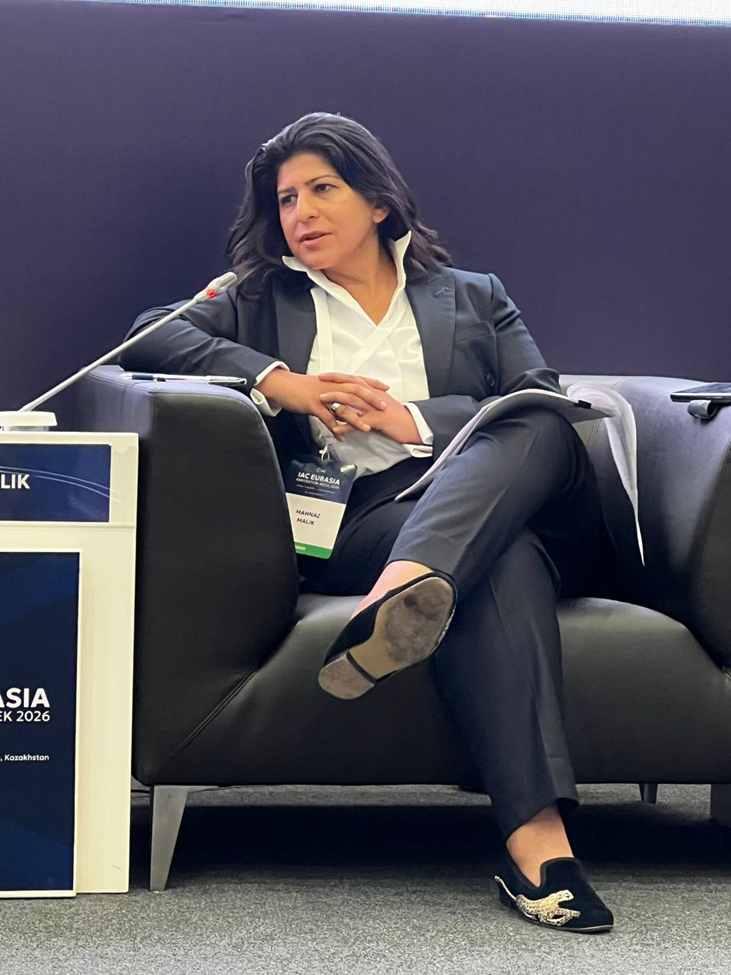
In this regard, Mahnaz referred to the IBA Rules on the Taking of Evidence in International Arbitration, which permit proportionate document production while preventing unnecessary fishing expeditions. She noted that the widespread adoption of the IBA Rules demonstrated users’ continued confidence in this balanced approach, arguing that the solution lies in careful case management rather than abandoning document production altogether.
Artem Doudko: Document Production is like the search for El Dorado
Comparing the process to a futile search for “El Dorado”, he argued that there had only been a couple of examples wherein document production resulted in the discovery of something substantial which impacted the case; usually this was not the case. He suggested that arbitration should instead embrace procedural proportionality.
Artem criticised the tendency of parties to formulate broad, burdensome, and largely irrelevant requests seeking “any and all documents”, observing that such requests imposed considerable burdens upon both opposing parties and tribunals. Although Article 3 of the IBA Rules requires document requests to be narrowly tailored to specific categories reasonably believed to exist, he argued that these safeguards were often applied too liberally in practice.
Advocating a more disciplined approach, Artem suggested that requests should identify clearly identifiable documents or limited categories directly relevant to the issues in dispute. Such targeted production would be more efficient. However, parties produce and receive massive bundles, dedicate enormous resources to review, and even then, only a handful of those documents are referred to in a hearing, if any at all.
Referring to the Queen Mary Survey, he noted that minimizing costs and ensuring rapid resolution are the primary drivers for expediting mechanisms, which parties appreciate. Parties say that user AI will assist with document production, and 90 per cent of the survey respondents expect to use AI for document production, with 54 per cent citing time savings as the primary driver. He argued that AI-assisted document review can identify genuinely important documents from large volumes far more efficiently and accurately than traditional review.
In conclusion, Artem stated that though AI-enabled document production could be cheaper, faster, and more precise, this alone would not solve the disclosure challenges.
Round 3: People: Live witness and expert evidence is indispensable to a fair hearing, not ritual theatre
For the third round, Thomas explained that experts write reports, reply reports, joint reports, and then explain that the other expert is wrong. While some say live evidence is where the truth emerges, others argue that it is an expensive theatre.
Mahnaz Malik: Unveiling the truth behind careful drafting
Supporting the proposition, Mahnaz argued that witness statements and expert reports are frequently refined, revised, and carefully drafted by legal representatives, often presenting an idealised version of events. In contrast, live cross-examination provides the tribunal with its only opportunity to assess the witnesses directly, which turns the case into a hearing.
“On paper, every witness is articulate, consistent, and certain. But in the box, without the drafting to hide behind, the tribunal can finally see and hear the witness rather than the witness’s voice”
She observed that the true value of cross-examination lies not in courtroom theatrics but in exposing inconsistencies between witness testimony and contemporaneous documentary evidence. It is during oral examination, she argued, that tribunals can properly evaluate witness credibility and distinguish carefully prepared written narratives from genuine recollections.
With respect to expert evidence, Mahnaz submitted that written reports often appear equally persuasive until subjected to rigorous questioning. Referring again to findings from the Queen Mary Survey, she noted that 90 per cent of respondents considered cross-examination to be an effective mechanism for testing factual evidence.
Rejecting the characterisation of hearings as expensive theatre, she emphasised that modern arbitration already provides tribunals with numerous case management tools like witness conferencing and time allocation to have controlled examinations. She concluded by observing that procedural fairness carries a distinctly human dimension; individuals whose conduct or integrity is questioned should have the opportunity to respond personally before the tribunal.
“It is the oldest instinct of justice you have, the right to face an accuser in the courtroom and to answer for yourself in your own voice.”
Artem Doudko: Balancing extensive witness testimonies with case requirement
Opposing the motion, Artem accepted that live evidence is indispensable in certain disputes but argued that it should not automatically form part of every arbitration. According to him, many commercial disputes turn primarily upon contractual interpretation or undisputed facts, making oral testimony unnecessary. Drawing upon his own experience, he recalled several arbitrations in which witness examinations had little or no impact on the tribunal’s eventual determination.
He illustrated that bifurcation was a good example of fair procedural efficiency, as separating a preliminary legal issue for determination via arguments leads to the parties frequently settling on the merits once that issue is resolved. There are categories of witnesses, those describing technical details of transactions whose evidence is necessary, but whose participation at a hearing can be easily dispensed with, without affecting the quality of the evidence presented at the hearing. In this regard, he referred to a case involving numerous factual witnesses whose written evidence proved sufficient, with only a limited number ultimately required to testify before the tribunal.
Addressing expert evidence, Artem expressed concern that party-appointed experts often function as advocates rather than independent advisers, producing competing methodologies that tribunals struggle to compare and reconcile. As alternatives, he encouraged greater reliance upon tribunal-appointed experts and witness conferencing, where opposing experts present evidence simultaneously and respond directly to each other’s opinions.
In conclusion, he argued that tribunals should exercise stronger procedural control to ensure that parties present only genuinely necessary evidence and don’t spend unnecessary funds.
Round 4: Power: In disputes against states, efficiency must yield to the public interest
Contextualizing the last round, Thomas stated that arbitration is not only about private commercial disputes; it often involves states, state-owned entities, investors, public infrastructure, natural resources, strategic projects, and public money.
Answering the dilemma, Artem argued against the motion, whereas Mahnaz argued in favour of it.
Mahnaz Malik: Public interest overrides the value of efficiency
Supporting the proposition, Mahnaz distinguished sovereign States from State-owned commercial entities, emphasising that disputes involving governments frequently implicate broader public interests extending beyond the immediate parties. She argued that efficiency is a value; public interest is a duty, and as citizens of a state, as shareholders in public interest, public interest overrides the value of efficiency.
She argued that claims against the state are structured unexpectedly, under the guise of a treaty claim. Governments often face unique practical challenges when responding to investment claims. Unlike private claimants, States must coordinate across procedures and departments, frequently within compressed procedural timelines. Gathering records from numerous departments, identifying relevant witnesses, and complying with domestic procurement procedures requires additional time.
To illustrate the potential consequences of prioritising procedural efficiency over substantive justice, Mahnaz referred to the well-known P&ID v Nigeria1 litigation, where allegations of corruption ultimately led the English courts to permit a challenge to an arbitral award notwithstanding procedural time limits.
She argued that while tribunals should prevent abusive delay, they must also recognise the distinctive responsibilities borne by sovereign States and provide sufficient procedural flexibility where broader public interests are engaged.
Artem Doudko: Unfairness of State privilege in arbitration
Opposing the motion, Artem remarked that arbitration is fundamentally a consensual dispute resolution process in which States voluntarily agree to procedural rules and timelines. Granting governments additional procedural latitude solely because of their sovereign status would unfairly prejudice private parties that had relied upon agreed institutional rules when entering into contracts. Internal governmental procedures, procurement requirements, or bureaucratic delays should not excuse non-compliance with procedural obligations.
“States have no procedural privilege. Arbitration is a consensual process to which the state has voluntarily submitted. Taking two months to appoint legal advisors after an emergency application, failing to participate in the proceedings or invoking sovereign complexity as an excusable delay are an abusive process contrary to the public interest.”
He further observed that State delays frequently impose significant financial burdens upon private claimants, waste public money, and delay justice. While cost recovery is available at the end of an arbitration, it is the expense during the arbitration that becomes problematic. Furthermore, States often cite administrative complexity; he argued that governments can act with remarkable speed and coordination whenever political priorities demand it, citing the United Kingdom’s rapid procurement of COVID-19 vaccines as an example.
According to Artem, procedural efficiency itself serves the public interest and is not an exception to it. Affording States procedural privileges would ultimately discourage private investment by increasing uncertainty and driving up arbitration costs.
“Arbitration proceedings should not become inefficient, simply to allow a slow-moving group of taxpayers to keep moving at a patient speed under the false pretense of public interest.”
Conclusion
Following the completion of all rounds, members of the audience voted on each motion before delivering an overall verdict through applause. The closely contested debate concluded with a tie after the audience remained evenly divided across several rounds.
Bringing the session to a close, Thomas reflected that procedural efficiency is not a technical issue but a broader theory of justice. If proceedings move too slowly, arbitration loses commercial legitimacy, whereas if they proceed too quickly, it risks losing perceivable legitimacy.
“If we allow every document, every witness, every extension, every submission, efficiency becomes a myth. If we merely repeat efficiency without defining what we are protecting, that becomes a mantra. If efficiency becomes an excuse to cut corners, to shut out evidence, to silence parties, or to ignore the public dimension of a dispute, it becomes a menace.”
Thus, he concluded by stating that arbitration, he observed, must continue striving to become faster without sacrificing fairness, more disciplined without becoming mechanical, and more efficient without losing sight of the reasons parties choose arbitration as their preferred mechanism for resolving disputes.
Read other reports from IAC Eurasia Arbitration Week 2026:
1. [2025] UKSC 36