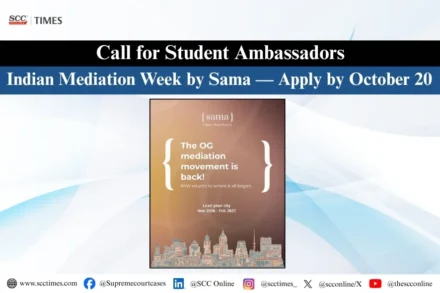
Call for Student Ambassadors: Indian Mediation Week by Sama — Apply by October 20
Indian Mediation Week (IMW) is India’s largest student-run Access to Justice campaign.

Bringing you the Best Analytical Legal News


Indian Mediation Week (IMW) is India’s largest student-run Access to Justice campaign.
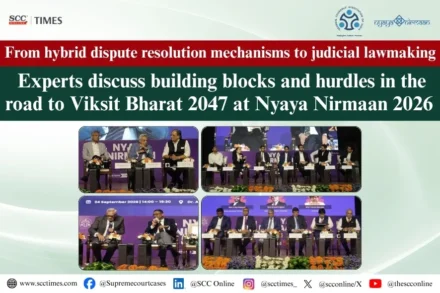
The General Counsels’ Association of India (GCAI) organised the fifth edition of Nyaya Nirmaan 2026: India @ 2047 on 24 September 2026 at the Dr. Ambedkar International Centre, New Delhi, on the theme “Building the Legal Architecture for a Connected Global Economy”.
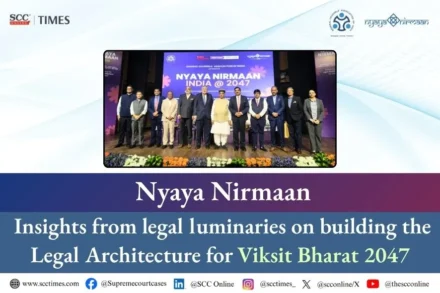
The General Counsels’ Association of India (GCAI) organised the fifth edition of Nyaya Nirmaan 2026: India @ 2047 on 24 September 2026 at the Dr. Ambedkar International Centre, New Delhi. Held under the theme “Building the Legal Architecture for a Connected Global Economy”
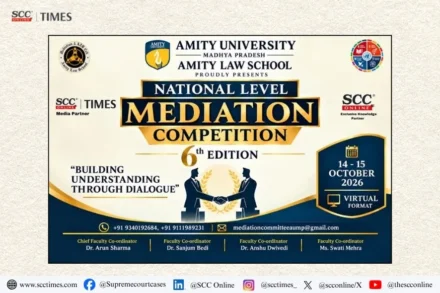
The Sixth edition marks a significant milestone in our ongoing journey, one that builds on the legacy of past successes while reaching toward new horizons. This year, we aspire to elevate the competition to new heights by offering participants a more immersive, engaging platform to test their skills and refine their mediation expertise. The event will be held in virtual mode.
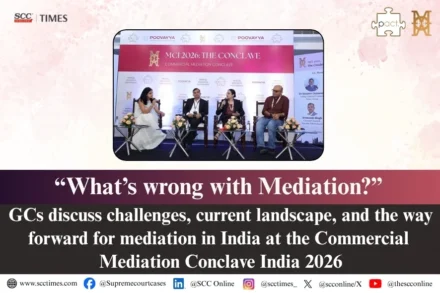
At the Commercial Mediation Conclave India 2026, curated and hosted by The PACT, a roundtable of general counsel and mediation service providers set out, candidly, why mediation has yet to become the default route for resolving high-value commercial disputes in India, and what would have to change before it did. This session was held in collaboration with Obelisk Legal.
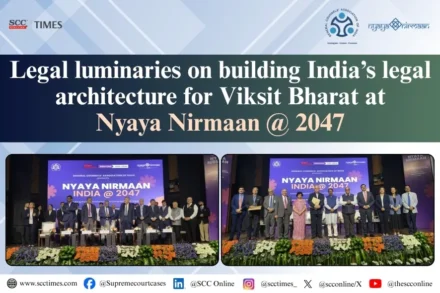
The General Counsels’ Association of India (GCAI) organised the fifth edition of Nyaya Nirmaan 2026: India @ 2047 on 24 September 2026 at the Dr. Ambedkar International Centre, New Delhi. Held under the theme “Building the Legal Architecture for a Connected Global Economy”
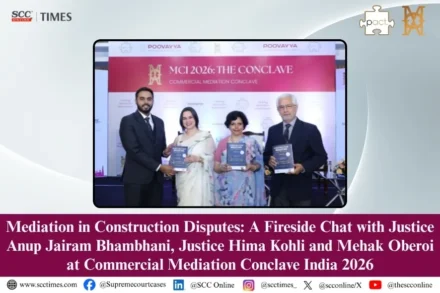
At the Commercial Mediation Conclave India 2026, curated and hosted by The PACT the launch of Mehak Oberoi’s book on construction mediation was followed by a fireside conversation in which two senior judges examined how mediators uncover the real interests behind a construction dispute, when mediation should begin, and what it takes to make a settlement hold.
Envisioned as an “umbilical cord” connecting professionals, businesses and other stakeholders across the country, IMF seeks to foster a collaborative mediation ecosystem, with the larger vision of positioning India as a global hub for mediation.
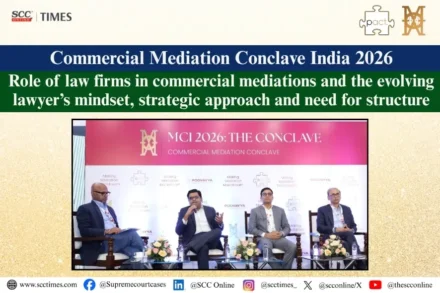
At the Commercial Mediation Conclave India 2026, experts examined the evolving role of lawyers and law firms in promoting mediation, advising clients on when to pursue settlement, developing internal awareness and training, and ensuring that mediation is conducted through a structured and professional process.
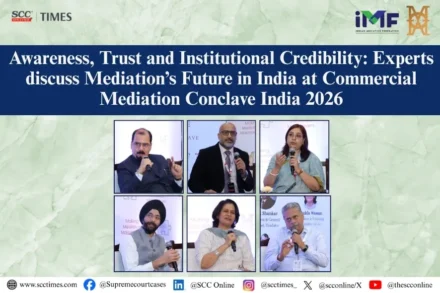
At the Commercial Mediation Conclave India 2026, panellists discussed the need to position mediation as an early and flexible dispute-resolution mechanism, with emphasis on awareness, trust, mediator quality, institutional credibility and a balanced approach among stakeholders.
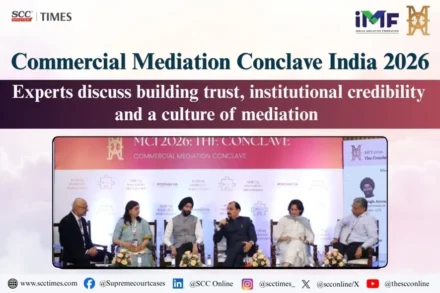
At the Commercial Mediation Conclave India 2026, practitioners and corporate legal professionals discussed how mediation can be strengthened in India through institutional mechanisms, internal dispute-resolution processes, professional mediators, greater awareness and a shift away from adversarial approaches.
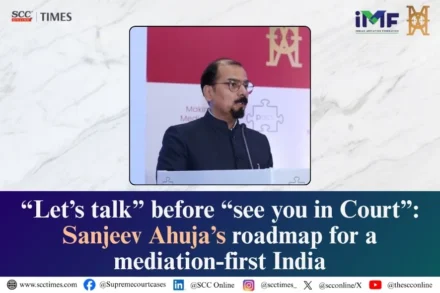
Addressing the MCI: The Conclave by PACT & Poovayya, Sanjeev Ahuja, President, Indian Mediation Federation (IMF) said that “IMF is not here to compete with the courts or the government, but to complete the picture, close the loops, fill the gaps and connect the loose threads. Our vision is simple, but ambitious: To make Mediation the First Port of Call”
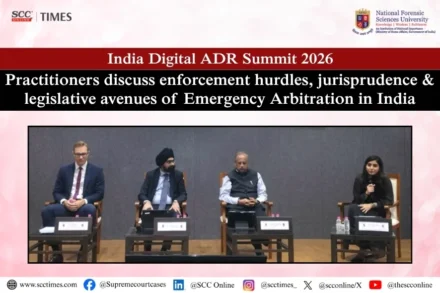
In a panel discussion held at the India Digital ADR Summit 2026, the panellists explored the need for emergency award, landmark cases, judicial activism v. legislative action, and future of emergency arbitration in India.
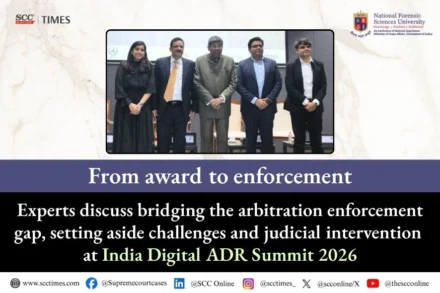
At the India Digital ADR Summit 2026, arbitration practitioners examined the challenges affecting the enforcement of arbitral awards, including the quality of awards, judicial intervention, domain expertise, institutional arbitration, patent illegality and the need for greater consistency and certainty in arbitration-related proceedings.
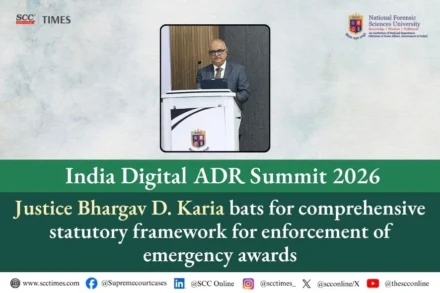
Speaking at the Summit, Justice Bhargav D. Karia examined the need of emergency arbitration, analysed India’s position on the same, and emphasised the need for a comprehensive statutory framework for enforcement of emergency awards in India regardless of seat.
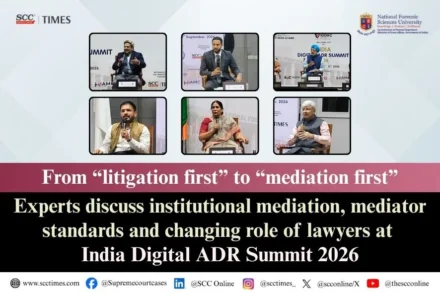
At the India Digital ADR Summit 2026, a panel of senior mediators and practitioners examined the implementation of the Mediation Act, 2023, focusing on institutional mediation, mediator accreditation, community and online mediation, and the changing role of lawyers in dispute resolution.
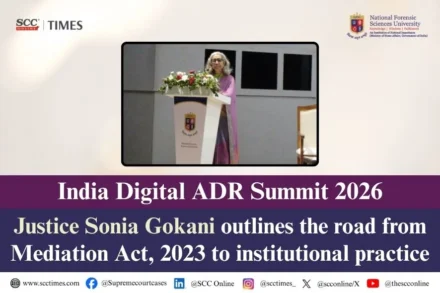
At the India Digital ADR Summit 2026, Justice Sonia Gokani discussed the evolution of mediation after the Mediation Act, 2023, highlighting institutionalisation, mediator training, accreditation, specialised panels, community mediation and the role of human governance alongside technology.
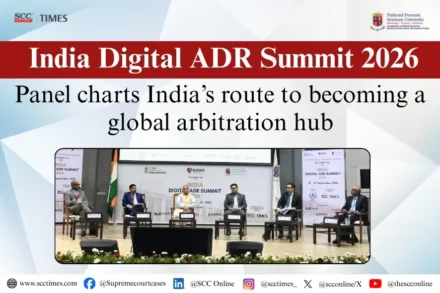
At the India Digital ADR Summit 2026, arbitration professionals examined the steps required to position India as a competitive arbitration destination, including strengthening domestic confidence, promoting institutional arbitration, improving enforcement, developing specialised expertise and ensuring cost-efficient and time-bound dispute resolution.
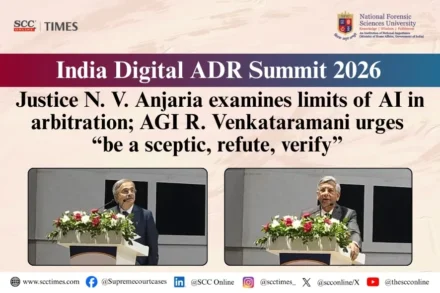
At the India Digital ADR Summit 2026, Attorney General R. Venkataramani and Justice N. V. Anjaria highlighted the potential of artificial intelligence in arbitration while stressing the need for human judgment, verification, fairness, confidentiality and control over AI-assisted decision-making.
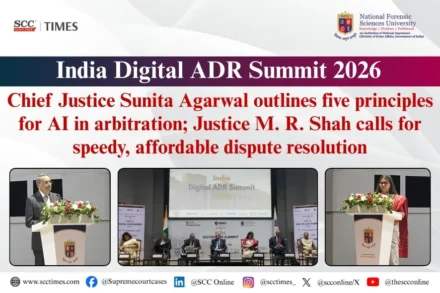
Chief Justice Sunita Agarwal highlighted the need to balance the use of artificial intelligence in arbitration with human judgment, while Justice M. R. Shah stressed that AI should not replace the human mind.