The Commercial Mediation Conclave India 2026, themed “Making Mediation Mainstream in India”, was held on 18 September 2026 at the India International Centre, New Delhi. The conclave brought together judges, mediators, lawyers, general counsel, government representatives and other stakeholders to discuss the evolving role of mediation in India.
One of the panel discussions, titled “Mediation in India and the Road Ahead”, examined the practical challenges involved in making mediation a meaningful part of commercial dispute resolution. The discussion focused on the experience of organisations that have developed internal mechanisms for resolving disputes, the role of corporate legal departments, the Mediation Act, 2023 (Mediation Act), institutional mediation, voluntary and mandatory mediation, and the need to build confidence in private mediation institutions.
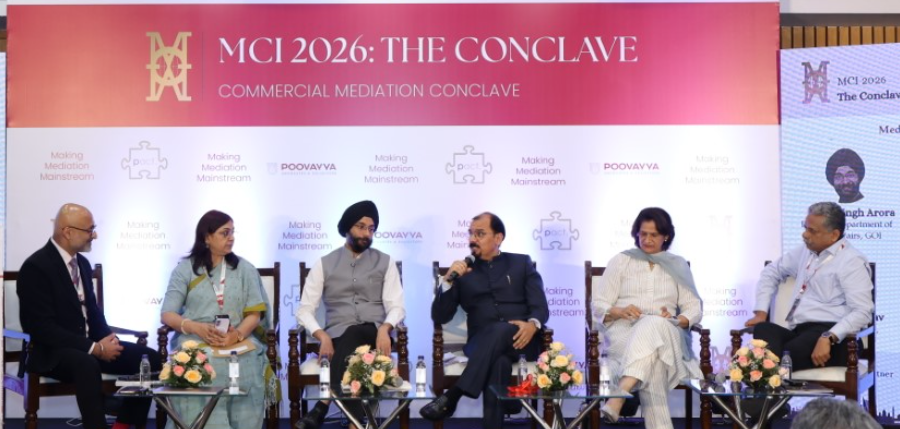
[In picture from left to right: Mr Gokul Narayan, Ms Sandhya Yadav, Mr Avnit Singh Arora, Mr Sanjeev Ahuja, Ms Shukla Wassan and Mr V R Shankar]
The discussion was moderated by Mr Gokul Narayan, Mediator and Director, SettleWiseNow, and featured Mr Avnit Singh Arora, Director, Department of Legal Affairs, Government of India, Mr V R Shankar, Senior President and Chief Law Officer, Hindalco, Ms Shukla Wassan, Mediator and Founding Member, General Counsels’ Association of India (GCAI), Ms Sandhya Yadav, General Manager, Chief Legal Services, Oil and Natural Gas Corporation Limited (ONGC) and Mr Sanjeev Ahuja, Mediator and President, Indian Mediation Federation (IMF).
ONGC’s three-decade experience with institutional conciliation
Opening the discussion, Mr Gokul Narayan asked Ms Sandhya Yadav about the organisation’s experience with board-approved conciliation mechanisms, which have been in place since 1998.
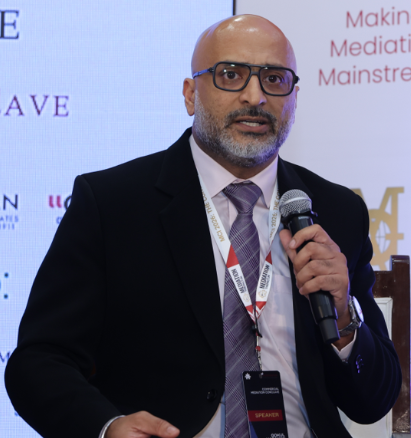
[In picture: Mr Gokul Narayan]
Ms Yadav explained that ONGC’s mediation mechanism originated from a practical concern. Following the enactment of the Arbitration and Conciliation Act, 1996 (Arbitration and Conciliation Act), the organisation faced a dispute where arbitration in Singapore could have resulted in costs disproportionate to the amount involved. This led the management to consider whether the dispute could instead be resolved through conciliation under Part III, Arbitration and Conciliation Act.
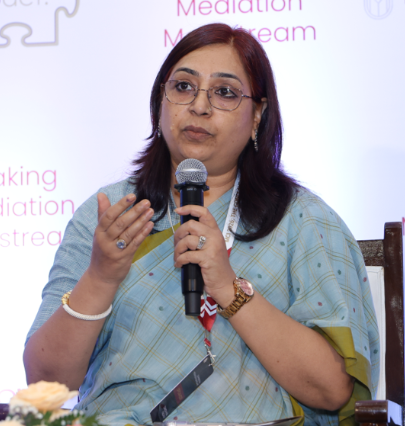
[In picture: Ms Sandhya Yadav]
The board subsequently approved a conciliation policy, which evolved over time as practical difficulties were identified and addressed. Ms Yadav said that the mechanism had gradually expanded and developed through successive board-approved circulars. According to her, the success rate of the mechanism had also increased substantially. It had initially been around 60 per cent, subsequently reached 80 per cent and over the preceding three to four years, had risen to approximately 94 per cent. She said that the success of the mechanism had encouraged vendors and contractors to participate, demonstrating that practical outcomes could help build confidence in mediation.
Direct access, independent scrutiny and defined exclusions
Ms Yadav explained that ONGC had introduced direct access to its mediation mechanism for contractors through a portal. An independent scrutiny committee examines requests before they are referred, thereby separating the referral decision from the project group that may have been involved in the underlying dispute.
The mechanism also contains defined criteria for matters that cannot be referred to mediation, including certain integrity-related issues, tender matters and fraud-related disputes. Matters where the limitation period has already expired are also excluded.
The process operates according to prescribed timelines. Ms Yadav explained that individual stages are required to be completed within specified periods and that the entire process, from a contractor’s request through the eventual payment, is intended to be completed within six months. She described this as a significant achievement for a public-sector organisation and said that ONGC’s experience demonstrated that mediation mechanisms could operate effectively even within a Public Sector Undertaking (PSU) framework.
Confidentiality, transparency and independence as pillars of mediation
Ms Yadav identified several factors that had contributed to the success of ONGC’s mechanism. These included confidentiality of the parties and proceedings, transparency of the process and the independence of the external experts acting as conciliators.
The organisation’s panel consists of experienced professionals, including retired government officers and PSU executives who possess sectoral and contractual knowledge. According to Ms Yadav, the expertise of these professionals helps parties arrive at workable solutions.
She also emphasised that the parties themselves remain responsible for deciding the solution. The role of the conciliator is to assist the parties in reaching a mutually acceptable middle path.
Collective decision-making in PSUs
Mr Narayan raised the concern that officials in government organisations and PSUs may hesitate to approve settlements because of the possibility of subsequent scrutiny of the decision.
Ms Yadav explained that ONGC had addressed this concern through collective decision-making. From the beginning of its mechanism, decisions concerning settlements were taken by the board rather than being left to an individual officer.
She stated that the board, comprising the organisation’s directors, collectively takes the decision, while an authorised individual merely signs the resulting document on behalf of the organisation. According to her, this structure ensures that the settlement is the result of an institutional decision rather than an individual officer assuming personal responsibility for the outcome.
Proactive referral before arbitration
Ms Yadav further explained that ONGC does not rely solely on contractors to initiate mediation. The organisation itself informs contractors about its board-approved policy and the possibility of resolving disputes before proceeding to arbitration.
In recent years, ONGC has also adopted a practice of informing parties who invoke arbitration about the mediation mechanism and its potential benefits. Where a party is reluctant to mediate, discussions may be undertaken to understand the concerns behind that reluctance.
She observed that parties sometimes believe that mediation would cause additional delay, but that this concern needs to be considered against the much longer timelines that may accompany arbitration and litigation.
Hindalco’s approach: changing the organisational mindset
The discussion then turned to Mr V R Shankar, who was asked about the circumstances in which the company chooses private mediation before litigation.
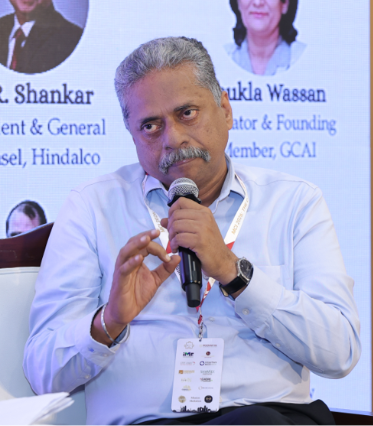
[In picture: Mr V R Shankar]
Mr Shankar said that, during his tenure in the organisation, Hindalco had not had commercial litigation before courts for approximately six years, apart from a small number of matters that had progressed part-way towards arbitration. He attributed this experience to an organisational mindset in which disputes are escalated internally at an early stage. Business functions that interact extensively with external stakeholders are encouraged to identify potential disputes early and resolve them internally rather than allowing them to develop into litigation. He explained that the organisation had consciously worked towards creating a culture in which going to court was not treated as the default response to disagreement.
“…court is not an option.”
Mr Shankar said that this approach required a significant change in organisational behaviour. He identified deeply rooted beliefs, individualistic approaches and the absence of standard operating procedures as some of the barriers that had to be addressed.
Building systems to prevent disputes from escalating
According to Mr Shankar, the first few years of his tenure involved identifying the reasons why disputes were escalating and addressing the gaps that permitted them to do so. He emphasised the importance of standard operating procedures and consistent internal processes. Different departments should work from the same documents and follow the same decision-making framework, reducing the scope for individual interpretations and unnecessary escalation. The final decision to approach a court, he explained, should itself be subject to escalation and discussion within the organisation.
Further, Mr Narayan observed that the experiences shared by the corporate panellists demonstrated the importance of process-oriented mediation: where organisations establish appropriate systems, those systems can themselves facilitate early dispute resolution.
“Mediation is process orientated. If you establish processes, if you establish systems, the system itself will lead to resolution.”
Mediation before confrontation
Ms Shukla Wassan provided an example from her earlier professional experience involving disputes between distributors.
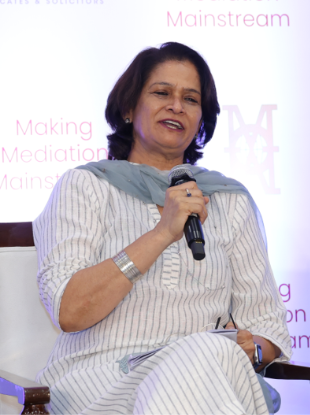
[In picture: Ms Shukla Wassan]
She explained that she and Mr Shankar had developed an informal understanding during their respective corporate careers that disputes between distributors should not immediately result in police complaints or court proceedings. Instead, the business teams were encouraged to bring the matter to them so that they could attempt to resolve it amicably. The example illustrated the importance of creating an organisational culture in which employees understand that the first response to a dispute need not be adversarial.
Mr Narayan noted that the underlying intention was to develop systems that resolve disputes without automatically resorting to adversarial processes.
Mediation Act, 2023 and institutional mediation
The discussion subsequently moved to the statutory framework governing mediation with Mr Avnit Singh Arora.
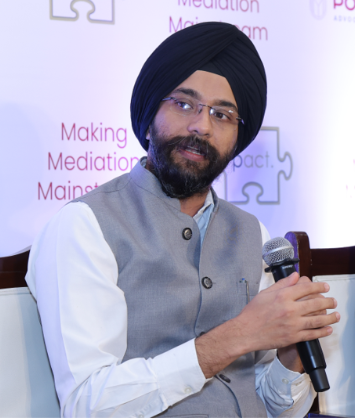
[In picture: Mr Avnit Singh Arora]
Mr Arora stated that the Act seeks to encourage institutional mediation and bring greater professionalisation to the mediation ecosystem. He noted that mediation and conciliation were not new concepts in India, referring to Section 89, Civil Procedure Code, 1908 (CPC) and the conciliation framework under the Arbitration and Conciliation Act.
However, he explained that the Mediation Act seeks to create a broader professional ecosystem by recognising different stakeholders, including the Mediation Council of India, mediation service providers and mediation institutes.
He described mediation service providers as institutions comparable in some respects to arbitral institutions, while mediation institutes are intended to contribute to mediator training.
“…the architecture of the Act, the Mediation Act of 2023 is structured in such a manner that it encourages institutional mediation.”
Mr Arora explained that the objective was not merely to recognise mediation as a process but also to create professional structures capable of taking mediation beyond large corporate disputes and extending its benefits to the grassroots.
Section 5 and pre-litigation mediation
Mr Arora then explained the role of Section 5, Mediation Act, which provides for pre-litigation mediation. According to him, Section 5, Mediation Act enables parties to consider mediation before commencing adversarial litigation, even where there was no prior written mediation agreement between them.
He distinguished this framework from Section 12A, Commercial Courts Act, 2015, under which pre-institution mediation operates as a mandatory requirement in applicable commercial disputes.
Section 5, Mediation Act, he explained, retains a voluntary character and provides parties with different avenues through which mediation can be attempted. The framework recognises several possible routes, including a registered mediator, a mediation service provider, a court or mediation centre and a mediation centre established under the legal services authorities.
The objective, according to Mr Arora, is to give parties greater choice and encourage them to consider mediation before proceeding with litigation. If mediation does not result in settlement, the parties remain free to continue with litigation.
Expanding private participation in mediation
Mr Narayan raised the question of whether private mediation institutions would be able to compete effectively with court-annexed mediation centres once private service providers are recognised under the statutory framework.
Mr Arora explained that the Act seeks to create more options for parties rather than limiting mediation to court-annexed centres. He stated that recognition by the Mediation Council of India would provide a minimum level of institutional standards, while the performance of individual institutions would ultimately be tested by the market and by parties choosing between available providers.
The objective, he said, was to encourage greater private participation in the mediation ecosystem and allow parties to choose the institution that best suited their requirements.
Mandatory and voluntary mediation
Ms Wassan observed that both approaches coexist internationally. She referred to jurisdictions where parties may be required to attend mediation while retaining the freedom to decide whether or not to settle. She explained that established mediation markets had developed credible institutions over time, allowing parties and sophisticated commercial users to develop confidence in private mediation.
She referred to Singapore as an example of an ecosystem where courts, arbitration institutions and mediation institutions operate within a coordinated framework.
According to Ms Wassan, the credibility of institutions is central to encouraging commercial parties to experiment with mediation. In India, she noted, mediation institutions are developing their capabilities, but the market still needs institutions that parties can identify with confidence.
The need to preserve the integrity of the mediation process
Ms Wassan also expressed concern that mediation could lose its effectiveness where the process becomes overly procedural or adversarial.
She observed that some court-annexed mediation settings could become highly crowded and confrontational, potentially undermining the fundamental nature of mediation as a process based on dialogue and consensual settlement. She explained that corporate legal teams often prefer to resolve disputes internally and may turn to external mediation only when internal mechanisms are unable to resolve the matter.
The discussion therefore focused not simply on increasing the number of mediations but on ensuring that the process itself retains the characteristics that make mediation useful.
Building institutional credibility through successful outcomes
Addressing the question of how private mediation institutions could gain the confidence of general counsel and corporate organisations, Ms Wassan said that credibility would ultimately have to be built through successful mediation outcomes.
She stated that institutions did not necessarily need to promote themselves aggressively. Successful mediations could generate confidence through professional networks and word of mouth.
According to her, institutions needed to establish sufficient credibility and stability for corporate users to become comfortable with private mediation. Once that foundation was established, private mediation could expand further.
Training mediators without overcomplicating the system
Mr Shankar agreed on the importance of trust and professional capability. He observed that confidence in mediation begins with the people conducting the process.
He emphasised the need to train more mediators and create greater awareness about mediation. At the same time, he cautioned against creating an excessively complicated accreditation structure that could make the process inaccessible. In his view, training, advocacy and awareness should work together to create a wider ecosystem of capable mediators rather than placing excessive emphasis on formal labels or bureaucratic requirements.
Closing Remarks
The discussion demonstrated that making mediation mainstream requires more than statutory recognition. The experiences shared by the organisations like ONGC and Hindalco highlighted the importance of institutional processes, early identification of disputes, collective decision-making and an organisational culture that does not treat litigation as the automatic response to disagreement.
The discussion on the Mediation Act further highlighted the importance of developing a professional ecosystem involving mediators, mediation service providers, training institutions and the Mediation Council of India. At the same time, the panellists stressed that statutory recognition would need to be accompanied by credible institutions, trained professionals and successful outcomes capable of building confidence among corporate users.