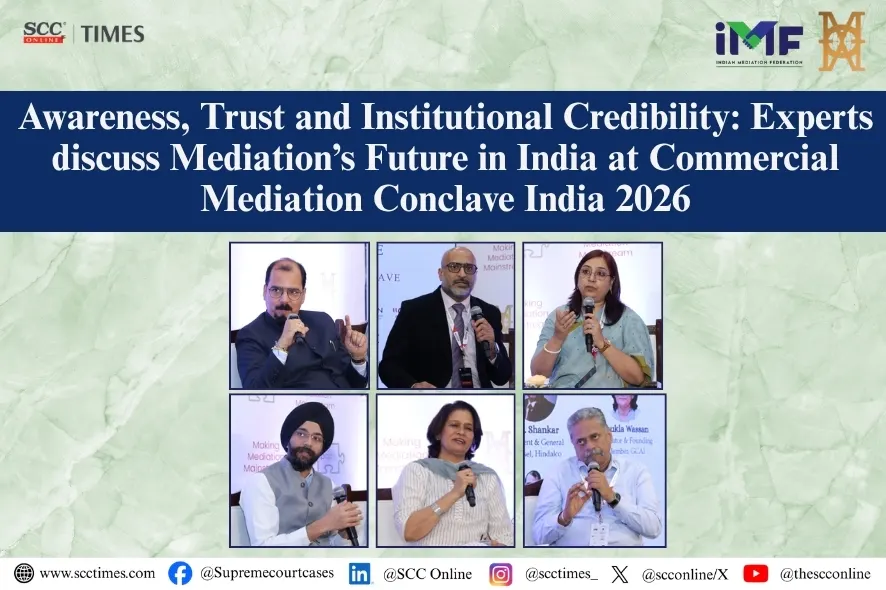
The panel discussion on “Mediation in India and The Road Ahead” at the Commercial Mediation Conclave India 2026 examined the role of mediation in India’s evolving dispute-resolution ecosystem. The session, held at the India International Centre, New Delhi, brought together representatives from government, industry and the mediation community to discuss how mediation could move beyond being viewed as a secondary step after litigation had already begun.
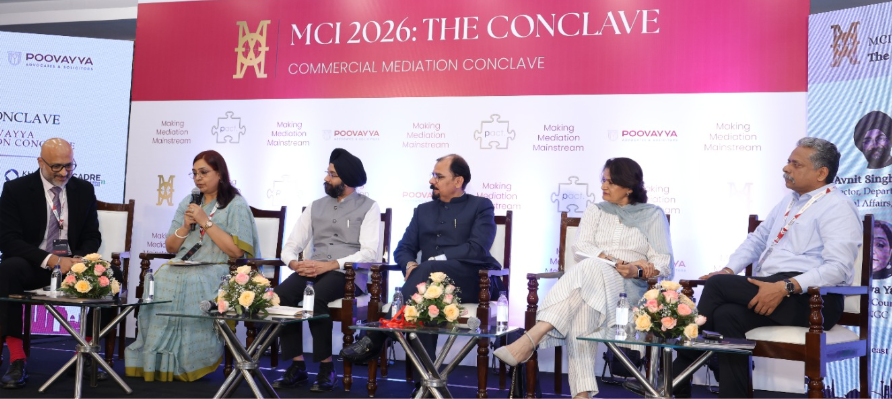
[In picture from left to right: Mr Gokul Narayan, Ms Sandhya Yadav, Mr Avnit Singh Arora, Mr Sanjeev Ahuja, Ms Shukla Wassan and Mr V R Shankar]
The session was moderated by Mr Gokul Narayan, Mediator and Director, SettleWiseNow, and featured Mr Avnit Singh Arora, Director, Department of Legal Affairs, Government of India, Mr V R Shankar, Senior President and Chief Law Officer, Hindalco, Ms Shukla Wassan, Mediator and Founding Member, General Counsels’ Association of India (GCAI), Ms Sandhya Yadav, General Manager, Chief Legal Services, Oil and Natural Gas Corporation Limited (ONGC) and Mr Sanjeev Ahuja, Mediator and President, Indian Mediation Federation (IMF).
Mediation should be considered from day one
Responding to the perception among some lawyers that mediation is merely another attempt at resolving a dispute after other processes have failed, Mr Sanjeev Ahuja argued that the starting point itself needed to change.
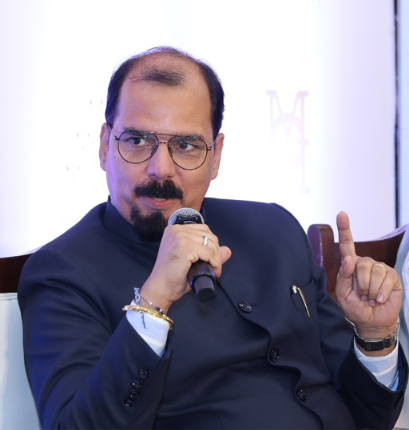
[In picture: Mr Sanjeev Ahuja]
He said that disputes should not immediately be characterised as failures before the parties have attempted meaningful communication and dialogue. According to him, mediation provides parties with an opportunity to understand each other’s perspectives before positions become entrenched.
“Before we term anything as a failure, why don’t we make people aware that there is something called a dialogue of communication.”
Mr Ahuja explained that parties may perceive the same situation differently and that mediation creates an opportunity to understand those differing perspectives. He linked this directly to the need for greater awareness about mediation. He questioned why mediation should be treated as a second option available only after a dispute has escalated.
“What if the party itself is aware that mediation should be the first option?”
He then identified what he regarded as the appropriate point for mediation to enter the dispute-resolution process:
“Now the best use of mediation is day one. And the next best use of mediation is every other day.”
He added that even after a matter had reached court, parties could return to mediation if they became stuck in the litigation process. For him, the flexibility of mediation was one of its defining features.
“That’s the essence of mediation. Flexibility. Talk it out.”
Mediation as both an art and a science
Mr Ahuja further observed that many disputes may not ultimately be about a purely legal issue. According to him, parties could often be seeking a solution that allowed them to move forward rather than simply obtain a judicial determination. He described mediation as both an art and a science, emphasising the importance of understanding what the parties actually wanted from the process.
“..if you can apply it at the right time and understand what parties want, I think the success rate will be much higher.”
He also identified a continuing challenge between trust and confidence in Indian mediation. In his view, Indian mediation institutions and practitioners would have to demonstrate their ability to deliver effective outcomes, while users would simultaneously need to develop confidence in using them. Mr Ahuja described this as a continuing “tug of war” and suggested that building credibility through actual performance would be central to the future of mediation in India.
Awareness cannot have a one-size-fits-all definition
The discussion then returned to the question of changing the mindset surrounding mediation. Mr Ahuja said that awareness was central to this process but cautioned against treating awareness as a simple, uniform concept. He observed that different stakeholders, including business founders, lawyers, law firms, mediators and general counsels, would understand mediation differently depending on their role and experience.
“…different people, different categories, different strata of society would need to understand awareness differently.”
He further argued that mediation itself could not be reduced to a single definition applicable to every situation. According to him, the manner in which mediation is understood should correspond to the needs and circumstances of the parties.
“One single sentence, one single definition, I think we are doing a disservice to the concept.”
He concluded that the focus should be on creating meaningful awareness rather than blaming mediation when the process had not been properly understood or utilised.
Creating the right atmosphere for mediation
The moderator, Mr Gokul Narayan, subsequently asked the panellists to identify one change they would make to the way mediation currently operates in India.
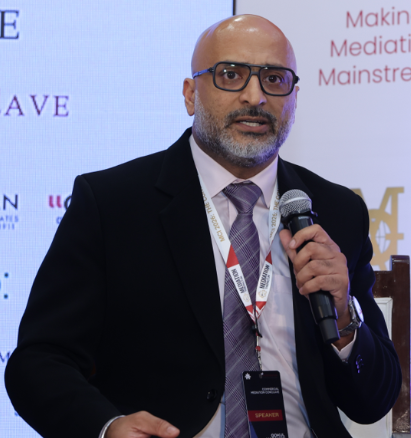
[In picture: Mr Gokul Narayan]
Ms Sandhya Yadav said that while she did not see an immediate need for a fundamental change in the way her organisation handled mediation, the atmosphere in which negotiations took place could be improved. She said that mediation required a setting in which parties could communicate their experiences and concerns with the mediator and understand the merits and limitations of their respective positions.
“There has to be some quiet place where the parties can share their experience or issues with the mediators properly.”
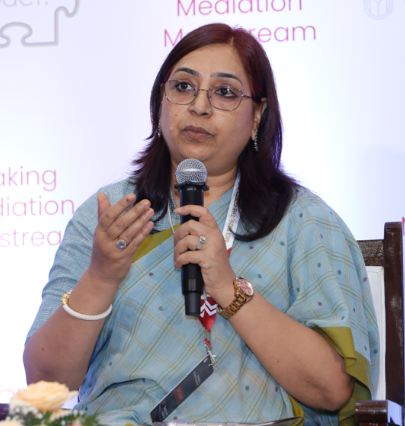
[In picture: Ms Sandhya Yadav]
She emphasised that the environment surrounding negotiations could influence whether parties were able to gradually move towards a mutually acceptable solution.
Quality of mediators and trust are critical
Mr Avnit Singh Arora identified the quality of mediators as a key factor in strengthening mediation. He observed that the effectiveness of mediation was closely connected with the mediator’s ability to build trust among the parties and within the mediation process itself.
“…the mediation is as good as the mediator.”
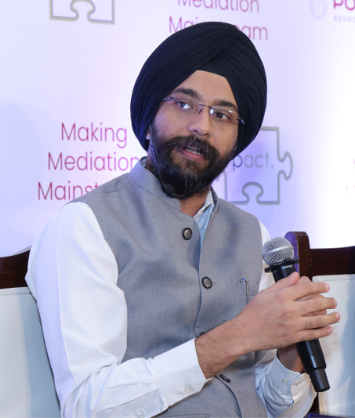
[In picture: Mr Avnit Singh Arora]
According to Mr Arora, improving the quality of mediators and strengthening the trust they are able to establish between parties could make a significant difference to the mediation ecosystem. He also highlighted the importance of a broader mindset change towards mediation.
Finding a balanced approach
Mr Ahuja identified “balance” as the principle that should guide the development of mediation. He said that the mediation ecosystem involved several stakeholders, including courts, law firms, parties and other participants, and that an approach favouring one stakeholder at the expense of another could create further imbalance.
“Let’s try and have a balanced approach because everyone has a view.”
He emphasised the importance of taking different stakeholders along rather than positioning mediation against courts, lawyers or parties. For him, a balanced approach was necessary to ensure that the development of mediation did not itself create another source of conflict.
Competition and accountability can strengthen institutional mediation
Ms Shukla Wassan spoke about the functioning of court-annexed mediation and the importance of creating stronger institutional mechanisms. She observed that merely transferring matters to a court-annexed mediation centre may not be sufficient to ensure the best outcomes.
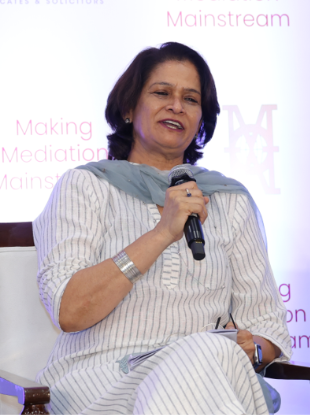
[In picture: Ms Shukla Wassan]
In her view, greater competition among institutions, together with appropriate accountability and recognition of accredited institutions, could strengthen the mediation ecosystem. She suggested that recognition by institutions such as the Mediation Council of India could help build trust among users.
When asked by the moderator to choose between accountability and competition as the more important change, Ms Wassan chose competition.
Trust must grow through experience
Mr V R Shankar emphasised the importance of developing trust in mediation. He observed that the mediation ecosystem had an opportunity to learn from the experience of other dispute-resolution mechanisms and develop stronger processes from the outset.
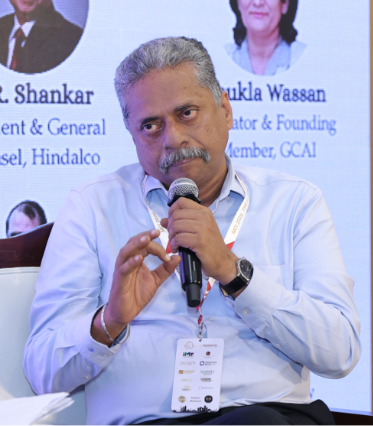
[In picture: Mr V R Shankar]
He also supported the importance of advocacy and greater engagement with the mediation process.
“We have to start trusting and then the trust will grow as well.”
Closing remarks
The discussion on “Mediation in India and The Road Ahead” highlighted that the growth of mediation would depend not only on legislative recognition but also on how early, effectively and confidently parties use the process.
The panellists identified several interconnected priorities: creating awareness among different categories of users, improving the quality and credibility of mediators, providing an appropriate environment for negotiations, strengthening institutional mechanisms, encouraging competition among mediation service providers and building trust through demonstrated outcomes
The discussion concluded with a broader recognition that mediation’s flexibility, dialogue-based approach and ability to accommodate the perspectives of different stakeholders could form an important part of India’s evolving dispute-resolution framework.