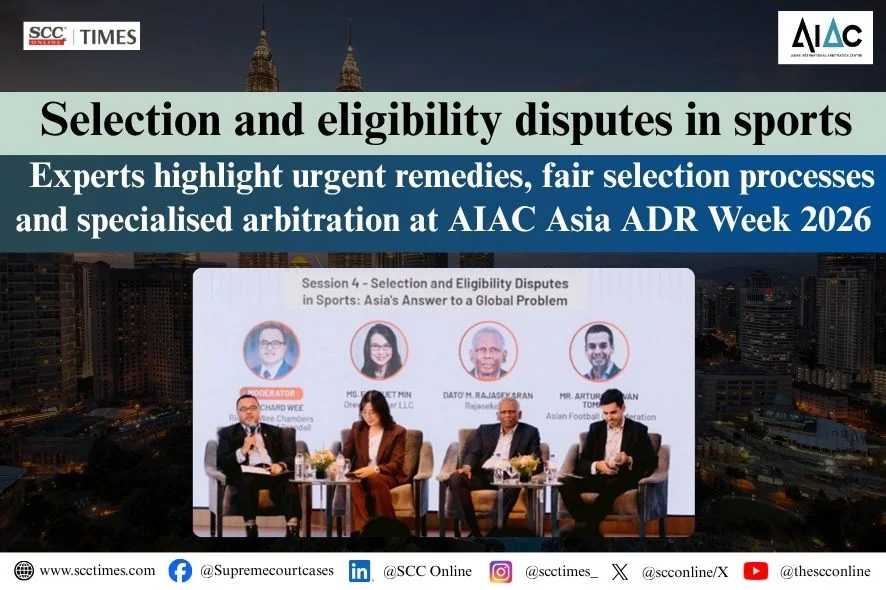
The session, titled “Selection and Eligibility Disputes in Sports: Asia’s Answer to a Global Problem” at the Asian International Arbitration Centre (AIAC) Asia ADR Week 2026, held at Kuala Lumpur, explored how sports arbitration can address disputes involving athletes, sports federations and governing bodies. The discussion also considered transparent selection criteria, specialised arbitrators, internal dispute resolution mechanisms and the commercial consequences of selection decisions.
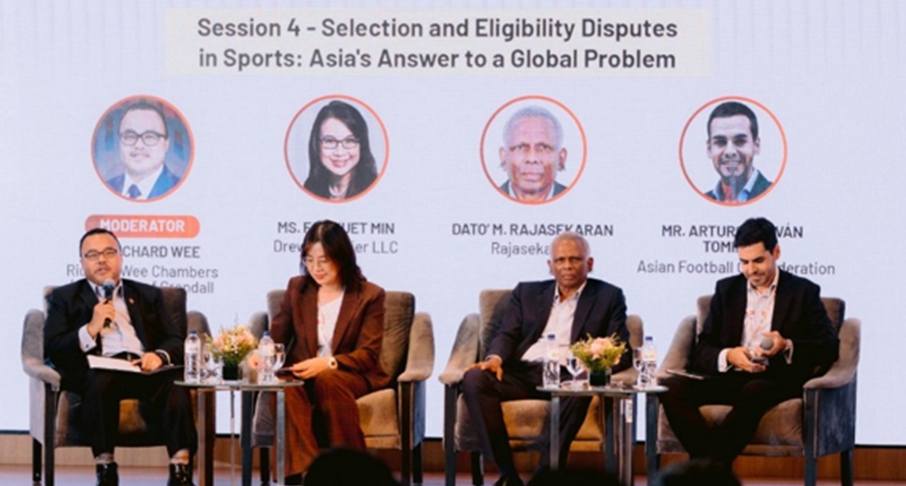
[In picture from left to right: Mr. Richard Wee, Ms. Foo Yuet Min, Dato’ M. Rajasekaran and Mr. Arturo Galván Tomillo]
Mr. Richard Wee, Richard Wee Chambers (a member of Grandall Law Firm), moderated the session. The panellists were Dato’ M. Rajasekaran, a practising lawyer and sports arbitrator, Ms. Foo Yuet Min, Managing Director, Dispute Resolution, Drew & Napier LLC, and Mr. Arturo Galván Tomillo, Head of Sports Legal, Disciplinary & Governance, Asian Football Confederation (AFC).
Selection and eligibility disputes: Understanding the different categories
Opening the discussion, Dato’ M. Rajasekaran explained that selection disputes must first be categorised according to their underlying causes so that appropriate remedies can be identified.
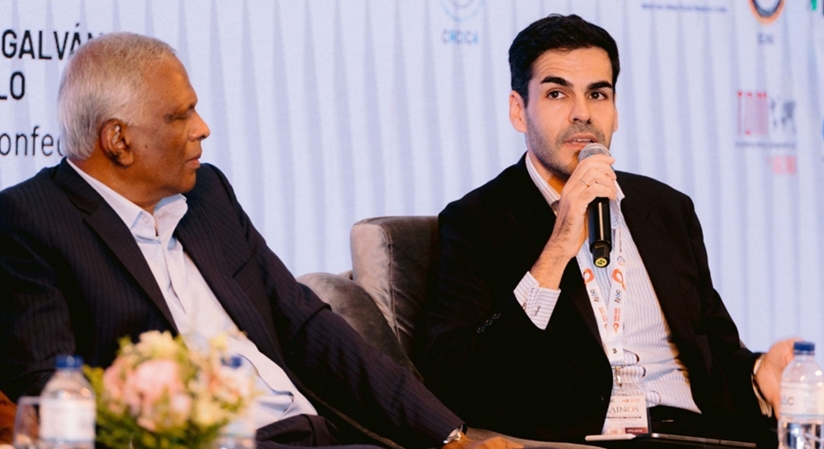
[In picture from left to right: Dato’ M. Rajasekaran and Mr. Arturo Galván Tomillo]
He broadly divided these disputes into three categories.
-
The first category concerns objective qualification failures, including errors in calculating ranking points, failure to satisfy timing criteria and disputes involving numerical quotas. A dispute may arise where an athlete satisfies published qualifying standards but a federation applies different, unpublished standards.
-
The second category involves misapplication of subjective criteria. Selection decisions may depend on factors such as an athlete’s current form or tactical suitability. Disputes can arise when selectors apply inconsistent criteria or exercise their discretion improperly.
-
The third category concerns eligibility disputes and status barriers, which may involve suspensions, disciplinary issues, nationality, residency, age, gender eligibility, transfer rules and classification requirements in Paralympic sports.
Referring to nationality-related disputes, Dato’ Rajasekaran mentioned the Court of Arbitration for Sport’s (CAS) award dated 6 March 2026 concerning the Football Association of Malaysia’s appeal against the Fédération Internationale de Football Association (FIFA) involving seven footballers. He emphasised that selection and eligibility disputes do not arise in a legal vacuum. An athlete’s rights may derive from the constitution of the relevant sports body, selection guidelines, policies, contractual arrangements, competition regulations and the principles of natural justice.
Integrity of selection processes and the need for clear regulations
Mr. Arturo Galván Tomillo agreed on the need to distinguish between subjective selection considerations and objective eligibility requirements. Selection may depend on performance, tactical considerations and fitness, whereas eligibility is generally governed by the applicable competition regulations. In football, eligibility requirements may concern nationality, age, player registration, registration deadlines and gender eligibility. Mr. Galván Tomillo stressed that governing bodies must establish clear and publicly accessible rules so that athletes, clubs and member associations understand the requirements for participation.
He also discussed provisions under FIFA’s Regulations on the Status and Transfer of Players concerning a player’s ability to terminate a contract with just cause. He explained that a player who participates in fewer than 10 per cent of matches during a season may seek to rely on this ground, but the relevant circumstances must be established. A player who fails to prove just cause may face sanctions. Mr. Galván Tomillo further referred to situations in which clubs withhold players’ passports, exclude them from training, fail to provide agreed accommodation or do not register them to compete. He explained that such circumstances had been considered by FIFA and CAS in relation to termination for just cause, and that FIFA had included these grounds in regulations scheduled to enter into force on 1 January 2027.
The discussion also examined the boundary between legitimate sporting discretion and potentially unfair treatment. Referring to examples involving players excluded from team training, Mr. Galván Tomillo observed that such disputes depend on the circumstances and evidence, including whether exclusion from team training prevents a player from properly performing their duties.
Commercial consequences of selection and eligibility decisions
Ms. Foo Yuet Min highlighted that selection disputes may have consequences extending beyond participation in competitions. Athletes may face financial difficulties if their selection affects sponsorship agreements, government funding or future commercial opportunities. Drawing on her experience in sports law and commercial rights, she observed that sponsorship arrangements do not always expressly address the consequences of an athlete being dropped from a competition or championship. Even where sponsorship is not terminated immediately, an athlete may face uncertainty over renewal.
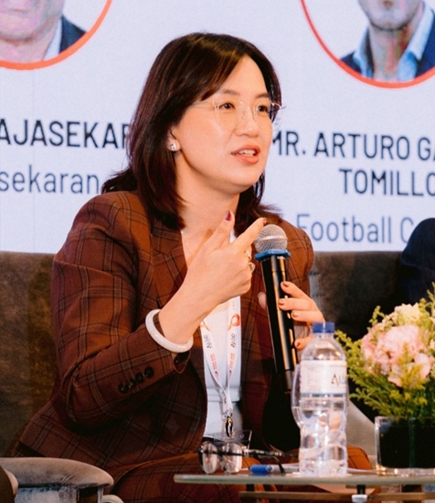
[In picture: Ms. Foo Yuet Min]
Ms. Foo referred to an example commonly associated with the EJ Obiena—Philippine Athletics Track and Field Association (PATAFA) dispute, involving a Filipino athlete who, according to the discussion, did not participate in the 2022 Southeast Asian (SEA) Games following allegations of the misuse of funding. The relevant sports federation subsequently withdrew the athlete’s government funding, raising the possibility that he would have to bear the costs of his own participation. Ms. Foo stated that the matter was eventually resolved through mediation. She also referred to the case of a British taekwondo athlete, Aaron Cook, who was not selected to represent Great Britain at the London 2012 Olympic Games despite being ranked world number one. In addition, she discussed the case of an American runner, Nick Symmonds, who was excluded from the 2015 World Athletics Championships after refusing to comply with kit requirements that conflicted with his sponsorship arrangement with a sportswear company. Ms. Foo summed up the commercial implications of such decisions, stating:
“…so there is an impact, there is a commercial impact to this selection issues that players face.”
Further, Mr. Wee added that morality clauses may also form part of arrangements involving athletes and public funding. He observed that athletes may not always appreciate that a breach of such clauses could lead to arbitration.
Natural justice and procedural fairness in selection decisions
Ms. Foo referred to the case1 of a Singapore national sprinter, who was suspended for 18 months following misconduct connected with a training stint before the 1989 SEA Games. He challenged the suspension, and the matter reached the Court of Appeal. As discussed during the session, the Court of Appeal found that the disciplinary proceedings fell short of the requirements of natural justice. The athlete had apparently not been informed of the case he had to meet, and basic fairness had not been observed. The suspension was declared invalid, although the decision came four years after the SEA Games. The case illustrated the limitations of a remedy delivered long after the sporting opportunity has passed.
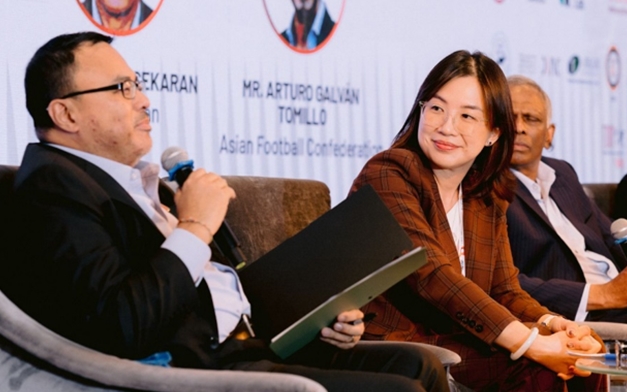
[In picture from left to right: Mr. Richard Wee and Ms. Foo Yuet Min]
Ms. Foo also discussed a case2 involving a triathlete. After competing in a second trial and finishing first, he was not selected for the 2007 SEA Games. The matter proceeded to a tribunal and subsequently to the High Court of Singapore, which granted leave for judicial review. The dispute was settled shortly after that decision, and no final judicial-review outcome was available from the account shared during the session. These cases prompted discussion about whether the selection process itself could be reviewed by courts, particularly where sports associations perform functions involving public funds.
Mr. Wee raised the possibility of judicial review of selection processes, rather than limiting challenges to claims concerning wrongful selection. The discussion underscored the distinction between reviewing the fairness of a decision-making process and replacing the sporting judgment of selectors with a court’s or tribunal’s own assessment.
Why sports arbitration requires specialised arbitrators
The panellists stressed that sports disputes differ from ordinary commercial arbitration because the consequences of delay can be irreversible. An athlete may receive a favourable ruling months or years after a competition has concluded, by which time the opportunity to participate may have disappeared.
Dato’ Rajasekaran illustrated the problem with an example in which a national federation announces its final squad 72 hours before a competition. An athlete challenges the selection criteria, calculation of points or disciplinary process, but the final ruling arrives six months later in the athlete’s favour. Although the athlete may technically obtain justice, the competition has already ended. He captured this distinction by observing:
“Now we may say there may be technically justice, but practically there’s none.”
Dato’ Rajasekaran identified three considerations relevant to sports arbitrators: the margin of appreciation afforded to sporting bodies, an understanding of the mechanics of the sport and proportionality. An arbitrator must understand the limits of reviewing selection decisions and avoid substituting personal judgment for that of a coach or selector. At the same time, the arbitrator must be able to identify unfairness, inconsistency, procedural defects and irrationality. Sports-specific knowledge is equally important. Arbitrators may need to understand tournament structures, ranking systems and the urgency of a dispute. Dato’ Rajasekaran emphasised:
“Specialist experience and expertise is not merely desirable. I would go further to say it is often essential. Arbitrators do not or should not become selectors.”
Mr. Galván Tomillo agreed that arbitrators should possess experience in sports law and familiarity with the relevant sport. He noted that eligibility and selection disputes may require particularly specific knowledge because the rules governing football are not necessarily the same as those governing basketball, badminton or other sports.
The discussion also highlighted the importance of emergency procedures, particularly where an athlete’s participation in an imminent competition is at stake. The panellists emphasised that an effective system must be capable of granting timely relief without undermining the integrity of sporting competitions.
Legal remedies: Internal processes, arbitration and courts
Addressing the remedies available to aggrieved athletes, Dato’ Rajasekaran outlined three levels of dispute resolution: internal procedures within sports bodies, arbitration and court proceedings. Internal mechanisms, such as appeals panels, selection review committees and disciplinary boards, may offer advantages including access to sports-specific expertise, speed, lower costs and preservation of relationships. He referred to Section 23 of Malaysia’s Sports Development Act, 1997 in discussing the requirement to exhaust domestic remedies.
However, internal processes may raise concerns about transparency and independence. Athletes may question whether the organisation whose decision they are challenging can provide an impartial review. Arbitration offers an alternative through procedural flexibility, confidentiality, enforceability and access to a neutral forum. Dato’ Rajasekaran explained that neutrality is particularly important when an athlete challenges a decision made by the organisation responsible for administering the sport. Courts also retain an important role in matters involving judicial review, employment contracts, constitutional rights and natural justice. He stressed that arbitration and court proceedings should not be viewed as mutually exclusive, but as complementary parts of a broader system of remedies. Summarising this approach, Dato’ Rajasekaran stated:
“…in the modern sports dispute system, there’s no single remedy. It is in an ecosystem of remedies operating at different levels.”
Ms. Foo observed that many selection and eligibility disputes in Singapore are resolved through mediation rather than lengthy court proceedings. She cautioned, however, that although remedies exist, athletes may be reluctant to pursue them because of the possible effects on government funding, sponsorship and their sporting careers. She also recounted the experience of a young sailor who began challenging decisions during competitions as a child. In sailing, disputes over deducted points may have to be raised within a very short period after the competition. The example illustrated how certain sports require immediate, accessible procedures through which athletes can challenge decisions.
Mr. Galván Tomillo added that sports governing bodies may seek to decide eligibility disputes before the relevant competition. This is important not only for the athlete, who may otherwise be prevented from participating, but also for the team, which could face consequences if an ineligible player competes. He also highlighted provisional measures as a potentially useful remedy. Athletes and clubs may seek interim relief, including the suspension of a sanction pending a final decision or permission for an athlete to participate in a competition while the dispute remains unresolved.
Criminal conduct, safeguarding and the limits of sports arbitration
During the question-and-answer session, an attendee asked whether disputes involving alleged criminal conduct, such as match-fixing or physical altercations between players, could be resolved through mediation or arbitration.
Dato’ Rajasekaran observed that matters involving criminal elements were generally approached as criminal cases, while also raising concerns about safeguarding in sports. He referred to situations involving the physical or sexual harassment of athletes and the role of safeguarding officers in addressing such incidents.
Ms. Foo explained that Singapore similarly treats sports betting under its general gambling laws rather than through a separate sports-specific legal framework, while safeguarding is addressed through relevant mechanisms.
Mr. Galván Tomillo distinguished between the jurisdiction of national courts to prosecute criminal offences and the disciplinary jurisdiction of sports governing bodies, such as FIFA and the AFC. He explained that FIFA and the AFC may initiate disciplinary proceedings in cases involving match-fixing, doping or corruption where the conduct falls within the scope of their respective disciplinary codes and has a sufficient connection to their competitions or regulatory authority. The sanctions imposed may include suspensions or bans from participating in football-related activities. In certain circumstances, a request may also be made for FIFA to extend a sanction imposed at the national or confederation level so that it has worldwide effect.
Political affiliation and participation in international sporting events
Another question concerned whether a foreign athlete could challenge exclusion from a competition on the basis of political affiliation.
Mr. Wee referred to Malaysia’s experience of losing the opportunity to host a world swimming competition after a dispute arose concerning the participation of an Israeli athlete who had been denied a visa.
Dato’ Rajasekaran also recalled Malaysia’s bid to host the World Team Squash Championship and the complications arising from the inability of Israeli athletes to obtain visas. He explained that international sports operate through a hierarchical structure connecting world governing bodies, regional confederations and national associations. Hosting arrangements may carry obligations concerning the participation of eligible athletes from different countries.
Closing Remarks
The session demonstrated that selection and eligibility disputes involve far more than determining whether an athlete meets the requirements to compete. They may raise questions of procedural fairness, sporting discretion, regulatory clarity, commercial rights and the independence of review mechanisms.
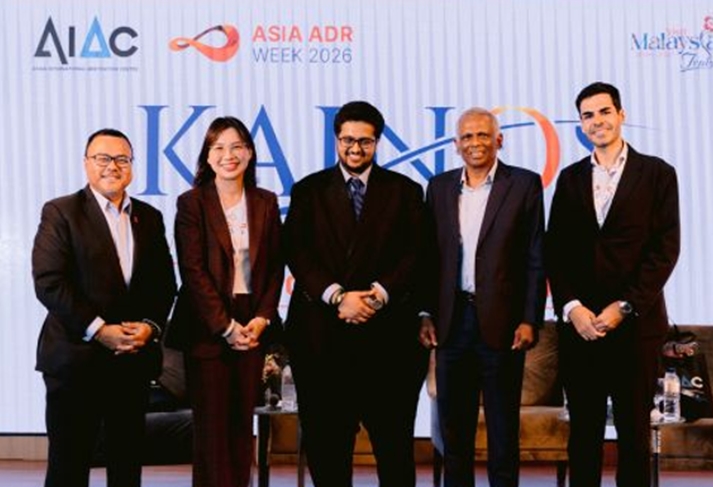
[In picture from left to right: Mr. Richard Wee, Ms. Foo Yuet Min, Ybhg. Datuk Danesh Chandran, Dato’ M. Rajasekaran and Mr. Arturo Galván Tomillo]
The panellists emphasised that effective remedies must account for the time-sensitive nature of sports. Internal review, mediation, arbitration, provisional measures and court proceedings each have a role to play, depending on the nature of the dispute. Specialised arbitrators, transparent rules and timely decisions remain essential to protecting athletes’ opportunities while respecting the legitimate authority of sports governing bodies.
SCC Times is the official media partner for AIAC Asia ADR Week 2026. Read more about AIAC Asia ADR Week 2026:
1. Singapore Amateur Athletics Association v. Haron bin Mundir [1993] SGCA 79
2. Ng Gino Ernest v. Triathlon Association of Singapore [2007] SGHC 183