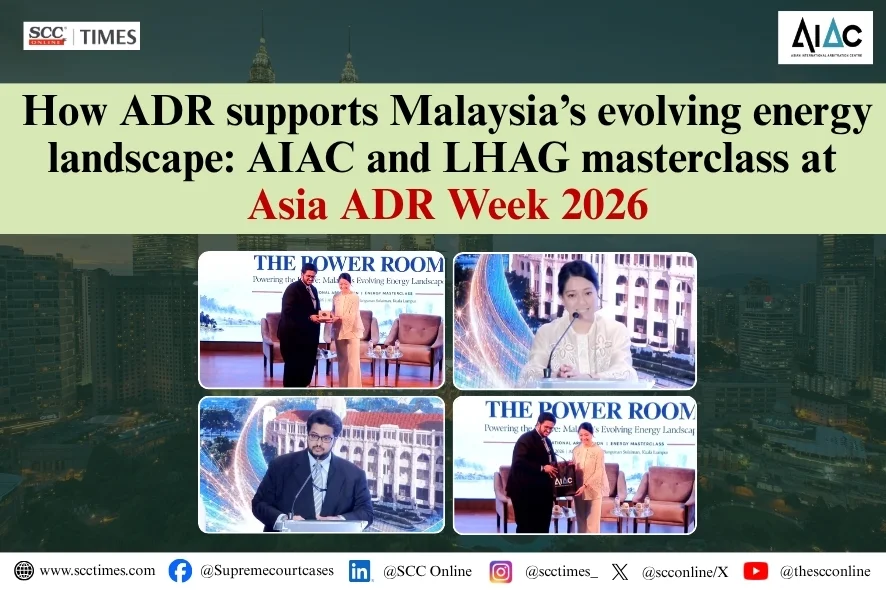
At Asia ADR Week 2026, the Asian International Arbitration Centre (AIAC) and Lee Hishammuddin Allen & Gledhill (LHAG) opened the Day 2 programme with “Malaysia’s Evolving Energy Landscape” on 13 October 2026 at the AIAC Auditorium in Kuala Lumpur, Malaysia. The programme formed part of the LHAG International Arbitration and Energy Masterclass, jointly organised by AIAC and LHAG during the eighth edition of Asia ADR Week, themed “Kainos: Where Vision Transforms Future”.
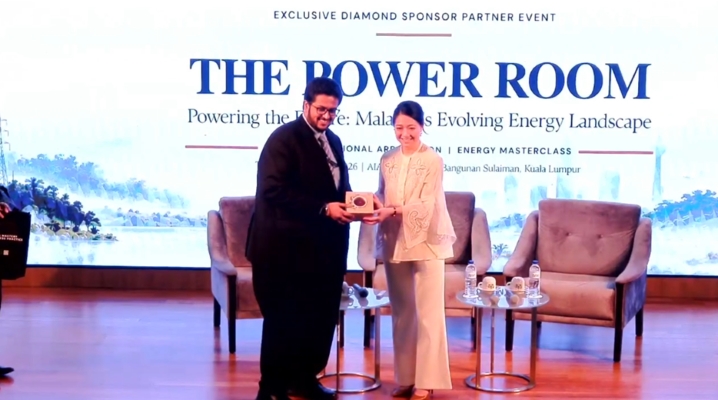
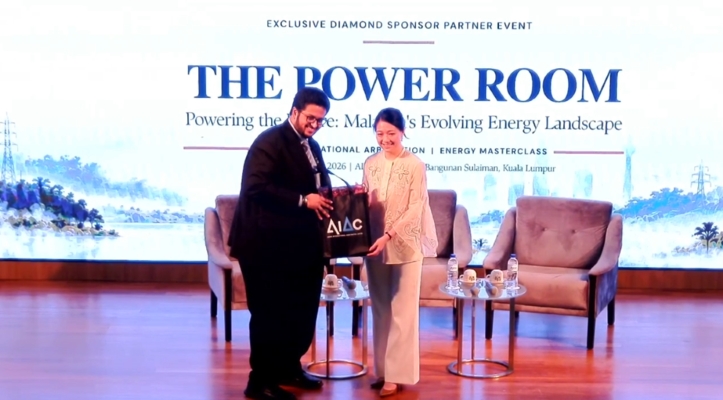
[In picture left to right: Danesh Chandran and Crystal Wong Wai Chin]
The session began with welcoming remarks by Danesh Chandran, Chief Executive Officer, AIAC, followed by opening remarks by Crystal Wong Wai Chin, Partner, LHAG. Both speakers addressed the evolving role of alternative dispute resolution (ADR), the importance of institutional collaboration and the need for the legal profession to adapt to changes in Malaysia’s energy sector.
Danesh Chandran: ADR as economic infrastructure and a driver of commercial confidence
Welcoming participants to the second day of Asia ADR Week, Danesh Chandran described Kainos as representing renewal, transformation and a new quality of progress. Building on the previous year’s theme, Kairos, he said the focus this year was on translating opportunities into meaningful action. For AIAC, this meant challenging conventional approaches, embracing new possibilities and ensuring that institutional development produced a lasting legacy.
He emphasised that ADR should extend beyond established legal communities and major commercial centres. Through its Road to Kainos initiative, AIAC had taken ADR engagements to different regions across Malaysia. He explained that the initiative reflected a deliberate effort to bring dispute resolution closer to the communities and industries that it serves, rather than expecting stakeholders to approach the institution themselves.
He added that access to ADR should extend to businesses, industries and emerging practitioners across the country and region.
Danesh Chandran also called for a broader understanding of the role of dispute resolution in economic development. Rather than viewing it solely as a process triggered when commercial relationships break down, he said ADR should be recognised as part of a country’s economic infrastructure. An effective dispute resolution framework strengthens investor confidence, supports commercial certainty, facilitates cross-border trade and helps businesses manage risk.
This role becomes particularly significant as Asia experiences growth in infrastructure development, energy transition, international investment and increasingly complex commercial relationships. AIAC, he said, sought to contribute not only to resolving disputes but also to their prevention and effective management.
Institutional development and the next generation of practitioners
Turning to AIAC’s institutional direction, Danesh Chandran referred to the centre’s growing international recognition, including coverage of its institutional reforms and the AIAC Suite of Rules 2026. He also referred to the 2026 International Dispute Resolution Survey conducted by the Singapore International Dispute Resolution Academy at Singapore Management University, which, according to his remarks, placed AIAC jointly fifth among preferred arbitral institutions alongside the Dubai International Arbitration Centre.
He cautioned that recognition should not become an end in itself. Instead, it should reinforce the institution’s responsibility to maintain the confidence of its users through service quality, independence and meaningful contributions to the dispute resolution community.
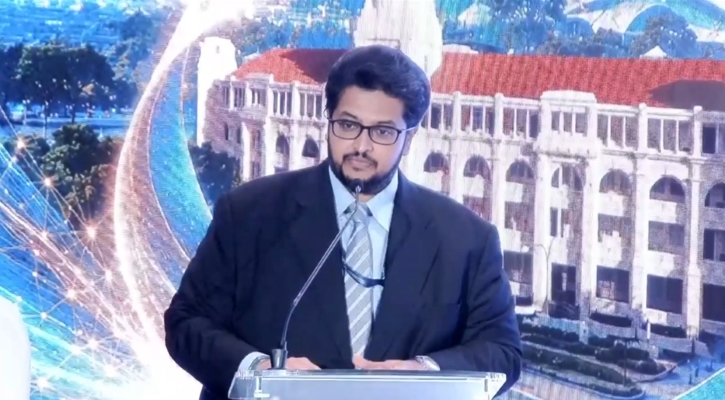
He also highlighted the importance of developing younger practitioners. Referring to the relaunch of the AIAC Young Practitioners Group, of which Crystal Wong Wai Chin is a co-chair, he said institutional progress depended not merely on rules, facilities or reforms, but also on people. Younger practitioners should be given opportunities to contribute ideas, assume responsibility and progressively shape the profession. He said:
“The future of ADR cannot be built solely through new rules, modern facilities or institutional reforms. It must be built through people.”
Looking ahead, Danesh Chandran described the next phase of AIAC’s development as an opportunity to define the institution’s ambitions for the coming decades. Its objective, he explained, was to become an institution of choice, trusted for its independence and valued for its services and contribution to dispute resolution.
Energy projects require effective dispute avoidance and resolution
Linking these institutional priorities to the day’s programme, Danesh Chandran highlighted the growing relevance of energy disputes. He noted that AIAC had received high-value domestic and cross-border energy disputes and observed that the sector presented complex commercial and legal relationships.
As economies pursue energy security, renewable energy development and the transition towards more sustainable energy systems, large-scale projects increasingly involve multiple parties, jurisdictions, regulatory frameworks and long-term contractual commitments. Effective dispute avoidance and resolution mechanisms are therefore essential to supporting project delivery, managing commercial risk and preserving business relationships.
He expressed the expectation that the day’s discussions would examine how the ADR community could respond to these changes through innovation, expertise and responsive solutions. He also stressed that the future of dispute resolution would depend on collective effort rather than institutions acting independently.
“The future of dispute resolution will not be shaped by institutions acting alone,” he said, calling for a shared willingness to innovate, collaborate and move forward together.
Crystal Wong Wai Chin: Bridging energy practice and international arbitration
Opening the Energy Masterclass on behalf of LHAG, Crystal Wong Wai Chin described the programme as bringing together two areas central to her professional experience: energy and international arbitration.
She explained that energy projects are fundamental to the future being built, while international arbitration provides a means of addressing disputes when projects and commercial relationships do not proceed as planned. The masterclass was designed around this intersection, examining both the changing energy landscape and the disputes that may arise from projects operating within it.
Crystal Wong Wai Chin said the programme marked LHAG’s first Energy Masterclass as Diamond Sponsor of Asia ADR Week 2026. She acknowledged AIAC’s role in Malaysia’s arbitration landscape, including its work on institutional development and legislative reform, while underscoring the importance of continued collaboration between the institution, the legal profession and industry.
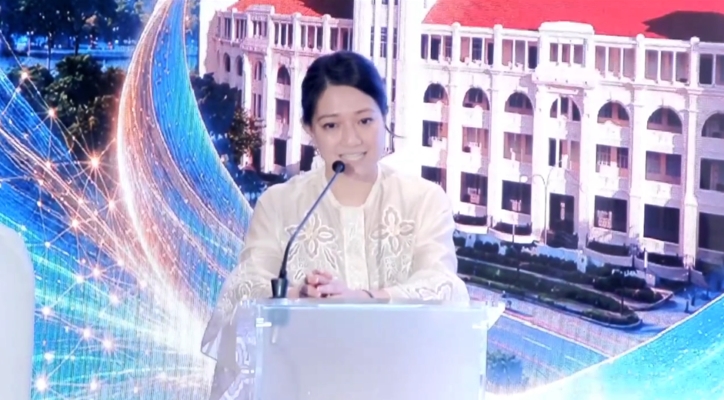
Drawing on her experience in energy and infrastructure disputes, she observed that legal practitioners often encounter projects when they are already facing difficulties. In her view, more could be achieved if those working on energy projects and those handling their disputes engaged with each other earlier and more openly.
She emphasised the need for the worlds of energy practice and dispute resolution to speak to each other more candidly before a dispute arises.
This concern provided the rationale for the masterclass. Rather than treating energy development and dispute resolution as separate subjects, the programme was intended to connect the commercial, legal and practical considerations that arise over the course of a project.
Connecting the energy transition with dispute resolution
Crystal Wong Wai Chin explained that the programme’s two sessions were intended to form a continuous discussion. The first would examine the changing shape of Malaysia’s energy landscape, while the second would consider what happens when projects operating within that landscape come under pressure.
She contextualised Malaysia’s energy sector within a wider regional and global context shaped by the energy transition, closer integration across Asia and the growing sophistication of international arbitration practice. The resulting commercial arrangements and disputes, she observed, cannot always be understood through a purely domestic lens.
The masterclass therefore sought to combine an understanding of developments in the energy sector with the legal and commercial experience required to address the challenges arising from them.
The opening remarks established the central focus of the programme: as Malaysia’s energy landscape changes, effective dispute resolution must develop alongside it. The discussions were framed around the need for collaboration between industry and legal practitioners, greater attention to preventing disputes before they arise, and dispute resolution mechanisms capable of responding to increasingly complex energy projects.
SCC Times is the official media partner for AIAC Asia ADR Week 2026. Read more reports from the week.