


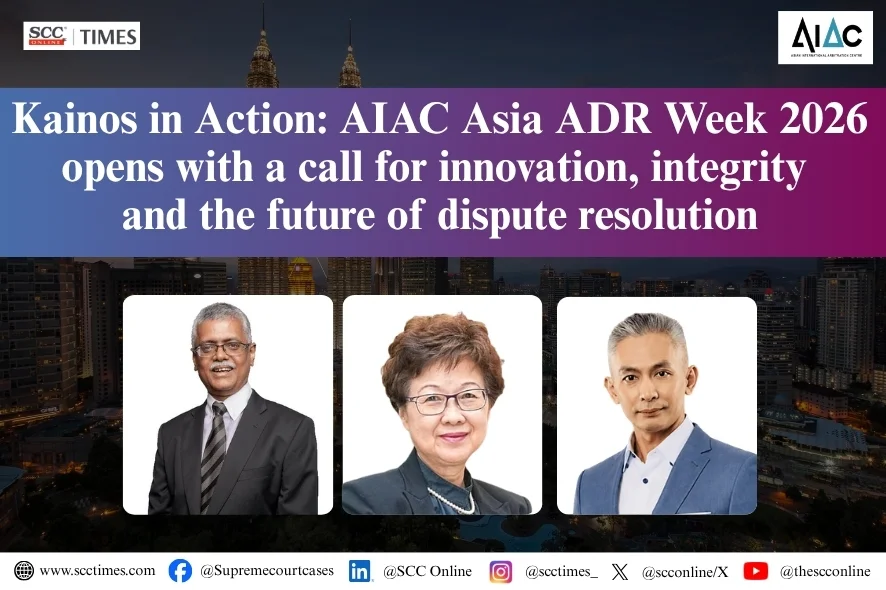
The Asian International Arbitration Centre (AIAC) commenced its Asia ADR Week 2026 on 12 October 2026, at the AIAC Auditorium, Kuala Lumpur, Malaysia, with a series of welcome and opening addresses highlighting the evolving landscape of alternative dispute resolution (ADR), the importance of institutional integrity, and the need to embrace technological advancements while preserving fairness and professional judgment. Held from 12—16 October 2026 under the theme “Kainos: Where Vision Transforms Future,” the event brought together leading arbitration practitioners and members of the dispute resolution community to reflect on the future of international arbitration and the role of ADR in an increasingly interconnected world.
The opening session featured welcoming remarks by Dato’ Mary Lim Thiam Suan, President, AIAC Court of Arbitration, followed by opening addresses from Dr. Bahari Yeow Tien Hong, Partner, RDS Partnership and John Mathew, Partner, Christopher & Lee Ong. The speakers explored the significance of institutional trust, responsible artificial intelligence (AI), cross-border commercial confidence, and the continuing importance of human judgment in dispute resolution.
Dato’ Mary Lim Thiam Suan highlights integrity, trust and responsible AI

In her welcoming remarks, Dato’ Mary welcomed participants to the first day of AIAC Asia ADR Week 2026, acknowledging the series of associated and prelude events that had brought practitioners together in Kuala Lumpur and beyond. She particularly commended the Young Arbitration Practitioners Group for organising an engaging gathering that united young practitioners from Malaysia, Singapore, and other jurisdictions, underscoring the value of professional networks and enduring connections within the arbitration community.
Reflecting on the theme “Kainos: Where Vision Transforms Future”, Dato’ Mary emphasised that meaningful transformation begins with individual commitment and a willingness to reconsider established practices. She underscored two essential elements for the future of dispute resolution: integrity and trust. According to her, these principles form the foundation for efficiency, efficacy, and expediency in arbitration and other dispute resolution processes.
She further drew attention to the growing role of artificial intelligence in the legal profession, observing that AI is increasingly becoming an integral part of legal practice. Rather than treating its use merely as a matter of disclosure, she encouraged practitioners to recognise its growing relevance and adopt it responsibly. She noted that clients increasingly expect the effective utilisation of AI and that legal professionals must understand how to work alongside emerging technologies without losing sight of their professional responsibilities.
Dr. Bahari Yeow Tien Hong calls for fairness, credibility and a broader understanding of ADR
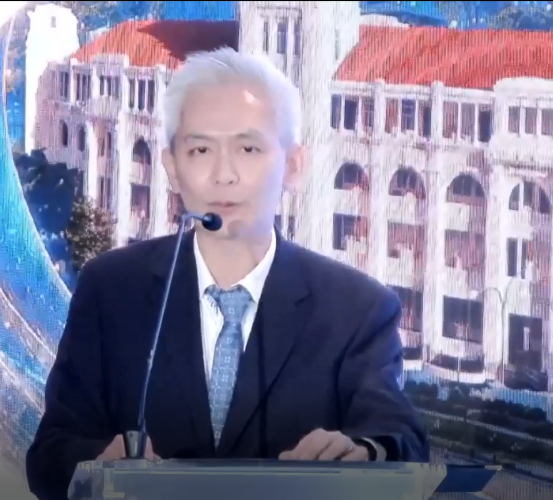
Delivering his opening address, Dr. Bahari Yeow offered an engaging perspective on dispute resolution by drawing parallels between familiar Disney characters, including Cinderella and Elsa from Frozen, and the realities of commercial disputes. Through these illustrations, he highlighted how conflicts often begin with parties attributing blame to one another, eventually leading to hardened positions, eroded trust, and fractured relationships.
He observed that, unlike fairy tales, commercial disputes cannot rely on magical solutions or guaranteed happy endings. An arbitral award, by itself, does not necessarily restore relationships or resolve every underlying difficulty. Effective dispute resolution, therefore, requires wisdom, independence, imagination, sound judgment, and, above all, a fair and credible process.
Congratulating the AIAC on organising the week under the leadership of Dato’ Mary, Dr. Bahari emphasised the growing international significance of ADR. In an era characterised by cross-border transactions, technological advancements, and increasingly interconnected markets, dispute resolution has become a shared international concern that extends across industries, legal systems, and jurisdictions.
He challenged the conventional description of ADR as merely an alternative to litigation, arguing that it should instead be understood as an essential component of the infrastructure supporting commercial confidence. Businesses engaging in cross-border transactions need assurance that their rights will be protected, their obligations enforced, and their disputes resolved through dependable and impartial processes. A predictable dispute resolution framework, he noted, is therefore not merely a legal service, but an economic asset that facilitates international commerce and investment.
Addressing the influence of technology, Dr. Bahari acknowledged that AI can assist in analysing documents, reconstructing events, and improving procedural efficiency. Nevertheless, he stressed that the ultimate objective of dispute resolution should not simply be to make proceedings faster, but to make them better.
“Faster where possible, fair always, and credible at every stage.”
Turning to the substantive discussions scheduled for the day, he examined the delicate relationship between arbitration and judicial supervision. While arbitration rests on party autonomy and the expectation of finality, courts continue to play an important role in safeguarding the integrity of the arbitral process. The challenge lies in identifying where legitimate judicial oversight ends and impermissible intervention begins, particularly in matters concerning jurisdictional boundaries and public policy.
He also highlighted the importance of effective oral advocacy in international arbitration, noting that the strength of a case depends not only on its legal merits but also on how persuasively those merits are communicated to the tribunal.
Concluding his address, Dr. Bahari returned to the familiar message of “Let it go” from Frozen, offering a deeper reflection on the practice of dispute resolution.
“In the context of a dispute resolution, perhaps the lesson is not simply just letting it go. Parties cannot let go of their legal rights. Arbitrators cannot let go of the evidence, and of course counsel cannot let go on the duty to advance their client’s case. We must learn to let go what prevents us from seeing the dispute clearly.”
He concluded by emphasising that the future of ADR would be shaped not by technology or procedural rules alone, but by the collective efforts of arbitrators, mediators, judges, experts, institutions, counsel, and users of the system. The ultimate objective must be to ensure that parties receive not merely a decision, but a process worthy of their confidence.
John Mathew reflects on renewal and the evolving arbitration landscape
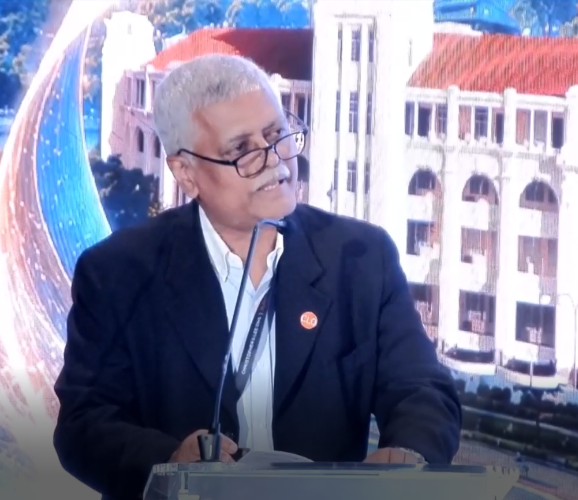
In his opening address, John Mathew welcomed participants on behalf of his firm and expressed appreciation to the AIAC for the opportunity to contribute to Asia ADR Week 2026.
Reflecting on the theme, he described renewal as more than change for its own sake. Instead, it represents the willingness to rethink established ideas, embrace new possibilities, and adapt to evolving professional and commercial realities. As the AIAC approaches its golden jubilee, he observed that institutions, much like the professions they serve, must continue to evolve to remain relevant.
Mr. Mathew noted that the nature of commercial disputes has changed significantly over the past decade. Businesses increasingly operate across multiple jurisdictions, transactions have become more sophisticated, technological developments are reshaping industries, and the pace of commercial decision-making has accelerated. Amid these changes, however, the fundamental responsibility of dispute resolution professionals remains constant: helping clients navigate uncertainty with confidence.
He highlighted that arbitration, mediation, adjudication, and litigation perform roles that extend beyond resolving disputes. These processes can help preserve commercial relationships, facilitate investment, and reinforce confidence in the rule of law. Effective dispute resolution, he emphasised, remains central to the functioning of modern commerce.
He also underscored the importance of gatherings such as Asia ADR Week in bringing together practitioners, judges, arbitrators, academics, and business leaders from across the region. Such platforms enable participants to exchange ideas, challenge perspectives, and learn from different professional and jurisdictional experiences, thereby contributing to the continued development of the dispute resolution community.
Turning to the session on “The Art of Persuasion: Oral Advocacy in International Arbitration,” Mr. Mathew acknowledged the growing relevance of AI while emphasising the continuing importance of human advocacy. Although technology is reshaping legal practice, the ability to present arguments persuasively, engage with a tribunal, and communicate a client’s case effectively remains an essential professional skill.
Mr. Mathew concluded by thanking the AIAC for its continued leadership and organisational efforts, while expressing hope that the week would foster meaningful discussions, professional collaboration, and lasting connections among participants.
Conclusion
The opening session underscored the importance of balancing innovation with integrity, technological advancement with human judgment, and efficiency with fairness in alternative dispute resolution. The speakers’ reflections on institutional trust, commercial confidence, and professional responsibility set the tone for AIAC Asia ADR Week 2026 under the theme “Kainos: Where Vision Transforms Future.”
SCC Times is the official media partner for AIAC Asia ADR Week 2026. Stay tuned for detailed reports, key insights, and highlights from all sessions.





