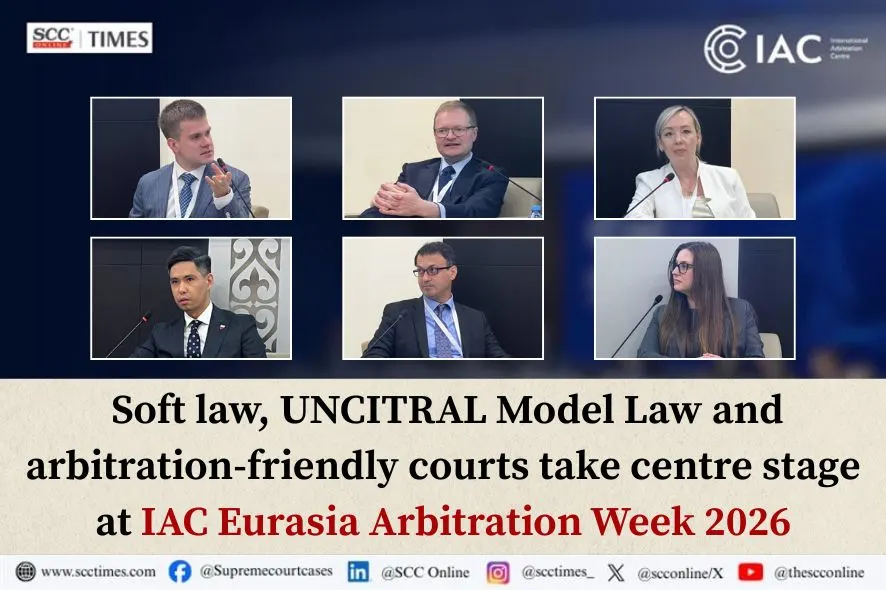
The panel discussion on Day 3 of the International Arbitration Centre (IAC) Eurasia Arbitration Week 2026, titled “International Law & Practice of Alternative Dispute Resolution (ADR)”, explored the growing influence of soft law, developments in national arbitration legislation, the enforcement of arbitral awards, mediation under the Singapore Convention, and emerging trends in international investment law.
Moderated by Daniil Litosh, Associate, Unicase, the panel featured David Hunt, Partner, Boies Schiller Flexner LLP; Yerkin Budenov, Counsel & Head of Astana International Financial Centre (AIFC) Practice, ADL Disputes; Caitlin Walczyk, Associate, White & Case LLP; Fuad Gashamov, Founding Partner, Legalize and Dr. Yulia Levashova, Associate Professor of International Investment Law, Nyenrode Business University.
Soft law has become an indispensable part of international arbitration

Opening the discussion, Caitlin Walczyk observed that although soft law instruments are technically non-binding, they have become deeply embedded in international arbitration practice.
Referring to procedural rules, she noted that the International Bar Association (IBA) Rules on the Taking of Evidence in International Arbitration are routinely relied upon by tribunals across jurisdictions. According to Walczyk, tribunals rarely depart from these rules despite their non-binding character, making them an accepted procedural standard across commercial arbitration.
She further explained that similar developments have occurred in relation to conflict-of-interest guidelines and other institutional standards, many of which have effectively become part of everyday arbitral practice.
Turning to investment arbitration, she highlighted the importance of the International Law Commission (ILC) Articles on Responsibility of States for Internationally Wrongful Acts, noting that they continue to influence substantive legal reasoning in disputes involving attribution, continuing breaches and State responsibility.
She observed:
“Tribunals are creating awards that are based on these ILC Articles and based on these principles that are developing over time.”
Encouraging younger practitioners to participate in international arbitration organisations and working groups, Walczyk said that many of today’s accepted standards originate from committees that draft guidelines and best practices.
She added:
“These are the people that are shaping these rules and these guidelines that ultimately become effectively universally accepted by tribunals.”
Azerbaijan’s new arbitration law aligns closely with the UNCITRAL Model Law
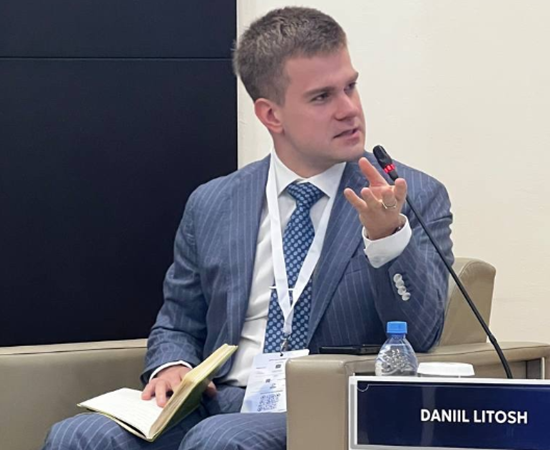
Throughout the session, moderator Daniil Litosh connected the various themes by highlighting how international arbitration continues to evolve through a combination of legislation, institutional practice and judicial interpretation. He observed that while international conventions and national arbitration laws provide the legal framework, practitioners, arbitrators and courts continue to shape many of the principles governing modern arbitration.
Commenting on the growing reliance on soft law, Litosh noted that the development of arbitration remains an ongoing process driven by the legal community itself. He remarked:
“Nowadays, in case there is no much substantial regulation, it’s actually us as lawyers, as future practitioners, as experts and judges and arbitrators who are creating the relevant principles.”
As the discussion progressed, Litosh steered the conversation towards practical issues, inviting the speakers to compare Azerbaijan’s recently enacted Arbitration Law with the United Nations Commission on International Trade Law (UNCITRAL) Model Law, examine the advantages of choosing the Astana International Financial Centre (AIFC) as the seat of arbitration, and discuss the growing importance of mediation following the adoption of the Singapore Convention.
He also emphasised that institutional support remains central to the success of alternative dispute resolution mechanisms and noted that the expanding network of modern bilateral investment treaties across Eurasia reflects the region’s continuing commitment to strengthening international dispute resolution.
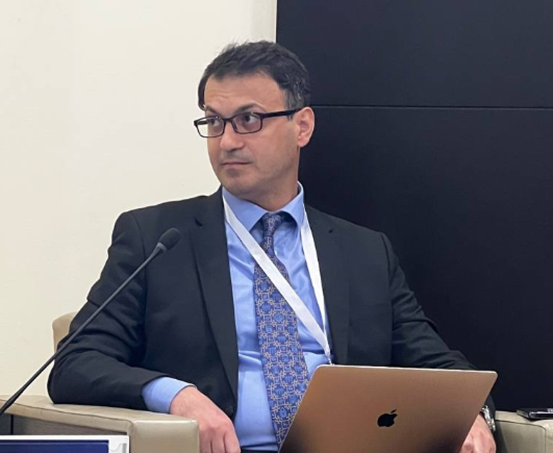
Responding to a question on domestic arbitration legislation, Fuad Gashamov explained that Azerbaijan’s Arbitration Law, adopted in 2023 and in force since 2024, was largely modelled on UNCITRAL Model Law on International Commercial Arbitration.
According to Gashamov, nearly 85 per cent of the legislation mirrors the structure and substantive principles of the UNCITRAL Model Law, while the remaining provisions reflect domestic policy choices intended to establish a complete arbitration framework.
He identified several important distinctions between the Azerbaijani legislation and the UNCITRAL Model Law.
Unlike the Model Law, which primarily governs international commercial arbitration, Azerbaijan’s legislation applies to both domestic and international arbitration.
The statute also expressly regulates issues left to domestic legislation under the Model Law, including:
-
arbitrable and non-arbitrable disputes;
-
competent courts for arbitration-related functions; and
-
regulation and governance of permanent arbitral institutions.
Another significant feature is Azerbaijan’s approach to ad hoc arbitration, which is permitted only for international arbitration, while domestic disputes are expected to proceed before permanent arbitral institutions.
Gashamov further explained that the legislation adopts an arbitration-friendly approach by limiting judicial intervention when parties seek referral to arbitration. He highlighted the importance of one particular word in the statute.
The court, he explained, may refuse to refer parties to arbitration only where the arbitration agreement is manifestly null, void or incapable of being performed.
He remarked:
“That single word, ‘manifestly’, is important here.”
According to him, this reflects the internationally recognised principle of favour arbitrandum, requiring courts to resolve doubts in favour of arbitration rather than litigation.
The legislation also incorporates the 2006 amendments to the UNCITRAL Model Law, including provisions concerning interim measures, preliminary orders, electronic communications and case-related arbitration procedures.
Importantly, it expressly prohibits courts from reviewing the merits of arbitral awards, reinforcing the principle of finality.
Summarising the significance of the reforms, Gashamov observed:
“The most significant asset of the new legislation is that it signals Azerbaijan’s clear intention to position itself as an arbitration-friendly jurisdiction aligned with internationally recognised best practices.”
AIFC Court’s enforcement framework strengthens confidence in arbitration
The discussion then shifted to AIFC and the enforcement of arbitral awards rendered under IAC.
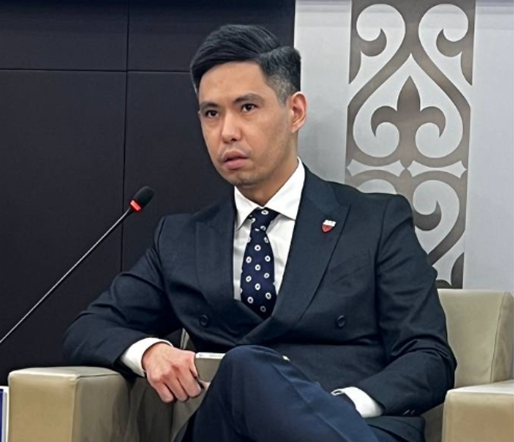
Yerkin Budenov explained that one of the principal advantages of choosing the AIFC as the seat of arbitration is the specialised enforcement mechanism available through the AIFC Court.
Unlike many jurisdictions where local courts are involved in recognising and enforcing arbitral awards, awards rendered under the IAC Arbitration Regulations are enforceable through the AIFC Court itself. He explained that legislative amendments introduced in 2020 enabled judgments and orders of the AIFC Court to be directly enforced in Kazakhstan without requiring separate recognition proceedings before domestic courts.
According to Budenov, the AIFC Court has consistently adopted a pro-arbitration approach, giving parties greater confidence in the enforcement process.
Referring to publicly available statistics, he noted that the IAC has administered over 1,100 arbitration cases, with a reported 100 per cent enforcement rate.
He also highlighted that although a number of applications seeking to set aside arbitral awards or resist enforcement have been filed before the AIFC Court, none have succeeded to date.
Budenov observed that while the AIFC Arbitration Regulations largely replicate the provisions of the UNCITRAL Model Law relating to setting aside awards, what ultimately distinguishes the AIFC is not merely legislative drafting but the practical approach consistently adopted by the Court.
He concluded that the Court’s established jurisprudence demonstrates a strong commitment to minimal judicial intervention and effective support for arbitration proceedings.
Does soft law simplify arbitration or make it more complicated?
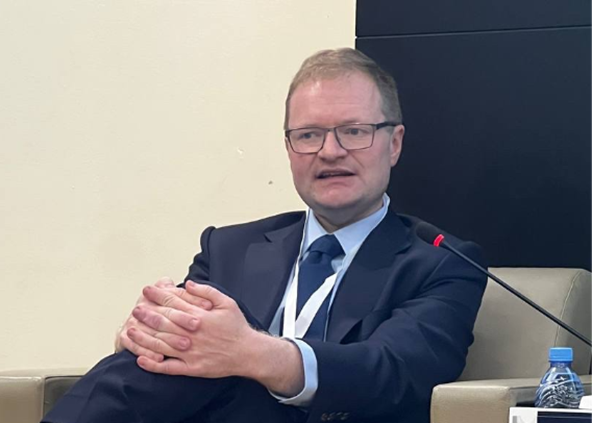
Offering a contrasting perspective, David Hunt questioned whether the growing body of soft law has always improved international arbitration. While acknowledging that many soft law instruments were developed with positive intentions, he cautioned that their proliferation has also generated procedural complexity and satellite disputes.
According to Hunt, rather than streamlining proceedings, certain guidelines have encouraged increasing challenges to arbitrators based on disclosure obligations and perceived procedural deficiencies.
He observed:
“The proliferation of soft law has led, in large part, to more procedural problems in arbitration than it has solved.”
Referring specifically to the IBA Guidelines on Conflicts of Interest, Hunt remarked that although they were intended to provide certainty regarding arbitrator disclosures, they have sometimes become the basis for additional challenges extending even beyond what the Guidelines themselves require.
He explained that this has diverted attention from substantive issues.
“There are too many people who spend their time arguing about process and procedure in international arbitration rather than the substance of cases.”
While recognising that certain soft law instruments, such as the International Law Commission (ILC) Articles on State Responsibility, have effectively evolved into accepted principles of public international law, Hunt distinguished them from procedural guidelines.
In his view, confusion between binding law and non-binding guidance often complicates proceedings unnecessarily.
Singapore Convention marks an important milestone, but mediation still faces practical challenges
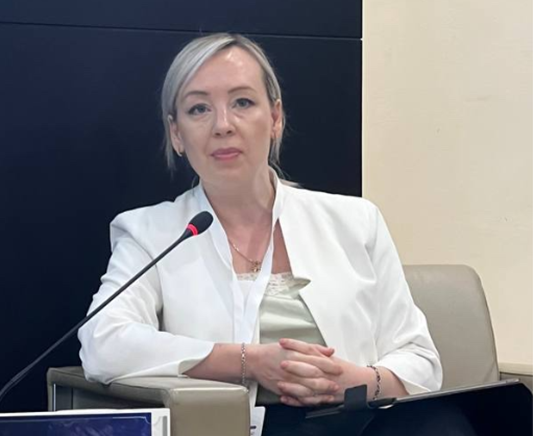
Turning to mediation, Dr. Yulia Levashova discussed the growing significance of the United Nations Convention on International Settlement Agreements Resulting from Mediation, commonly known as the Singapore Convention.
Providing background, she explained that the Convention entered into force in 2020 and established the first global framework for enforcing international mediated settlement agreements, much as the New York Convention did for arbitral awards.
Despite this important development, she observed that the Convention has not yet achieved universal acceptance.
According to Levashova, while numerous Eurasian countries, including Kazakhstan and Kyrgyzstan, have signed or ratified the Convention, implementation differs significantly between jurisdictions.
She noted that Kazakhstan ratified the Convention with a reservation, excluding its application to investor-State disputes, whereas Kyrgyzstan adopted it without such a reservation.
Explaining why many States remain cautious, Levashova observed that mediated settlements involving sovereign governments frequently concern fiscal commitments, regulatory measures and broader public policy considerations. Consequently, governments are often reluctant to allow mediated settlement agreements involving investor-State disputes to become directly enforceable across jurisdictions.
She emphasised that successful mediation depends on much more than ratification of an international treaty.
Among the essential components, she identified:
-
supportive domestic legislation;
-
specialised mediation institutions;
-
effective enforcement mechanisms;
-
trained mediators with expertise in both commercial and public international law; and
-
willingness of parties, particularly governments, to engage in mediation.
Speaking from her own experience, she explained that public officials frequently hesitate to pursue mediation because negotiated settlements may later be criticised or misunderstood.
She observed that for many civil servants, choosing mediation rather than litigation can create concerns about accountability and allegations of impropriety, making institutional support particularly important.
AIFC Court and IAC work together to support arbitration through interim relief
Returning to the practical operation of arbitration within Kazakhstan, Yerkin Budenov highlighted another important feature of AIFC framework, the close institutional cooperation between the AIFC Court and IAC.
He explained that the Court performs functions extending beyond enforcement of arbitral awards. Among its most valuable powers is the ability to grant interim relief before an arbitral tribunal has even been constituted.
According to Budenov, this enables parties to preserve assets, secure evidence and protect the effectiveness of future arbitral proceedings without waiting for the tribunal to be formed.
Even after a tribunal has been constituted, the Court may assist by enforcing interim measures ordered by the tribunal itself.
Drawing on recent practice, he noted that the Court has already issued several judgments supporting arbitral proceedings through interim relief.
These cases, he explained, illustrate the practical advantages of the AIFC framework by allowing urgent judicial assistance while respecting the autonomy of arbitration.
He added that the cooperation between the Court and the IAC reflects the principle of minimal judicial intervention, one of the central objectives of the UNCITRAL Model Law.
Azerbaijan’s Supreme Court adopts a narrow interpretation of public policy
Fuad Gashamov then examined recent developments concerning the recognition and enforcement of foreign arbitral awards in Azerbaijan.
Describing a recent judgment of the Supreme Court of Azerbaijan, he explained that the case involved enforcement of an ad hoc arbitral award arising from a construction dispute against a public entity. The respondent argued that the tribunal had incorrectly applied the limitation period and that this constituted a violation of Azerbaijani public policy. The Supreme Court rejected that argument. According to Gashamov, the Court reaffirmed three important principles.
First, the public policy exception must be interpreted narrowly and invoked only in exceptional circumstances.
Secondly, even where an arbitral tribunal may have erred in interpreting or applying the law, such alleged legal errors do not justify refusal of enforcement.
Finally, courts are not permitted to review the merits of arbitral awards during recognition and enforcement proceedings.
Instead, judicial review remains confined to the exhaustive grounds for refusal contained in the New York Convention and Azerbaijan’s Arbitration Law. Gashamov also highlighted another significant aspect of the judgment.
For the first time, the Supreme Court accepted and relied upon an amicus curiae submission prepared by the Azerbaijan Arbitration Association, which analysed international arbitration practice relating to the public policy exception.
Although such submissions remain relatively uncommon in Azerbaijan, he regarded the decision as an encouraging sign that domestic courts are increasingly willing to engage with specialist arbitration expertise.
Summarising the broader significance of these developments, Gashamov stated that recent Supreme Court decisions consistently demonstrate that Azerbaijani courts interpret refusal grounds narrowly, place the burden of proof on the party resisting enforcement and refrain from reopening the merits of arbitral awards.
In his view, this strengthens confidence among international users that Azerbaijan will continue applying the New York Convention in accordance with internationally recognised arbitration-friendly principles.
Civil law and common law traditions continue to shape arbitration practice
The discussion also examined whether differences between civil law and common law traditions continue to influence international arbitration.
David Hunt observed that while international arbitration has gradually developed its own procedural identity, practitioners often carry litigation habits from their domestic legal systems into arbitral proceedings.
He explained that common law lawyers generally seek broader document production and cross-examination, whereas civil law practitioners tend to favour a narrower evidentiary approach. In practice, however, experienced tribunals increasingly blend the strengths of both traditions to ensure fairness and procedural efficiency.
Hunt cautioned against allowing procedural disputes to overshadow the real commercial issues in a case, reiterating his earlier concern that arbitration should remain focused on resolving disputes rather than creating additional procedural battles.
Investment treaty practice is evolving alongside international arbitration
Dr. Yulia Levashova then discussed the changing landscape of international investment law and investor-State dispute settlement.
She explained that States across the world are renegotiating older Bilateral Investment Treaties (BITs) to better balance investor protection with a State’s sovereign right to regulate in the public interest.
The discussion also referred to the ongoing reform work of UNCITRAL Working Group III, which is examining proposals such as appellate mechanisms, standing adjudicatory bodies and greater use of mediation in investment disputes.
According to Levashova, the objective is not to replace arbitration altogether but to strengthen confidence in the legitimacy, consistency and efficiency of investor-State dispute settlement.
Understanding the client’s business is essential for arbitration lawyers
During the audience interaction, participants asked how younger practitioners could develop stronger commercial judgement rather than focusing exclusively on legal analysis.
Responding to the question, the panellists emphasised that effective arbitration counsel must first understand the client’s commercial objectives before attempting to solve legal problems.
David Hunt encouraged younger lawyers to think beyond legal doctrine and appreciate the broader business context in which disputes arise.
The discussion echoed a recurring theme throughout the conference, that successful arbitration practitioners are those who combine legal expertise with commercial awareness.
Audience questions focus on enforcement, mediation and future reforms
The audience also raised questions concerning enforcement of arbitral awards, mediation and the future of dispute resolution.
Responding to questions on judicial support for arbitration, Fuad Gashamov reiterated that courts should not revisit the merits of arbitral awards during enforcement proceedings.
He observed that Azerbaijan’s recent judicial practice demonstrates an increasingly arbitration-friendly approach grounded in international standards.
Dr. Yulia Levashova, meanwhile, emphasised that mediation will continue to grow only if supported by appropriate domestic legislation, trained mediators and institutional confidence.
Concluding remarks
Closing the session, Daniil Litosh thanked the speakers for examining arbitration from both theoretical and practical perspectives. The discussion demonstrated that international arbitration continues to evolve through legislative reform, judicial practice and institutional innovation.
Reflecting on the broader themes discussed throughout the panel, the speakers agreed that arbitration’s continued success depends upon balancing flexibility with certainty, encouraging judicial support while preserving party autonomy, and ensuring that dispute resolution remains responsive to the needs of international commerce.
Read more IAC Eurasia Arbitration Week 2026 coverage: