Transnational Issue Estoppel in Foreign Award Enforcement in India
by Iram Hassan* and Yukti Agarwal**
The case arose from a Russian company’s attempt to restrain LCIA arbitration proceedings on the ground that foreign restrictive measures and procedural difficulties had rendered the arbitration agreement incapable of performance.
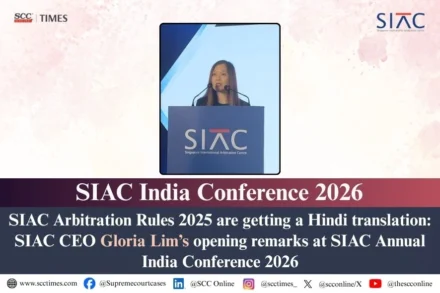
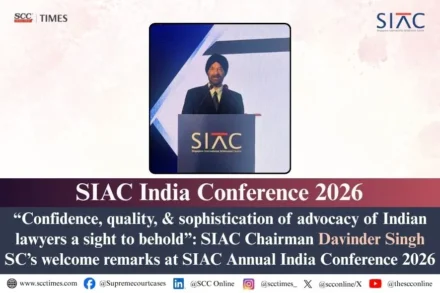
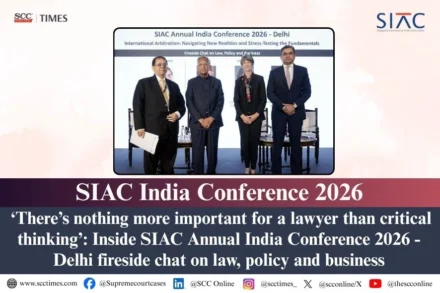
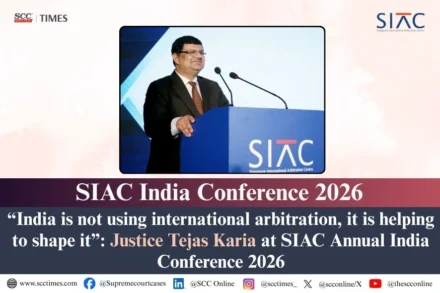
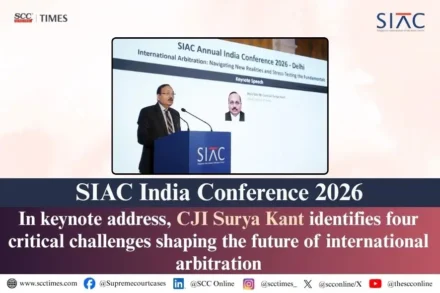
SIAC has inaugurated its Delhi Liaison Office during the SIAC Annual India Conference 2026, marking a significant expansion of its presence in India and strengthening engagement with the country’s arbitration ecosystem.
Explore the latest Supreme Court Cases in 2026 SCC Vol. 5 Part 5 on international commercial arbitration, Panchayat elections, corporate debtor, and more.
During the IAC Eurasia Arbitration Week 2026, “Regional Update: ADR Trends in Central Asia & South Caucasus” focused on how jurisdictions across Central Asia and the South Caucasus are strengthening their arbitration ecosystems through legislative reform, institutional development, judicial support, and enhanced enforcement practices.
How do soft law, modern arbitration legislation and supportive courts influence cross-border dispute resolution? A Day 3 panel at IAC Eurasia Arbitration Week 2026 examined the evolving legal and institutional framework shaping international arbitration across Eurasia.
Leading arbitration practitioners at Eurasian Arbitration Week 2026 explored practical strategies for enforcing arbitral awards, discussing Kazakhstan’s evolving arbitration framework, the AIFC Court, sanctions, judicial predictability and the growing importance of enforcement planning in cross-border disputes.
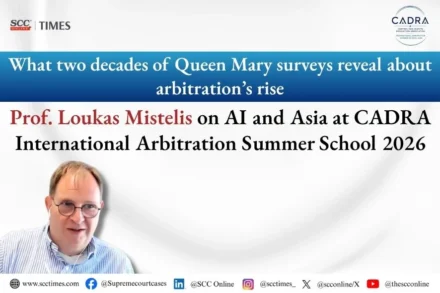
Prof. Loukas Mistelis traced the evolution of the Queen Mary International Arbitration Survey over the past two decades, highlighting arbitration’s continued dominance in cross-border disputes, Asia’s growing influence, user expectations, and the transformative role of artificial intelligence.
From representations and warranties disputes to fraud, earn-outs, mediation and investment arbitration, panellists at the International Arbitration Centre’s Eurasia Arbitration Week 2026 discussed why cross-border M&A disputes arise and how businesses can better structure transactions to prevent and resolve them.
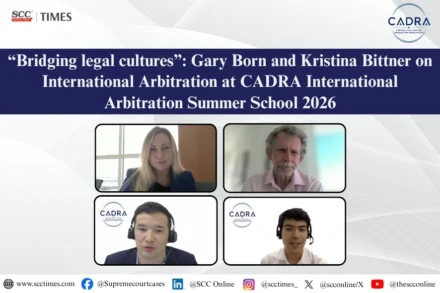
Delivering the keynote address at Eurasian Arbitration Week 2026, Gary Born examined the evolution of international arbitration from ancient civilisations to the modern legal order, arguing that arbitration has always been rooted in party autonomy, contractual freedom and the pursuit of peaceful dispute resolution.
The Indian Council of Arbitration is holding its 4th International Conference on Arbitrating Indo-UK Commercial Disputes on 5 June 2026 at Church House, Westminster, London. The Conference will be inaugurated by Chief Justice of India Surya Kant, with keynote addresses by Union Law Minister Arjun Ram Meghwal and the Master of the Rolls Sir Geoffrey Vos.
Explore the latest Supreme Court Cases in 2026 SCC Vol. 2 Part 2 on international commercial arbitration, limited scope of interference under Section 37, and registration of FIR.
The core controversy centres on the effect of deliberate non-disclosure by a nominee arbitrator, the determination of the juridical seat of arbitration, and the extent of supervisory jurisdiction of Indian courts notwithstanding the fixation of a foreign venue by an arbitral institution.
The team from Symbiosis Law School, Hyderabad, comprising Tanisha Nambisan, Varsha Ganji, Aishwarya S, and Ananya Jha, emerged victorious at the Asia Pacific Vis Pre-Moot 2025, held in Malaysia. Competing among 100+ global teams, they secured the top position after intense arbitration rounds, marking a proud achievement for the institution.
by Abhisaar Bairagi*, Milind Sharma** and Ausaf Ayyub***
by Vasanth Rajasekaran* and Harshvardhan Korada**
National Law University, Jodhpur is making a call for abstracts for its 9th CARTAL Conference on International Arbitration, 2025 to be held on 22-23rd March, 2025.
This report provides insights into the first-ever ICDR Conference held in India. It highlights the key discussions, themes, and outcomes of the event, showcasing the innovative ideas and collaborative efforts presented by participants in the field of dispute resolution.
by Prashant Pakhiddey* and Manav Gill**
Manuscripts received during April 1 — September 30 shall be considered for publication in the January issue and manuscripts received during October 1