


The legal profession has historically evolved through gradual shifts-whether in the form of codification, digitization, or procedural reform. However, the integration of artificial intelligence represents a different kind of transformation. It is not merely an incremental improvement but a structural shift in how legal work is performed, reviewed, and delivered.
Across jurisdictions and practice areas, legal professionals are increasingly engaging with AI systems that assist in drafting contracts, conducting legal research, monitoring compliance, and even evaluating risk. What was once perceived as an experimental overlay is now becoming embedded within the operational fabric of legal institutions.

This shift was strongly emphasized in the opening remarks by Mr. Nitin Balyan, who highlighted that the debate around AI in law is already over. The real question today is how fast, how responsibly, and how strategically organizations will adopt AI. From contract lifecycle management to compliance and legal research, AI is no longer an exception or experiment-it is becoming operational in day-to-day legal activities.
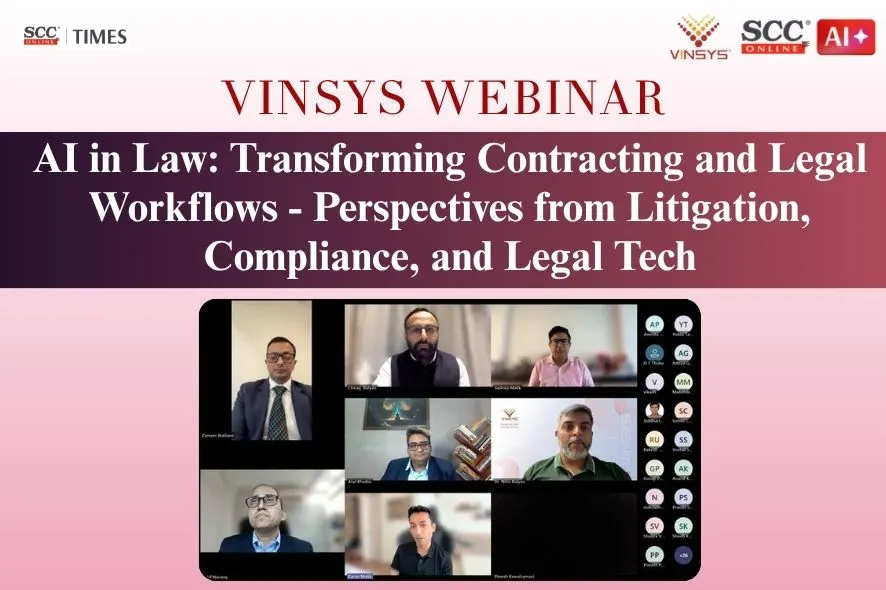
The panel featured Mr. Sahil Narang, Partner at Khaitan & Co and Advocate-on-Record at the Supreme Court of India; Mr. Atul Khadse, Senior Legal Counsel at Asian Paints; Mr. Zameer Nathani, Global General Counsel at DNEG; and Mr. Rachita R Maker, Co-Founder & Co-CEO of Ekamm8.
The session was moderated by Mr. Chirag Balyan, Associate Professor (Law) at DY Patil School of Law, Navi Mumbai and, and hosted by Mr. Nitin Balyan, Strategic Director (Vinsys), with SCC Online as the official media partner, represented by Mr. Sudeep Malik, Director, EBC Publishing Pvt. Ltd. and SCC Online, and Mr. Karan Malik, Product Manager, EBC Publishing Pvt. Ltd. and SCC Online.
The discussion did not attempt to position AI as a replacement for legal expertise. Instead, it examined how AI is reshaping workflows, redistributing effort, and redefining the role of legal professionals in an increasingly technology-driven environment.
Framing the Discussion: AI as an Embedded Legal Reality

At the outset, Mr. Chirag Balyan established a crucial premise that guided the entire discussion: artificial intelligence is no longer an emerging concept within legal systems but an active and operational tool.
“Artificial intelligence is actually integrated into core legal functions. It’s not the future, it’s the present.” – Chirag Balyan
This framing was supported by observations of industry adoption patterns. AI is now being used across multiple layers of legal work, including contract drafting, document review, legal research, and workflow automation. In many organizations, these tools are no longer optional enhancements but integral components of legal operations.
However, the discussion did not treat this integration uncritically. Chirag highlighted the caution expressed by courts in different jurisdictions regarding the use of AI-generated content. Instances of fabricated citations and unreliable outputs have led judicial bodies to reiterate that responsibility for legal submissions remains with practitioners.
This introduces an important tension within the adoption of AI: while technology can increase efficiency and scale, it simultaneously raises questions about accountability, verification, and professional responsibility.
The regulatory dimension further complicates this landscape. As noted during the discussion, jurisdictions are adopting different approaches to AI governance. Some are moving toward dedicated legislative frameworks, while others are relying on existing legal frameworks. For legal professionals operating in cross-border contexts, this divergence requires careful navigation.
Litigation and Arbitration: Efficiency Without Displacement

The discussion then moved to litigation and arbitration, where Mr. Sahil Narang provided a detailed account of how AI is influencing practice.
Litigation, by its nature, is deeply rooted in judgment, strategy, and advocacy. These elements are inherently human and require contextual understanding, discretion, and experience. Mr. Narang made it clear that these core aspects remain unchanged.
At the same time, he identified several areas where AI has introduced significant efficiency gains.
One of the most notable transformations has occurred in legal research.
“We have moved from keyword search to contextual, semantic search.” – Sahil Narang
This shift represents more than a technological improvement; it changes how legal professionals interact with information. Instead of manually filtering through large volumes of case law, AI systems can interpret queries, identify relevant precedents, and generate summaries that provide immediate context.
This reduces the time required for initial research and allows lawyers to focus on analysis and strategy at an earlier stage.
Document review has also undergone a similar transformation. Litigation often involves extensive documentation, and reviewing these materials manually can be both time-consuming and prone to human error. AI tools assist in organizing documents, identifying inconsistencies, and linking related materials.
Sahil noted that tasks that previously required several days can now be completed within hours, even when dealing with complex and voluminous records.
Another emerging area is predictive analysis. By leveraging historical data and internal knowledge repositories, AI systems can assist in evaluating potential outcomes and strategies. While still evolving, this capability suggests a shift toward more data-informed legal decision-making.
Despite these advancements, Mr. Narang emphasized the limits of AI in legal practice:
“Judgment, strategy, advocacy… that has not changed and will not change.” – Sahil Narang
This distinction between infrastructural functions and sovereign functions is critical. AI can enhance efficiency in tasks such as searching, sorting, and summarizing, but it cannot replace the interpretative and decision-making roles that define legal practice.
Compliance in the Age of AI: From Reactive to Predictive Systems

From the perspective of corporate legal teams, Mr. Atul Khadse provided valuable insights into how AI is transforming compliance functions.
Traditionally, compliance has been a reactive process. Organizations relied on periodic audits, static checklists, and retrospective reporting to ensure adherence to regulatory requirements. This approach often resulted in delays and increased the risk of oversight.
With the integration of AI, compliance systems are becoming more dynamic and proactive. AI tools can monitor regulatory changes in real time, identify deviations, and flag potential risks before they escalate into significant issues.
However, this increased efficiency comes with new challenges.
“Efficiency without accountability is ultimate risk.” – Atul Khadse
Atul emphasized that while AI can improve speed and consistency, it does not reduce the responsibility of legal professionals. Instead, it requires them to ensure that AI systems are reliable, explainable, and aligned with organizational governance frameworks.
This involves implementing structured mechanisms such as human validation checkpoints, clear accountability structures, audit trails, and controlled access to data. Compliance, therefore, becomes not only a question of regulatory adherence but also of system integrity.
AI, in this context, does not simplify compliance-it transforms it into a more complex and nuanced function.
Managing Risk in High-Value Contracts

A distinct perspective was offered by Mr. Zameer Nathani, who discussed the application of AI in managing high-stakes contracts within the entertainment industry.
Operating in a global environment involving major studios and large-scale productions, legal teams must navigate complex contractual frameworks that carry significant financial and reputational implications. AI plays a crucial role in enhancing the ability to identify and assess risks within these agreements.
AI systems are used to detect potential intellectual property conflicts, evaluate indemnity clauses, and interpret limitation of liability provisions across jurisdictions. They also assist in determining appropriate insurance coverage based on the nature and scale of a project.
“AI is helping us identify risks even before they become visible in the contract structure – whether it is IP conflicts, indemnity exposure, or gaps in rights ownership.” — Zameer Nathani
In such contexts, even minor contractual oversights can lead to substantial consequences. AI provides an additional layer of analysis, enabling legal teams to make more informed decisions.
“You can use AI to draft faster and analyze better, but you cannot outsource risk ownership – final accountability still sits with the legal team.” — Zameer Nathani
However, as emphasized during the discussion, AI remains an assistive tool. Final decisions regarding risk allocation and contractual obligations continue to require human judgment and expertise.
Legal Technology and the Challenge of Data

From a legal technology perspective, Ms. Rachita R Maker addressed one of the most pressing challenges facing modern legal teams: the exponential growth in data.
Legal professionals today work with a wide range of data formats, including emails, documents, chat records, audio files, and video content. This increase in both volume and complexity has made traditional review processes increasingly inefficient.
AI offers a solution by enabling faster data processing and reducing the time required for document review. Tasks that previously required large teams and extended timelines can now be completed more efficiently with smaller teams.
However, this shift also requires a redefinition of the lawyer’s role. Legal professionals must identify where their expertise adds value and focuses on tasks that require judgment, interpretation, and strategic thinking.
AI, in this sense, does not reduce the importance of legal professionals-it changes the nature of their work.
AI in Legal Research: The SCC Online Perspective
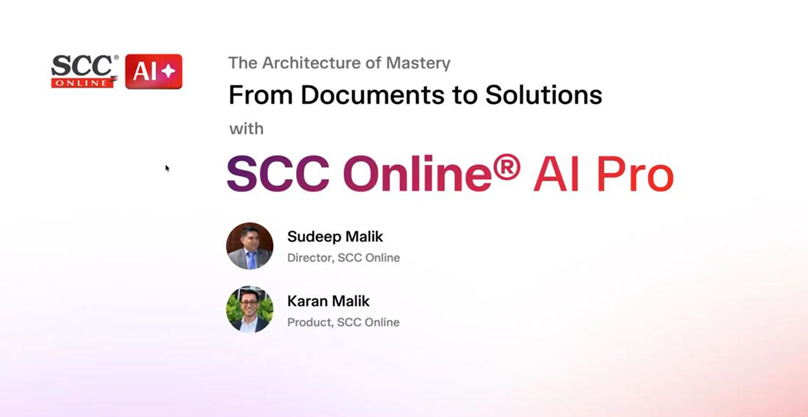
A portion of the session was dedicated to the demonstration of AI-driven legal research tools by SCC Online®, the official media partner for the event. Mr. Sudeep Malik and Mr. Karan Malik showcased how their product SCC Online® AI pro is transforming traditional research methodologies.
Know More about SCC Online® AI Pro: The Future of Legal Solutions, Grounded in Trust
The Evolving Role of Legal Professionals:
A recurring theme throughout the discussion was the changing role of legal professionals in an AI-enabled environment.
AI is increasingly handling repetitive and time-intensive tasks, allowing lawyers to focus on higher-value activities. This includes strategic decision-making, risk assessment, and client interaction.
At the same time, legal professionals are required to develop new skills, including an understanding of how AI systems operate and how their outputs should be interpreted and validated.
The future legal professional is not one who competes with AI but one who works alongside it, leveraging its capabilities while maintaining control over decision-making processes.
Rapid Fire Insights: Key Takeaways from the Panel
The rapid-fire round brought out concise yet revealing perspectives from the panelists, offering a sharper view of how AI is being adopted in legal practice and how its role is being defined by practitioners.
When asked about one AI tool they would not give up, Mr. Zameer Nathani pointed to Gemini as his current preference, highlighting its evolving capabilities. Mr. Sahil Narang emphasized Claude for its structured and context-aware outputs suited to legal reasoning, while Mr. Atul Khadse identified Microsoft Copilot as most relevant from an enterprise and in-house counsel perspective.
A critical question on risk reframed the discussion: whether the biggest concern with AI is hallucination or over-reliance. Mr. Atul Khadse responded unequivocally that over-reliance is the greater risk, noting that while AI can assist, the responsibility of judgment cannot be delegated.
Addressing misconceptions, Mr. Zameer Nathani highlighted that a common misunderstanding is that AI outputs are inherently unreliable. In practice, he noted, AI can provide useful direction, but its outputs must always be validated through legal expertise.
On client transparency, Mr. Sahil Narang stated that if asked whether AI was used in a matter, the answer would be a clear yes, accompanied by assurances around data security, internal controls, and prior client consent.
The panel also drew a firm boundary on the role of AI in legal decision-making. Across responses, there was consensus that while AI can assist in drafting, analysis, and research, it should not be allowed to make final legal decisions. Judgment, interpretation, and accountability remain human responsibilities.
Looking ahead, the panelists shared a consistent view of how legal teams will evolve over the next five years. Mr. Nathani indicated that teams are likely to become smaller, with greater emphasis on senior professionals handling decision-making and risk evaluation. Mr. Khadse noted the emergence of a new category of AI-enabled legal professionals who combine legal expertise with technological understanding. Mr. Narang added that legal teams will become more efficient and focused, with reduced time spent on routine tasks and greater emphasis on strategic and high-value work.
Collectively, these insights reinforce a clear direction. AI is reducing the effort required for execution-heavy tasks, while increasing the importance of human judgment, accountability, and strategic thinking within legal functions.
How Vinsys is Transforming Legal Workflows Through AI?
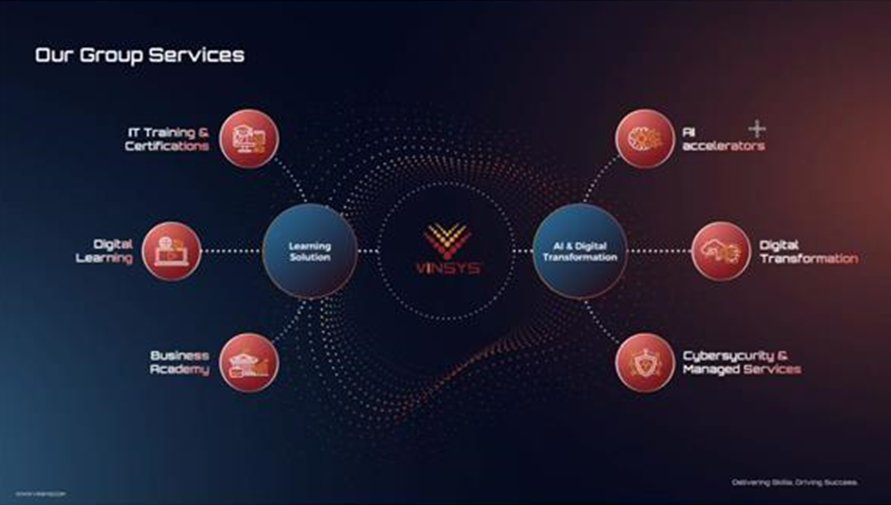
As the host of the panel discussion, team Vinsys continues to support organizations in navigating the intersection of technology and legal functions. With over two decades of experience, Vinsys is a global provider of professional services across IT solutions, corporate training, digital learning, consulting, and recruitment, with a growing focus on AI-led capability development in areas such as legal and compliance.
In addition to this, Vinsys is actively building AI-driven solutions that address real challenges in legal operations:
-
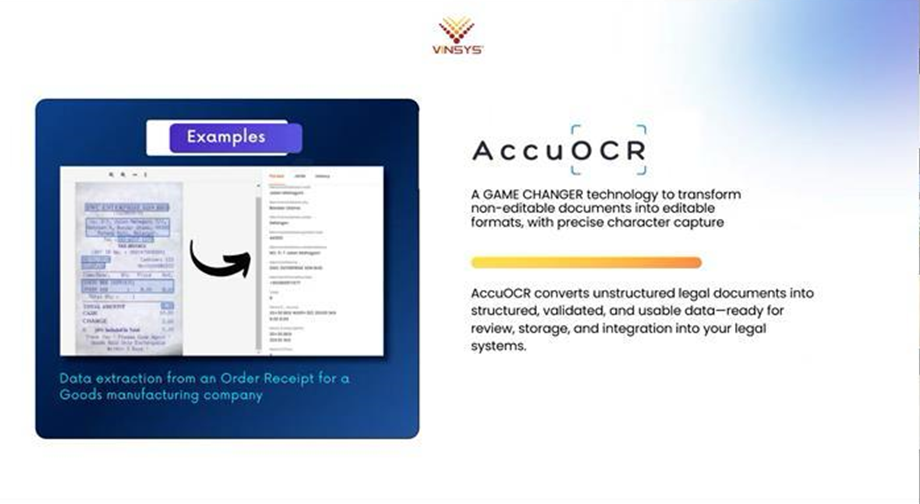
- AccuOCR — Converts complex, unstructured legal documents into structured, analyzable formats with high accuracy
- QueryHive — Enables instant, context-aware legal research and document analysis across multiple data sources
- Legal AI Assistant (NuVin AI) — An integrated legal AI platform for drafting, document comparison, and legal workflow automation
These solutions reflect a structured and practical approach to integrating AI into legal workflows.
Conclusion
The webinar AI in Law: Transforming Contracting & Legal Workflows provided a comprehensive and practice-oriented examination of how artificial intelligence is being integrated into legal workflows.
The discussion made it clear that AI is not a substitute for legal expertise but a tool that enhances efficiency and scalability. At the same time, it introduces new responsibilities, requiring legal professionals to ensure that technology is used responsibly and effectively.
This was succinctly captured in the closing observation by Mr. Chirag Balyan:
“AI is not replacing legal judgment. It’s forcing us to be clearer about what that judgment actually is.”
The session concluded with remarks from Mr. Nitin Balyan, who emphasized that AI in law has moved “from interesting to inescapable,” underscoring the importance of continuous engagement with both technology and capability development.
The future of legal practice lies in this balance-where AI enhances efficiency, and human expertise ensures accountability, interpretation, and ethical judgment.




This article gives a clear explanation of how technology can simplify daily legal work. Managing tasks, documents, approvals and deadlines from one place can save a lot of time.