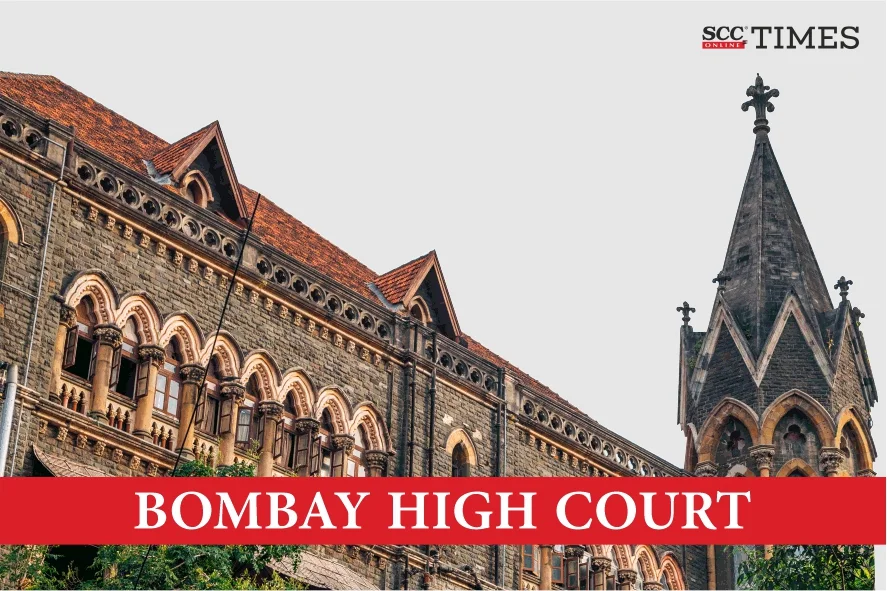
Bombay High Court: In the present case, appeal was filed to challenge the judgment and order dated 15-04-2004 passed by the IIIrd Additional Sessions Judge, Jalgaon in a case wherein appellants were held guilty for offence punishable under Sections 498-A2 and 306 read with Section 343 of the Penal Code, 1860 (‘IPC’). A Single Judge Bench of Abhay S. Waghwase, J., opined that making the wife (deceased) merely sleep on carpet would not amount to cruelty and preventing her to mix with neighbour could not be termed as harassment. The Court stated that there was no evidence to show that at the point of suicide or any proximity to the suicide, there was any demand, cruelty, or maltreatment to connect them with the suicidal death and what triggered the suicide was a mystery. The Court, therefore, allowed the appeal, quashed, and set aside the conviction, and acquitted appellants of the offence punishable under Sections 498-A and 306 read with Section 34 of IPC.
Background
The wife (deceased) married appellant in 2002 and after two months of their marriage, she reported ill treatment, while she was staying with her husband and in-laws. In 2003, she had stated that she received taunts for not preparing meals and humiliating her and was not allowed to watch TV and while she was suffering from Typhoid, she was asked to do the domestic work, and she was even prevented from talking to neighbours. In 2003 itself, news of her suicide was received and thus, her mother lodged a report, based on which the crime was registered.
Thereafter, an investigation was carried out and by judgment and order dated 15-04-2004, her husband, brother-in-law, father-in-law, and mother-in-law were held guilty for offence punishable under Sections 498-A and 306 read with Section 34 of IPC. Therefore, the present appeal was filed challenging the said judgment.
Analysis, Law, and Decision
The Court noted that the allegations regarding ill-treatment by accused included, (a) she was given humiliating treatment; (b) she was made to fetch water after taking bath in the night around 1:00 to 2:00 am; (c) she was not allowed to watch TV; (d) she was made to sleep on the carpet; (e) she was taunted on the quality of meals prepared and was made to do domestic work despite suffering from Typhoid; and (f) she was not allowed to visit neighbours and was not allowed to go alone to the temple.
The Court noted that in Varangaon, where the deceased stayed, water supply was made at late night and thus, the Court opined that when the entire village was required to fetch water after 1:00 am, there was nothing unusual to expect deceased to fetch water at 1:30 am or 1:00 am. The Court stated that the aunt and uncle of the deceased were levelling allegations of taunting, not allowing to watch TV, not allowing to go to alone temple, but the Court opined that none of the allegations had any severity, or such nature of allegations would not constitute physical and mental cruelty as allegations were pertaining to the domestic affairs of the house of accused.
The Court relied on Giridhar Shankar Tawade v. State of Maharashtra, (2002) 5 SCC 177, Gurnaib Singh v. State of Punjab, (2013) 7 SCC 108, State of Andhra Pradesh v. M. Madhusudhan Rao, (2008) 15 SCC 582 (‘M. Madhusudhan Rao Case’), Bhaskar Lal Sharma v. Monica, (2009) 10 SCC 604 and K. Subba Rao v. State of Telangana, (2018) 14 SCC 452 and opined that the said allegations would not constitute offence under Section 498-A of IPC.
The Court opined that in what form humiliation was done was not clarified and merely sleeping on carpet would not amount to cruelty. Further, what kind of taunting was made and by which accused was also not clear and in the same way, preventing her to mix with neighbour could not be termed as harassment.
The Court stated that the instances cited by the aunt and uncle of the deceased could be termed as “harassment” and the Court relied on M. Madhusudhan Rao Case (supra), to opine that every harassment did not amount to “cruelty”.
The Court noted that there was a charge under Section 306 of IPC and to attract the said charge, it was necessary for prosecution to establish incitement, instigation, aiding, or abetment to commit suicide. The Court also noted that allegations were made by the deceased when she visited her aunt and uncle during Holi in March 2003 and the incident of suicide was of May 2003. The Court stated that there was a gap of almost two months since the deceased, aunt-complainant and witnesses (aunt and uncle) met each other and it was admitted that there was no communication from the deceased either written or oral and the deceased did not convey that there were any instances of cruelty in proximity to suicide.
The Court stated that there was no evidence to show that at the point of suicide or any proximity to the suicide, there was any demand, cruelty, or maltreatment to connect them with the suicidal death and what triggered the suicide was a mystery.
The Court stated that the Trial Court tried to impose its own reflection on how a newly bride should be treated and that such an act of accused making her fetch water at off hours amounted to physical and mental cruelty. The Court further stated that even when there was no evidence that conduct of accused towards deceased was incessant or consistent, the Trial Court noted that ill treatment became intolerable to the deceased and therefore she committed suicide. The Court opined that such observations were out of place and were not based on strong foundation.
The Court held that findings of the Trial Court were patently erroneous, and the allegations were non-specific, general, or petty in nature, and even essential ingredients for Section 306 of IPC were not available. The Court stated that, such judgment could not be allowed to be sustained, therefore, the Court allowed the appeal, quashed, and set aside the conviction awarded to appellants, and acquitted appellants of the offence punishable under Sections 498-A and 306 read with Section 34 of IPC.
[XYZ v. State of Maharashtra, 2024 SCC OnLine Bom 3351, decided on 17-10-2024]
Advocates who appeared in this case :
For the Appellants: Joydeep Chatterji, Advocate;
For the Respondent: K. K. Naik, APP for Respondent — State; R.P. Kahale h/f. Vinod P. Patil, Asstt. to APP for complainant.
Buy Penal Code, 1860 HERE
1. Corresponding Section 108 of the Nyaya Sanhita, 2023 (‘BNS, 2023’)