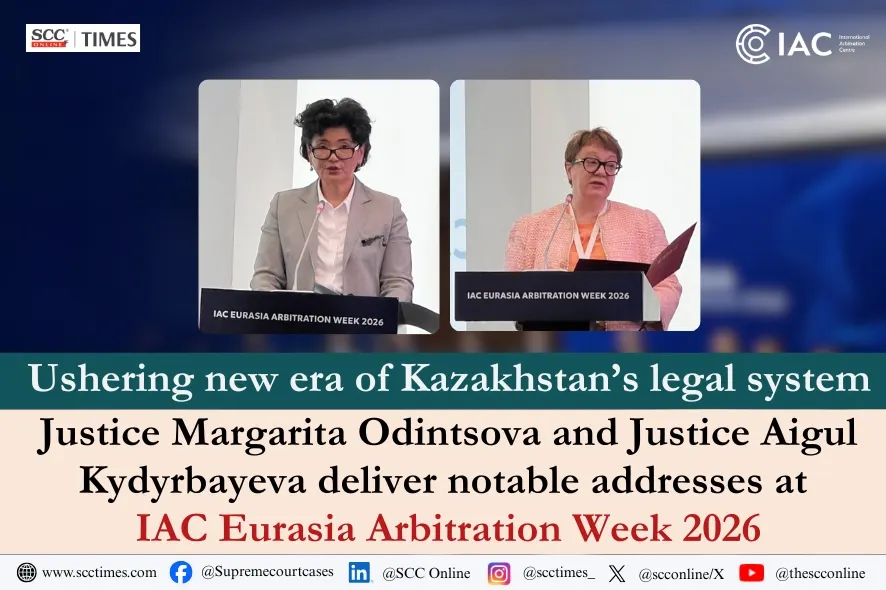
The International Arbitration Centre (IAC) has begun its fourth annual IAC Eurasia Arbitration Week 2026 (EAW26), taking place from 30 June to 3 July 2026 in Astana, Kazakhstan. IAC EAW26 has brought together leading policymakers, academics, in-house counsel, private practice lawyers, and arbitrators from around the world. The event provides a unique platform for participants to engage with internationally recognised experts in arbitration and dispute resolution. The programme will feature panel discussions, keynote sessions, interactive masterclasses, and advocacy-style debates.
Day 1 of the event formally began with an opening ceremony graced by several distinguished speakers, namely, Thomas Krümmel, IAC Chairman; Rt. Hon. The Lord Burnett of Maldon KG, AIFC Court Chief Justice; Renat Bekturov, Astana International Financial Centre (AIFC) Governor; Justice Margarita Odintsova, Judge of the Supreme Court of the Republic of Kazakhstan; and Justice Aigul Kydyrbayeva, Judge of the Constitutional Court of the Republic of Kazakhstan.
Justice Aigul Kydyrbayeva
At the outset, Justice Aigul welcomed everyone on behalf of the Constitutional Court of Kazakhstan. She remarked that IAC Eurasia Arbitration Week had become an annual platform for discussing topical issues in the field of arbitration and dispute resolution. This year, the IAC EAW26 coincided with a significant stage in the constitutional and legal development of our country, as on 1 July, the new Constitution of Kazakhstan entered into force.
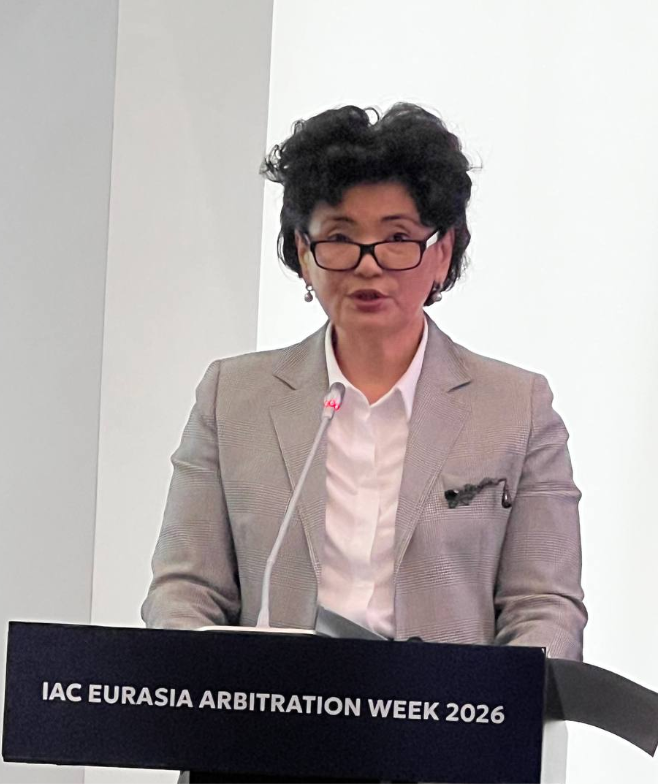
She explained that the creation of a new constitution was another step in the reformation process initiated in 2022. According to her, the Constitution enshrines the development of human capital, education, science, and innovation as strategic priorities of the State, as well as the protection of all forms of property and respect for the norms and principles of international law. This was especially important for investors and for small and medium-sized businesses, as the protection of property is intended to serve as a fundamental condition for sustainable corporate governance and economic development.
Referring to the topics that would be discussed at the IAC EAW26. Justice Aigul remarked that such diversity reflected the growing role of Eurasia as an important center of economic integration and underscored the importance of arbitration as a reliable instrument for ensuring legal certainty and sustainable development of cross-border business relations.
Within the scope of their respective mandates, she added, the Constitutional Court, the AIFC Court and the IAC are committed to ensuring impartiality, independence and fairness in the administration of justice, as well as to creating conditions for the rule of law.
Thus, she concluded by extending her support for the conference and wished everyone a successful professional dialogue.
Justice Magarita Odintsova
Justice Magarita began by underscoring the importance of arbitration in Kazakhstan’s modern legal system as it eases the burden on the state courts by offering parties an efficient, confidential, and specialized mechanism for dispute resolution.
She remarked that interest in arbitration had increased since the adoption of the Law on Arbitration and since arbitral awards were enforceable like court judgments. However, unlike court judgments, which may be reviewed by higher judicial instances only in cases expressly provided by law, arbitral awards could not be reviewed by a court on their merits. This was one of the distinctive features of arbitration legislation in Kazakhstan.
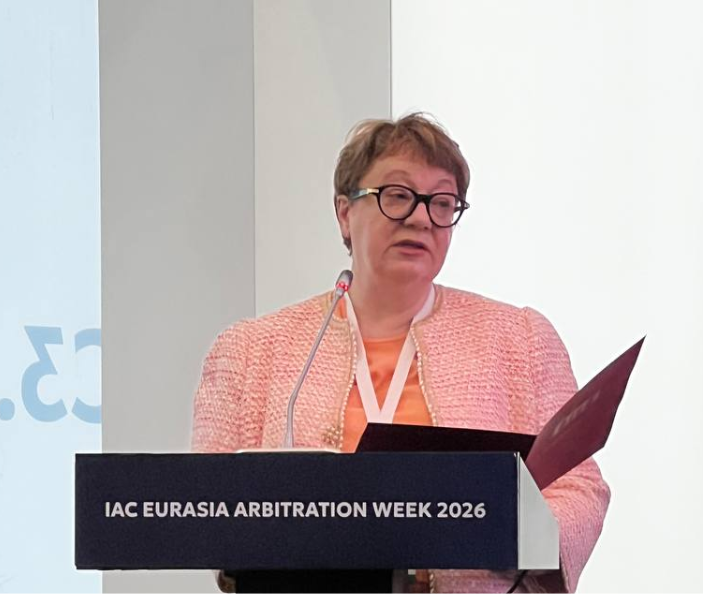
Recognising the role of arbitration as an autonomous and independent institution for the resolution of civil law disputes, she added, the Supreme Court of Kazakhstan had been consistently working to shape judicial practice in this category of cases. Since the Arbitration Law’s adoption, the Supreme Court had conducted two reviews of case practice in this category.
Justice Magarita stated that a regulatory resolution was adopted in 2023 which provided Courts with relevant clarifications on the application of the Law. Additional amendments were planned for the second half of 2026, considering the judicial practice accumulated over the past three years. Furthermore, three analytical reviews of the arbitration ecosystem had been carried out, and recommendations were made, considering judicial practice, which would serve as the basis for amendments and additions to the current normative resolution.
She stated that the Supreme Court supported arbitration, but only on the condition of strict compliance with the law. Kazakhstan’s judicial practice, as the analyses show, was generally stable, and arbitral awards are set aside by the courts only on grounds strictly provided for by law.
Regarding the challenges faced by arbitration, she stated that through the combined efforts of the State, the judicial community, and the arbitration community, the country would be able to build an effective and fair dispute resolution mechanism that serves the interests of citizens and business alike.
Thus, she concluded by wishing everyone a productive conference and a constructive dialogue.