As one of the law firm events, RPC and Stephenson Harwood organized a debate titled “The arbitrator is dead, long live the AiBitrator: this house believes that human-led dispute resolution is slow, expensive, and generally ineffective.” The question for the debaters was: Should Arbitrators be replaced with AI?
RPC and Stephenson Harwood advocates argued for and against the motion. A ‘tribunal’ comprised of esteemed members of the leading international arbitration institutions will put questions to the teams, share their personal views, and showcase the steps their institutions are taking in this area.
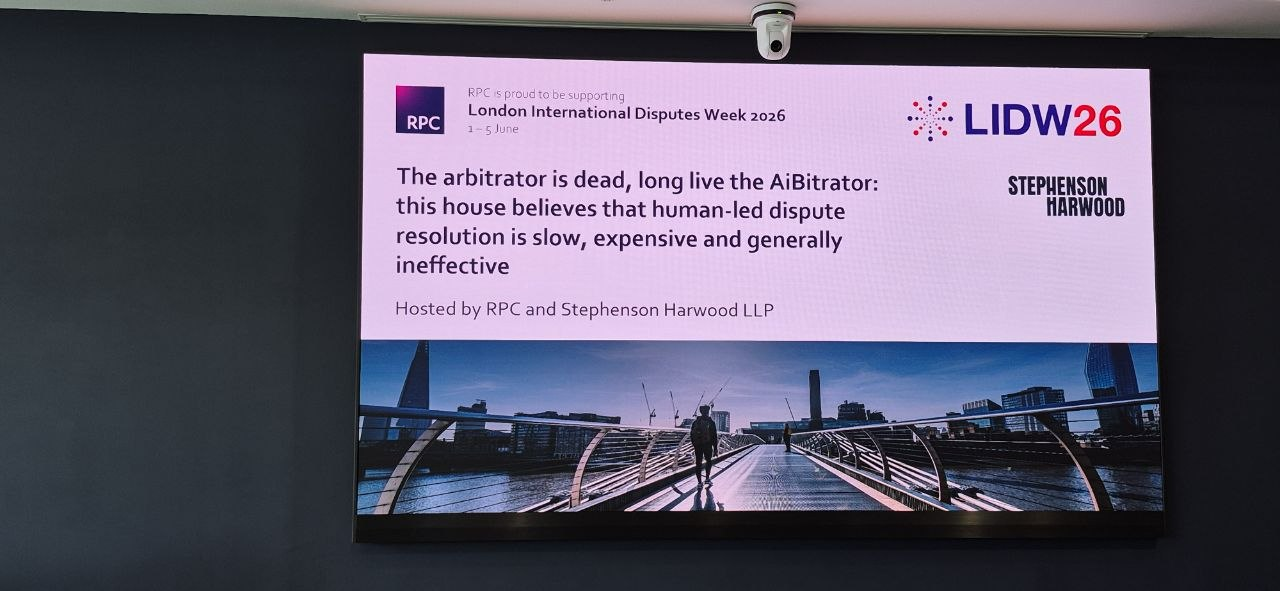
Counsel For the Motion:
-
Ms. Kirtan Prasad, Partner, RPC
-
Mr. Yi-Shun Teoh, Partner, RPC
CounselAgainst the Motion:
-
Mr. Henry Simpson, Associate, Stephenson Harwood
-
Mr. Daniel Boon, Associate, Stephenson Harwood
Tribunal:
-
Ms. Shwetha Bidhuri, SIAC, Director & Head, South Asia
-
Ms. Juliet Blanch, Vice President, Arbitration Chambers and ICC Court
-
Mr. Samuel Mbiriri Nderitu, NCIA, Director
-
Ms. Neeti Sachdeva, MCIA, Secretary General & Registrar
-
Mr. Kamal Shah, Stephenson Harwood LLP, Head of International Arbitration
-
Mr. Shai Wade, RPC, Head of International Arbitration
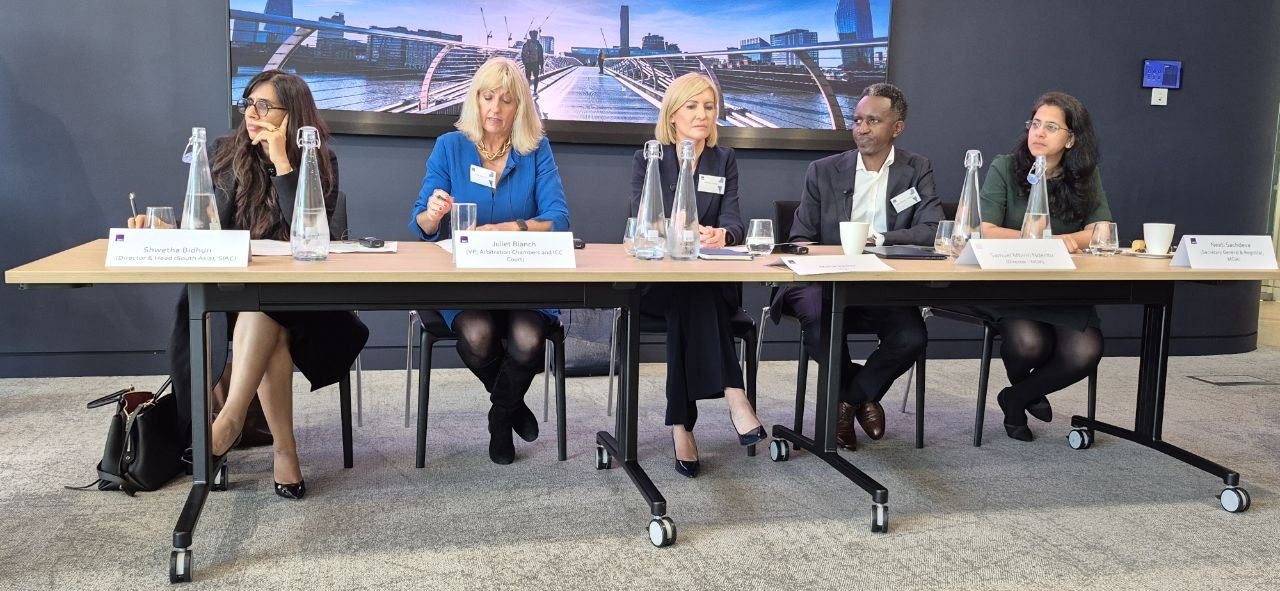
After introducing the counsels and the tribunal, Mr. Shai Wade explained the rules for the debate.
Arguments For the Motion
Speaker 1:
Ms. Kirtan Prasad kick-started the debate by humorously comparing her stance to that of a turkey voting for Christmas, as she was an arbitration practitioner who was arguing to convince the audience that human arbitrators were not required.
She underscored that five qualities of arbitration were highlighted in comparison with litigation, i.e., speed, cost, neutrality, enforceability, and confidentiality, but now AI had surpassed humans in each quality. She explained it as follows:
-
Speed: She stated that AI can process information and generate decisions significantly faster than human tribunals. Citing the LCIA’s Cost and Duration Survey statistics, she mentioned that the average award-writing time increased from three months in 2017 to four months in 2024 and suggested that human arbitrators are becoming slower rather than faster. Thus, she argued that no realistic comparison exists between machine processing speed and human decision-making.
-
Cost: She argued that arbitral institutions had created an ‘à la carte’ menu of ad valorem costs and hourly rates, and regardless of the fee structure, there was a huge difference between the costs. AI-generated decisions would be substantially cheaper than maintaining a tribunal throughout lengthy proceedings.
-
Neutrality: Ms. Prasad acknowledged that while AI can be biased or can hallucinate, algorithmic bias was easier to identify and correct. She argued that human bias is often unconscious, hidden, and difficult to remedy. She noted that despite years of diversity initiatives in arbitration, progress remains slow, demonstrating the difficulty of addressing human bias.
-
Enforceability: She contended that nothing in the 1958 New York Convention explicitly prevents AI-generated awards from being enforced. She also stated that if challenges are raised for bias against an arbitrator, the court adjudicating such a challenge cannot have insight into how the arbitrator thinks. Still, an AI’s algorithm can be checked for bias.
-
Confidentiality: She argued that machines might be more reliable custodians of confidential information than human practitioners.
“I’d rather take an AI hallucination any day over the arbitrator dozing off mid-hearing.”
“I’d much rather vouch for the discretion of a machine than an arbitration practitioner with a beverage in hand at an arbitration conference.”
She also argued that emerging AI-driven dispute resolution systems were already in operation for smaller claims. To substantiate this, she mentioned the AAA-ICDR’s AI-assisted award drafting tools as evidence that AI is already performing functions traditionally carried out by arbitrators, whereas humans act as a reviewer of the award in the scrutiny process.

Speaker 2:
Continuing the arguments for the motion, Mr. Yi-Shun Teoh delved into LIDW’s theme, i.e., Tradition, Trust and Transformation, to substantiate his stance.
-
Tradition:
-
He remarked that international arbitration practitioners suffered from intellectual arrogance just because they practice arbitration instead of commercial litigation and thus believed that AI would not threaten their jobs.
-
He challenged the claims that arbitration was faster, cheaper, and more efficient than litigation, pointing towards lengthy delays in the issuance of awards and escalating arbitrator fees.
-
He also criticised arbitration’s confidentiality for shielding poor-quality decision-making from scrutiny. Additionally, institutional review processes provide insufficient oversight.
-
He also claimed that arbitration tolerates factual and legal errors that would be unacceptable in other professions. In this regard, he criticised the limited grounds for challenging awards under the UNCITRAL Model Law and the New York Convention. He compared arbitrators to surgeons or pilots, arguing society would not accept comparable mistakes in those fields.
-
-
Trust:
-
On this front, he mentioned the trust that is placed in arbitration due to the arbitrators being appointed by them. He argued that party-appointed arbitrators create structural incentives that undermine neutrality, and appointment should be left to an institution or AI.
-
He suggested that AI would be more impartial than human arbitrators who depend on repeat appointments.
-
He also referred to Mr. Toby Landau’s keynote address, wherein he criticized the self-promotion and ranking system of the arbitration community, which was not based on competence but rather social media visibility. He suggested that AI systems could be ranked according to measurable criteria of accuracy of citations, quality of reasoning, and hallucination/ error rates. He contended that this was a more objective system than evaluating human arbitrators based on reputation and conference appearances.
-
-
Transformation:
-
Referencing Prof. Richard Susskind OBE, he argued that the question is not whether AI will replace judges and arbitrators, but when. He argued that AI arbitration was an inevitable evolution rather than a speculative future development.
-
He referred to the AAA-ICDR AI-assisted arbitration model mentioned by Ms. Prasad and stated that it provides resolution 25% faster and saves 35% costs.
-
“This is an industry that has long been corrupted and should no longer have the legitimacy that it seems to have by default.”
When questioned about accountability, he contended that AI systems may actually be more accountable because their data sources and methodologies can be examined. AI “black boxes” are no less transparent than closed-door tribunal deliberations.
Arguments Against the Motion
Speaker 1:
Mr. Henry Simpson made the following arguments against the motion:
-
Efficiency vs Legitimacy:
-
He stated that though awards can be made efficiently, their legitimacy was reduced due to hallucinations and manufactured conclusions. Such flaws made the enforcement of such awards uncertain.
-
Generative AI is an algorithmic, fundamentally a predictive text system trained on vast datasets rather than a reasoning entity. Thus, it suffered from two fatal flaws for its role as an arbitrator: hallucinations and the inability to assess human evidence.
-
Hallucinations: He stated that AI suffers from hallucinations, meaning it can fabricate authorities, facts, and legal conclusions. Often, there are news stories about how AI tools continue to generate fictitious legal citations and incorrect analyses. Human judges and arbitrators currently act as safeguards by detecting and correcting such errors. However, decision-making could not be left to such unreliable AI arbitrators.
-
Assessing Human Evidence: He argued that evaluating human testimonies was a complex value judgment as it involves understanding not just documents but also human nature, emotional intelligence, and cultural context. He argued that generative AI is a document-heavy platform, fundamentally, as of today, incapable of human emotion and understanding the human experience; thus, it would not arrive at the same quality of conclusion.
-
-
He argued that the issue of delay could be solved by proper reform and incentives. Though AI could help reduce costs, speed, and cost savings, it could not justify potentially incorrect decisions.
-
Regarding the Black Box Problem, he contended that human arbitrators provide transparent reasoning that parties can scrutinize, but AI systems often cannot fully explain how conclusions are reached.
-
-
Risk of Professional Atrophy:
-
He argued that one of the most important relationships in the arbitration ecosystem was the relationship between arbitrators and counsel. Their interactions improve advocacy standards as practitioners learn through engagement with experienced tribunals.
-
Removing human arbitrators would weaken this educational and professional development function.
-
He further contended that the counsel-tribunal relationship was also responsible for arbitration innovations. For example, the 2026 ICC Rules contain a highly expedited arbitration procedure, an award within three months of the first case management conference, and the removal of mandatory terms of reference.
-
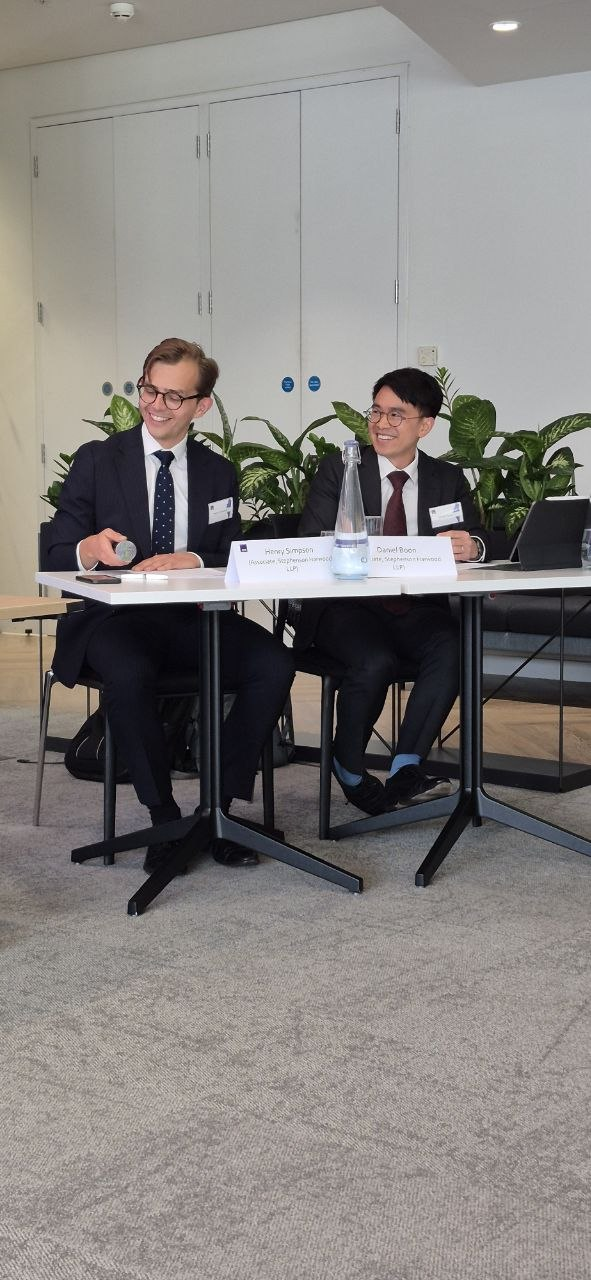
Speaker 2:
Taking the debate further, Mr. Daniel Boon argued that:
-
Limitations of Party Autonomy: Referring to Ms. Prasad’s point about party consent, he argued that even if parties consent to AI arbitration, consent alone does not justify every process. Arbitration operates within broader legal and societal frameworks. Fundamental principles of justice and the rule of law should not be overridden merely because parties agree.
-
Enforceability Risks Under the New York Convention:
-
Article V(1)(b) New York Convention: Right to Present One’s Case- AI may generate arguments or legal theories that neither party raised. If parties are not allowed to address those points, awards may be challenged for violating due process.
-
Accountability Concerns/ Black Box Problem: While AI may identify documents it considers, one cannot fully access the process of how it weighs evidence and reaches conclusions. Without access to underlying algorithms, accountability remains impossible. However, when a human arbitrator makes an error, there are identifiable decision-makers and decision-making processes responsible for the award.
-
Article V(1)(d) New York Convention: Use of AI must be as per the seat: If the seat of arbitration does not allow the use of AI as an arbitrator, then users of such AI would have to ascertain which jurisdictions would allow the use of AI-generated awards.
-
Article V(2)(b) New York Convention: Public Policy: An AI award, which is probabilistic rather than deliberative, simply cannot have a genuine deliberation, which is the right of every user of arbitration.
-
He concluded by referring to concerns raised by senior judges regarding democracy and adjudication. The central question is whether society is willing to delegate judicial or quasi-judicial decision-making to machines.
Rebuttal
For the Motion:
-
On the issue of AI hallucination, Ms. Prasad argued that hallucination was the current state of technology and there were no contentions that it wouldn’t improve with time. Mr. Teoh agreed with the point that AI hallucination would decrease over time.
-
She stated that arbitration was an adversarial system that required a mechanism for parties to check the cited cases and legislation by the opposite party.
-
She argued that in most commercial disputes, documents were sufficient, and there were few instances of reliance on witness evidence or testimony. This was because it is human emotional intelligence, and could be attributed to bias.
-
Regarding enforcement issues, she questioned the difference between the current situation, as counsels still had to check whether the seat of jurisdiction had any legislation hindering the enforcement of the award.
“You have a cold machine that’s looking at the evidence rather than someone who’s applying their bias to a witness who may or may not be a product of that same cultural background.”
Against the Motion:
-
Mr. Boon argued that involving a human for the review of an AI-generated award did not save any costs, as the institutions would have to appoint a reviewer who would go through all the underlying documents, all the witness statements, without having listened to any of the testimony, and without attending any hearings. Thus, these awards would not just incur institutional costs but also costs at the court level when they get challenged.
“Why are we changing something that is not completely broken yet and introducing a whole new factor that we simply can’t control?”
Tribunal Insights
Ms. Shwetha Bidhuri remarked that the proposition was problematic since it created a false binary. She stated that both positions were extreme and not plausible. Thus, the question was whether arbitrators could improve with AI, and neither side of the motion could win.
Regarding institutional approach towards use of AI, she stated that it was measured and institutions followed six parameters: human responsibility, procedural fairness, equality of treatment, confidentiality, information security, disclosure, and the use of data.
Ms. Juliet Blanch agreed that AI was threatening the job of arbitrators, as it may not be as good, but it would be cheaper and quicker. She agreed with the concerns of a lack of human emotions in an AI, but mentioned that there was an AI that could detect 130 emotions and micro-expressions. She also spoke about the 2026 Arbitration Rules issued by the International Chamber of Commerce and the task force established to make a report on clauses on AI in the Rules.
Speaking from the Kenyan perspective, Mr. Samuel Mbiriri Nderitu talked about the process of hot-tubbing, wherein experts are questioned together to identify why their conclusions differ. AI may be able to choose between reports, but it may not adequately explain why one expert’s evidence was preferred over another. Human arbitrators can probe experts, understand nuances, and require clarification.
Regarding enforcement, he stated that the enforcement of arbitral awards depends heavily on clear reasoning. Even if an AI reaches a legally correct conclusion, courts and parties will still need to understand how the decision was reached and why particular evidence was accepted or rejected. This remains a significant challenge for AI-generated awards.
He observed that arbitration has increasingly adopted court-like procedures. Counsels often raise technical objections and procedural disputes that unnecessarily prolong proceedings. He cited examples from Kenya where lawyers rely on evidentiary objections even though the Evidence Act does not apply to arbitration. These practices create delay and inefficiency. Thus, he stated that the Nairobi Centre for International Arbitration’s approach was that AI is not coming to replace the human arbitrator, but rather to improve efficiency, so that we do away with such bad habits.
He also mentioned that Kenya was developing policies and laws on the use of AI and amendments to its arbitration act.
Lastly, Ms. Neeti Sachdeva questioned whether AI can truly perform the functions of weighing evidence, exercising judgment, and making evaluative decisions rather than simply analysing information. She emphasised that the most important question is not efficiency but legitimacy. Parties want to feel heard, understood, and judged by a person.
Referring to the COVID experience of virtual hearings, she observed that although many procedural steps can be conducted remotely, parties still often prefer in-person cross-examination. This demonstrates the continuing importance of human interaction in dispute resolution. The satisfaction of being heard would not exist if AI were to replace a human arbitrator.
Regarding Mumbai Centre for International Arbitration’s use of AI, she explained that though it was used for case management, deadline monitoring and administrative support, they were still questioning using AI for arbitrator selection, AI generated awards, etc.
Despite AI’s efficiency advantages, she was not prepared to conclude that human arbitrators are obsolete. She stated that she would not support replacing human arbitrators now and was uncertain whether she would support it even in the next decade.
In conclusion, Mr. Wade reflected on the debate and commended the counsels and the tribunal for their remarkable participation.
This report forms part of SCC Times’ special coverage of London International Disputes Week (LIDW) 2026. As a Media Partner for the event, SCC Times is reporting key conversations across the conference, highlighting emerging trends and perspectives from the international dispute resolution community.
SCC Times extends its appreciation to Zehra Naqvi, EBC—SCC Online Foreign Student Ambassador and Lawyer, for her on ground presence, valuable assistance and contribution to the reporting of this event.