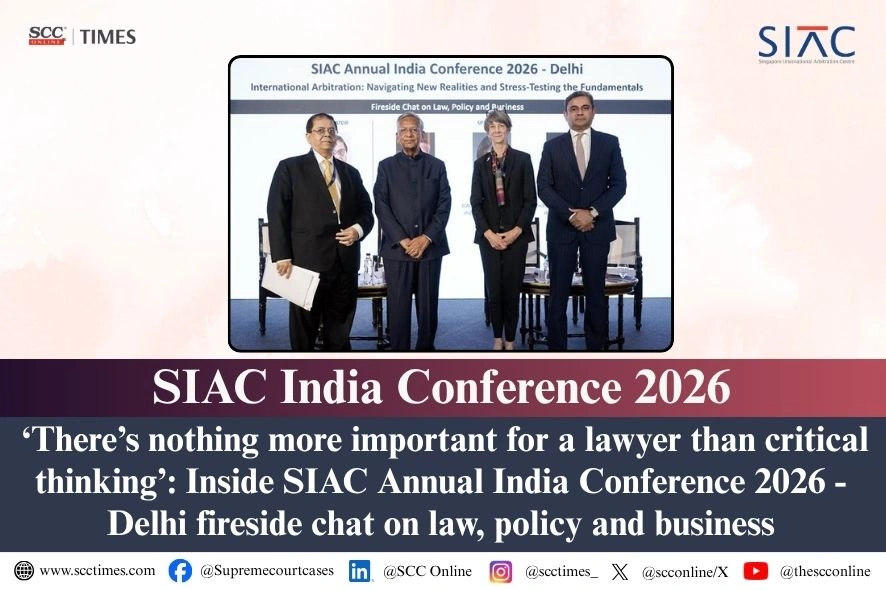
The Singapore International Arbitration Centre (SIAC) organised the SIAC Annual India Conference 2026 in New Delhi on 25 July 2026 under the theme “International Arbitration: Navigating New Realities and Stress-Testing the Fundamentals”.
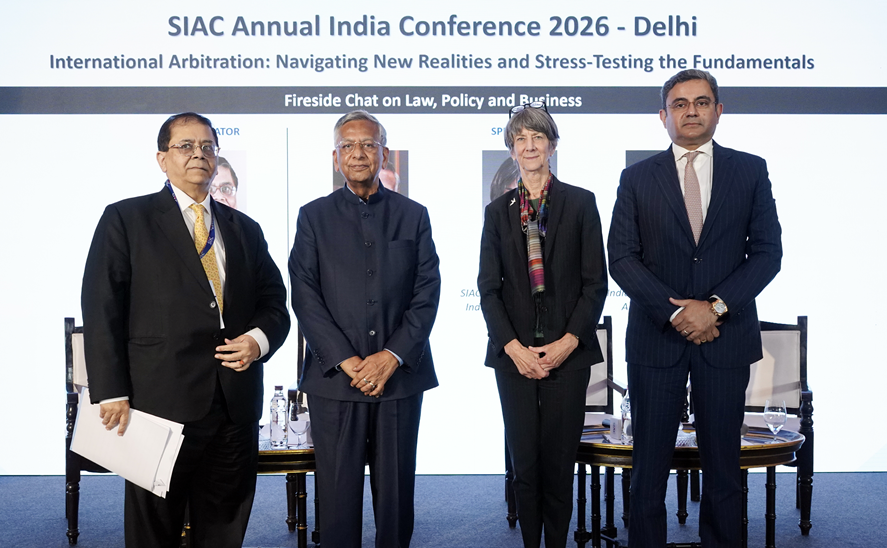
Among the key sessions was a fireside chat on “Law, Policy and Business”, moderated by Cyril Shroff, Member of the SIAC Board of Directors and Managing Partner, Cyril Amarchand Mangaldas. The discussion featured R. Venkataramani, Attorney General for India and Senior Advocate, Supreme Court of India, Lucy Reed, President of the SIAC Court of Arbitration and Subhrakant Panda, Managing Director of Indian Metals and Ferro Alloys Ltd. (IMFA) and Past President of Federation of Indian Chambers of Commerce & Industry (FICCI).

Opening the discussion, Cyril Shroff reflected on India’s remarkable economic transformation over the past two decades, describing the country as standing at a critical inflection point. Referring to India’s aspiration of becoming the world’s third-largest economy in less than a decade, he observed that significant policy, regulatory and governance reforms have already laid the foundation for sustained growth. At the same time, he emphasised that economic progress cannot be viewed independently of the country’s dispute resolution framework.
While India continues to attract investment because of its market size and economic potential, concerns relating to the speed and efficiency of dispute resolution remain a recurring challenge for businesses and foreign investors. According to him, improving dispute resolution is therefore not merely a legal issue but a business imperative that will increasingly shape India’s competitiveness in the global economy.
Rule of law must evolve alongside economic development
Responding to the question on the broader relationship between law, policy and business, Attorney General R. Venkataramani observed that the legal system is operating during a period of rapid transformation driven by changes in global economic activity, investment patterns and public policy.
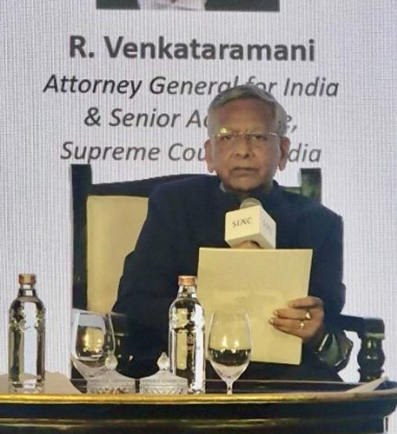
As he remarked, “We are not only in one paradigm shift, we are in multiple paradigms shifts”, emphasising that governments today must continually adapt to changing commercial realities rather than relying on conventional policymaking approaches.
According to him, legislation should not be examined in isolation from the broader policy objectives it seeks to achieve. As economic systems evolve, legal frameworks must also adapt to new forms of commercial activity and dispute resolution. He suggested that India should remain open to rethinking conventional legal structures and borrowing ideas from different dispute resolution mechanisms wherever appropriate, observing that innovative institutional reforms may become necessary to meet emerging commercial needs.
Turning specifically to the relationship between economic growth and the rule of law, the Attorney General noted that discussions on the rule of law have been traditionally looked at from a socio-political lens. However, he argued that the concept must now be understood in a broader sense that also recognises its role in enabling economic development, promoting equality, and social participation and ensuring wider participation in the benefits of growth. Concluding his remarks on institutional reform, he urged policymakers and legal stakeholders to remain open to new solutions, observing that we must start searching for answers.
Business seeks certainty, fairness and enforceability
Offering the perspective of Indian industry, Subhrakant Panda observed that his experience both as a business leader and as the former President of FICCI had demonstrated how closely business success depends upon sound policymaking. He remarked that participation in policy discussions through organisations such as FICCI requires balancing competing interests across sectors of the economy.
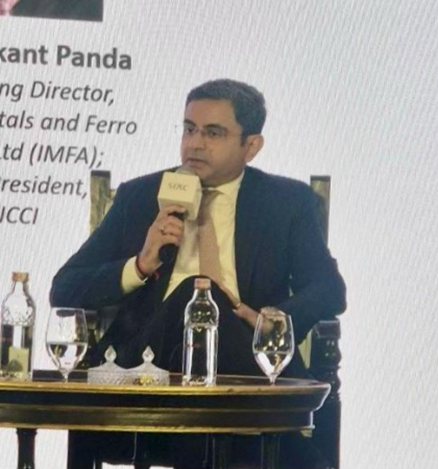
Reflecting on India’s economic trajectory, he expressed optimism about the country’s future, observing that India possesses significant demographic advantages, a large domestic and international market and an increasingly unified economic framework. Stressing the confidence of Indian industry, he remarked,
“We don’t want protection. Give us a level playing field and we are ready to take on the world”, adding that businesses today are prepared to compete globally provided the regulatory environment and policies remain predictable and fair.
From the perspective of investors, he explained that commercial decisions are rarely driven by headline returns alone. “It’s not the headline returns that any business is going to chase after, it’s the risk-adjusted return”, he observed, explaining that policy certainty, enforceability of contractual rights and long-term regulatory stability become critical considerations when businesses evaluate investments that may span decades. While infrastructure deficiencies or operational challenges may increase project costs, uncertainty surrounding legal rights and policy implementation cannot easily be absorbed by businesses.
Discussing dispute resolution more specifically, Subhrakant remarked that businesses today devote considerably greater attention to risk management before entering commercial transactions than in previous decades.
When asked what businesses value most in dispute resolution, he noted that businesses place the greatest value on enforceability and process certainty, followed by speed, with cost coming last because businesses ultimately seek confidence that disputes are resolved through fair and transparent processes. Even where the outcome is unfavourable, he suggested, parties are more willing to accept it if they understand the reasoning behind the decision and perceive the process to have been fair.
Trust remains the foundation of international arbitration
On being asked on how SIAC is evolving its rules and case administration to meet the changing expectations of the users and the increasing complexity of disputes, Lucy Reed, President of the SIAC Court of Arbitration, emphasised that business and investment is the engine, while law and policy exist to support business, commerce and the international commercial relationships. Against this backdrop, she observed that arbitration institutions must continue adapting to changing technology and increasingly complex disputes without losing sight of their core purpose.

While innovation remains essential, Lucy stressed that: “We have to keep a very strong hold on the fundamentals”, identifying neutrality, fairness, responsiveness to users and dedication of service as the qualities that continue to define credible arbitral institutions. She also highlighted the importance of cultivating diversity within institutions and preparing the next generation of arbitration practitioners for an increasingly technology-driven profession.
Reflecting on the growing use of artificial intelligence, Lucy observed that technological proficiency has become an essential professional skill. However, she cautioned that legal education must continue to emphasise independent reasoning, remarking, “There’s nothing more important for a lawyer than critical thinking.”
Judiciary and institutional credibility determine arbitration success
When asked why only a handful of jurisdictions succeed in establishing themselves as leading arbitration hubs, and what India’s ambition should be in this regard,Lucy observed that only a limited number of centres ultimately achieve lasting global credibility. She noted that successful arbitration centres require much more than modern rules or newly established institutions. In particular, where the seat of arbitration is concerned, the quality ofthe judiciary, high-quality arbitration legislation, enforceability of awards and long-term institutional stability remain decisive factors influencing users’ choices.
Businesses selecting an arbitral institution need confidence that it will continue to operate effectively many years after disputes arise, making institutional longevity an important indicator of credibility. She further observed that genuinely international institutions distinguish themselves through their international outlook and ability to inspire confidence across jurisdictions.
Technology should assist justice, not replace human judgment
The discussion also addressed the growing role of artificial intelligence within the legal profession.
Responding to a question on AI, R. Venkataramani described artificial intelligence as just tools and agencies created by human beings. While acknowledging that technology can improve efficiency, connectivity and access to information, he cautioned that qualities such as emotion, sympathy, empathy and human judgment cannot be replicated through algorithms. In his view, technology should support legal systems rather than replace the exercise of judicial discretion.
India’s economic ambitions require equally ambitious legal reforms
Bringing the discussion to a close, the panellists reflected on India’s future as both an economic and dispute resolution hub. While each speaker approached the subject from a different perspective, a common theme emerged throughout the conversation: India’s ambition to become one of the world’s leading economies must be matched by equally strong legal institutions, effective dispute resolution mechanisms and sustained policy reform.