Moral Policing, POCSO & the Rule of Law
Watch Law Made Easy by SCC Times new episode which examines the legal framework under the Bharatiya Nyaya Sanhita, 2023, the Protection

Bringing you the Best Analytical Legal News


Watch Law Made Easy by SCC Times new episode which examines the legal framework under the Bharatiya Nyaya Sanhita, 2023, the Protection
The Bar Council of Delhi stated that uncorroborated and sensational allegations made without concrete evidence can create unjustified prejudice, hinder the regular functioning of the justice delivery system and lower the dignity of courts in the eyes of the public.
SCWLA reaffirms commitment to Constitution, judicial independence; opposes attempts to undermine dignity of Supreme Court and CJI’s office
The Court held that High Court had failed to adequately consider the gravity of the allegations, criminal antecedents, apprehension of witness intimidation, influence of the principal accused and the wider impact upon the medical fraternity.
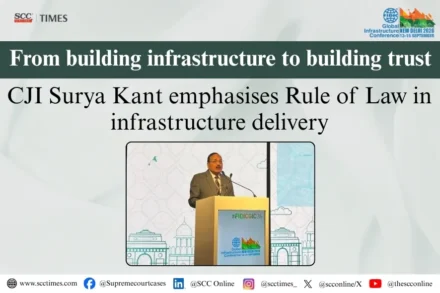
Addressing the FIDIC Global Infrastructure Conference 2026, the Chief Justice of India underscored that the Rule of Law was integral to infrastructure delivery, calling for clear contractual obligations, balanced risk allocation and effective dispute resolution mechanisms.
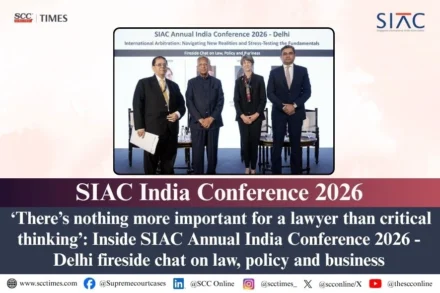
How do law, policy and business shape investor confidence and economic growth? A fireside chat at the SIAC Annual India Conference 2026 examined the legal and institutional reforms needed to strengthen dispute resolution and support India’s long-term economic ambitions.
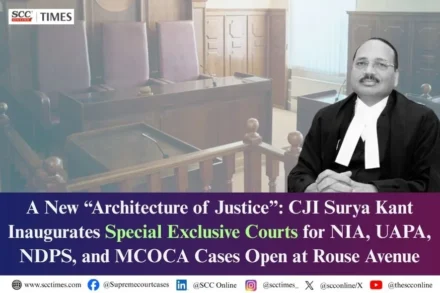
Calling Delhi the “nation’s laboratory for judicial innovation”, CJI Surya Kant marked the importance of specialised courts for timely and effective adjudication of complex criminal cases.
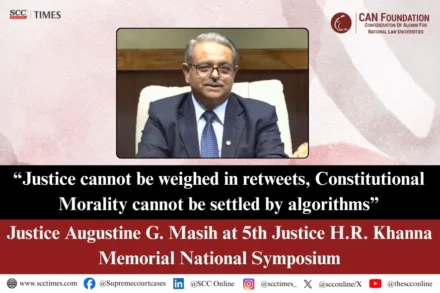
Speaking at the 5th Justice H.R. Khanna Memorial National Symposium organised by the CAN Foundation, Justice Augustine G. Masih reflected on Justice H.R. Khanna’s enduring constitutional legacy and examined how judicial independence is being tested in an era shaped by social media, artificial intelligence and unprecedented digital visibility.
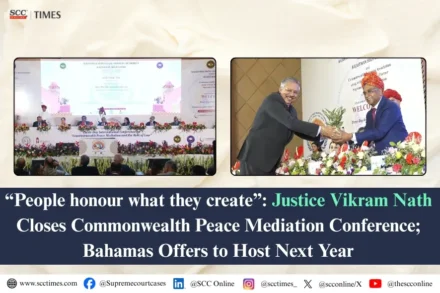
The Commonwealth Peace Mediation Conference closed as it opened: with a call to choose dialogue over confrontation. Justice Vikram Nath’s valedictory address and The Bahamas’ offer to host next year capped three days spanning climate disputes, family conflict, and peace-building.
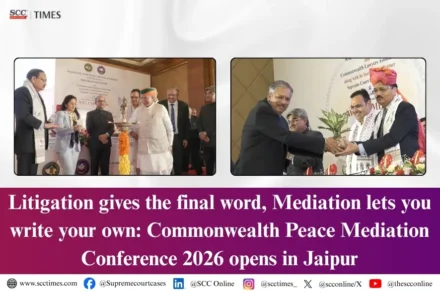
Judges from across the Commonwealth, India’s top law officers, and a newly launched memoir on justice, the three-day Commonwealth Peace Mediation Conference opened in Jaipur with a shared message: mediation isn’t an alternative to justice, it’s one of its truest expressions.
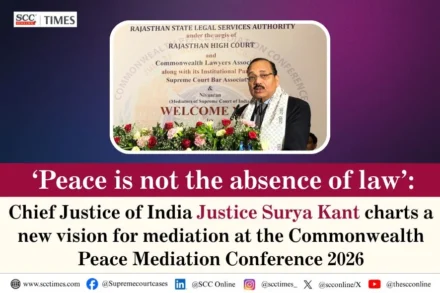
From ancient village panchayats and the Mahabharata to the Mediation Act, 2023 and modern commercial disputes, Chief Justice of India Justice Surya Kant outlined why mediation must become a central pillar of India’s justice delivery system and the Rule of Law.

BCI has issued an appeal urging lawyers, academicians, professionals and citizens to uphold constitutional values and promote peace, while alleging that anti-social and anti-national elements are exploiting recent student protests and disturbances to destabilise the country, stressing that ‘the nation comes first.’
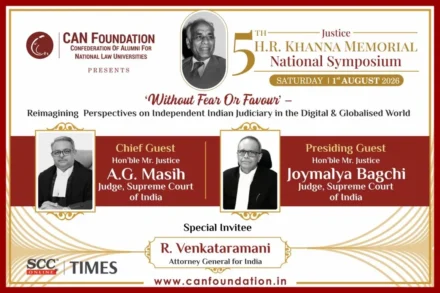
The Symposium is being organised virtually in honour of Late Justice H. R. Khanna, whose unwavering commitment to constitutional morality, judicial independence and civil liberties continues to inspire generations of lawyers, judges and legal scholars.
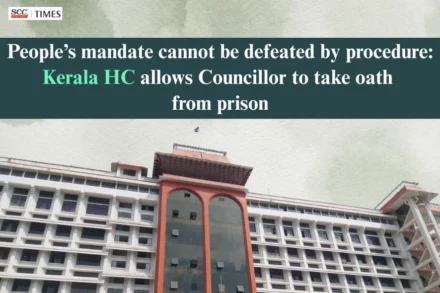
Kerala HC stated that the duty of the Court is to uphold the democracy and ensure that the democratic procedures are strictly followed. However, in extraordinary situation, Court must take extraordinary decision to protect the democratic principles and people’s mandate.
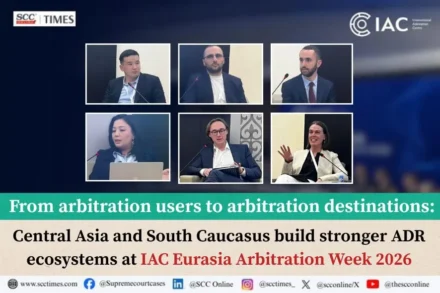
During the IAC Eurasia Arbitration Week 2026, “Regional Update: ADR Trends in Central Asia & South Caucasus” focused on how jurisdictions across Central Asia and the South Caucasus are strengthening their arbitration ecosystems through legislative reform, institutional development, judicial support, and enhanced enforcement practices.
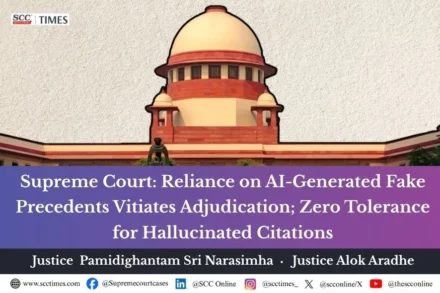
Supreme Court held that reliance on non-existent, AI-generated or hallucinated judicial precedents vitiates adjudication, rendering the decision void in law and warranting its setting aside.
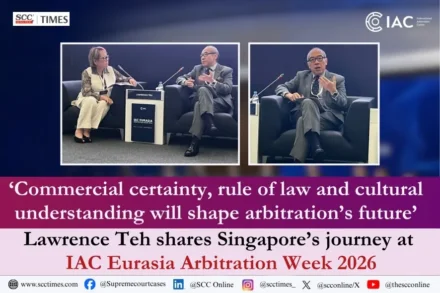
Lawrence Teh highlighted the importance of institutional trust, judicial restraint, and cultural understanding in international arbitration, while encouraging Kazakhstan to build an arbitral identity rooted in its own strengths rather than replicating existing models.
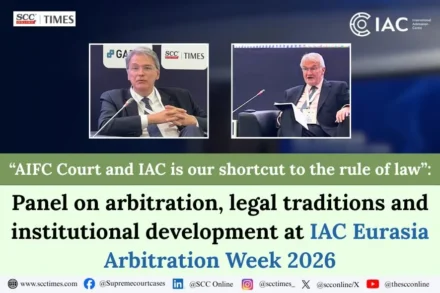
At the International Arbitration Centre Eurasia Arbitration Week 2026 in Astana, Kazakhstan, speakers examined the role of courts and arbitral institutions, the interaction between different legal traditions, settlement and mediation in arbitration, and the future development of arbitration in Eurasia.
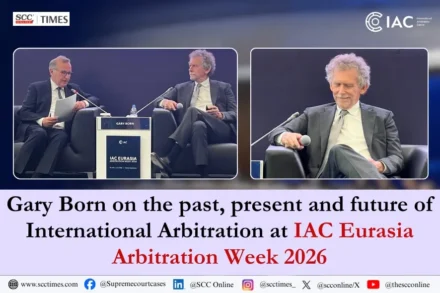
Delivering the keynote address at Eurasian Arbitration Week 2026, Gary Born examined the evolution of international arbitration from ancient civilisations to the modern legal order, arguing that arbitration has always been rooted in party autonomy, contractual freedom and the pursuit of peaceful dispute resolution.

If the AI systems driving arbitral decisions are trained on materials from other jurisdictions, the awards they generate may be unenforceable or worse, systematically biased. Sir Geoffrey Vos used his keynote at the ICA’s 4th Indo-UK Commercial Disputes Conference to draw a line between AI in arbitration, where party consent makes adoption feasible, and AI in courts, where constitutional legitimacy makes it impossible.