








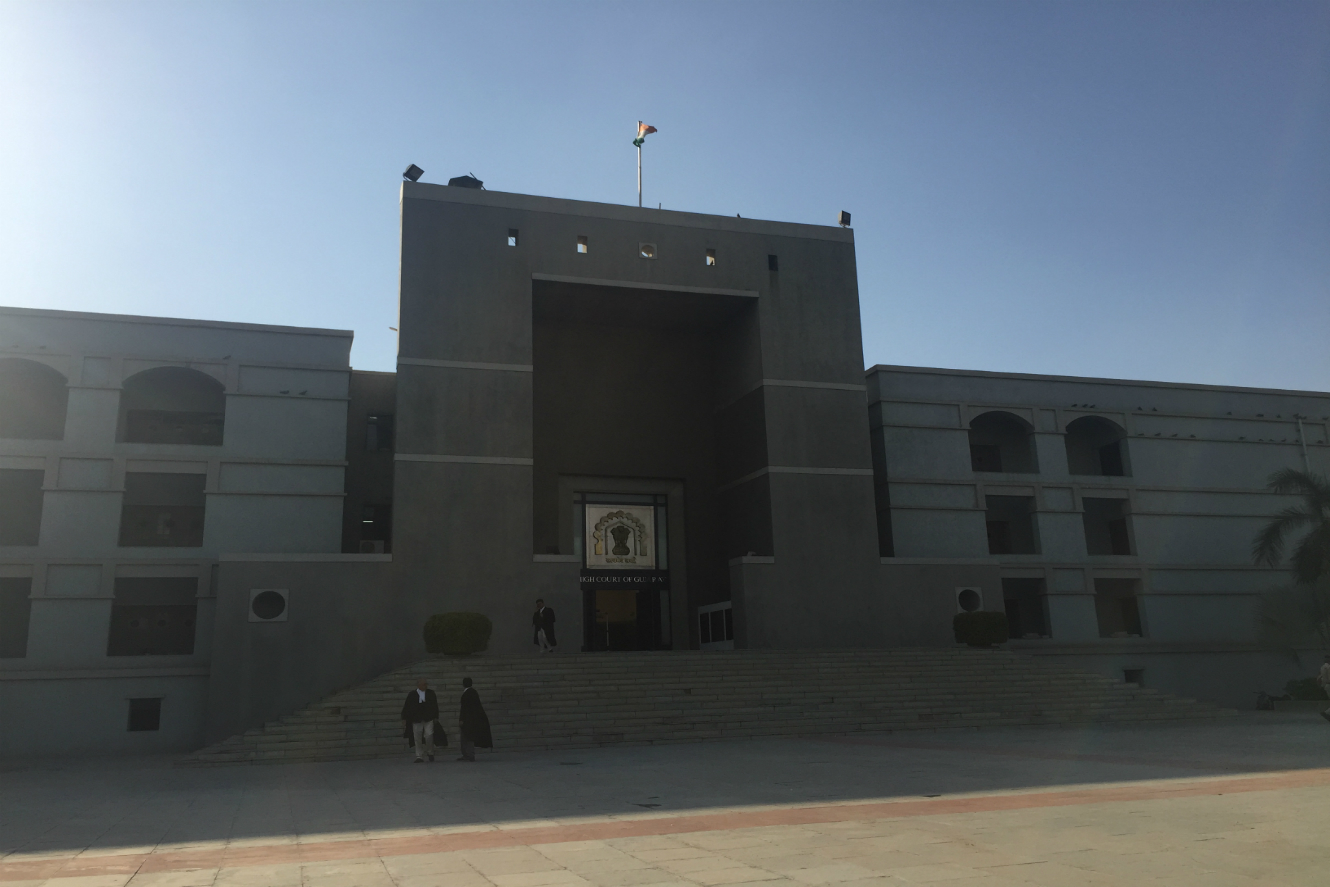
Gujarat High Court: The order of acquittal passed by the trial court in favor of the accused was upheld by a Single Judge Bench comprising of R.P. Dholaria, J., wherein it was held that in order to prove a case of demand of illegal gratification, the prosecution must adduce clinching evidence.
The respondent Taluka Surveyor, was accused of demanding illegal gratification from the complainant for measuring his land. He was accordingly prosecuted. However, on appreciation of evidence the trial court was of the view that the guilt of the respondent was not proved by the prosecution; and the trial Court acquitted the respondent. Aggrieved thus, the State filed the instant appeal.
The High Court perused the evidence adduced by the prosecution and also discussed the law on the subject; and was of the view that to prove the vital ingredients i.e. demand, acceptance and recovery, the evidence of crucial witnesses i.e. complainant, panchas and independent witness is worth to be appreciated. However, such evidence did not support the prosecution case. The demand of illegal gratification has to be proved by adducing clinching evidence. The prosecution in the present case failed to do so; and thus, the order of the trial court acquitting the respondent could not be faulted with. Accordingly, the appeal was dismissed. [State of Gujarat v. Amratbhai Zinabhai Chapaneria, 2018 SCC OnLine Guj 228, dated 16-02-2018]







0 replies