








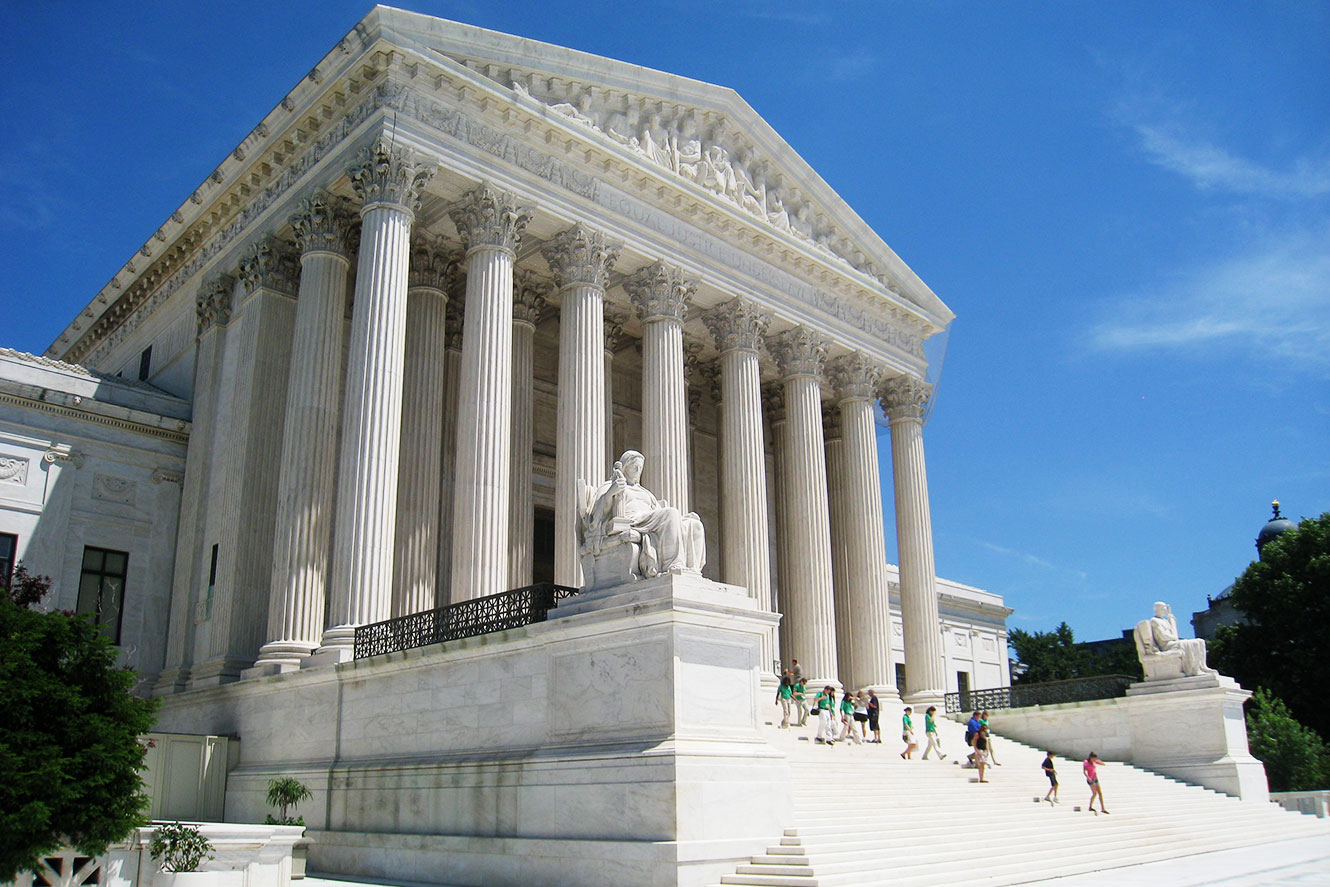
Supreme Court of United States: The Petitioner Supap Kirtsaeng had initially won a copyright infringement filed by a textbook publisher John Wiley & Sons, Inc. Returning victorious, Kirtsaeng invoked Section 505 of the Copyright Act to seek more than $ 2 million in attorney’s fees from Wiley. The Court denied this motion of the petitioner.
The Court denied the application because, it reasoned, imposing a fee award against a losing party that had taken reasonable positions during litigation would not serve the Act’s purpose. The purpose of the Act being“copyright law ultimately serves the purpose of enriching the general public through access to creative works” and “to promote the Progress of Science and useful Arts. The Court held that a District Court should give substantial weight to the objective reasonableness of the losing party’s position while awarding attorney’s fees. Section 505 of the Act states that “a district court may (…) award reasonable attorney’s fee to the prevailing party”. It thus authorizes fee-shifting, but without specifying standards that courts should adopt, or guideposts they should use, in determining when such awards are appropriate. But in the Case of Fogerty v. Fantasy, Inc., 510 U. Section 517, the Court has placed two restrictions on that authority: First, a court may not award attorney’s fees as a matter of course, and second, court may not treat prevailing plaintiffs and prevailing defendants differently.
The Court declined Kirtsaeng’s application on two grounds: first, Kirtsaeng’s proposal would not produce any sure benefits and second, Wiley’s approach is more administrable than Kirtsang’s. [Kirtsaeng, DBA Bluechristine 99 v. John Wiley & Sons, INC., No. 15-573, decided on 16.06.2016]








0 replies