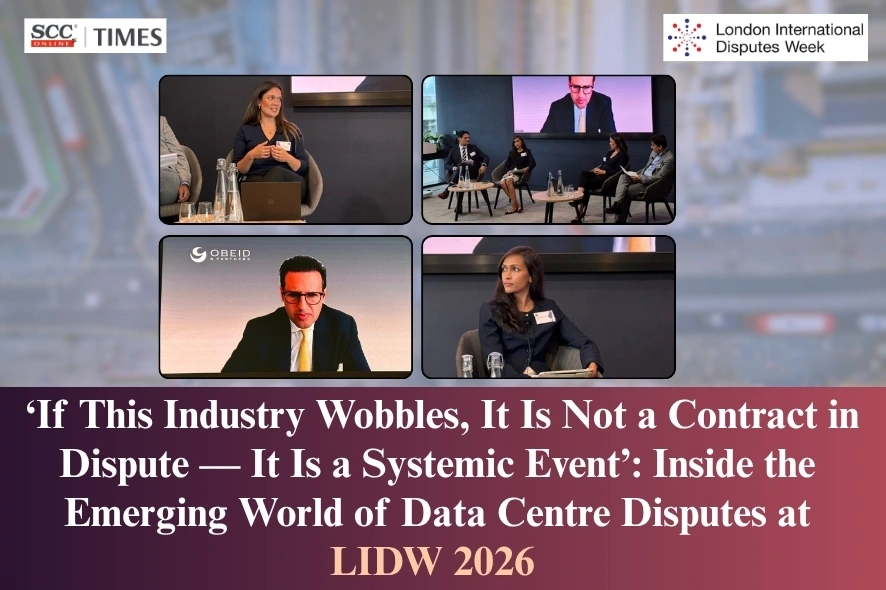
At a member-hosted event by Reynolds Porter Chamberlain (RPC) during London International Disputes Week (LIDW) 2026, lawyers, quantum experts and industry specialists from England, India and the Middle East examined the dispute risks emerging from the rapid growth of data centre projects. The discussion explored how unprecedented investment in digital infrastructure is creating new legal challenges involving construction, energy, technology and regulation, with speakers highlighting issues ranging from compressed project schedules and power constraints to AI liability, data protection and damages assessment.
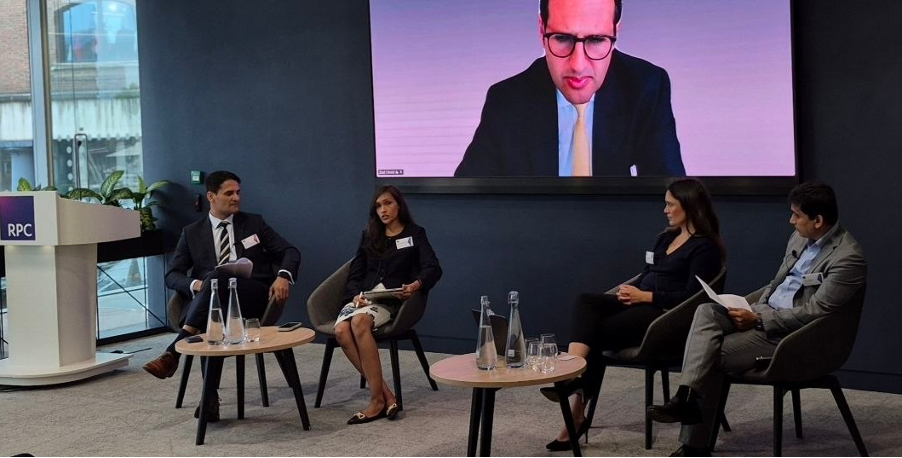
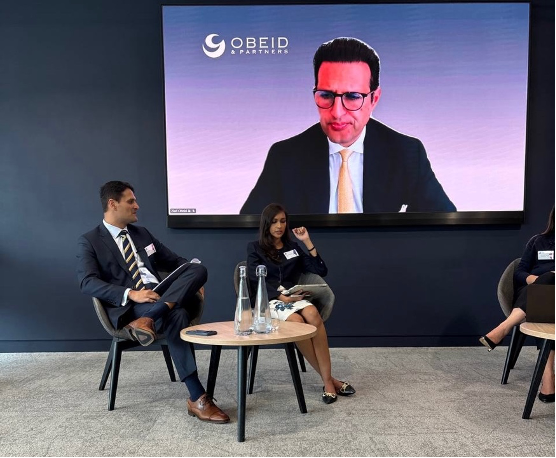
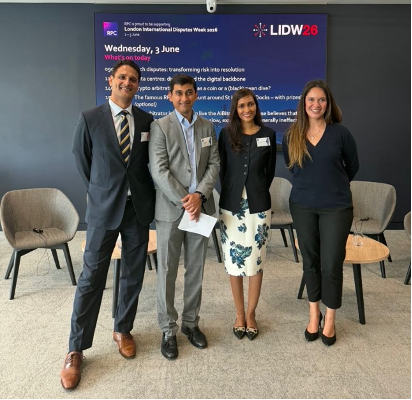
Moderated by Ankit Goyal (RPC), the panel brought together Mr. Karthik Balasagar (FTI Consulting), Ms. Caroline Tuck (RPC), Ms. Gathi Prakash Karrah (Cyril Amarchand Mangaldas) and Mr. Ziad Obeid (Obeid & Partners) to discuss what may become one of the defining categories of commercial disputes in the coming decade.
A Trillion-Dollar Industry with Systemic Consequences
Opening the discussion, Mr. Karthik Balasagar provided a macroeconomic overview of the data centre sector, emphasising the extraordinary scale of investment flowing into digital infrastructure.
According to Mr. Balasagar, global investment in data centres during 2024 and 2025 was estimated at approximately USD 770 billion, exceeding global upstream oil and gas investment during the same period. Estimates suggest annual spending could reach USD 1.5 trillion by 2030, while the broader industry could grow into a USD 5 trillion market.
He also highlighted the growing concentration of economic activity around major technology companies and warned that systemic risks could emerge if the sector experiences significant disruption.
As he observed:
“If this industry wobbles, either because there’s a technology issue or there is a macroeconomic issue, then it is not a contract that is in dispute between two parties. It is going to be a systemic event.”
Mr. Balasagar further noted that by 2030 the data centre industry is expected to consume more electricity than the Japanese economy, underscoring the strategic significance of digital infrastructure in the global economy.
Why Data Centres Are Particularly Disputes-Prone
The discussion then turned to whether data centre projects are inherently more susceptible to disputes than traditional infrastructure projects.
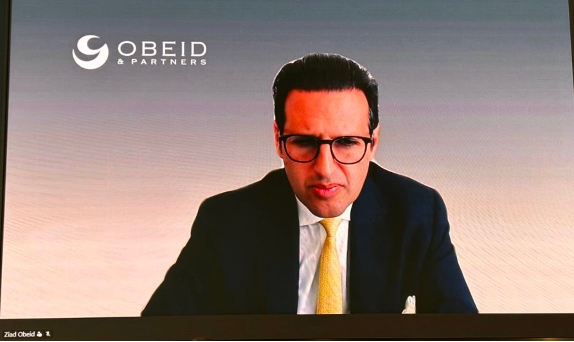
Providing a Middle Eastern perspective, Mr. Ziad Obeid suggested that if one were intentionally trying to create a project capable of generating disputes, it would closely resemble a modern data centre project.
He explained that data centres combine nearly every feature traditionally associated with construction disputes, including compressed timelines, long-lead equipment, highly complex interfaces, demanding performance requirements and severe consequences arising from project delay.
As Mr. Obeid remarked:
“They contain almost every ingredient that construction lawyers traditionally associate with disputes.”
Yet despite those characteristics, comparatively few disputes currently proceed to formal arbitration.
According to Mr. Obeid, the explanation lies in commercial necessity. Delays in bringing capacity online can have consequences so severe that parties are often forced to resolve disagreements immediately rather than allowing claims to accumulate until project completion.
He observed:
“The cost of not resolving them is generally greater than the cost of actually resolving them.”
Data Centres: Technology Projects or Infrastructure Projects?
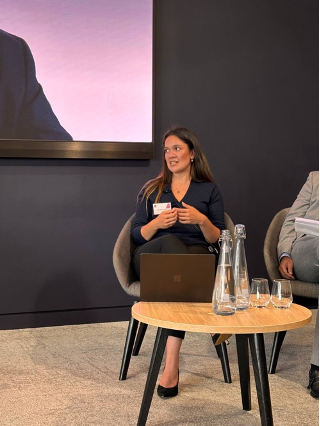
Addressing the nature of disputes arising from data centres, Ms. Caroline Tuck argued that many of these disputes should not automatically be viewed through a traditional construction lens.
She noted that clients rarely describe matters as “data centre disputes”. Instead, disputes typically emerge through technology-related issues such as data migration failures, service outages, infrastructure transformation projects, cybersecurity incidents and software implementation challenges.
According to Ms. Tuck, data centre disputes increasingly sit at the intersection of infrastructure and technology law. She explained that technology litigators are already accustomed to dealing with multiple vendors, complex contractual frameworks and highly technical factual scenarios, making many data centre disputes familiar territory despite their unique context.
The discussion suggested that data centre disputes are becoming hybrid disputes, combining elements of construction, energy, technology and operational risk.
Compressed Timelines and Embedded Disputes
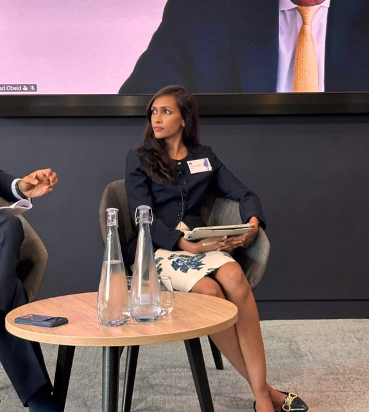
Ms. Gathi Prakash Karrah argued that compressed timelines are not simply a factor contributing to disputes but rather the ecosystem within which data centre disputes arise. She explained that aggressive schedules frequently require construction to begin before designs are fully developed, creating inevitable tensions around design changes, procurement decisions and project execution.
As Ms. Karrah observed:
“Compressed timelines don’t just increase the likelihood of disputes, they embed disputes into the project from the very beginning.”
The pressure to rapidly deliver capacity is driven by demand for artificial intelligence, cloud computing and digital infrastructure. However, this speed creates challenges involving incomplete designs, evolving technical requirements, procurement uncertainty and system integration risks.
Ms. Karrah further highlighted commissioning as one of the most significant pressure points because data centres only become operational when multiple interdependent systems function seamlessly together. Questions regarding completion, acceptance testing and certification are therefore likely to become fertile ground for disputes.
Supply Chains, Change Management and Commercial Reality
According to Ms. Caroline Tuck, the most significant disconnect between legal drafting and commercial reality often emerges when projects fail to properly manage changes occurring during implementation. Technology contracts typically contain detailed change control procedures intended to assess costs, timing impacts and operational consequences before modifications are implemented.
However, Ms. Tuck observed that operational teams frequently make practical decisions without fully engaging with those contractual mechanisms. As a result, disputes often emerge later when parties discover that operational changes have fundamentally altered contractual assumptions.
The panel stressed that contracts should function as active project-management tools rather than documents consulted only after relationships have deteriorated.
Energy: The New Battleground
From an Indian perspective, Ms. Gathi Prakash Karrah argued that data centre disputes increasingly resemble a combination of energy disputes and regulatory disputes.
She explained that electricity in India is heavily regulated through overlapping central and state-level frameworks, creating unique challenges for operators. It was further noted that data centres frequently commit to stringent uptime requirements while having limited control over the infrastructure necessary to achieve those commitments.
Ms. Karrah pointed to changing tariff structures, grid reliability concerns, delayed approvals, renewable energy commitments and power connectivity issues as significant sources of future disputes. According to her, operators often find themselves making commercial commitments based on assumptions about energy supply and pricing, only to encounter regulatory changes that fundamentally alter those assumptions.
From a Gulf Cooperation Council (GCC) perspective, Mr. Ziad Obeid noted that energy availability is presently less problematic than in some jurisdictions, although rapidly increasing demand is likely to place growing pressure on energy infrastructure throughout the region.
Delay Analysis, Counterfactuals and the Butterfly Effect
According to Mr. Karthik Balasagar, data centres differ fundamentally from traditional infrastructure projects because they combine power systems, processors and cooling infrastructure within a highly interconnected environment.
To illustrate the point, Mr. Balasagar referred to situations where changes in hardware specifications required substantial redesigns of cooling systems, creating cascading impacts across entire projects. He highlighted concurrency as a major challenge because multiple delay events often occur simultaneously. Beyond delay itself, he stressed the difficulty of constructing reliable counterfactual scenarios for damages analysis.
Drawing on Edward Lorenz’s chaos theory and the “butterfly effect”, Mr. Balasagar explained how seemingly insignificant variables can dramatically alter outcomes within complex systems.
As he remarked:
“That is exactly what a data centre problem is looking like as far as counterfactuals are concerned.”
The discussion highlighted the growing complexity of proving causation and quantifying loss where multiple technological and commercial factors interact simultaneously.
Data Protection, Arbitration and Contract Architecture
Ms. Gathi Prakash Karrah identified data protection as a particularly important issue in India following the enactment of the Digital Personal Data Protection Act, 2023. She noted that data centres must navigate increasingly complex compliance obligations, including localisation requirements imposed by financial and sectoral regulators.
On dispute resolution, both Ms. Karrah and Mr. Obeid agreed that arbitration remains the preferred mechanism for resolving major data centre disputes.
However, both speakers also highlighted the growing importance of expert determination procedures, dispute avoidance boards, emergency arbitration mechanisms and consolidation provisions capable of dealing with the multi-contract structures frequently encountered in data centre projects.
Mr. Obeid additionally emphasised the significance of governing law as a risk allocation tool, particularly where mandatory legal principles may affect the enforceability of contractual provisions such as liquidated damages clauses.
Quantifying Loss in a Rapidly Evolving Industry
Returning to the issue of damages, Mr. Karthik Balasagar discussed the challenges facing quantum experts operating within a sector characterised by rapid technological change.
He pointed to differing accounting approaches adopted by major technology companies when depreciating data centre assets and noted that the absence of consistent industry standards complicates the assessment of lost profits and diminished value.
As he observed:
“If you don’t have industry standards on how capital expenditure is ultimately reduced into the income statement over a period of time, how is lost profits going to look like?”
The panel also discussed the difficulties of establishing causation where project delays coincide with broader market developments, technological shifts or strategic business decisions and in such situations, tribunals may face difficult questions when determining whether losses truly result from contractual breaches or reflect independent commercial choices.
Future Disputes: Power, AI and Adaptation
For Ms. Caroline Tuck, access to power infrastructure and grid capacity is likely to become one of the most significant sources of contention, particularly as electricity networks struggle to accommodate growing demand from data centre developments.
Ms. Gathi Prakash Karrah predicted that artificial intelligence could generate entirely new categories of disputes concerning liability for automated decision-making.
She posed a series of questions likely to become increasingly important in future litigation:
“Is the data centre responsible for it? Is it the cloud that is responsible for it? Is it the AI developer that’s responsible for it? Is it the customer who made the query?”
Mr. Karthik Balasagar warned that the enormous energy demands of AI infrastructure may eventually create broader societal tensions involving resource allocation and public policy.
Meanwhile, Mr. Ziad Obeid predicted that future disputes would increasingly concern adaptation and changing circumstances as technology evolves more rapidly than the infrastructure and regulatory frameworks supporting it.
Summarising the challenge, he observed:
“Infrastructure moves much slower than technology.”
According to Mr. Obeid, disputes concerning change, adaptation, renegotiation and even project termination may become increasingly common as technological developments continue to outpace contractual assumptions.
Concluding Reflections
The discussion revealed that data centre disputes are rapidly emerging as a distinct category of international commercial conflict. While they incorporate familiar elements of construction, infrastructure, technology and energy disputes, they also present unique challenges arising from compressed timelines, evolving technologies, enormous energy requirements and increasingly complex regulatory frameworks.
As investment in digital infrastructure accelerates worldwide, future disputes are likely to extend far beyond traditional questions of delay and defects. Instead, they may increasingly focus on power availability, AI liability, data governance, technological adaptation and the ability of legal and contractual frameworks to keep pace with one of the fastest-growing sectors of the global economy.
This report forms part of SCC Times’ special coverage of London International Disputes Week (LIDW) 2026. As a Media Partner for the event, SCC Times is reporting key conversations across the conference, highlighting emerging trends and perspectives from the international dispute resolution community.
SCC Times extends its appreciation to Zehra Naqvi, EBC—SCC Online Foreign Student Ambassador and Lawyer, for her on ground presence, valuable assistance and contribution to the reporting of this event.