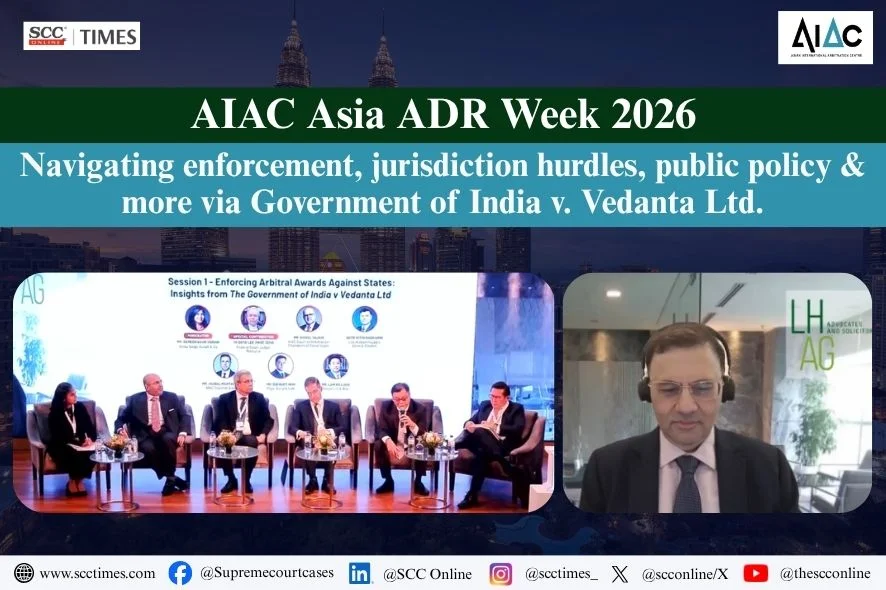
The Asian International Arbitration Centre (AIAC) is hosting the eighth edition of its flagship Asia ADR Week from 12th to 16th October 2026 in Kuala Lumpur.
Hosted under the theme “Kainos: Where Vision Transforms Future”, the Asia ADR Week 2026 brings together practitioners, arbitrators, mediators, academics, businesses and stakeholders from Malaysia, Asia and beyond to exchange perspectives on the developments shaping the future of dispute resolution.
In a panel discussion titled “Enforcing Arbitral Awards Against States: Insights from The Government of India v. Vedanta Ltd”, the esteemed panellists examined the enforcement of international arbitral awards, the supervisory role of courts, jurisdictional challenges, public policy, sovereign immunity, enforcement of annulled awards, and non-signatories. Using Government of India v. Vedanta Ltd., (2020) 10 SCC 1, as the anchor case, the panellists traced the development of different national courts’ approach to setting aside arbitral awards and considered the implications for enforcement proceedings.
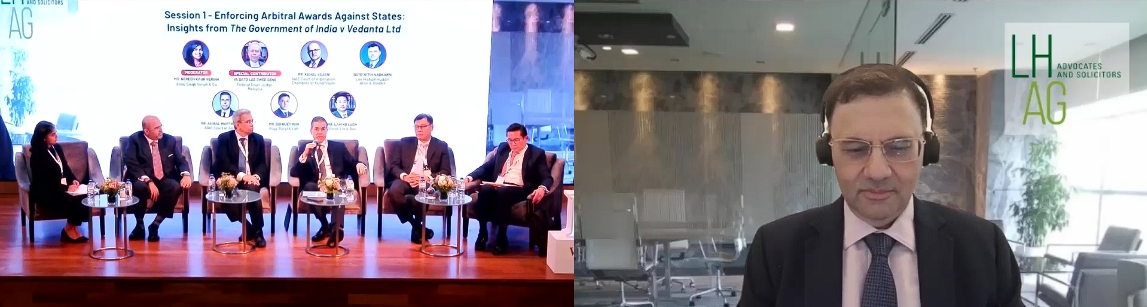

[In frame from left to right: Ms. Nereen Kaur Veriah, Mr. Kunal Vajani, YA Dato’ Lee Swee Seng, Mr. Aníbal Sabater, Mr. Huey Miin Ooi, Mr. Ko Luen Lam, and Dato’ Nitin Nadkarni (appearing virtually)]
The session was moderated by Ms. Nereen Kaur Veriah, Partner, Messrs Atma Singh Veriah & Co, with special contribution from YA Dato’ Lee Swee Seng, Judge of the Federal Court, Federal Court of Malaysia. The esteemed panellists included, Dato’ Nitin Nadkarni, Consultant and Head of the International Arbitration practice, Lee Hishammuddin Allen & Gledhill; Mr. Kunal Vajani, Advocate, Arbitrator & Mediator Additional Advocate General of Karnataka Court Member, AIAC Court of Arbitration; Mr. Huey Miin Ooi, Partner, Raja, Darryl & Loh; Mr. Ko Luen Lam, Managing Partner, Shook Lin & Bok; and Mr. Aníbal Sabater, Partner, Chaffetz Lindsey LLP, and Member of AIAC Court of Arbitration.

To kick off the discussion, Ms. Nereen Kaur Veriah set out the discussion structure and invited Mr. Huey Miin Ooi to provide an overview of Vedanta Ltd (supra) and its key principles.
Timeline of the case: Mr. Huey Miin Ooi

Mr. Huey Miin Ooi opened the discussion by explaining the significance of Vedanta Ltd. (supra) in the context of setting aside arbitral awards in Malaysia, particularly because the enforcement proceedings concerning the awards had taken place in India.
He explained that the case formed the final part of a series of five awards arising from four arbitration proceedings under the same production sharing contract relating to the Rava offshore oil field in the Bay of Bengal. The disputes concerned the apportionment of expenditure for calculating profit petroleum and the resulting financial entitlements of the oil companies and the Government of India. The principal connection with Malaysia was that Malaysia had initially been chosen as the seat of arbitration.
Mr. Ooi traced the development of Malaysian jurisprudence through the five awards. The first three challenges were brought under the former Arbitration Act, 1952, while the last two were brought under Section 37 of the Arbitration Act, 2005.
In the first two cases, the High Court set aside the awards on grounds that included misconduct and error of law on the face of the award. He noted that the first decision did not adequately address the significance of the seat of arbitration. The challenging party had initially approached the English courts on the basis that the arbitration agreement was governed by English law, but was directed to Malaysia because Malaysia was the seat of arbitration. The second decision reflected a greater recognition of the distinction between applicable laws, although the award was again set aside under the former legal regime. Both decisions were subsequently overturned on appeal, restoring the awards.
Mr. Ooi then discussed a parallel arbitration concerning the ONGC carry issue. The dispute included an assertion that the seat of arbitration had been moved from Kuala Lumpur to London. The challenge was brought in Malaysia on the basis that the agreement to change the seat was invalid. However, the Malaysian proceedings were set aside on jurisdictional grounds because the courts concluded that the seat had been moved to London. The issue ultimately reached the Federal Court in Government of India v. Petrocon India Limited, 2016 SCC OnLine MYFC 35.
Turning to the fourth arbitration, Mr. Ooi explained that the challenge to the final award was the first to be decided under the Arbitration Act, 2005. The High Court decision addressed several principles relevant to Section 37, including the distinction between matters within and outside an arbitral tribunal’s jurisdiction, public policy, and natural justice. The award was upheld, and the decision was affirmed through the appellate process. He further explained that the fifth and final award arose from a challenge in the second arbitration proceedings. These proceedings challenged the final award. This last award was upheld by the High Court and remained upheld through the appellate process, with the Malaysian proceedings concluding in 2019.
Mr. Ooi explained that the production sharing contract had originally been for 25 years. Although its duration was extended, the parties removed Malaysia as the seat of arbitration under the extension, bringing Malaysia’s involvement in challenges arising from that contract to an end.
Thereafter, he highlighted the consequences of the Malaysian decisions in India. In relation to the partial award concerning the ONGC carry issue, the Supreme Court of India had held that Section 9 of the Arbitration and Conciliation Act, 1996, did not apply because the arbitration was foreign, and that the Indian courts lacked jurisdiction to grant the requested stay1. The Indian courts also took the view that the seat had not moved to London. This differed from the subsequent position adopted by the Malaysian Federal Court, which treated London as the seat and declined to proceed with the challenge. Mr. Ooi further noted that the awards arising from the third, fourth, and fifth arbitrations were ultimately enforced in India.
Jurisdiction of arbitral tribunal and the supervisory role of Courts: YA Dato’ Lee Swee Seng
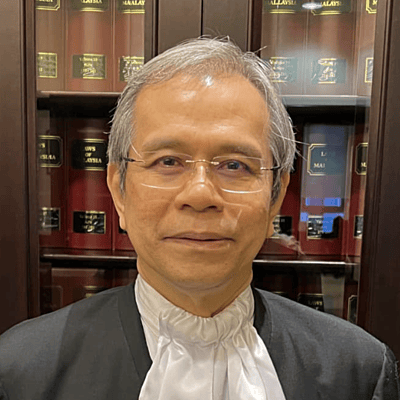
As the Judge who decided the final arbitration in Vedanta Ltd (supra), Justice Lee explained that his decision concerned the narrower issue of quantification with respect to whether the Government of India owed the consortium company represented by Vedanta Ltd., which had taken over a shareholding in Cairn India. He explained that one party maintained that there was no dispute because deductions had been made at source over a period of approximately six years without objection, but the Government of India subsequently issued a show-cause notice asserting that a sum was owed to it, giving rise to a disagreement between the parties.
He added that the Government of India also challenged the jurisdiction of the arbitral tribunal, arguing that its mandate had expired. However, the first tribunal’s award had contemplated a return to the tribunal if the parties could not agree on quantification. Although a considerable period had elapsed and one of the tribunal members had been replaced, he concluded that the tribunal retained jurisdiction to decide the issue.
He added that the tribunal ultimately determined that neither party owed anything to the other after the calculations were completed. Justice Lee explained that the dispute had involved deductions made by both sides following earlier developments in the setting-aside proceedings. After the High Court of Malaya set aside the award, the Government of India made deductions at source. When the Court of Appeal overturned that decision, and the Federal Court affirmed it, Cairn India made deductions to equalise the figures.
Justice Lee emphasised that the proceedings before him concerned an application to set aside the award. The court was not sitting as an appellate court to reconsider the merits or factual findings of the tribunal. Finding no sufficient reason to set aside the award, he dismissed the application. The Court of Appeal subsequently dismissed the appeal, and the leave to appeal to the Federal Court was not granted.
Review of the existence of an arbitration agreement
Responding to a question concerning challenges to the existence of an arbitration agreement, Justice Lee explained that arbitral tribunals possess the principle of kompetenz-kompetenz, under which they can determine their own jurisdiction. However, a tribunal’s determination that a valid arbitration agreement exists is not necessarily final. The issue may be raised again before a court hearing an application to set aside the award or an application for enforcement.
Referring to Hindustan Petroleum Corpn. Ltd. v. M3nergy Sdn. Bhd., 2019 SCC OnLine Bom 2915, Justice Lee explained that a court could review the issue de novo, examining the evidence, including affidavit evidence, and reaching its own conclusion on whether a valid arbitration agreement had been concluded. He noted that the agreement in question had been in draft form but bore the parties’ signatures, while their conduct was consistent with the existence of a concluded agreement, and the tribunal concluded that there existed an agreement. Furthermore, the court also considered the fact that the issue had already been examined by the court hearing the setting-aside application, which had agreed with the tribunal’s conclusion.
He distinguished the court’s ability to review jurisdiction from the principle of transnational issue estoppel. Although a court could reach its own conclusion, it might give due deference to the findings of a foreign court that had already considered the same issue thoroughly. The earlier finding would not necessarily be binding, but the court could take it into account when deciding whether a valid arbitration agreement existed.
Enforcement-friendly jurisdictions and the position of non-signatories: Dato’ Nitin Nadkarni

Dato’ Nitin Nadkarni discussed Malaysia’s approach to the enforcement of foreign arbitral awards. Referring to the Malaysian Court of Appeal’s decision in Sintrans Asia Services Pte Ltd v. Inai Kiara Sdn Bhd2 he explained that Malaysian courts act purely as enforcement courts regarding foreign awards, while challenges to those awards should generally be brought before the supervisory courts applying the relevant curial law. Based on his experience, he described Malaysia as an enforcement-friendly jurisdiction and stated that he had not personally encountered a foreign arbitral award being refused enforcement in Malaysia.
He nevertheless identified an unresolved question concerning whether an award could be enforced against a person or entity that had not signed the arbitration agreement.
Dato’ Nadkarni referred to the group-of-companies doctrine and the question of whether a parent company could be treated as a party to an arbitration agreement because of its involvement in the negotiation or performance of a contract. He noted that Malaysian courts had considered related questions, including in proceedings involving the application of the Singapore decision in Aloe Vera, but the issue had not been fully determined in Malaysia.
For Singapore, he referred to the case of Astro Nusantara International BV v. PT First Media TBK3, in which the Singapore Court of Appeal discussed the group-of-companies doctrine and the significance of consent to arbitration, holding that the doctrine does not apply in common law jurisdictions. India had taken a similar stance in 2019 in Mahanagar Telephone Nigam Ltd. v. Canara Bank, (2020) 12 SCC 7674, holding that a non-signatory cannot be held liable under an arbitration agreement.
The concern, he explained, was that Malaysian companies operating through foreign subsidiaries might find that a parent company was treated as a party to an arbitration agreement despite not having signed it. A related question was whether the Malaysian Government could be treated as a party to a contract entered into by a government-linked company.
Dato’ Nadkarni distinguished cases in which the parties had signed a commercial arbitration agreement, where he considered Malaysia’s enforcement approach clear, from cases in which an arbitral tribunal had treated a non-signatory as a party because of its participation in negotiations or contract performance.
He also referred to the enforcement in Malaysia of an award against the Government of Zimbabwe under the New York Convention, notwithstanding his objections to the procedure adopted. He concluded that the position of non-signatories remained an important question for Malaysian courts.
Curial law, finality of awards & limitation periods in India: Mr. Kunal Vajani

Speaking from the Indian perspective, Mr. Kunal Vajani explained that the decisions in the series of proceedings of Vedanta Ltd. (supra) had helped clarify the importance of the curial law and the enforcement regime under the UNCITRAL Model Law framework. According to him, the distinction between the seat and the venue of arbitration had been addressed through the successive decisions, and the importance of the curial law associated with the seat had become well established.
He observed that the Supreme Court of India had given due regard to the Malaysian courts’ decisions concerning the applicable curial law. He also highlighted the importance of respecting the finality of an award once it had been tested before the competent court. Where the court at the seat had considered a challenge and upheld the award, the Indian enforcement courts would not reopen the merits of the award. The enforcement proceedings would proceed without a fresh examination of the merits merely because a party sought to revisit issues already addressed by the supervisory court.
He considered this respect for the supervisory court’s decision an important feature of the enforcement regime. Furthermore, the successive enforcement decisions in India demonstrated that courts could give effect to an award once it had survived a challenge before the court with jurisdiction to set it aside.
Mr. Vajani also drew attention to limitation periods in enforcement proceedings. He explained that Indian law governed the limitation question when enforcement was sought in India. Consequently, lawyers advising parties needed to consider the applicable limitation period in the intended enforcement jurisdiction, rather than waiting until the award had been issued. He referred to the dispute concerning the show-cause notice issued in 2014, while the relevant award had been made in 2011. The Indian courts had treated the show-cause notice as the relevant starting point for enforcement in the circumstances because quantification had occurred only subsequently.
Mr. Vajani further discussed the question of extending the reach of enforcement proceedings to entities that had participated in the underlying transaction, like third-party funders, but were not signatories to the arbitration agreement.
He referred to an award in which companies that had participated in negotiations were brought within the arbitration. During execution proceedings, a challenge was raised concerning whether enforcement should proceed against a third-party funder. The Delhi High Court rejected that position, and further jurisprudence on the issue remained limited. Thus, he argued that the question of third-party funders was an additional issue in the broader debate about which entities could be brought within the enforcement process.
Non-Signatories, Privity of Contract and the Government of Laos Dispute: Mr. Ko Luen Lam

Mr. Ko Luen Lam returned to the question of non-signatories and distinguished the issue considered in Hindustan Petroleum (supra) from situations involving parent companies or other entities that had not entered into the relevant arbitration agreement.
He referred to the case of Thai-Lao Lignite (Thailand) Co. Ltd. v. Government of the Lao People’s Democratic Republic, wherein the underlying arrangements included a project development agreement relating to a power project and two separate mining contracts involving other subsidiary companies. The project development agreement provided for Malaysia to be the seat of arbitration and was governed principally by New York law, with certain aspects governed by Laotian law. The arbitration was commenced under the project development agreement, but other companies that were not parties to that agreement were also included in the proceedings.
The tribunal applied the American third-party beneficiary principle and awarded damages in favour of Thai-Lao Lignite that included claims arising under the mining contracts. When the award came before the Malaysian courts in setting-aside proceedings, an issue arose as to whether the non-signatory companies could properly be parties to the arbitration. Mr. Lam explained that the Malaysian position was that the third-party beneficiary principle was not recognised in that context and that the principle of privity of contract applied. On that approach, a person who was not a party to the relevant contract could not simply be treated as a party to its arbitration agreement.
Adding to the discussion, Justice Lee recalled that the case involved the commingling of different agreements, although the terms of reference concerned a single dispute. He explained that he had set aside the award and that the decision was upheld by the Court of Appeal and the Federal Court. Justice Lee also noted that, while the proceedings concerning an extension of time to set aside the award were taking place, the successful party had sought enforcement in the United States, the United Kingdom, and France. The different jurisdictions reached different decisions. However, because Malaysia was the seat of arbitration, the Malaysian courts had jurisdiction to decide the setting-aside application.
Dato’ Nadkarni then clarified that two separate issues needed to be considered: whether Malaysian law permitted an award to be made against a person who had not signed or acceded to an arbitration agreement, and whether Malaysian courts would enforce an award made by a foreign tribunal that treated a non-signatory as a party under the law applicable to the arbitration.
He explained that the second question remained open for fuller consideration in Malaysia. If a foreign tribunal, applying a legal system that recognised the group-of-companies doctrine, made an award against a Malaysian parent company that had not signed the arbitration agreement, the question would be whether Malaysian courts would enforce it. He referred to the Singapore approach in Aloe Vera of America, Inc v Asianic Food (S) Pte Ltd5 and the discussion in AXT Solutions Inc. (formerly known as Lombard Trading International Corp.) v. TOI Commodities S.A.6, while noting that the Malaysian courts had not comprehensively addressed the issue in the context of a foreign award applying a different legal framework.
Enforcement in the United States and the treatment of annulled awards: Mr. Aníbal Sabater

Mr. Aníbal Sabater examined why parties might seek to enforce an arbitral award in a jurisdiction that has no immediate connection with the case. Using the United States as an example, he explained that an award creditor might approach a third country because enforcement in the State that lost the arbitration was unlikely to succeed, or because the creditor believed that the third country offered a better prospect of locating assets.
He noted that the United States could be attractive where substantial funds moved through its banking system. Enforcement proceedings could also create publicity, particularly where the respondent was a government that raised funds through international capital markets. Public proceedings could put pressure on the government to satisfy the award.
Recognition and enforcement under the United States framework
Mr. Sabater explained that the United States generally follows a two-step process involving recognition of the award followed by enforcement. He noted that the framework broadly follows the New York Convention but contains features that require careful consideration, particularly where enforcement is sought against a state. Under the United States’ Foreign Sovereign Immunities Act, 1976, a State can be sued in limited circumstances, including where it has agreed to arbitrate. A State may resist enforcement by arguing that it never agreed to arbitration.
Mr. Sabater explained that recognition of an award in the United States does not require the award to have a minimum connection with the country. Recognition may be sought even if the State has no assets there at the time, for example, because the creditor expects that assets might become available in the future or considers recognition desirable for publicity.
He also discussed the court’s review of jurisdictional issues. The recognition court might examine de novo whether the state agreed to arbitrate and is not necessarily bound by the arbitral tribunal’s finding. At the same time, Mr. Sabater observed that courts may restrict a State from raising jurisdictional arguments that it did not raise during the arbitration. Once recognised, an award is converted into a judgment under the United States framework and will remain enforceable over a lengthy period. Mr. Sabater identified this as another reason why an award creditor might seek recognition before assets become available.
Sovereign immunity and attachment of State assets
Mr. Sabater identified sovereign immunity from attachment as one of the principal practical difficulties in enforcing awards against States in the United States. Although recognition may be comparatively straightforward, the assets of a State are often protected where they are connected with sovereign functions. Embassy assets, military funds, and sovereign funds might be treated as immune or presumed to be immune, leaving creditors to establish that the relevant assets fall outside that protection. In practice, enforcement might depend on the availability of commercial bank accounts belonging to the State.
He added that enforcement proceedings against sovereigns are handled by federal courts in Washington, D.C., creating a relatively specialised and consistent body of case law. This differs from commercial awards between companies, which are generally pursued in the jurisdictions where the debtor’s assets are located or believed to be located. Mr. Sabater cautioned that awards against State-owned companies require a separate analysis. The applicable approach depends on whether the entity performs sovereign functions or operates in a commercial capacity.
Enforcement of awards annulled at the seat
Turning to awards that had been annulled by the courts at the seat, Mr. Sabater explained that the United States generally gives effect to foreign annulments, although exceptions exist. He referred to Thai-Lao Lignite (supra). The award had been annulled by the Malaysian courts, and the United States Court of Appeals for the Second Circuit ultimately declined to enforce it in 2017, giving effect to the annulment at the seat.
However, Mr. Sabater explained that United States courts may depart from this approach where the annulment is considered arbitrary or contrary to fundamental notions of justice.
He cited the case of Corporación Mexicana de Mantenimiento Integral, S. de R.L. de C.V. v. Pemex-Exploración y Producción7, wherein the Mexican state-owned company. In that case, the Second Circuit Court enforced an award despite its annulment by Mexican courts because the annulment was considered arbitrary. The court took account of the retroactive application of legislation that had been enacted to favour the Pemex and had led to the award being annulled. However, Mr. Sabater emphasised that this was an exception rather than the general rule.
Emerging Trends in International Arbitration
In the concluding segment, Ms. Veriah invited the panellists to identify emerging trends in international arbitration and award enforcement.
-
Dato’ Nitin Nadkarni: Increasing acceptance of enforcement
-
Mr. Ko Luen Lam: Narrow interpretation of public policy
-
Mr. Huey Miin Ooi: Sovereign immunity and limitation
-
Mr. Aníbal Sabater: Enforcement beyond jurisdictions connected to the dispute
-
Mr. Kunal Vajani: Sanctions are an obstacle to enforcement
-
YA Dato’ Lee Swee Seng: Security for Setting-Aside and Enforcement Proceedings
Dato’ Nadkarni observed that international arbitration was increasingly recognised and that courts across jurisdictions generally enforced arbitral awards as a matter of course. He noted that refusal would typically arise where something seriously problematic had occurred in relation to the award.
Mr. Lam stated that jurisdictions were increasingly encouraging arbitration and that public policy was being interpreted narrowly in challenges to awards and objections to enforcement. He viewed this as an emerging trend supporting the enforcement of international arbitral awards.
Mr. Ooi emphasised that enforcement against states would continue to require careful consideration of sovereign immunity provisions and limitation periods in the jurisdiction where enforcement was sought. He observed that these issues would remain important regardless of broader international developments in award enforcement.
Mr. Sabater noted that, despite wider concerns about the effectiveness of international law, the New York Convention and the ICSID Convention governing enforcement of foreign arbitral awards were generally applied around the world.
He highlighted the growing possibility of enforcing awards in jurisdictions that had no obvious connection with the underlying dispute. However, this required preparation, such as asset tracing and familiarity with the law of the enforcement jurisdiction. He described this as an avenue that had been far less conceivable two or three decades earlier.
Mr. Vajani agreed that enforcement had increasingly become the norm and that courts were giving greater deference to the curial law governing the arbitration. However, he identified sanctions as an emerging means of resisting or delaying enforcement. He observed that sanctions were being invoked not only to impede arbitral proceedings but also at the enforcement stage. In his view, their use as a defence reflected the challenges posed by the current geopolitical environment.
In his closing remarks, Justice Lee discussed provisions under Malaysian law that could require a party challenging an award or resisting enforcement to deposit the award sum into court as security.
Thus, the discussion concluded with the panellists highlighting the importance of the seat of arbitration, the finality of arbitral awards and the enforcement court’s role in determining jurisdictional issues. The speakers also identified unresolved questions concerning non-signatories, application of estoppel, limitation periods, sovereign immunity, and more.
SCC Times is the official media partner for AIAC Asia ADR Week 2026. Read more about AIAC Asia ADR Week 2026:
1. Videocon Industries Ltd. v. Union of India, (2011) 6 SCC 161
2. [2016] 5 CLJ 746
3. SIAC Case No. ARB062/08/JL
4. [Ed. note: The Supreme Court’s Constitution Bench has since held, in Cox & Kings Ltd. v. SAP India (P) Ltd., (2024) 4 SCC 1, decided on 6-12-2023, that the group of companies doctrine is retained in Indian arbitration law.]
5. [2006] SGHC 78
6. GAFTA Case No. 19-430
7. No. 10 Civ. 206 (AKH), 2013 WL 4517225 (S.D.N.Y. Aug. 23, 2013)