The Central Asia Dispute Resolution Association (CADRA) organised its International Arbitration Summer School from 10—29 August 2026 in an online format, bringing together students, researchers and practitioners for theoretical and practical learning in cross-border dispute resolution. The programme featured practical workshops, case studies and interactive discussions on arbitration agreements, arbitral proceedings, evidence-taking, recognition and enforcement of awards, and emerging developments in international arbitration.
As part of the Summer School, Jay Shin, Head of Northeast Asia at the Singapore International Arbitration Centre (SIAC), delivered a session on “Emergency Arbitration: Balancing Speed, Due Process and Enforceability”. Based in Seoul, Jay oversees SIAC’s activities in Korea and Japan and supports its engagement with Russia and Central Asia. The session, moderated by Aziza Normakhammatova, examined SIAC’s institutional framework and the procedural innovations introduced under the SIAC Rules 2025, with particular emphasis on emergency arbitration and other mechanisms designed to make proceedings faster and more cost-efficient.

Singapore as a seat for Arbitration and SIAC’s development
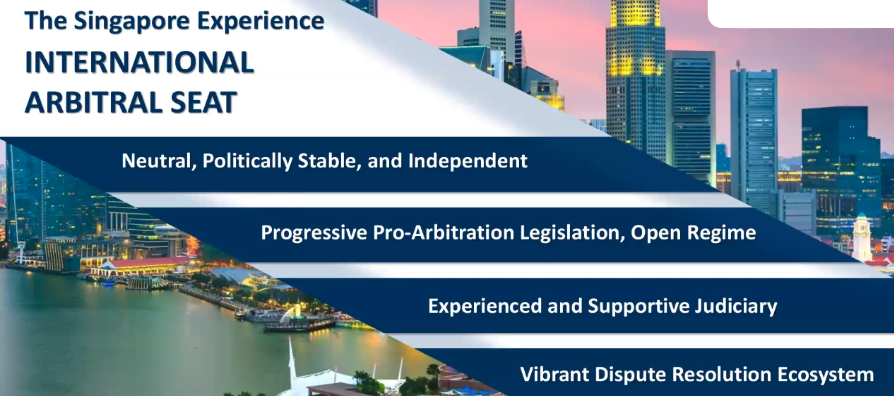
Jay began by explaining why Singapore has developed into a prominent seat for arbitration, highlighting its neutrality, political stability and independence, together with progressive pro-arbitration legislation, an experienced and supportive judiciary and a strong dispute-resolution ecosystem. He noted that the wider legal community’s understanding of arbitration gives users confidence in choosing Singapore as a seat. Political stability, he added, is particularly important because disputes may arise years after a contract is concluded, making long-term predictability an important consideration when selecting a seat.
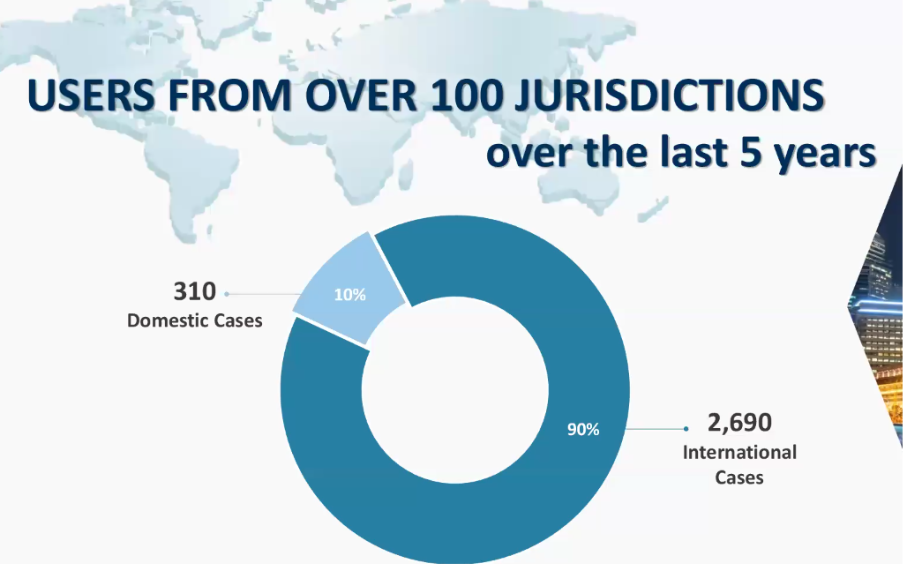
SIAC was established in 1991 and now administers approximately 800 active cases a year. Jay introduced the SIAC Rules 2025, the seventh edition of the Rules, which replaced the 2016 Rules after almost a decade. The new Rules followed extensive public consultation involving users, the SIAC Users Council, practitioners, arbitrators, in-house counsel and government representatives, and drew on SIAC’s experience administering more than 3,000 international cases under the 2016 Rules, involving parties from more than 100 jurisdictions.
Jay described the new Rules as focused on time and cost efficiency, while noting SIAC’s track record concerning enforcement of its awards. He also outlined SIAC’s international presence, including its headquarters in Singapore, its Americas office in New York, offices in India and China, and its Northeast Asia office in Seoul. He noted that SIAC had opened its Delhi office on 25 July 2026.
Also read: SIAC opens Delhi Liaison Office, strengthening engagement with India’s arbitration ecosystem
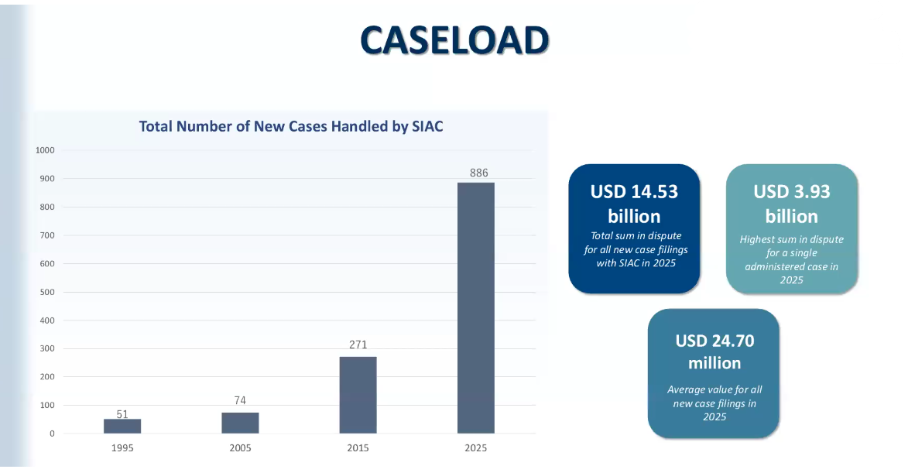
SIAC’s caseload has grown significantly over approximately three decades. Jay mentioned that around 90% of SIAC’s cases in the preceding five years were international, with users from more than 100 jurisdictions, including Kazakhstan, Kyrgyzstan and Uzbekistan. India, China together with Hong Kong, and the United States were among its leading users, followed by South Korea, Vietnam, Indonesia, Malaysia, Switzerland and the UAE. He suggested that companies doing business in jurisdictions where SIAC is widely used may consider SIAC when drafting arbitration clauses.
Jay noted that the most common category of disputes in the previous year was trade, referring principally to sales and sale-and-purchase contracts. Commercial disputes included licensing, distribution and service agreements, while corporate disputes included matters concerning shares, joint ventures and M&A. Maritime/shipping and construction disputes also remained common.
Jay further highlighted SIAC’s panel of more than 800 arbitrators from over 50 jurisdictions. The Secretariat is closely involved in the appointment process, identifying suitable and available candidates for consideration by the President of the SIAC Court, while also conducting conflict checks and considering expertise, neutrality, diversity and availability.
SIAC’s arbitration lifecycle
Jay then explained the lifecycle of an SIAC arbitration. The arbitration agreement forms the foundation of the process, and SIAC provides seven model arbitration clauses to assist parties in drafting their agreements.
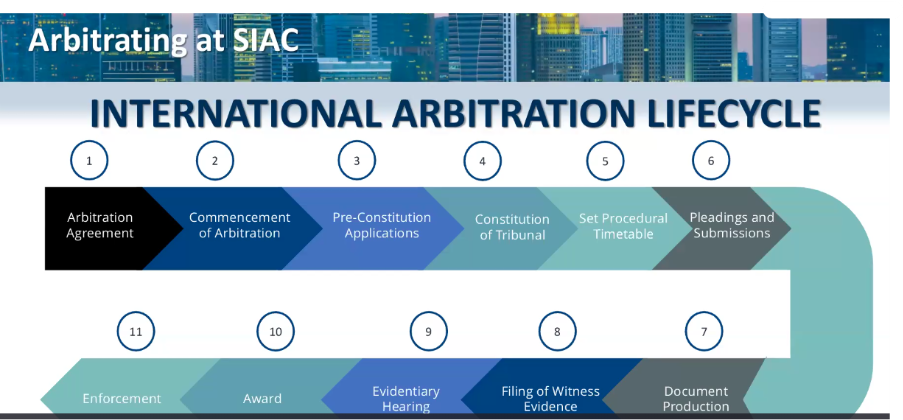
The claimant commences arbitration by filing a Notice of Arbitration (NOA). SIAC checks whether the arbitration agreement refers to SIAC or the SIAC Rules and, where the requirements under Rule 6.3 have been substantially complied with, the Registrar issues a commencement letter.

Before constitution of the tribunal, parties may make applications including those concerning expedited procedures, joinder, consolidation and the Streamlined Procedure. SIAC administers these applications to ensure they are dealt with efficiently.
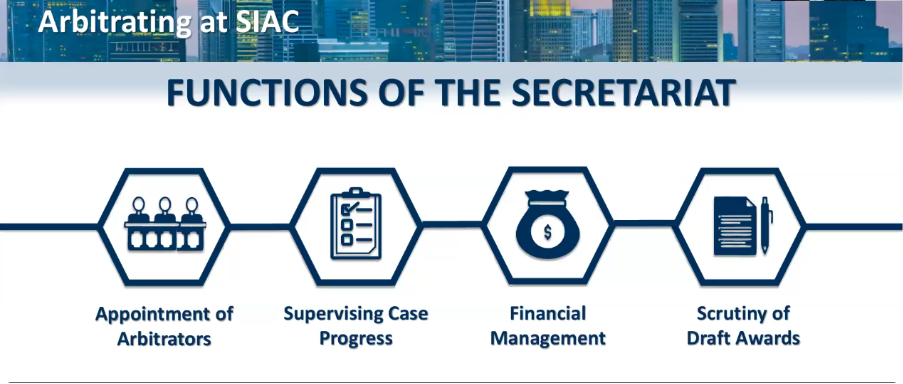
During constitution of the tribunal, SIAC considers the qualifications, experience, availability, independence and impartiality of arbitrators. Where parties cannot agree on an appointment, SIAC may appoint from its main, reserve or Rising Stars panels, considering factors such as industry expertise, neutrality and diversity. Availability becomes particularly important for emergency arbitrations because the Emergency Arbitrator must work within a highly compressed timeframe.
Once the tribunal is constituted, the tribunal conducts the proceedings while SIAC continues to monitor progress and provide administrative and financial support. SIAC tracks changes in the amount in dispute, manages deposits and oversees administrative and tribunal fees under its ad valorem fee structure. Under this system, larger disputes attract higher fees and smaller disputes lower fees, which Jay said provides flexibility and fair cost determination and may encourage efficient case management.
Before an award is issued, the tribunal submits a draft award to SIAC for scrutiny. Enforcement itself remains within the jurisdiction of national courts, although SIAC can provide authentication and certification services to assist parties with requirements in different jurisdictions.
Emergency Arbitration and Protective Preliminary Orders
The central part of the session concerned Emergency Arbitration (EA) and the new Protective Preliminary Order (PPO) mechanism.
Under the previous Rules, an Emergency Arbitration application was generally filed with or after the Notice of Arbitration. Under the SIAC Rules 2025, an applicant may seek a PPO together with an EA application before filing the Notice of Arbitration and without notifying the opposing party.
Where the EA and PPO applications are filed without the NOA, the NOA must be submitted within seven days. The application must be accompanied by the emergency arbitration filing fee and required deposit. The Emergency Arbitrator is appointed within 24 hours of receipt of the application or payment of the filing fee and deposit, whichever is later. Jay noted that, in practice, appointment may occur even sooner, with an average of approximately 12 hours.
Once the EA and PPO applications are accepted and the Emergency Arbitrator appointed, the applicant must serve all case papers on the opposing party within 12 hours of issuance of the PPO. If service cannot be effected, the applicant must provide a statement detailing the efforts made and explaining why service was unsuccessful. If service does not take place within three days, the PPO lapses.
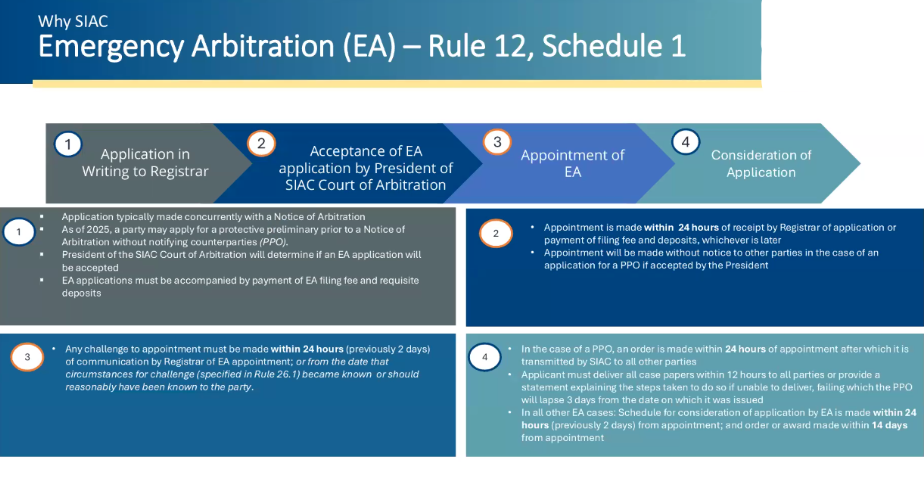
The Emergency Arbitrator must then issue a decision or award on the urgent interim relief sought within 14 days of appointment.
Jay explained that the PPO is designed to prevent the opposing party from frustrating the purpose of the emergency relief. For example, if the applicant seeks to freeze assets, notification of the EA application could allow the respondent to dissipate those assets. Similarly, if the applicant seeks to prevent disclosure of confidential information, notification could result in the information being disclosed before relief is granted. The PPO therefore temporarily preserves the position until the Emergency Arbitrator determines the substantive application.
Jay referred to three examples from SIAC’s experience without disclosing confidential case details. In one, an applicant filed an EA and PPO application without an NOA. In another, the respondent argued that the 2016 Rules applied, meaning that an EA application could not be made without a NOA and that the PPO mechanism did not exist under those Rules. In the third, the claimant had filed a NOA without seeking emergency relief, while the respondent subsequently applied for EA and PPO relief, including an anti-suit injunction and protection against disclosure of confidential information. Jay therefore noted that the new mechanism can be strategically relevant to respondents as well as claimants.
Streamlined and Expedited Procedures
Jay next explained the Streamlined Procedure, which applies to disputes where the amount in dispute does not exceed S$1 million, subject to the President’s determination after parties are invited to comment. It is designed for lower-value, less-complex disputes.
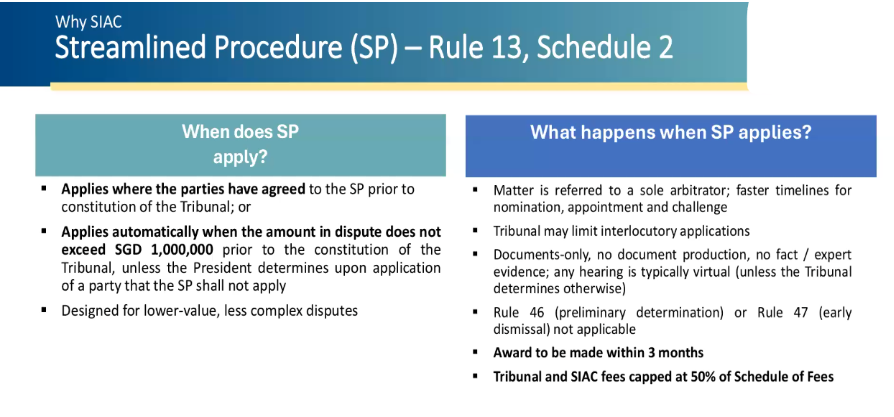
The procedure provides for a sole arbitrator, discretion to limit interlocutory applications, a documents-only process as the default, no document production and no fact or expert evidence. If a hearing is required, it will generally be conducted virtually. Preliminary Determination and Early Dismissal applications are not available within the Streamlined Procedure. The tribunal must issue the award within three months of constitution, while fees are capped at 50% of the maximum applicable amount under the SIAC fee schedule.
The Expedited Procedure (EP) is distinct. It is not automatically applied and may be considered where the amount in dispute exceeds S$1 million but does not exceed S$10 million, subject to the applicable requirements. The 2025 Rules increased the threshold from S$6 million to S$10 million, reflecting inflation, rising contract values and the increasing complexity of international disputes.
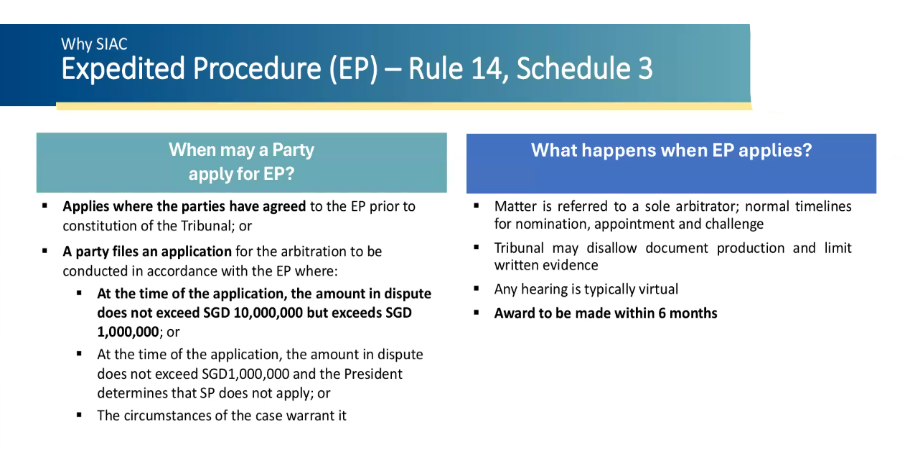
The Expedited Procedure also generally involves a sole arbitrator. Unlike the Streamlined Procedure, however, the ordinary timelines for nomination, appointment and challenges apply. The tribunal may disallow document production and limit written evidence; hearings, if required, are generally virtual; and the award must be issued within six months of constitution.
Joinder, consolidation and coordinated proceedings
Jay distinguished between joinder, consolidation and Coordinated Proceedings.
Joinder allows a non-party to be brought into a pending arbitration where all parties, including the additional party, agree, or where the additional party is prima facie bound by the arbitration agreement. A joined party may consequently be bound by the award.
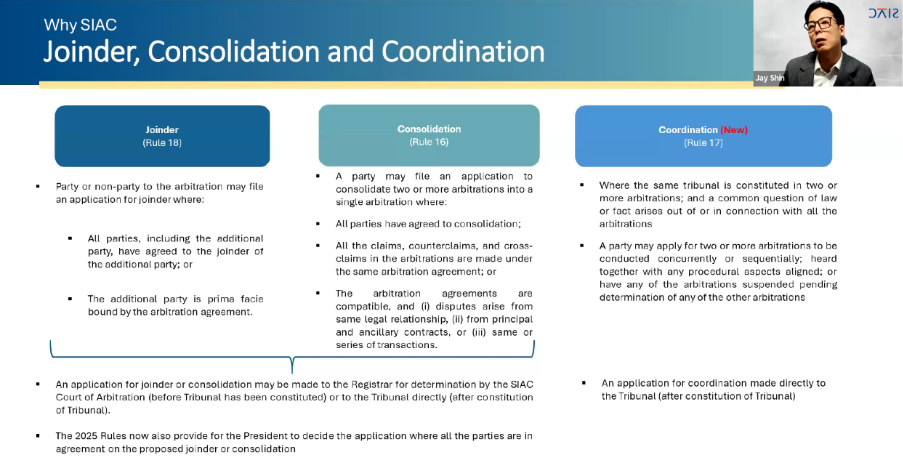
Consolidation permits two or more arbitrations to be merged where the parties agree, where the claims, counterclaims and cross-claims arise under the same arbitration agreement, where compatible arbitration agreements apply, or where the disputes arise from the same legal relationship, principal and ancillary contracts, or the same or a series of transactions.
Where all parties agree, the President decides the application without requiring a Court committee, making the process faster. Where there is no unanimous agreement, a committee of the SIAC Court determines the application on a case-by-case basis.
The new Coordinated Proceedings mechanism differs because it operates after constitution of the tribunal and requires the tribunal in the related arbitrations to be the same. Once coordination is permitted, the tribunal may conduct proceedings concurrently or sequentially, hear matters together and coordinate timelines, evidence and other procedural issues.
Jay highlighted the balance between due process and confidentiality. Coordination may help where a party does not want a witness in one arbitration to appear in another, while in other circumstances parties may worry that the same tribunal could be influenced by evidence or legal issues arising in a related proceeding. He also noted that where one contract incorporates the 2016 Rules and another the 2025 Rules, consolidation may not be possible because the Rules are incompatible. If the same tribunal or sole arbitrator is appointed in both proceedings, however, Coordinated Proceedings may provide an alternative.
Early Dismissal and Preliminary Determination
Jay described early dismissal as a distinctive mechanism allowing parties to seek dismissal of claims or defences at an early stage where a case clearly lacks legal merit or falls outside the tribunal’s jurisdiction.
The application is made before the tribunal, which has discretion to determine whether it should proceed. Given that acceptance can bring the case to an end, the threshold is high and the tribunal must hear the other party before making its decision. Under the 2025 Rules, the tribunal must issue its ruling within 45 days, reduced from 60 days under the previous Rules. SIAC’s Secretariat may assist by scrutinising the ruling before it is issued.
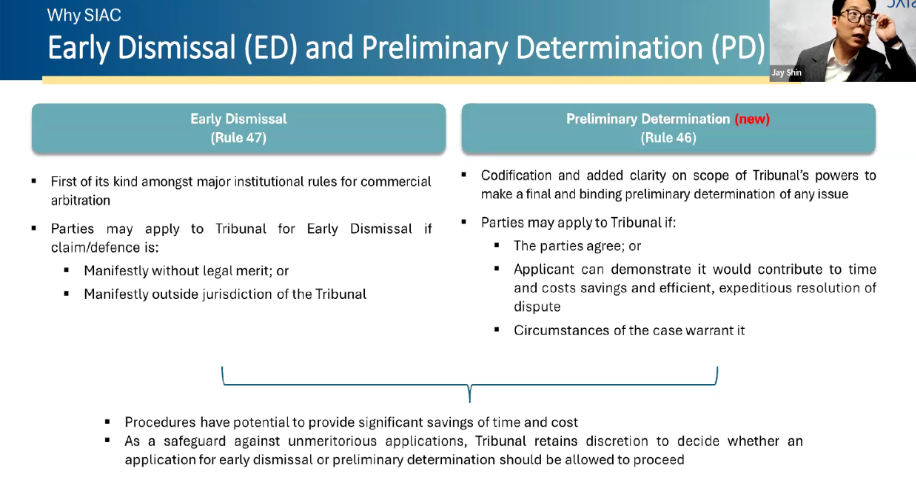
Preliminary Determination (PD) allows a tribunal to make a final and binding decision on an issue at an early stage where the parties agree, where resolving the issue is likely to save significant time and cost, or where the circumstances warrant preliminary determination.
Jay gave the example of a limitation issue that could be determined as a discrete question of law without hearing all evidence on the merits. Where the tribunal accepts the application, it must issue a decision, ruling or award within 90 days.
He distinguished PD from Early Dismissal: Early Dismissal seeks to end proceedings or remove claims or defences, while PD resolves a particular legal or factual issue without necessarily ending the arbitration. Jay also connected PD with bifurcation, observing that PD effectively codifies a tribunal’s inherent power and may give tribunals greater confidence to bifurcate proceedings where appropriate.
Scrutiny of awards
Jay explained that SIAC’s scrutiny of draft awards is intended to provide an additional layer of quality control and enhance enforceability.
The scrutiny process generally involves several levels within the Secretariat, including counsel, senior counsel and the Registrar or Deputy Registrar. The Secretariat may suggest changes to improve clarity, identify procedural errors or inconsistencies and flag requirements under the law of the seat or likely place of enforcement.
For example, if an award needs to be registered before a local court, the Secretariat may alert the tribunal to the requirement and suggest clarifying whether a power of attorney is necessary for a local representative to complete the registration. This is important because, once the final award is issued, the tribunal may become functus officio and lose the authority to take such steps.
The 2025 Rules also introduced greater transparency under Rule 53. Within 30 days of the last directed oral or written submission, the tribunal must provide the parties and SIAC Secretariat with an estimate of when it expects to submit the draft award for scrutiny. The draft award must generally be submitted within 90 days of the last directed oral or written submission, unless the Registrar determines otherwise.
SIAC also informs parties when it receives the draft award and, once scrutiny is completed and the Registrar approves the award, transmits it to the parties. Jay emphasised that SIAC’s scrutiny does not allow the Secretariat to alter the tribunal’s substantive decisions. It may suggest corrections or clarifications necessary for procedural compliance or enforceability, but the tribunal retains its decision-making authority.
Mediation, third-party funding and jurisdiction
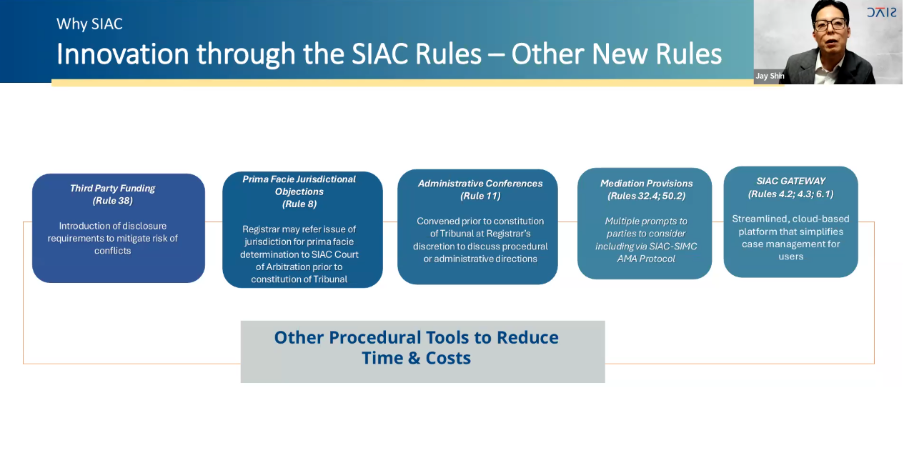
Jay also discussed the SIAC-SIMC protocol, which provides a hybrid arbitration-mediation-arbitration model. A dispute begins in arbitration, mediation is attempted, and a successful settlement can be converted into an enforceable consent award. The mediation stage is subject to an eight-week period, addressing concerns that mediation could unnecessarily delay arbitration.
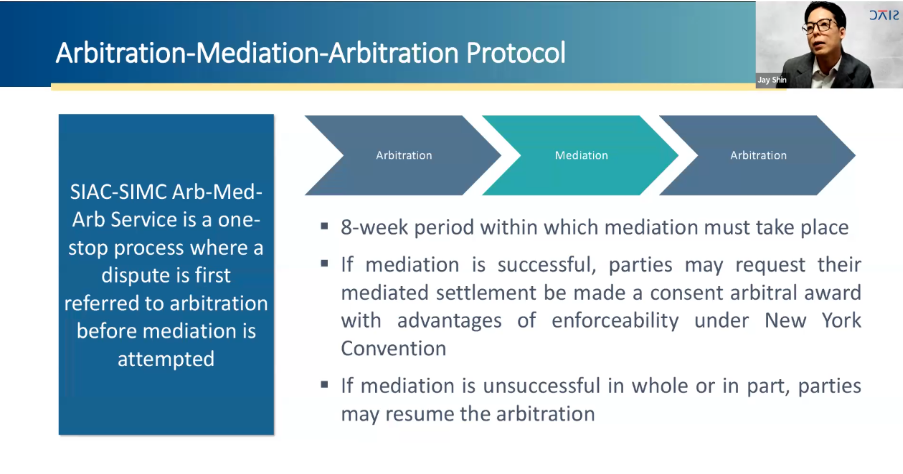
Jay noted that mediated settlements are not always directly enforceable, whereas converting the settlement into a consent award may provide the benefit of enforceability under the New York Convention. He also observed that the possibility of settlement may increase once parties have understood each other’s cases through the NOA, response, hearings or document production. Mediation may be attempted at any stage before the final award, and if it fails wholly or partly, the arbitration can resume.
Under the 2025 Rules, third-party funding disclosures are required from as early as the Notice of Arbitration and Response to the NOA. The objective is greater transparency and identification of relationships that could create conflicts affecting impartiality or independence.
Jay also discussed prima facie jurisdictional determination under Rule 8. Certain jurisdictional issues may be referred by the Registrar to the SIAC Court for a prima facie determination before constitution of the tribunal, including where a respondent fails to submit a response or where a party challenges the existence, validity or applicability of the arbitration agreement. If the Court determines that the arbitration should proceed, the tribunal ultimately decides its own jurisdiction; if not, relevant claims may be brought to an end at an early stage.
An administrative conference, Jay explained, is similar to a case-management conference but takes place between the parties and the SIAC Secretariat rather than the tribunal. It can be particularly useful before constitution where several applications are pending. He referred to a case involving applications concerning the Expedited Procedure and consolidation, where an administrative conference helped clarify the parties’ positions, timelines and the sequence in which the applications would be addressed.
Jay also briefly introduced SIAC Gateway, SIAC’s electronic case-management platform, which allows parties to manage documentation electronically.
Uptake of procedural mechanisms
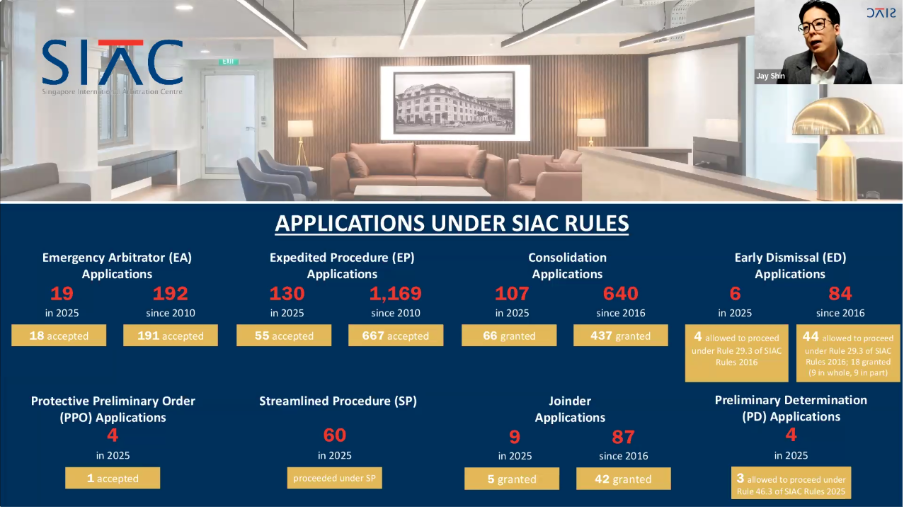
The final presentation considered the use of the procedural mechanisms in 2025 and their overall uptake since introduction. Jay noted that only one PPO application was accepted in 2025, although SIAC was seeing more PPO applications in 2026, with the full 2026 figures expected to be released in 2027.
The Streamlined Procedure, introduced under the new Rules, was used in 60 cases in 2025, while the Expedited Procedure was used in 130 cases. Jay explained that some disputes that might previously have fallen within the Expedited Procedure when the threshold was S$6 million could now fall within the Streamlined Procedure framework. He said the figures demonstrated users’ active interest in using the available procedural tools to make arbitrations more efficient and affordable.
Growing prominence of Asian arbitration seats
In the concluding discussion, Aziza referred to the Queen Mary University of London arbitration survey, noting that three of the five leading arbitration seats were in Asia, and asked Jay what had driven the region’s growing prominence.
Jay noted that arbitration in Asia had grown generally, with strong institutions including HKIAC, KCAB, JCAA and VIAC, alongside SIAC. He attributed the growth partly to strong support from the respective home jurisdictions, including supportive legislation and judiciaries. The increasing global preference for Asian seats, he said, reflects the development of arbitration communities and institutional infrastructure across the region.
Overall, the discussion offered participants a comprehensive yet practical overview of SIAC’s evolving procedural framework. From Emergency Arbitration and Protective Preliminary Orders to the Streamlined and Expedited Procedures, Joinder, Consolidation, Coordinated Proceedings, Early Dismissal, Preliminary Determination, award scrutiny, mediation and jurisdictional mechanisms, Jay’s presentation demonstrated SIAC’s continuing emphasis on balancing speed, cost-efficiency, due process, confidentiality and enforceability in international arbitration.