Judicial Review of Arbitral Awards: The Supreme Court’s Tryst with Article 142 and Arbitral Finality
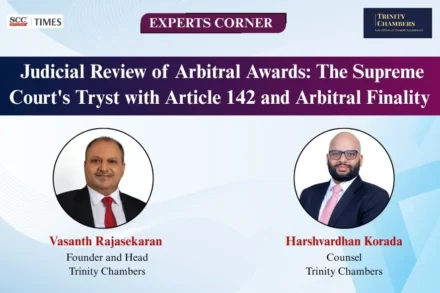
by Vasanth Rajasekaran* and Harshvardhan Korada**
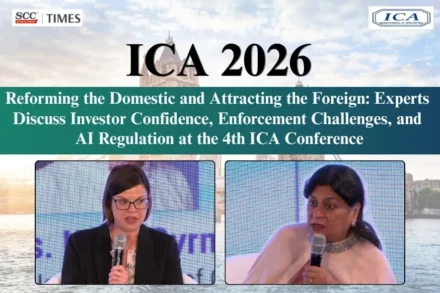
The fireside chat at the 4th ICA Conference on “Arbitrating Indo-UK Commercial Disputes” examined the challenges of enforcement, arbitration efficiency, judicial intervention, institutional reforms, AI regulation, third-party funding, and investor confidence.
At a panel discussion at the 4th ICA Conference on “Arbitrating Indo-UK Commercial Disputes”, the speakers agreed that while disputes may be inevitable in business, successful commercial ecosystems were defined not by the absence of disputes, but rather by avoiding them and if they arise, resolving them efficiently, fairly, and with minimal disruption to long-term relationships and commerce.
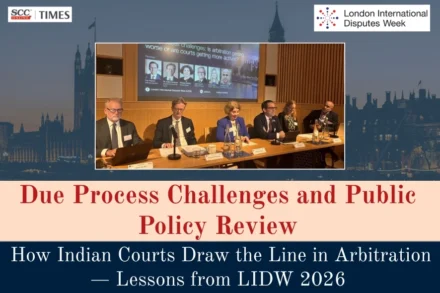
The distinction drawn at LIDW26 between due process challenges and public policy review finds a close parallel in Indian arbitration jurisprudence, where courts examine procedural fairness and public policy concerns through separate legal lenses.
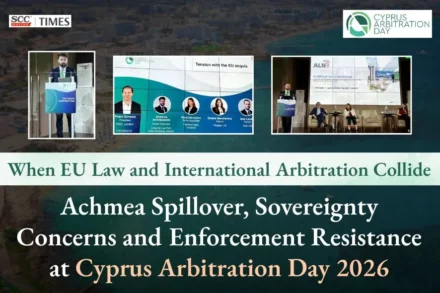
The evolving friction between EU law and international arbitration formed the core of discussions during the second session of Cyprus Arbitration Day 2026, with experts analysing the aftermath of Achmea, challenges to arbitral enforcement, and the increasing assertion of sovereignty and public policy concerns across jurisdictions.
The 4th Edition of Cyprus Arbitration Day 2026 will bring together leading global practitioners, arbitrators, and policymakers to deliberate on emerging trends in commercial and investment arbitration, enforcement of arbitral awards, and technology-driven developments in dispute resolution.
by Vasant Rajasekaran* and Harshvardhan Korada**
Cite as: 2024 SCC OnLine Blog Exp 26