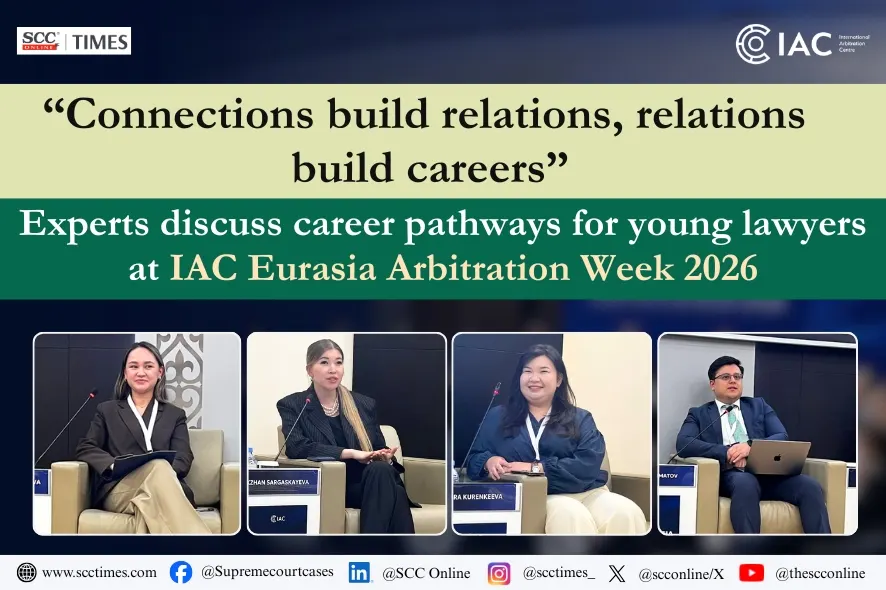
At IAC Eurasia Arbitration Week 2026, a panel discussion titled “From Law School to Global Practice: Career Pathways for Young Lawyers” explored the diverse career trajectories available to aspiring legal professionals and the transition from legal education to international practice. Moderated by Meray Ozat, Head of Centre for Global Policy Leadership, AIFC Court & IAC, the panel featured,
-
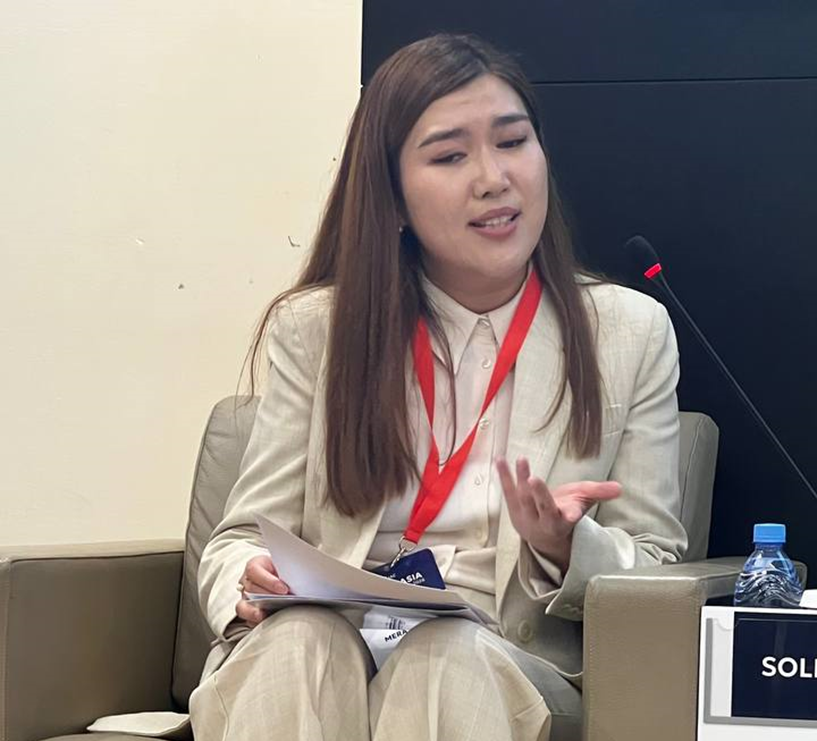
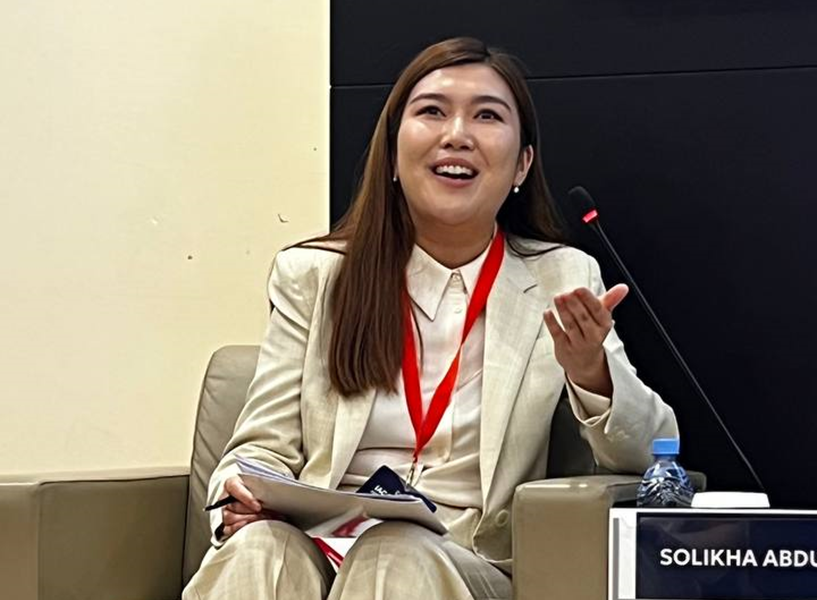
Solikha Abdurakhimova, Lecturer at the University of World Economy and Diplomacy;
-
Faridun Isomatov, International Legal Advisor at the Commercial Law Development Program (CLDP);
-
Zhanara Kurenkeeva, Legal Counsel at Coca-Cola Bishkek Bottlers CJSC; and
-
Akzhan Sargaskayeva, Partner at GRATA International.
The discussion opened with the panellists reflecting on their own professional journeys before examining the transition from legal education to practice, the different career paths available to young lawyers, and the skills and experiences considered essential for building an international legal career.
Opening the discussion, Meray Ozat observed that many law students and young lawyers often wonder where to begin after graduating from law school and how to build a meaningful legal career. Emphasising that the legal profession today offers an extraordinary range of opportunities, Meray remarked that the panel would draw on the experiences of professionals from academia, in-house practice, international organisations and private practice to illustrate that there is no single path to a successful international legal career.
Career journeys: From uncertainty to finding the right path
Invited to reflect on her own journey, Zhanara Kurenkeeva, described law school as a gateway to opportunities, highlighting guest lectures, workshops and moot court competitions as experiences that helped bridge the gap between legal theory and practice.
While acknowledging the value of legal education, Zhanara observed that her decision to pursue law had been made much earlier, during high school. According to Zhanara, law school did not determine her career choice but instead reinforced her commitment to it by helping her appreciate and enjoy the professional path she had chosen.
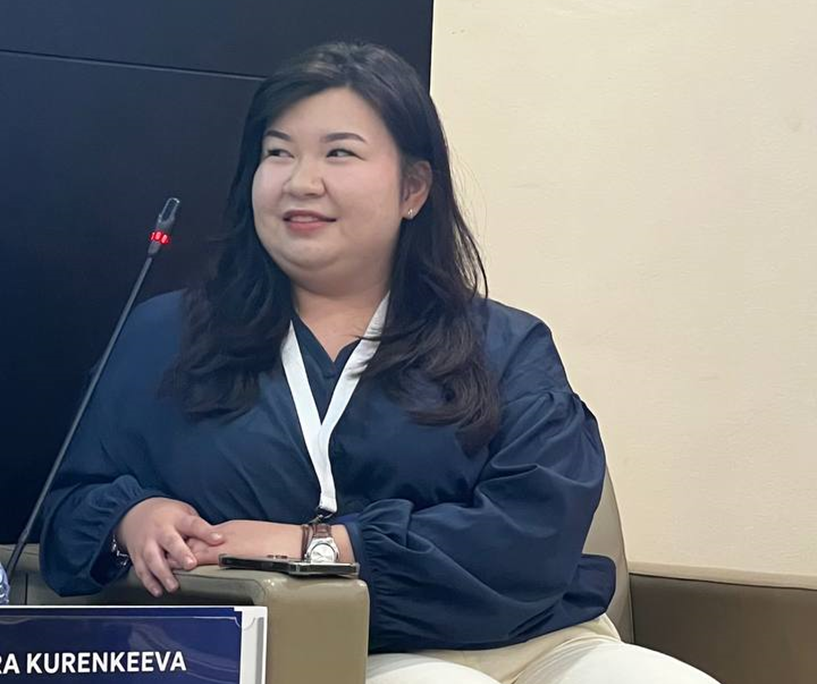
Reflecting on Zhanara‘s remarks, Meray remarked that many people seem to find themselves entering law school almost without realising where the journey might eventually lead. Subsequently, she invited Faridun Isomatov to share his journey.
Reflecting on his own journey, Faridun, remarked that law had not been his original career choice. According to Faridun, it was only during the later years of law school, when he was introduced to subjects such as international law and investment law, that he began to identify the area in which he wished to specialise.
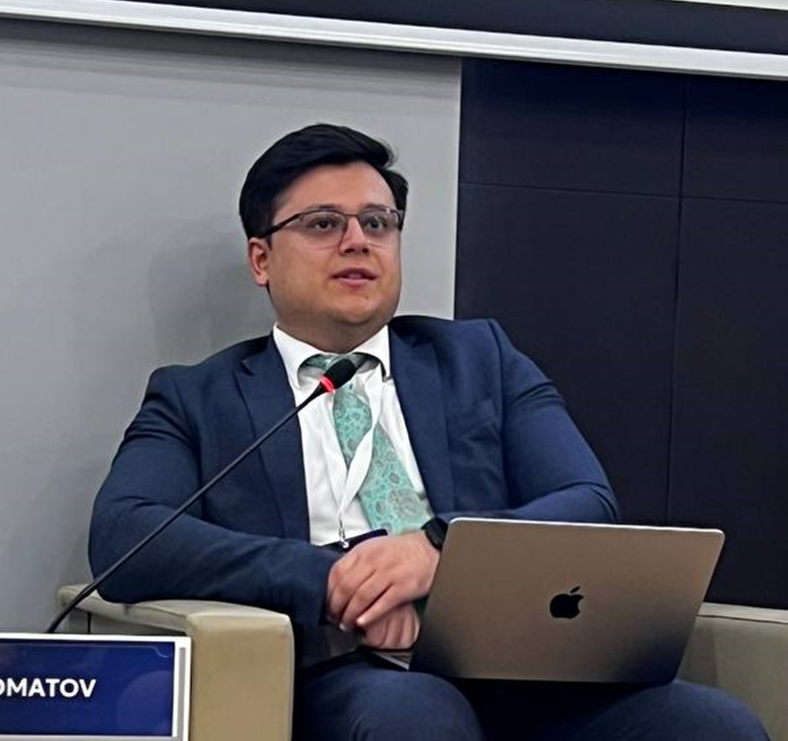
Faridun observed that his exposure to alternative dispute resolution (ADR), particularly through the Vis Moot and similar initiatives, proved to be a turning point in his career. Describing ADR as an area that he found far more engaging than litigation, Faridun remarked that it ultimately shaped his professional direction and expressed the view that ADR represents the future of dispute resolution.
Picking up on Faridun’s experience, Meray observed that not everyone begins law school with a clear idea of the career they wish to pursue. She noted that practical exposure and networking opportunities can often help students discover their interests before inviting Solikha Abdurakhimova to share her own journey, observing that she had taken a different path by returning to academia.
Discovering specialisations and professional interests
Sharing a similar experience, Solikha, admitted that she had entered law school without a clear understanding of the profession or where it would eventually lead her. Solikha observed that while academic success had initially helped her gain admission, legal education soon taught her that the study of law required far more than memorisation. According to Solikha, law school helped her develop analytical and critical thinking skills, while also exposing her to the importance of psychology, professional relationships and networking.
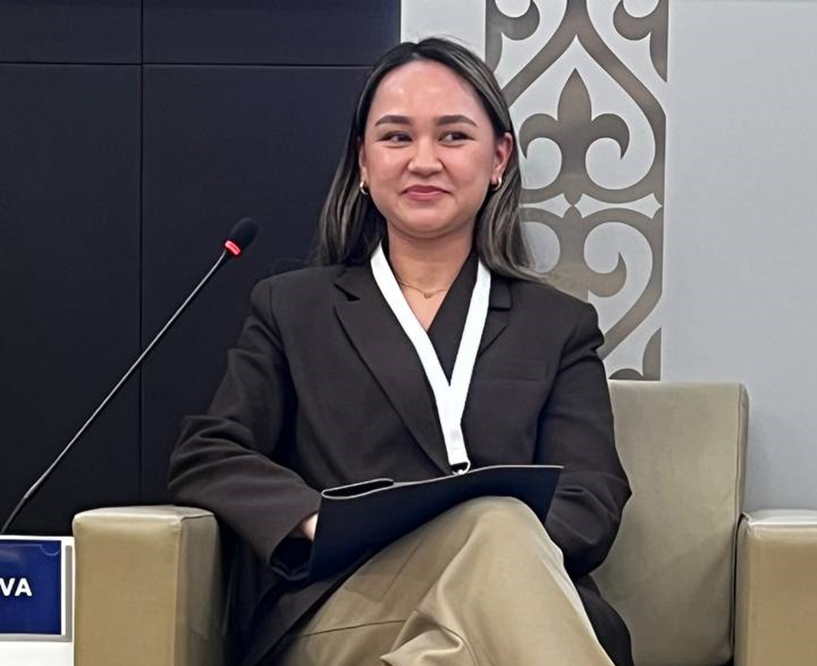
Reflecting on her career choices, Solikha remarked that even after completing her LL.B., she remained uncertain about her long-term path and therefore entered legal practice. It was only after three years in practice that she realised her interest lay in intellectual property law, following which she pursued an LL.M. and eventually found her calling in academia.
Summarising the discussion so far, Meray observed that a recurring theme emerging from the discussion, that many lawyers begin their studies without a clearly defined career path and discover their interests only through education and professional experience. She then turned to Akzhan Sargaskayeva, observing that her journey offered yet another perspective.
Akzhan shared that she too had entered law school without a clear conviction that law was the right career for her. According to Akzhan, the decision was largely influenced by the fact that she enjoyed writing more than mathematics. Recalling her time at the University of Edinburgh Law School, Akzhan admitted that she found the experience challenging and, at times, overwhelming. She described certain subjects as particularly difficult and recalled periods of frustration, self-doubt and even considering whether to continue her studies. Nevertheless, encouraged by her family to persevere and complete her degree, she graduated before taking time to travel, teach and reflect on her future.
Reflecting on the period after graduation, Akzhan remarked that her return to the legal profession was a conscious decision rather than an inevitable one. Through experiences in local law firms, the AIFC Authority and legal education, she eventually discovered that cross-border private practice was the area that most interested and engaged her.
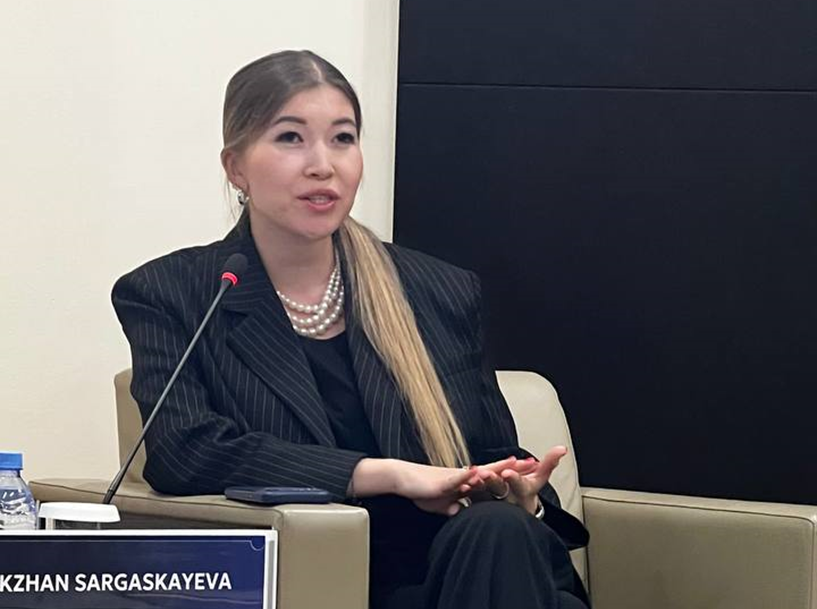
Looking back, Akzhan observed that the importance of legal education is often underestimated while one is still studying. According to Akzhan, her law degree laid the foundation for her career and continues to inform her work through legal reasoning, drafting, communication and negotiation skills. She further remarked that educational background remains an important consideration when recruiting young lawyers. Reflecting on her own experience, Akzhan remarked:
“The right environment for practising law is the key.”
She observed that finding a workplace where one enjoys the work and continues to learn is often more important than simply pursuing rapid career progression.
Understanding different legal career paths
Turning the discussion to in-house practice, Meray observed that careers as in-house counsel is often perceived differently from private practice and invited Zhanara to reflect on the transition, the realities of working within a multinational company, and the skills required to succeed in such a role.
Recalling her early days as an in-house counsel, Zhanara described the experience as “a very humbling, yet a massive reality check”. She recounted how, during her first month, she raised concerns over the legal risks associated with a proposed business transaction, only to be told by her General Manager to stop looking at the issue solely from a lawyer’s perspective and instead consider the financial, commercial and marketing objectives behind the decision. According to Zhanara, that conversation fundamentally changed her understanding of the role of an in-house lawyer.
Zhanara observed that, unlike lawyers in private practice whose primary focus is legal analysis for different clients, in-house counsel must balance legal considerations with broader business objectives, including financial implications, commercial relationships, marketing strategies and long-term corporate goals. She further remarked that, while external counsel may complete a matter and move on to another client, an in-house lawyer has only one client, the company, and must continue to live with the consequences of the decisions taken.
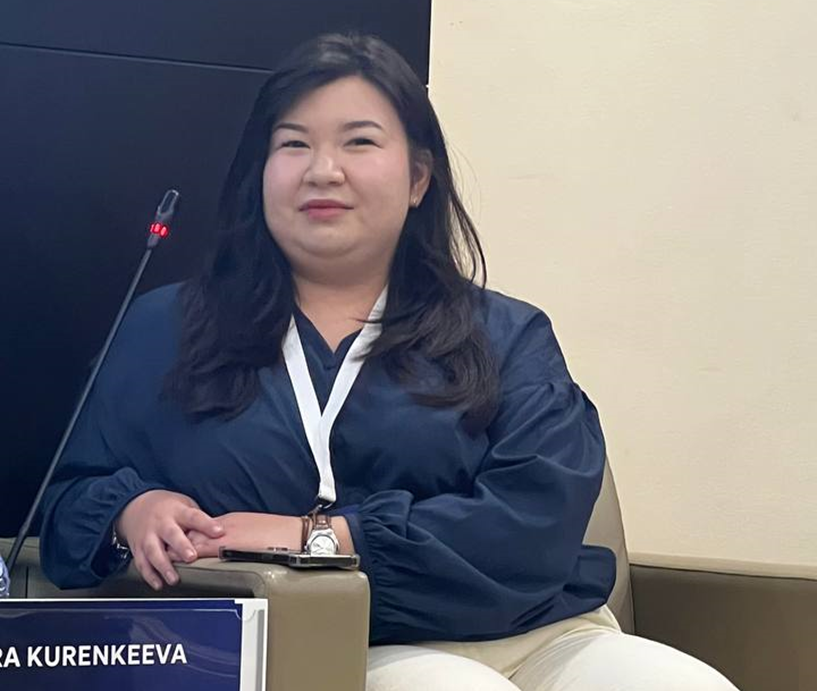
Advising students aspiring to work in multinational corporations, Zhanara cautioned against assuming that strong legal knowledge alone is sufficient for a successful corporate legal career. According to Zhanara, corporate lawyers are required to perform multiple roles depending on the situation, whether by understanding financial data, appreciating marketing considerations, navigating commercial negotiations or effectively communicating with business teams. She concluded by observing that excellence in legal analysis alone does not necessarily translate into success as an in-house lawyer.
Responding to Zhanara’s remarks, Meray observed that her experience highlighted how the role of an in-house lawyer demands flexibility, an understanding of different business functions and the ability to manage diverse responsibilities within an organisation. She then turned to Faridun Isomatov, noting that his work at the intersection of law, policy and international development offered another distinct career pathway for young lawyers. Inviting Faridun to share his experience, Meray asked how students could pursue careers in international organisations and development programmes, and what skills and experience were most relevant for such roles.
Responding to Meray’s question, Faridun, reflected on his experience of working with stakeholders across the private and public sectors, observing that each approaches legal issues from a different perspective. Faridun emphasised that networking plays a crucial role in building a legal career, remarking, “Connections build relations, relations build careers.”
Encouraging students and young practitioners to actively seek opportunities, Faridun advised them not to limit themselves to a preconceived idea of what legal practice should look like. According to Faridun, his own perception of the profession changed significantly after entering practice, where the work proved to be very different from what he had imagined as a law student.
Stressing the importance of professional visibility, Faridun observed that young lawyers should demonstrate their skills and communicate the value they can bring to prospective employers. He encouraged participants to make use of professional networking platforms such as LinkedIn, attend conferences and networking events, introduce themselves to new people, and pursue internships and volunteering opportunities even where such roles may not provide immediate financial benefits. According to Faridun, the experience, professional relationships and visibility gained through such opportunities often prove more valuable in the long term, particularly for those seeking careers in international organisations and development programmes.
Picking up on Faridun’s advice, Meray observed that networking was a message she herself had been emphasising to interns throughout the arbitration week, expressing the hope that participants would build professional relationships that would endure beyond the conference. She then invited Solikha to discuss careers in academia, asking how legal education differs from traditional legal practice and whether pursuing an academic career limits opportunities to remain engaged with professional practice.
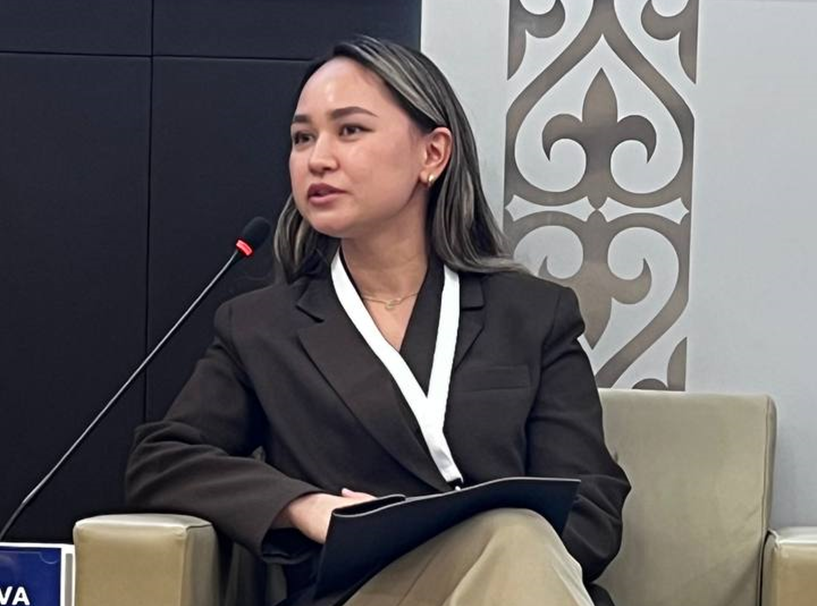
In response, Solikha remarked:
“Academia and professional legal practice don’t compete. They are linked to each other.”
Elaborating further, she observed that both require a strong legal foundation and frequently complement one another in practice.
Pointing to several speakers at the conference who combined academic and professional roles, Solikha observed that the two complement rather than exclude one another, noting that both require a strong foundation in legal knowledge.
Distinguishing the nature of academic work from legal practice, Solikha observed that while legal practice is largely client-oriented and driven by commercial demands and deadlines, academia focuses on generating and sharing knowledge through teaching and research. According to Solikha, academic life extends beyond classroom teaching and also involves research, departmental responsibilities and mentoring students.
Solikha further remarked that many academics continue to practise law alongside their university responsibilities, observing that it is common for law professors to maintain private practices while teaching. Addressing students interested in pursuing academia, Solikha emphasised that the profession requires enthusiasm for teaching, patience, resilience and a willingness to learn alongside students. She concluded by observing that, irrespective of the career path chosen, the most important consideration is to pursue work that one genuinely enjoys and strives to excel at.
Thanking Solikha for her insights, Meray observed that her remarks demonstrated how academia and legal practice can complement one another, noting that several speakers at the conference had successfully combined both paths. She then invited Akzhan to elaborate on her own professional journey, asking her to reflect on the key decisions and challenges that shaped her career, the skills that contributed to her progression, and the lessons she would offer to young lawyers seeking to accelerate their professional development.
Building a successful legal career
Reflecting on her career progression, Akzhan remarked that her professional journey had largely unfolded in private practice, where she progressed from a junior associate to partner at an international law firm. While acknowledging that her advancement had been relatively rapid, Akzhan observed that she would not necessarily recommend the same path to others because of the personal demands it entailed. According to Akzhan, hard work was indispensable, but equally important was working in the right environment, where one enjoys the work and benefits from the guidance of trusted mentors. She credited her own career development to the support of a mentor who consistently challenged her, encouraged her and pushed her beyond her comfort zone.
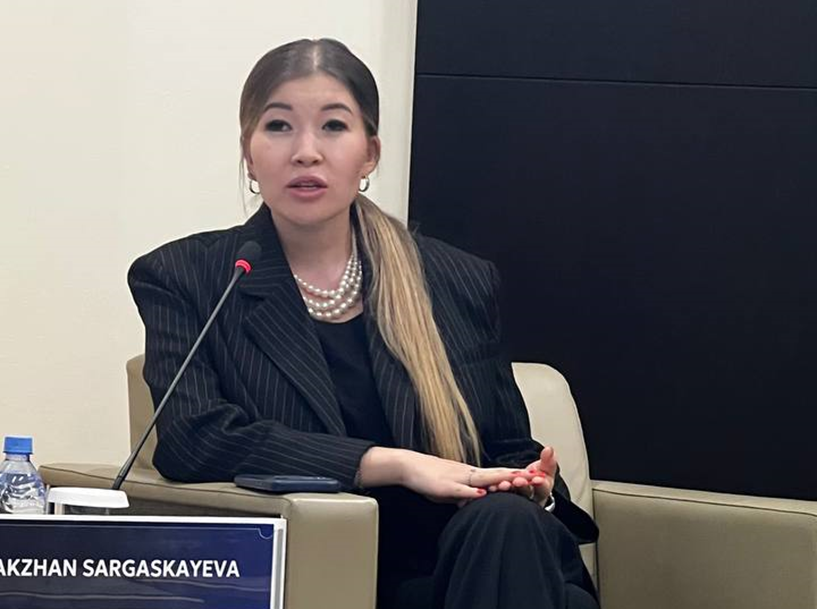
Akzhan further observed that accelerated career progression often requires conscious sacrifices, including reduced personal, family and social time. At the same time, she emphasised that there is no single model for success, noting that some lawyers choose a steadier pace of professional growth while maintaining a healthier work-life balance. According to Akzhan, the appropriate path ultimately depends on an individual’s own priorities and circumstances.
Reflecting on work-life balance, Akzhan remarked:
“You will never find the perfect work-life balance. You just have to embrace it and have fun.”
Sharing practical advice for young lawyers, Akzhan emphasised the importance of hard work, proactivity, reliability and consistency. She encouraged junior lawyers to actively seek new responsibilities rather than waiting for work to be assigned, observing that initiative is an important quality in a professional environment. Akzhan further remarked that lawyers should strive to make themselves dependable team members by communicating effectively, remaining responsive, delivering quality work on time and consistently earning the trust of colleagues and clients. She concluded by observing that a successful legal career is built not on occasional outstanding achievements but on the consistent performance of hundreds of smaller tasks over time.
Legal practice and pursuing LLM
Thanking Akzhan for her insights, Meray observed that career progression ultimately involves balancing personal priorities, with some lawyers choosing faster professional advancement while others place greater emphasis on work-life balance. She then turned to Faridun, inviting him to reflect on how legal practice differs across Central Asia and the South Caucasus, and whether he had observed any cultural or professional differences while working across jurisdictions.
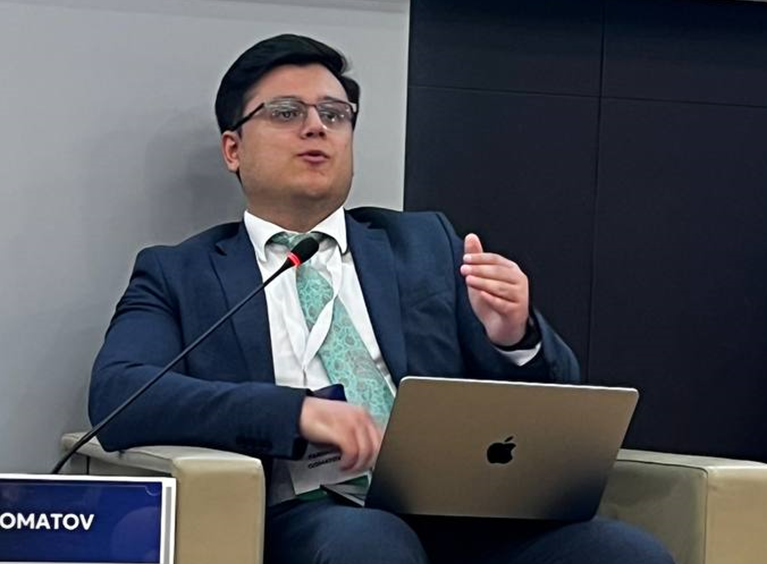
Responding to the question, Faridun observed that, although his experience with the South Caucasus was relatively recent, his work across Central Asia had exposed him to diverse legal cultures. According to Faridun, one of the most noticeable differences lay in the contrast between legal professionals educated under the Soviet system and those trained in more recent Western legal traditions. He remarked that legal practice in Kazakhstan appeared comparatively more Western in outlook, whereas jurisdictions such as Tajikistan and Kyrgyzstan retained more traditional professional cultures.
Illustrating the point, Faridun observed that differences were reflected not only in legal approaches but also in workplace culture and professional communication. While describing these contrasting perspectives as both interesting and valuable, Faridun remarked that such differences were gradually diminishing as a new generation of lawyers entered the profession and legal markets across the region became increasingly integrated with international practice.
Picking up on Faridun’s observations, Meray remarked that young lawyers should consider not only the nature of the work they wish to pursue but also the professional environment, mentorship and organisational culture that best align with their values. At the same time, she emphasised the importance of remaining flexible and adapting to different working styles and cultural contexts when practising across jurisdictions. She then invited Solikha to share her perspective on the role of postgraduate legal education, asking whether pursuing a master’s degree was necessary for a successful legal career.
Responding to the question, Solikha observed that pursuing an LL.M. is not a prerequisite for a successful legal career, noting that lawyers can build rewarding careers, become partners or establish their own practices without obtaining a postgraduate degree. According to Solikha, an LL.M. becomes particularly valuable for those intending to combine legal practice with academia or transition from practice into teaching and research.
Solikha strongly encouraged students who remain uncertain about pursuing postgraduate studies to consider spending a year or two in legal practice before enrolling in an LL.M. programme. Reflecting on her own experience, Solikha observed that practising law enabled her to revisit and apply the legal theories studied during her undergraduate degree, deepen her understanding of the law and identify intellectual property as the area she wished to specialise in.
According to Solikha, entering an LL.M. programme with a clear professional purpose made the experience significantly more meaningful, including helping her identify a suitable dissertation topic. At the same time, Solikha emphasised that there is no universally correct path, observing that some students may choose to pursue postgraduate studies immediately after completing their bachelor’s degree, while others may benefit from gaining practical experience first. She concluded by remarking that every career journey is different, and the appropriate choice ultimately depends on an individual’s own goals and circumstances.
Questions from Audience
Concluding the discussion, Meray opened the floor for questions from the audience.
The audience raised a range of practical career questions, including whether legal careers can offer financial success alongside flexibility and travel, the impact of artificial intelligence on opportunities for junior lawyers, how young professionals can identify a supportive work environment and mentor, and the role of experiential learning in preparing future generations of lawyers.
Responding to a question on careers involving travel and remote work, the panellists observed that no area of legal practice offers an effortless balance between professional success, flexibility and financial rewards. While acknowledging that remote working arrangements are becoming increasingly common, they emphasised that lawyers must consciously establish boundaries and manage their time effectively to avoid professional burnout. They further observed that maintaining a healthy balance between work and personal life is an ongoing process rather than a fixed destination.
Addressing concerns that AI may reduce opportunities for entry-level lawyers, the panellists expressed the view that artificial intelligence should be regarded as a tool rather than an obstacle. They encouraged students to familiarise themselves with AI technologies while continuing to develop the legal reasoning and practical skills expected by employers. They also advised aspiring lawyers to actively approach law firms and organisations, use professional networking platforms such as LinkedIn, and remain open to internships and other opportunities to gain practical experience.
On the question of identifying a suitable professional environment, the panellists observed that there is no universal formula for choosing the right employer or mentor. Instead, they encouraged young lawyers to explore different areas of practice before deciding where they fit best. It was also suggested that, particularly at the beginning of a career, learning under lawyers who are willing to devote time to mentoring may prove more valuable than working solely under well-known practitioners with limited capacity to train junior colleagues.
Responding to a question on educating future generations of lawyers, the discussion turned to the importance of experiential learning. It was observed that students often engage more deeply when teaching connects with their individual interests and encourages active participation rather than relying exclusively on traditional lectures. Moot court competitions, practical exercises and meaningful interaction between students and practitioners were highlighted as valuable means of bridging legal education and professional practice.
Bringing the discussion to a close, Meray thanked the panellists and participants for an engaging discussion.
Read more IAC Eurasia Arbitration Week 2026 coverage: