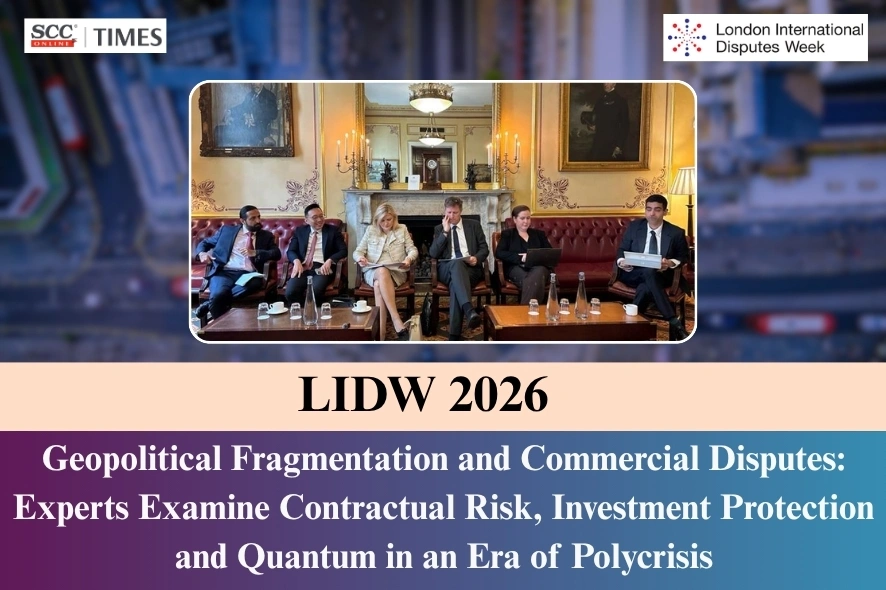
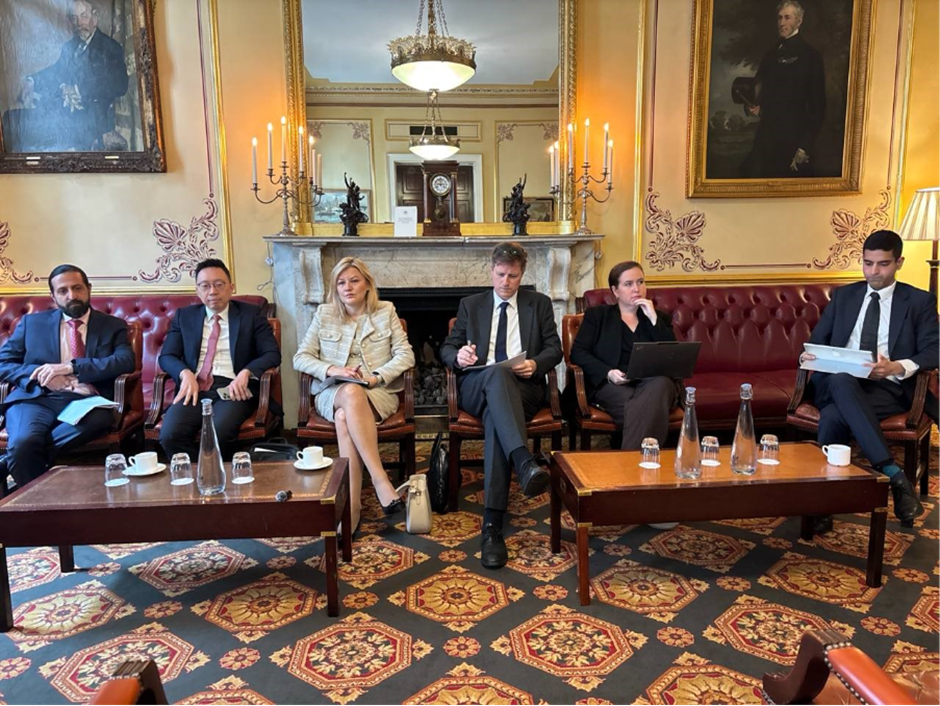
As geopolitical tensions continue to reshape global commerce, businesses are increasingly confronting disputes arising from sanctions, supply-chain disruptions, trade restrictions, regulatory intervention and shifting investment environments. Against this backdrop, a distinguished panel of arbitration practitioners, dispute lawyers and valuation experts gathered at a member-hosted event organised by Osborne Partners and Cyril Amarchand Mangaldas (CAM) at the London International Disputes Week (LIDW) 2026 to examine how geopolitical fragmentation is transforming commercial disputes and risk allocation.
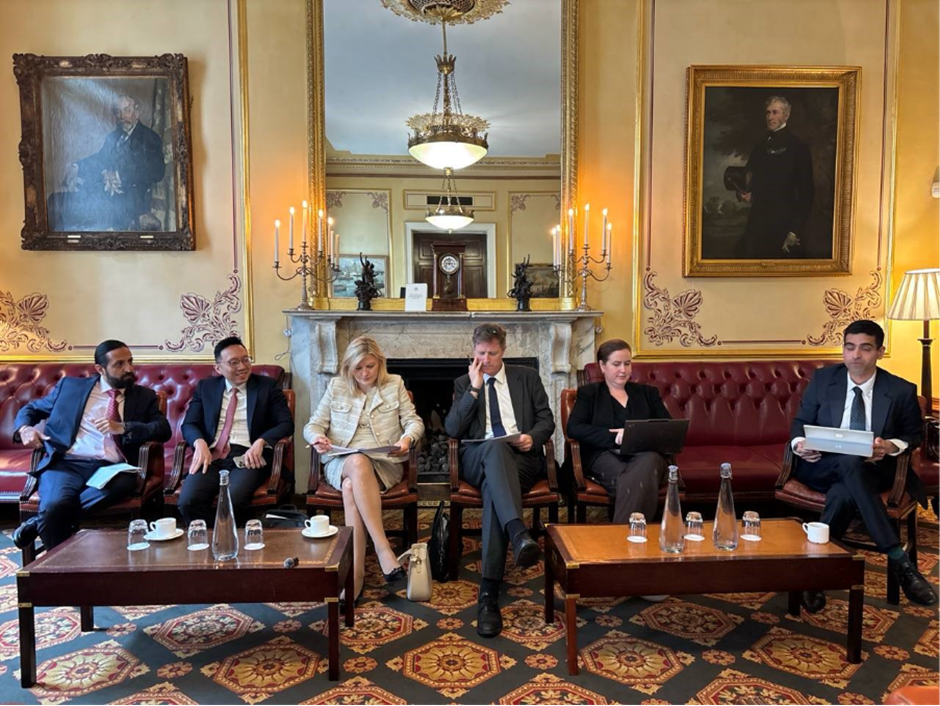
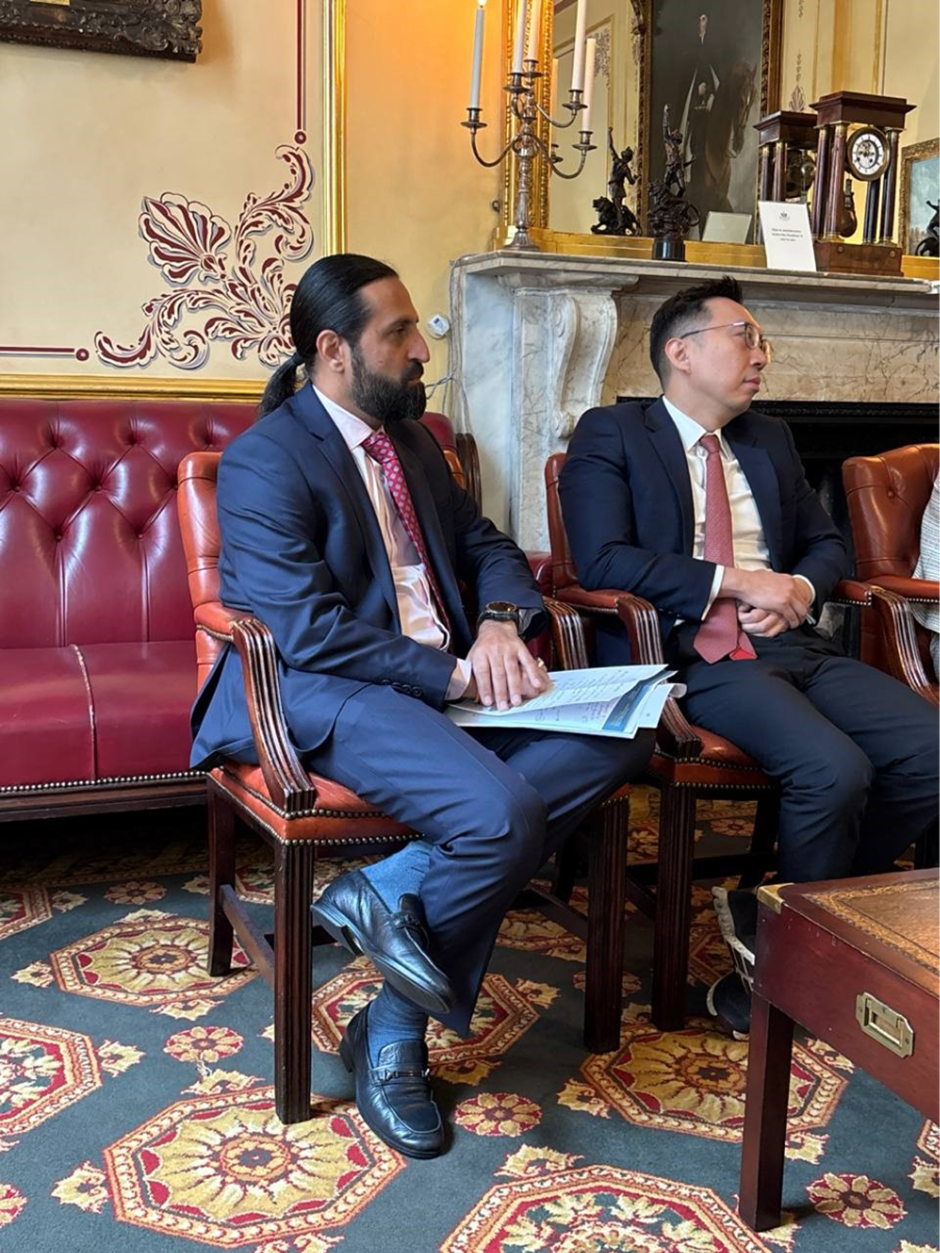
The panel featured Mr. Raunak Dhillon, Partner at Cyril Amarchand Mangaldas; Mr. Nick Storrs, Partner at Taylor Wessing; Ms. Rebecca James, Partner at Linklater; and Mr. Paul Tan KC of One Essex Court. The discussion was moderated by Mr. Montek Mayal, Partner at Osborne Partners.
The Age of Polycrisis: When Geopolitics Becomes a Commercial Dispute
Opening the discussion, Mr. Montek Mayal introduced a concept that has gained prominence in policy and academic circles: “polycrisis”. He explained that the term describes a condition in which multiple systemic shocks interact with one another, compounding their effects and creating consequences that are significantly more difficult to manage than any individual disruption.
Originally used to describe the intersection of climate stress, energy insecurity and post-pandemic economic fragility, the concept, Mr. Mayal observed, has now migrated directly into the world of commercial disputes and international arbitration. A sanctions designation in Washington may simultaneously trigger a force majeure notice in Singapore, a material adverse change dispute in London and a valuation dispute in an investment arbitration, all against the backdrop of armed conflict and geopolitical uncertainty.
According to Mr. Mayal, for much of the post-Cold War era, geopolitical risk was treated as a background condition that could largely be priced into transactions and managed through standard contractual provisions. That assumption has now been fundamentally dismantled. Trade policy has become an instrument of statecraft, sanctions regimes have become increasingly aggressive, kinetic conflicts have disrupted global supply chains and states have become more willing to regulate, redirect or seize commercial assets.
As a result, contractual provisions that were once viewed as theoretical safeguards are now being tested in high-stakes disputes involving substantial financial exposure. Moreover, parties frequently find themselves interpreting the same contractual language and the same geopolitical event in fundamentally different ways.
Mr. Mayal structured the discussion around four broad themes: supply-chain and contractual performance disputes; investment and shareholder disputes; the state as a commercial actor; and the quantum and valuation challenges arising from these disputes.
Supply Chains, Sanctions and the New Geography of Disputes
Inviting each panellist to identify the types of disputes that had become materially more common over the past three years, Mr. Mayal began with Mr. Nick Storrs.
Mr. Nick Storrs pointed to technology supply-chain disputes. While acknowledging the role of supply and demand dynamics, he suggested that geopolitical efforts to restructure and secure technology supply chains have contributed significantly to a growing number of disputes. In his view, the trend is likely to continue as states increasingly view technology and strategic industries through a geopolitical lens.
Building on that theme, Ms. Rebecca James observed that geopolitical fragmentation has intensified state focus on domestic energy security and critical minerals. She noted that governments are increasingly adopting measures such as export restrictions, local-content requirements and revised regulatory frameworks. While such measures are often aimed at protecting strategic industries, they have also generated contractual disputes and, in some instances, potential investment treaty claims.
Mr. Paul Tan KC identified both direct and indirect effects of geopolitical developments. Some disputes arise directly from governmental action that affects contractual performance. Others emerge from secondary market consequences. Referring to sanctions affecting Russian oil, he explained that the resulting market distortions have generated disputes involving vessel owners, cargo interests and trading arrangements in jurisdictions such as Singapore.
Offering an Indian perspective, Mr. Raunak Dhillon observed that supply-chain disruptions have had a significant impact on infrastructure and power projects. He noted that disruptions affecting input availability have led to disputes concerning pricing, timelines and performance obligations under power purchase agreements and infrastructure contracts.
Force Majeure, Frustration and the Central Role of Causation
Moving to the first substantive segment, Mr. Montek Mayal asked how geopolitical disruption affects contractual performance and which legal mechanisms are most commonly invoked.
Ms. Rebecca James emphasised that force majeure remains fundamentally a contractual concept. Contrary to a common misconception, force majeure is not a free-standing doctrine under common law and provides protection only where it has been expressly incorporated into a contract.
According to Ms. James, force majeure analysis typically begins with the contractual definition of the triggering event. She observed that force majeure clauses continue to evolve over time. The COVID-19 pandemic exposed shortcomings in many existing provisions, prompting parties to reconsider whether events such as pandemics had been adequately contemplated.
Once a qualifying event has been identified, the critical question becomes whether the event has actually affected contractual performance. Ms. James repeatedly returned to the issue of causation, describing it as one of the most important questions in force majeure disputes. Parties must demonstrate that the relevant event has crossed the contractual threshold for disruption, whether that threshold is prevention, impossibility, material hindrance or delay.
Importantly, she noted that force majeure clauses generally do not excuse performance merely because it has become more expensive or less profitable. Parties must also satisfy notice requirements and demonstrate reasonable efforts to overcome the effects of the event.
Ms. James further examined the relationship between force majeure and frustration. While frustration remains available in principle, she noted that carefully drafted contracts containing detailed risk-allocation provisions often leave little room for frustration arguments. She referred to a recent matter involving pandemic-related measures in which a frustration argument was ultimately unsuccessful.
The discussion then turned to other contractual tools used to allocate risk, including liquidated damages provisions, price-adjustment mechanisms and economic equilibrium clauses. Ms. James observed that economic equilibrium provisions are particularly common in long-term arrangements involving energy projects, concessions and state participation. However, she cautioned that under laws such as English and Singapore law, parties must take care to ensure that such provisions do not become unenforceable “agreements to agree”.
War, Conflict or Market Event? The Challenge of Defining Modern Crises
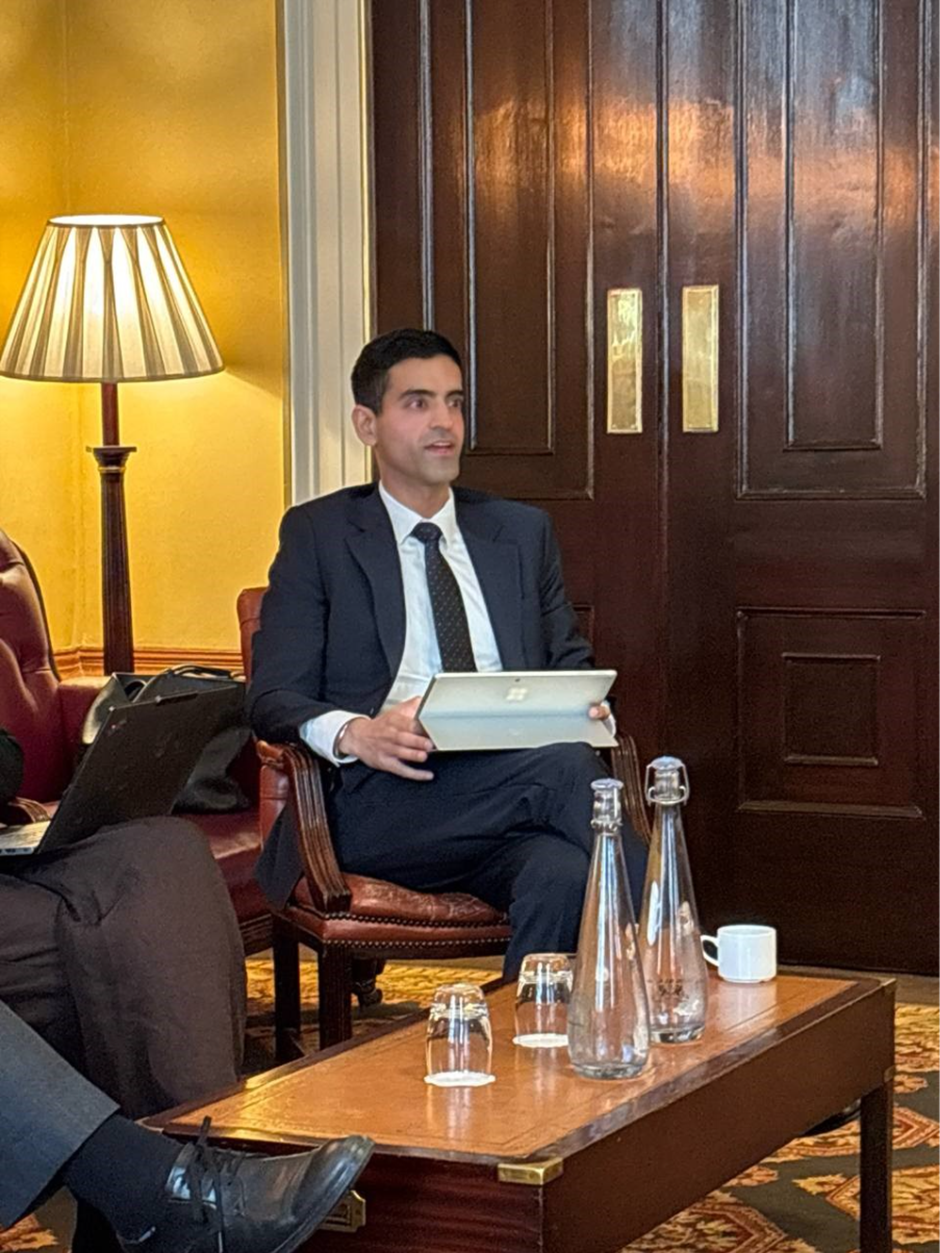
Building on Ms. James’ observations, Mr. Montek Mayal noted that parties often disagree on whether performance has become genuinely impossible or merely less profitable and asked how tribunals are approaching these questions.
Mr. Paul Tan KC identified three recurring challenges: definition, causation and threshold.
First, he noted that modern geopolitical crises are frequently polycentric. Events rarely fit neatly into traditional contractual categories. A clause may refer to “war”, but parties may disagree whether a particular situation constitutes a war, a conflict or some other form of geopolitical disruption.
Second, causation remains critical. Referring to disputes arising from trade measures and market intervention, Mr. Tan KC observed that tribunals often distinguish between governmental action and the economic consequences that follow. In some cases, the true cause of loss may be a market development rather than the governmental act itself.
Third, the threshold for invoking doctrines such as force majeure and frustration remains exceptionally high. Even where geopolitical developments have profound commercial consequences, the existence of alternative sources of supply often prevents parties from establishing impossibility.
Mr. Tan KC also noted that civil law approaches may sometimes offer greater flexibility. Referring to Article 79 of the CISG and hardship doctrines, he suggested that some legal systems may be more receptive to arguments based on economic disruption than traditional common-law approaches.
Nevertheless, he stressed that parties should not rely exclusively on force majeure clauses. In his view, contractual drafting should increasingly focus on flexibility, including renegotiation provisions and price-adjustment mechanisms that provide a middle ground between strict performance and termination.
Remedies, Specific Performance and the Indian Coal Case
Turning to remedies, Mr. Mayal asked what forms of relief parties actually pursue in these circumstances.
Mr. Nick Storrs explained that many disputes arise in long-term supply relationships where alternative sources of supply may technically exist but are commercially unattractive. Buyers frequently seek specific performance, arguing that alternative suppliers are too expensive or disruptive.
However, courts and tribunals are often reluctant to grant specific performance where a market alternative remains available. In such circumstances, parties frequently find themselves negotiating price adjustments instead. According to Mr. Storrs, renegotiation often becomes the most commercially efficient resolution.
Mr. Raunak Dhillon then provided a practical illustration from India. Referring to a Supreme Court decision involving power purchase agreements dependent on imported Indonesian coal, he explained that regulatory changes in Indonesia significantly increased coal prices. Indian parties argued that performance had become impossible. The Supreme Court rejected that argument, holding that the contracts had become more onerous rather than impossible to perform.
Mr. Dhillon noted that Indian courts continue to apply a strict approach when evaluating force majeure and frustration arguments. Both tribunals and courts examine whether the relevant event falls within the contractual clause, whether a causal link exists between the event and the alleged loss and whether parties took reasonable steps to mitigate their losses.
Investment Disputes, Shareholder Claims and Price Renegotiation
Moving to the second segment of the discussion, Mr. Montek Mayal observed that geopolitical instability increasingly affects pricing, financing conditions and regulatory certainty in commercial transactions.
Responding first, Mr. Nick Storrs highlighted the growing importance of price-renegotiation clauses. Traditionally, such provisions risked being characterised as unenforceable agreements to agree. However, courts have become increasingly willing to give effect to sophisticated renegotiation frameworks between commercial parties.
According to Mr. Storrs, recent judicial decisions demonstrate a willingness to interpret such provisions in a commercially meaningful way, particularly where parties have incorporated objective standards such as reasonableness and good faith.
Ms. Rebecca James agreed and emphasised the importance of drafting. If parties wish tribunals or courts to enforce renegotiation mechanisms, they must provide objective criteria that allow decision-makers to determine what the parties intended.
MAC Clauses, Materiality and the Problem of Duration
Mr. Montek Mayal then turned to material adverse change (MAC) clauses.
Mr. Paul Tan KC observed that MAC clauses are increasingly invoked as parties seek to exit transactions affected by geopolitical developments. However, MAC clauses are generally designed to address company-specific deterioration rather than market-wide geopolitical events.
Many MAC provisions contain carve-outs excluding market-wide developments. Even where a clause is potentially applicable, parties must establish materiality and, importantly, duration.
According to Mr. Tan KC, duration presents a particularly difficult challenge in modern geopolitical disputes. Markets can fluctuate dramatically in response to political developments. A disruption that appears significant one day may disappear following a ceasefire, policy reversal or regulatory change. Determining whether an adverse effect is sufficiently durable therefore becomes a complex exercise.
Mr. Mayal observed that modern financial markets themselves raise difficult questions. In a world where markets may fluctuate dramatically within short periods, determining what constitutes a sufficiently significant change becomes increasingly challenging.
Mr. Nick Storrs agreed that duration remains critical and noted that evidentiary questions frequently arise in assessing the significance of market movements.
Ms. Rebecca James returned once again to causation, observing that parties often disagree fundamentally about why a company’s performance has deteriorated. Market conditions may provide part of the explanation, but company-specific factors may also be at play. Determining the true cause of loss often becomes one of the central battlegrounds in these disputes.
Quantum, Valuation Dates and the Challenge of Full Reparation
Turning to the final segment, Mr. Montek Mayal observed that valuation questions become exceptionally difficult during periods of geopolitical instability.
Introducing the topic, he noted that valuation-date disputes sit at the intersection of law and quantum. In ordinary circumstances they are challenging. In the current geopolitical environment, they can become extraordinarily complex.
Mr. Nick Storrs responded first. He explained that valuation analysis generally begins with the date of breach. Where an available market exists, parties are expected to mitigate their losses by obtaining replacement performance. As a result, tribunals and courts frequently view the date of breach as the appropriate starting point.
The position becomes more complicated where the relevant asset or opportunity is genuinely unique. In such circumstances, parties often advance competing valuation-date arguments that can produce dramatically different damages outcomes.
According to Mr. Storrs, valuation-date disputes frequently become central issues in arbitration because the financial consequences can be enormous.
Chorzów Factory, Counterfactuals and the Meaning of Full Reparation
Mr. Montek Mayal observed that in cases involving unlawful expropriation or breaches of fair and equitable treatment, international law seeks to restore the injured party to the position it would have occupied absent the wrongful conduct.
If commodity prices or energy prices subsequently increase, he suggested, should the injured investor not benefit from those gains if the purpose of damages is truly to undo the harm caused?
Drafting for Volatility Rather Than Stability
As the session drew to a close, Mr. Mayal invited each panellist to identify the single most important adjustment that commercial parties, lawyers and experts should make in response to an increasingly fragmented geopolitical environment.
Ms. Rebecca James argued that parties must now draft contracts on the assumption of volatility rather than stability. Traditional drafting approaches often treated geopolitical risk as a remote contingency addressed through boilerplate provisions. In her view, parties must now engage in more sophisticated forward-looking analysis and anticipate how geopolitical risks might affect performance during the life of the contract.
Mr. Nick Storrs emphasised the importance of clear price-adjustment mechanisms. Given the uncertainty surrounding supply chains and strategic industries, parties should devote greater attention to drafting provisions that provide workable solutions when circumstances change.
Mr. Paul Tan KC agreed and expanded the discussion beyond substantive contractual provisions. He stressed the importance of considering dispute-resolution mechanisms, choice of seat, jurisdictional issues and investment-treaty structuring from the outset. In a world characterised by shifting geopolitical alliances, assumptions about neutral forums may no longer remain static.
He also noted that many investors only discover the absence of treaty protection after a dispute has arisen. Proper investment structuring therefore remains an essential part of geopolitical risk management.
Mr. Raunak Dhillon observed that commercial parties have historically been reluctant to negotiate aggressively over protective provisions for fear of jeopardising transactions. However, he suggested that the current environment requires a different approach. Rather than treating force majeure and similar clauses as mere escape mechanisms, parties should develop carefully considered contractual protections that address foreseeable geopolitical risks.
Mr. Dhillon emphasised the importance of collaboration between transactional and disputes lawyers. In his view, meaningful discussions about risk allocation should occur during negotiations rather than after disputes emerge.
Mr. Dhillon humorously noted that lawyers are frequently asked to review dispute-resolution clauses within minutes and provide immediate advice, despite the strategic significance of those provisions. The exchange underscored the panel’s broader message that contractual risk management requires deeper and more thoughtful engagement.
Documentation, Causation and the Future of Disputes
Concluding the session, Mr. Montek Mayal offered a final observation from a quantum and damages perspective.
According to Mr. Mayal, documentation is becoming increasingly important in modern disputes. One of the central questions in any damages analysis is what was known at the time decisions were made, how risks were assessed and whether those risks were consciously priced into commercial arrangements.
He observed that sophisticated commercial parties increasingly document risk analysis and decision-making processes. However, in many emerging markets, including India, such documentation remains less common.
This has important implications for causation. To recover damages, a claimant must establish a clear connection between the alleged breach and the harm suffered. In an era characterised by multiple overlapping geopolitical and economic influences, demonstrating that connection has become considerably more difficult.
Mr. Mayal remarked that he continues to be surprised by the limited documentation available in many disputes, including matters involving sophisticated investment funds. Yet documentation often provides the clearest evidence of how risks were understood, allocated and priced at the relevant time.
As the discussion concluded, one theme had emerged consistently across every segment of the panel: causation. Whether analysing force majeure, investment treaty breaches, valuation methodologies or damages, tribunals increasingly face the challenge of disentangling multiple overlapping causes of loss in a world shaped by geopolitical fragmentation.
The panel ultimately reflected a growing consensus that geopolitical risk can no longer be treated as a peripheral consideration. It has become a defining feature of modern commercial and investment disputes, requiring more sophisticated contractual drafting, investment structuring, dispute-resolution planning and damages analysis than ever before.
This report forms part of SCC Times’ special coverage of London International Disputes Week (LIDW) 2026. As a Media Partner for the event, SCC Times is reporting key conversations across the conference, highlighting emerging trends and perspectives from the international dispute resolution community.
SCC Times extends its appreciation to Zehra Naqvi, EBC—SCC Online Foreign Student Ambassador and Lawyer, for her on ground presence, valuable assistance and contribution to the reporting of this event.