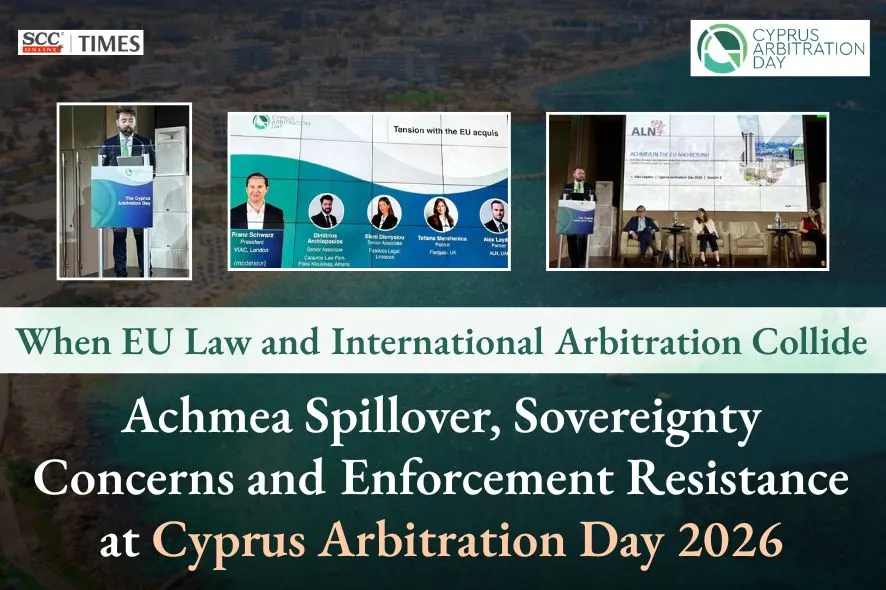
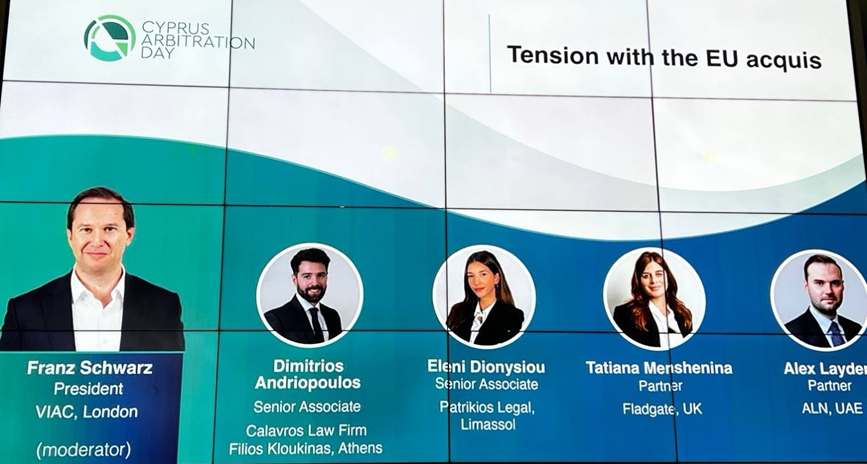
The second session of Cyprus Arbitration Day 2026 titled “Tension with the European Union (EU) Acquis” brought together leading arbitration practitioners to examine the continuing friction between international arbitration and the legal framework of the European Union. The session was moderated by Mr. Franz Schwarz, President, VIAC, London, and featured Mr. Dimitrios Andriopoulos, Senior Associate, Calavros Law Firm Filios Kloukinas, Athens; Ms. Eleni Dionysiou, Senior Associate, Patrikios Legal, Limassol; Ms. Tatiana Menshenina, Partner, Fladgate, UK; and Mr. Alex Layden, Partner, ALN, UAE.
Opening the discussion, Mr. Franz Schwarz reflected on how the tension between arbitration and EU law has continued to evolve since the Achmea judgment. He noted that concerns initially arising in the context of intra-EU investment arbitration now increasingly raise questions for commercial arbitration as well. Referring to the broader judicial developments within Europe, he observed:
“We try to delineate how Achmea and the precedent that the European courts have developed, and that courts in other jurisdictions have picked up on, are threatened to spill over into commercial arbitration as well.”
He emphasised that the issue remains central to arbitration discourse as practitioners and courts continue grappling with the interaction between arbitral autonomy and EU legal principles.
Spillover of Achmea into Commercial Arbitration
Mr. Dimitrios Andriopoulos traced the origins of the tension back to the post-Lisbon Treaty period, when foreign direct investment became an exclusive competence of the European Union. According to him, the European Commission increasingly attempted to introduce arguments relating to the primacy of EU law before investment tribunals, creating a prolonged conflict between EU institutions and arbitral frameworks.
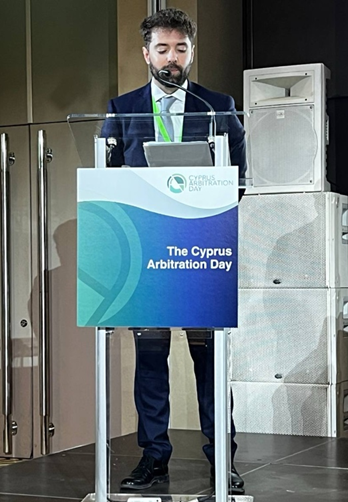
Describing the evolving relationship between the two systems, he remarked:
“It left us with a breakup, you could say, without any side understanding where the other side was coming from.”
Mr. Andriopoulos further discussed the uncertainty surrounding the distinction drawn in Achmea between investment arbitration and commercial arbitration, observing that while commercial arbitration appeared formally untouched, the reasoning behind that distinction remained unclear. Referring to judgments of the Greek Council of State involving concession agreements and Value Added Tax (VAT) disputes, he explained how domestic courts had increasingly relied on Achmea-based reasoning to challenge the binding effect of arbitral awards involving EU law issues.
Highlighting the practical implications for investors and practitioners, he observed:
“It has created a chilling effect when negotiating arbitration clauses with the state in new concession agreements.”
Resistance to Investment Arbitration Beyond Europe
Expanding the discussion beyond Europe, Ms. Eleni Dionysiou examined how resistance to investment arbitration enforcement has emerged across Latin America, the CIS region, Africa, and parts of Asia. Referring to withdrawals from the International Centre for Settlement of Investment Disputes (ICSID) framework by countries including Bolivia, Ecuador, Venezuela, and Honduras, she explained that states often reconsider investment treaty obligations after facing substantial claims arising from regulatory changes and economic pressures.
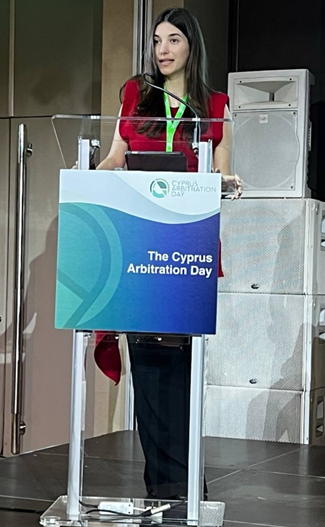
She emphasised:
“The broader issue is the legitimacy and durability of the international arbitration framework as a whole.”
Focusing particularly on Russia and the wider Commonwealth of Independent States (CIS) region, Ms. Dionysiou discussed the growing reliance on sovereignty-based arguments and constitutional supremacy to resist enforcement of investment awards. She referred to developments following sanctions-related disputes, including the Wintershall proceedings, where Russian courts imposed penalties connected to ongoing arbitral proceedings. According to her, sanctions regimes and geopolitical developments are increasingly reshaping the enforcement landscape of investment arbitration.
Concluding her remarks, she highlighted ongoing United Nations Commission on International Trade Law (UNCITRAL) reform discussions surrounding proposals for a multilateral investment court, while noting that divisions remain between states supporting systemic reform and those preferring more limited changes. She observed:
“The success of the reform will depend on whether it is possible to reconcile the skeptical and non-skeptical supportive views.”
Institutional Trust and Arbitration Infrastructure
Concluding the session, Mr. Alex Layden reflected on the importance of institution-building in sustaining the credibility of arbitration systems. Speaking about the Cyprus Arbitration and Mediation Centre (CAMC) and its collaboration with legal and commercial bodies, he highlighted the importance of combining local familiarity with internationally recognised arbitral standards.
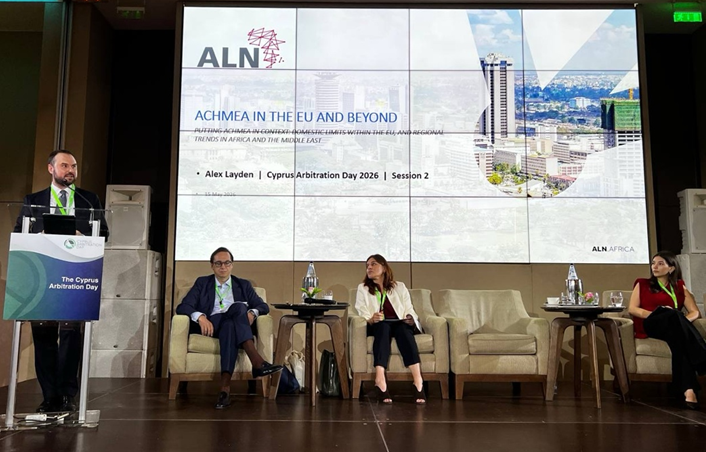
He stated:
“It is local enough to understand the market, it is institutional enough to be trusted and it is outward-looking enough to contribute to Cyprus’ role as a regional dispute resolution hub.”
Mr. Layden further emphasised that arbitration’s future would depend not merely on legislative reform but on institutional credibility, professional practice, and user confidence. He concluded:
“The future of arbitration will not be built by legislation alone. It will be built by institutions, by practice and by trust.”
The session concluded with broader reflections on how arbitration frameworks across jurisdictions are increasingly being shaped by regulatory oversight, sovereignty concerns, sanctions regimes, and institutional legitimacy. While speakers acknowledged growing tensions between arbitration and EU legal principles, the discussions also underscored the continuing importance of neutrality, procedural fairness, and institutional trust in preserving confidence in international dispute resolution.