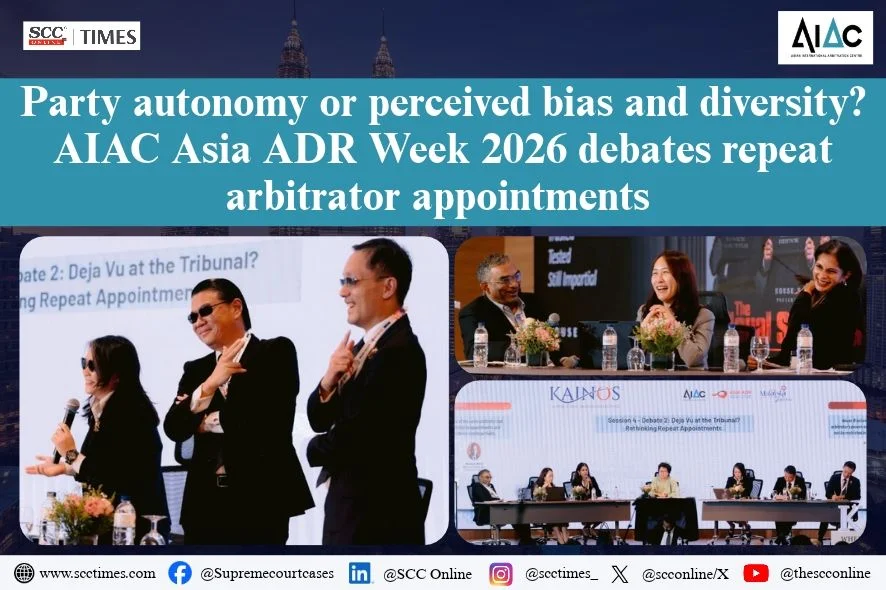
At AIAC Asia ADR Week 2026 in Kuala Lumpur, a debate titled “Déjà Vu at the Tribunal? Rethinking Repeat Appointments” brought opposing perspectives on a recurring question in international arbitration: should the repeated appointment of the same arbitrator raise concerns about independence, impartiality and diversity, or should parties remain free to appoint arbitrators whose expertise and experience they trust?
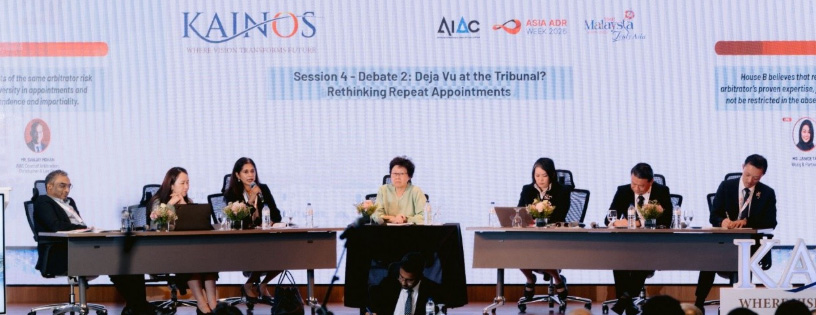
[In picture from left to right: Mr. Sanjay Mohan, Ms. Hangil Lee, Ms. K. Shanti Mogan, Dato’ Mary Lim Thiam Suan, Ms. Janice Tay, Mr. Andrew Heng and Mr. Ng Jern-Fei KC]
Moderated by Dato’ Mary Lim Thiam Suan, President, AIAC Court of Arbitration, the debate featured two teams taking opposing positions. House A, “Beyond the Usual Suspects”, comprising Ms. K. Shanti Mogan, Partner, Shearn Delamore & Co.; Ms. Hangil Lee, Partner, Bae, Kim & Lee LLC; and Mr. Sanjay Mohan, Member, AIAC Court of Arbitration, and Head of the Dispute Resolution practice Christopher & Lee Ong, argued that repeat appointments can create perceptions of bias, narrow the pool of arbitrators and weaken confidence in the arbitral process. House B, “The Usual Suspects”, comprising Ms. Janice Tay, Partner, Wong & Partners; Mr. Andrew Heng, Senior Partner, Zain Megat & Murad; and Mr. Ng Jern-Fei KC, Duxton Hill Chambers, defended party autonomy, arguing that repeat appointments reflect confidence in an arbitrator’s proven expertise, judgment and experience.
*The debate concluded with the audience voting in favour of House B.
House A: Repeat appointments raise concerns about perceived bias and diversity
Opening the debate for House A, Ms. K. Shanti Mogan drew an analogy between choosing a life partner repeatedly and appointing the same arbitrator in successive disputes. Familiarity and dependability may explain personal choices, she argued, but the same considerations cannot automatically justify repeat appointments in arbitration. She said:
“Love may thrive on loyalty, but justice must thrive on independence.”
Clarifying the scope of House A’s argument, Ms. Mogan distinguished repeat appointments of the same arbitrator by the same party, related companies or the same law firm acting for recurring clients from the appointment of an arbitrator in multiple disputes merely because of their expertise in a particular field. She identified three principal concerns:
-
perceptions of bias,
-
reduced diversity in arbitral appointments, and
-
diminished confidence in the arbitral process.
On perceived bias, Ms. Mogan referred to the Orange List in the International Bar Association (IBA) Guidelines on Conflicts of Interest in International Arbitration. She highlighted circumstances involving multiple appointments by a party or its affiliates, or repeated appointments by the same counsel or law firm, as relationships that may warrant disclosure. According to her, the concern was not necessarily that an arbitrator would decide a dispute in favour of the appointing party, but whether the circumstances could reasonably cause another party to question the arbitrator’s independence. Repeat appointments may also carry financial consequences through fees and the possibility of future appointments.
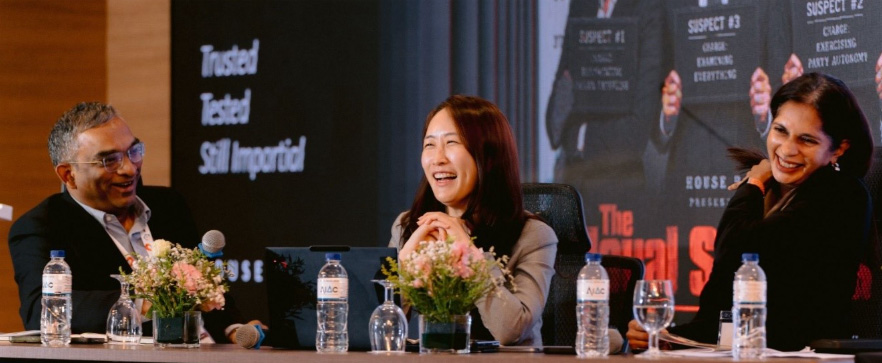
[In picture from left to right: Mr. Sanjay Mohan, Ms. Hangil Lee and Ms. K. Shanti Mogan]
Turning to diversity, Ms. Mogan argued that repeated reliance on familiar arbitrators could make it more difficult for younger and equally qualified professionals to enter the field. She referred to the Stockholm Chamber of Commerce’s report on arbitral appointments and its discussion of the concentration of appointments among a small group of arbitrators. She also referred to the International Chamber of Commerce’s (ICC) practice concerning appointments within 12 months of a previous appointment. She further warned of an “echo chamber effect”, in which familiar approaches and pre-existing beliefs could be reinforced, leaving less room for fresh perspectives.
Concluding her opening submission, Ms. Mogan argued that arbitration derives its legitimacy from confidence in independent decision-makers. Even where a party has not personally experienced an adverse outcome, concerns about the integrity of the appointment process could affect confidence in the system as a whole.
House B: Party autonomy and proven expertise justify repeat appointments
Responding for House B, Ms. Janice Tay used her own experience of choosing a doctor for the delivery of her children to illustrate why a repeat appointment may reflect confidence earned through experience rather than an improper preference for familiarity. She explained that, after choosing a doctor for her first child and experiencing the doctor’s competence, calmness and ability to manage complications, she had a sound reason to choose the same doctor again for her second child. Applying the analogy to arbitration, Ms. Tay argued that a party’s confidence in an arbitrator may arise from direct experience of the arbitrator’s work. The fact that an arbitrator has previously been appointed should not, by itself, displace that confidence. She identified three considerations underpinning House B’s position:
-
party autonomy,
-
the calibre and specialised expertise of arbitrators, and
-
the distinction between appointment and conflict.
According to Ms. Tay, party autonomy is a defining feature of arbitration. The Orange List provisions on repeat appointments require disclosure in relevant circumstances. They do not establish automatic disqualification. She also emphasised that certain sectors, including commodities, maritime disputes, reinsurance and sport, may have a limited pool of specialised arbitrators.

[In picture from left to right: Ms. Janice Tay, Mr. Andrew Heng and Mr. Ng Jern-Fei KC]
On conflicts, Ms. Tay argued that the existence of a previous appointment should not be conflated with actual bias. Her position was that a repeat appointment should not be restricted in the absence of genuine concerns about independence or impartiality. She concluded that parties should retain the choice to appoint an arbitrator whose expertise and judgment have already earned their confidence, provided appropriate safeguards remain in place.
House A’s rebuttal: Familiarity must not become a substitute for merit
In her rebuttal, Ms. Hangil Lee acknowledged that experience matters, particularly in technically demanding disputes, but questioned whether repeat appointments always reward excellence or instead reinforce incumbency. She argued that when previous appointments become the principal qualification for future appointments, established arbitrators gain further experience while equally capable candidates may struggle to obtain the opportunities needed to build their own track records. Ms. Lee clarified:
“This is not an argument for appointing unqualified arbitrators, and nor are we advocating quotas.”
Instead, she called for the full pool of qualified candidates to be assessed on merit rather than treating a familiar name as proof of superiority. Ms. Lee also challenged the suggestion that familiarity necessarily benefits both parties equally. A party that has appeared before an arbitrator repeatedly may have greater insight into the arbitrator’s procedural preferences, approach to evidence and case-management style. The opposing party may not possess the same information, even where the arbitrator remains impartial.
She accepted that repeat appointments do not establish actual bias in every case. However, she argued that the frequency and circumstances of appointments may give rise to objectively justified doubts about independence or impartiality, making disclosure and scrutiny important. Addressing party autonomy, Ms. Lee maintained that it operates within a framework of independence, impartiality and due process. The question, she argued, was not simply whether the appointing party had confidence in the arbitrator, but whether the process retained the confidence of both parties. She submitted:
“Party autonomy gives parties a choice, but legitimacy makes that choice worth having.”
Ms. Lee’s central argument was that individual appointments may each appear reasonable, while their cumulative effect could still produce a narrow pool of arbitrators and diminished confidence in the system.
House B’s rebuttal: Disclosure and scrutiny are preferable to restricting appointments
Mr. Andrew Heng Yeng Hoe responded that House B was not arguing for repeat appointments in every circumstance. Its position, he said, was that repetition should not be treated as inherently undesirable where genuine concerns about independence or impartiality are absent. He questioned whether the risk identified by House A necessarily arose from the number of appointments itself or from other circumstances, such as inadequate disclosure, overlapping disputes or a personal or professional relationship that could affect the decision-making process.
Mr. Heng described the Orange List as a safeguard that enables disclosure and allows parties to decide whether to accept an appointment or pursue a challenge before the relevant tribunal, institution or court. He also challenged the assumption that restricting repeat appointments would automatically increase diversity. Preventing a fourth appointment of an arbitrator, for instance, would not guarantee that the next appointment would go to a new entrant. Referring to initiatives aimed at broadening representation in arbitration, he argued that the emphasis should be on expanding the pool of candidates and selecting them on merit rather than restricting existing appointments. Mr. Heng also referred to the 2024 International Dispute Resolution Survey by the Singapore International Dispute Resolution Academy (SIDRA) to highlight the importance parties place on dispute-resolution experience and ethical standards. He concluded that the number of appointments should not be treated as conclusive evidence of a problem. Instead, the underlying circumstances should be examined. He argued in support of House B’s position:
“A repeat appointment may open the enquiry, but it cannot be the conclusion of the enquiry.”
Rebuttal round: Does repeat appointment undermine systemic legitimacy?
The debate then moved to a rebuttal round in which the teams responded to questions and propositions put forward by the opposing house.
-
House A questions whether experience benefits both parties equally
Mr. Sanjay Mohan addressed the propositions that bias is a matter of evidence rather than numbers, and that experienced arbitrators benefit the arbitral process through efficiency and better decision-making. He questioned whether repeat appointments always reflected confidence in an arbitrator’s impartiality, or whether parties might select arbitrators because they expected them to approach a dispute favourably.
Mr. Mohan raised concerns about transparency in appointments, explaining that a party may recommend an arbitrator without necessarily disclosing the extent of that party’s previous appointment history with the arbitrator. He argued that the other side may not have equivalent information about the arbitrator’s previous decisions or professional engagements. He also discussed the practice of “beauty parades”, in which prospective arbitrators may be invited to explain their approach to disputes before appointment. He questioned whether such practices, alongside repeat appointments, could undermine confidence in the appointment process.
Responding to the claim that experience benefits everyone, Mr. Mohan asked whether it necessarily benefits the party that ultimately loses the dispute. He maintained that confidence in the fairness of the process was more important than relying on the possibility that repeated appointments would produce efficiency. He argued that even a single instance of bias would be unacceptable and called for effective safeguards to address the risks associated with repeat appointments.
-
House B defends party autonomy and the existing disclosure framework
Mr. Ng Jern-Fei KC challenged House A to identify precisely what it wanted the audience to reject in House B’s proposition. He emphasised that House B was not advocating unrestricted repeat appointments. Its position was that party autonomy should not be curtailed without genuine concerns about independence or impartiality. Addressing systemic legitimacy, Mr. Ng argued that party autonomy is a cornerstone of arbitration, including the right of parties to nominate their arbitrators. He contended that restrictions imposed without sufficient justification could erode one of the principal advantages of arbitration as a dispute-resolution mechanism.
On specialised industries, Mr. Ng referred to the United Kingdom Supreme Court’s decision in Halliburton Co v. Chubb Bermuda Insurance Ltd and others (International Court of Arbitration of the International Chamber of Commerce and others intervening), [2020] 3 WLR 1474, explaining that some sectors, including shipping, commodities, insurance and reinsurance, operate with a relatively limited pool of specialist arbitrators. He argued that repeat appointments in such sectors should be assessed in context rather than presumed to create partiality. Disclosure, he submitted, allows parties to make informed decisions and consider whether the number of appointments, together with other circumstances, warrants a challenge. Mr. Ng maintained that the appropriate response was not prohibition but disclosure and scrutiny, consistent with the distinction between circumstances warranting disclosure and those requiring disqualification.
House A’s final rebuttal: Safeguards do not eliminate every risk
In her final rebuttal, Ms. Lee reiterated that House A was not calling for a blanket prohibition on repeat appointments. Rather, it sought appropriate scrutiny where the circumstances warranted it. She argued that disclosure promotes transparency but does not necessarily ensure equality of arms. A party with repeated experience of an arbitrator may understand the arbitrator’s procedural preferences better than its opponent, and disclosure alone does not eliminate that difference.
Ms. Lee also highlighted the cost and delay that may accompany challenges to appointments. Although such challenges are available, she argued that they may burden the parties in the very proceedings intended to provide efficient dispute resolution. On diversity, she welcomed initiatives to improve representation but stressed that diversity encompasses more than gender. It also includes generational and legal-background diversity, as well as opportunities for qualified newcomers. Her closing submission was that repeat appointments should be scrutinised where necessary to protect equality of arms, diversity and systemic legitimacy.
House B’s closing argument: The existing framework strikes the right balance
In his closing response, Mr. Ng argued that House B’s position already accommodated scrutiny and disclosure. He maintained that House A had not demonstrated why the existing approach required fundamental change. He referred to the 2024 edition of the IBA Guidelines on Conflicts of Interest in International Arbitration and argued that the existing framework had appropriately balanced party autonomy with the need to disclose relevant circumstances.
Mr. Ng also challenged the suggestion that limiting repeat appointments would necessarily improve diversity. He argued that established, highly sought-after arbitrators may continue to receive appointments regardless, while repeat appointments can help emerging arbitrators build the credibility needed to compete for future appointments. He therefore maintained that party autonomy and diversity were not necessarily opposing objectives and that a system allowing repeat appointments, subject to appropriate disclosure and scrutiny, could accommodate both.
Party autonomy and repeat appointments emerge as the audience’s preferred position
At the conclusion of the debate, Dato’ Mary Lim Thiam Suan invited the audience to vote for the house whose arguments had been more persuasive. She announced that the audience had voted in favour of House B, “The Usual Suspects”. The debate concluded with a broader reflection on the balance between expertise, party choice and confidence in arbitration. The central question remained: at what point do repeat appointments become too many, and when can repeated selection of an arbitrator continue to be justified by experience and trust?
The discussion underscored the competing considerations at the heart of the debate: protecting independence, impartiality and diversity while preserving parties’ freedom to select arbitrators whose expertise and judgment they value.
SCC Times is the official media partner for AIAC Asia ADR Week 2026. Read more about AIAC Asia ADR Week 2026: