


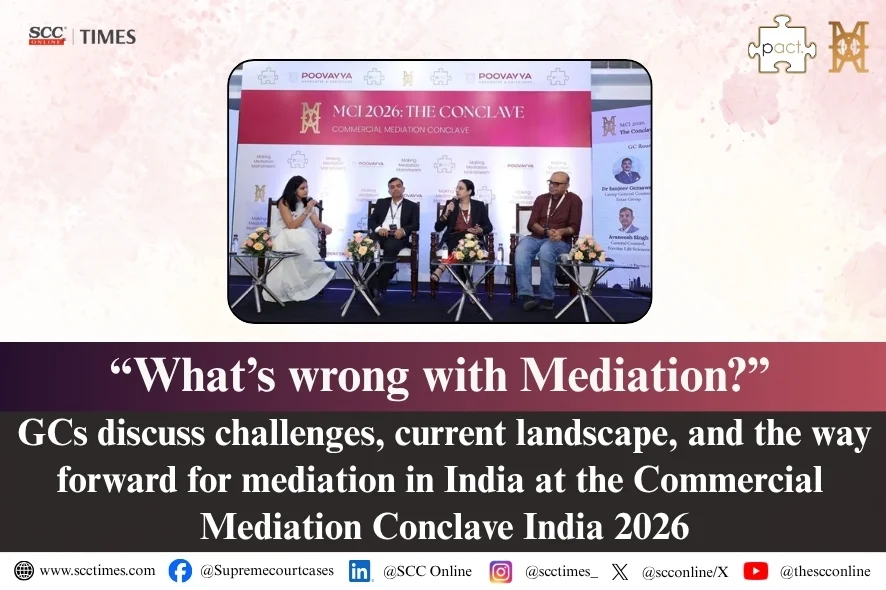
The Commercial Mediation Conclave India 2026, themed “Making Mediation Mainstream,” was held on 18 September 2026 at the India International Centre, New Delhi. Among its sessions was a General Counsel (GC) roundtable titled “What’s Wrong with Mediation?”.
Moderated by Ms. Aastha Chawla, Partner, Obelisk Legal, the roundtable brought together Dr Sanjeev Gemawat, Group General Counsel, Essar; Dr Neera Sharma, CEO, Sistems Smart Tech; Ms. Preet Sethi, Deputy General Counsel, Vedanta; Mr. Avaneesh Singh, General Counsel, Navitas Life Sciences; and Mr. Rajneesh Jaswal, Co-Founder and CEO, CADRE ODR.
Also Read: “Let’s talk” before “see you in Court”: Sanjeev Ahuja’s roadmap for a mediation-first India
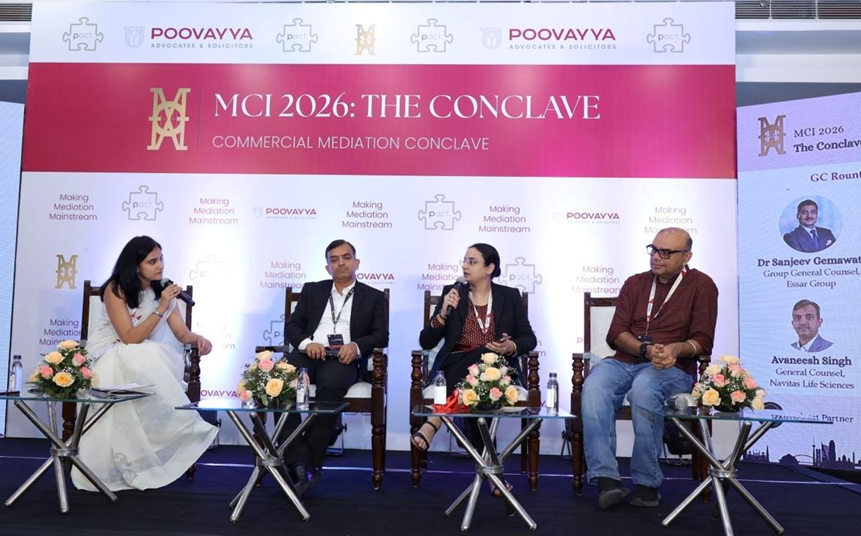
[In picture: Ms. Aastha Chawla, Mr. Avaneesh Singh, Ms. Preet Sethi, and Mr. Rajneesh Jaswal]
Settlements are common, Mediated settlements are not
Ms. Aastha Chawla opened by testing the premise of the day head-on. The conclave had spent the morning hearing that mediation is the way forward, she said, but was it actually being used, and were there real examples of settlements produced by mediation. She put the question to each panellist in turn, asking how many settlements they had seen across their careers, and how many of those had come out of mediation specifically.
Mr. Avaneesh Singh, who has spent most of his career with pharmaceutical and life sciences companies, put the settlement rate at over 90 per cent. Upon being asked specifically about mediation, his answer was blunt, nil. He attributed this to the intellectual-property-intensive nature of the industry, where data and information carry particular weight and there is a general reluctance to involve third parties, combined with a strong preference for protecting commercial and long-term business relationships by settling directly rather than through litigation, which can take years and is often simply bad for business.
Continuing the discussion, Ms. Preet Sethi described seeing a fair number of settlements over her career, primarily in high-end shareholder and stakeholder disputes, but said none of them had resulted from mediation. She had not seen much awareness of mediation as a route in her sector or in commercial matters, generally. Settlements did happen, particularly once parties became acutely aware that litigation would not lead anywhere, or would be too long and drawn out, but these too were relatively rare, and negotiated settlements arrived at through mediation specifically were something she had not really seen happen at all.
Speaking from two vantage points, Mr. Rajneesh Jaswal explained that he began his career as an in-house lawyer, where the settlements he saw were negotiations rather than mediations. In his current role of operating an online arbitration and mediation centre, he sees a different pattern, an increasing number of parties asking to pause an ongoing arbitration for some form of structured mediation. In percentage terms, and largely in the lower-value disputes that his platform handles, he put the figure at 10 to 15 per cent of cases resulting in mediation rather than straightforward negotiation, a marked shift from what he described as his “past life,” where nearly all of it was negotiation and settlement.
Why in-house counsel hesitate on high-value disputes
Moving onto the next question, Ms. Chawla asked the panel on why, even accepting that mediation is gaining ground at the margins, in-house counsels continue to hesitate to use it for their high-value disputes.
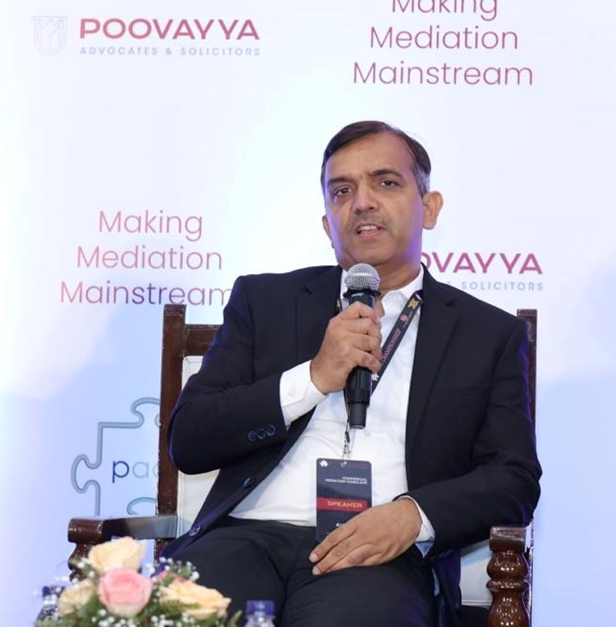
[In picture: Mr. Avaneesh Singh]
Mr. Singh highlighted his own instinct as general counsel to avoid bringing a third party into a commercial dispute at all. Before any negotiated settlement, he explained, a set of considerations plays out internally, chiefly whether the company has a case strong enough to fight and win in court, and what the broader business relationship is worth, given that the counterparty might just as easily be a client or a business partner. In a sector like pharma, with a relatively small pool of manufacturers and service providers, that calculation about the future of the relationship has to be kept in mind, and it shapes whether he goes for litigation or a negotiated settlement directly. Mediation, in his assessment, has not yet become a sufficiently formal process to change that calculus. However, he noted that the new Mediation Act, 2023 and the Mediation Council of India (MCI) were beginning to give it shape, and that his organisation might, in future, involve professional mediators once satisfied about their eligibility, technical knowledge and commercial understanding of the dispute at hand.
Speaking from her experience, Ms. Sethi explained the reasons for such apprehension. First, these are high-stake disputes arising out of a contract, and mediation is typically not written into the dispute resolution clause to begin with. Even where it is, a company may still not want to trigger a formal dispute resolution mechanism. Where the business and management understand a settlement as something arrived at through their own direct talks and negotiations, bringing in legal teams and law firms for a formal mediation process can itself signal, internally and externally, that a dispute resolution process has begun. This signal carries reputational consequences. Matters can end up in the media and the press, and simply starting a formal process, mediation included, can be read as an admission that a dispute exists, which cuts against the parties’ underlying wish to preserve the relationship. As a result, she said, the disputes that do settle tend to be exactly those that have not yet gone through any formal dispute resolution procedure at all. Initiating mediation, precisely because it is part of the formal dispute resolution machinery, can work against the very outcome, and the very relationship, the parties are trying to protect.
What Singapore gets right
Turning to Mr. Jaswal, as a service provider operating in a market where mediation is gaining traction and receiving government support, Ms. Chawla asked how providers like his could help make mediation genuinely mainstream.
In response Mr. Jaswal pointed to the Singapore International Mediation Centre (SIMC), which handles matters of equally high value and high stakes, and asked what its secret sauce was.
“The secret sauce is process.”
He stated that a mediation where nobody has read the brief in advance, or prepared the documents in advance, does not go anywhere. SIMC breaks the process down into a defined structure, an approach his own platform, CADRE, has adopted, for conducting two mediation sessions. The sessions were initially described as 25 minutes each, with parties required to complete a form in advance so the mediator knows exactly what needs to be addressed, and with the mediator able to speak to the parties beforehand if required. That structure, he said, puts everyone in the right frame of mind before the mediation even begins, and gathering feedback through a form at each stage generates useful data in its own right.
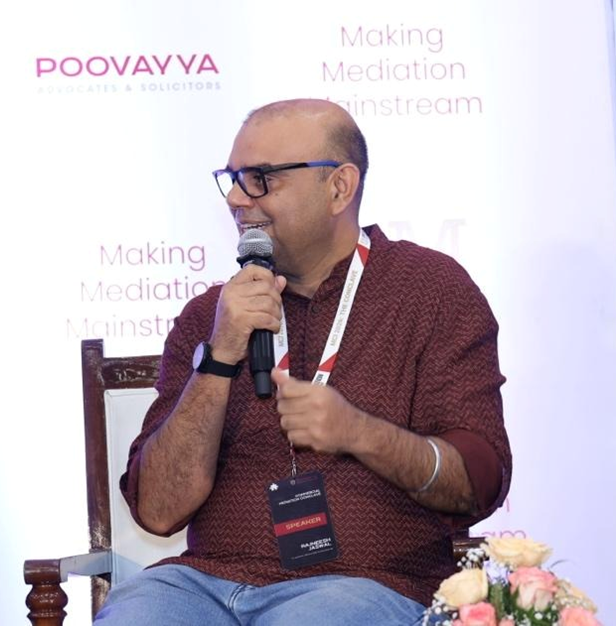
[In picture: Mr. Rajneesh Jaswal]
He argued that as the MCI becomes operational, the process followed by mediation and arbitration centres needs to be auditable. A provider has a responsibility to be transparent about its process, including how party data is protected, describing this as not merely a fiduciary obligation but a genuinely technical one, covering the security behind the platform and the questions the process asks of the parties. Later, he described CADRE’s own sessions as 45 minutes each, giving both parties adequate time. Providers, he said, should expect to be audited on whether their process is good enough, since that auditability is what will give clients the confidence to trust vendors in this space rather than feeling they have simply turned up for an unstructured conversation.
What does the Mediation Council of India needs to get right?
Ms. Chawla noted that the MCI’s statutory functions include registering mediators, setting professional and ethical standards, recognising mediation institutes and service providers, and maintaining an electronic depository of settlement agreements, and asked Mr. Singh, who had expressed limited faith in the mediation process, what the MCI needed to focus on to build that faith from an in-house counsel’s perspective.
Mr. Singh’s central concern was that the MCI, only recently notified, should not become a body that exists in name only, like other professional regulatory bodies sometimes do. He wanted to see mediators assigned to disputes based on relevant domain knowledge, in sectors such as pharma, construction or telecom, each with their own jargon and technicalities, so that parties are not left explaining basic technical concepts to a mediator who cannot properly engage with them. Along with domain-appropriate assignment, he wanted clear ethical standards to prevent mediators working hand in glove with one party or otherwise compromising the process, and clear standards for formalising settlement agreements and protecting the confidentiality of the documents and information shared during mediation.
Should India ratify the Singapore Convention?
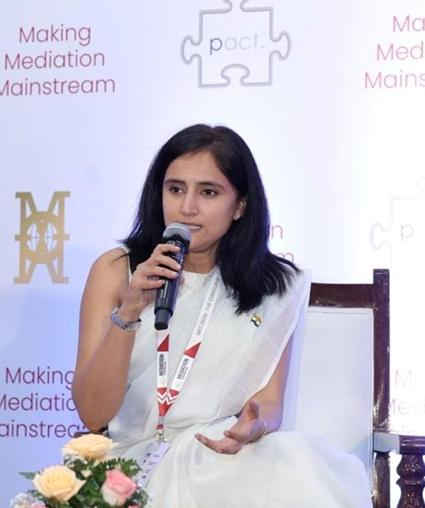
[In picture: Ms. Aastha Chawla]
Noting that India’s Mediation Act, not yet fully in force, applies only to mediations seated in India, Ms. Chawla mentioned that India had only signed and not ratified the Singapore Convention on Mediation. Given that the panellists’ own organisations operate globally, including in the United States and Singapore, she asked whether India should move to ratify the convention.
From the perspective of an entrepreneur running a business in the online mediation space rather than as a lawyer, Mr. Jaswal was unambiguous that ratification would allow more business expansion and let him operate across jurisdictions at once, and would help any business that is operating in more than one jurisdiction. Having signed the convention, he argued, India should go on to ratify it. He could see no real reason not to.
He argued that the more fundamental task was popularising the idea of mediation within Indian businesses itself. India, he suggested, still culturally favours disputes. There is a bias against settling, and in many disagreements, the parties would simply rather arbitrate or litigate than take the step of considering mediation. Equally important, he opined, was how the outcomes of mediations that do happen are published, so that the market can see mediation as a genuinely viable route rather than an unproven one.
He illustrated his argument with the framework the Securities and Exchange Board of India (SEBI) has built for investor disputes. A SEBI circular, roughly thirty pages long, set up a conciliation and arbitration mechanism for investor complaints against listed entities, stock exchanges or registrars, routed through the SEBI Smart ODR platform. Complaints are handled first by conciliation providers such as his own, and escalate to arbitration by law only if that fails. The circular also mandates publication of data. CADRE’s own website lists its panel of conciliators and mediators and publishes figures on how many conciliations it has handled and how many succeeded, without naming individual parties, and the SEBI Smart ODR dashboard publishes countrywide data on how long arbitrations and conciliations take to resolve and what subject matter they cover, alongside redacted arbitral awards. An investor conciliation under this framework, he noted, is required to conclude within 21 days, and in practice most conclude within 17, with a large share resolved in the investor’s favour. That combination, he argued, of visible process and visible data, is what builds confidence, and it doubles as evidence that mediators and conciliators in a specialised field can build the technical capacity that Mr. Singh and others were asking for.
Confidentiality, precedent and a fear of delay
Taking the discussion further, Ms. Chawla put a direct question to the panel, asking by show of hands how many of them had actually participated, in any capacity, in a mediation. Only a handful of hands went up, well short of double figures, prompting her to note that greater participation was still needed even among people already working in dispute resolution.
Turning to what would actually build faith in the process, she asked Ms. Sethi to set out the changes she would want to see. Ms. Sethi returned to confidentiality, and to how it would actually be maintained, and how a party would know in advance that mediation would genuinely help resolve a particular dispute. She suggested that public awareness efforts, aimed specifically at explaining which categories of dispute are best suited to mediation, would help more than a blanket assumption that every dispute should default to mediation. One of the principal reasons Vedanta does not favour including a mediation clause in its contracts, unless mediation is mandatory, is a concern that it will simply delay the eventual resolution of a dispute rather than speed it up.
She opined that a shorter mediation timeline, a stronger track record of precedent of the kind she had already raised, and a more fully developed ecosystem generally would be beneficial characteristics. At present, she said, mediation in India was at a nascent stage, without an established, popular track record, particularly for high-value. A dispute worth five or ten lakh rupees to a large conglomerate may simply not be worth the management time required to pursue mediation at all, whereas for high-value disputes what is needed is visible proof that mediators genuinely understand business, alongside evidence of cost savings that make mediation worthwhile for lower-value matters too. She recalled a stint at an arbitral institution, whose rules included a presumption of mediation, meaning that parties who chose that institution’s arbitration rules would be presumed to mediate before, or alongside, the arbitration itself, unless they specifically opted out.
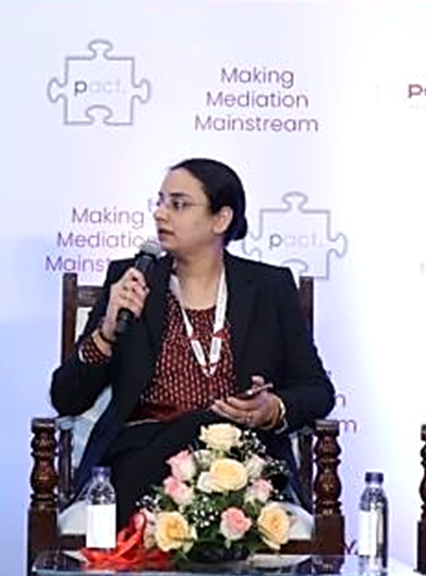
[In picture: Ms. Preet Sethi]
She linked this back to a broader cultural point. Businesses in India, she said, are not yet mentally geared towards settlement. Much as government authorities are sometimes assumed to hold out for a court order rather than settle, in-house teams face a similar perception risk, that pursuing settlement signals a weak underlying case. Changing that mindset, she argued, is a task for the MCI and the government together, in building genuine confidence that mediation is there to make a dispute easier to resolve, rather than being seen as simply another label within the same adversarial process.
Reputation abroad, and its absence at home
Picking up the same thread, Ms. Sethi observed that in India, litigation is treated almost as something to be reported rather than avoided, a fact of business life without real reputational cost. Her own international experience, she said, had shown her something different. One major matter in her career had been settled with a Japanese counterparty, and the reason it settled was that when her side moved towards litigation, it became clear the other side did not want it. In Japan, she explained, being seen in a dispute, or in litigation, is genuinely frowned upon, treated as evidence that a party could not manage its relationship with its counterparty. That reputational sensitivity, rather than any legal calculation, was what ultimately drove a settlement after prolonged negotiations, even though lawyers remained closely involved throughout. It was, she said, a way of thinking about disputes that Indian commercial practice does not really share, where going to arbitration or litigation with a counterparty is rarely treated as a mark against the business relationship in the same way.
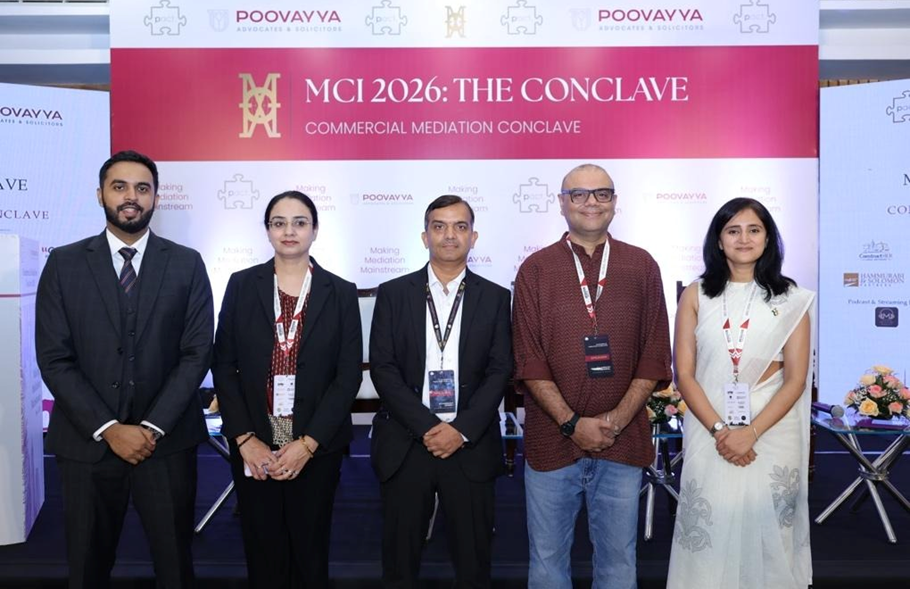
[In picture: Mr. Jonathan Rodrigues, Ms. Preet Sethi, Mr. Avaneesh Singh, Mr. Rajneesh Jaswal, and Ms. Aastha Chawla]
Voluntary change, and change by mandate
Concluding the session, Ms. Chawla observed there was still plenty of work ahead for people like Mr. Jonathan Rodrigues, Founder, The Pact, and Mr. Jaswal in making mediation genuinely popular.
Mr. Jaswal agreed, framing the task as one of change management, which he said happens in two ways. One is voluntary, with service providers such as his own publishing data and, in his words, shining a light on the benefits of the process. The other is by mandate. He offered an example from the Gauteng High Court in South Africa, where roughly a year earlier the court had been so badly backlogged that the earliest available hearing date was three years out. The High Court responded by issuing mandatory mediation across all categories of cases, through a detailed process document running to some twenty or twenty-five pages. For providers in the mediation space, he said, “it was almost, the heavens opened up for us,” a direct illustration of how a court-imposed mandate, rather than voluntary uptake, had driven a sudden and significant shift towards mediation.
With time for the session running out, Ms. Chawla thanked the panel for setting out both the problems with mediation as it currently stands and a clear sense of the way forward.





