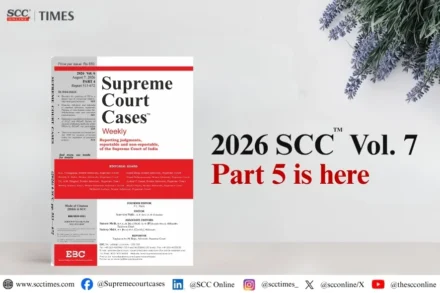
2026 SCC Vol. 7 Part 5: Key Supreme Court Cases on Constitution, GST, Criminal Law and more
Key Supreme Court rulings on Article 227, RTE, Teachers Eligibility Test, custody, GST rebate, etc.

Bringing you the Best Analytical Legal News


Key Supreme Court rulings on Article 227, RTE, Teachers Eligibility Test, custody, GST rebate, etc.
Supreme Court set aside the conviction of a man who spent 22 years in prison, holding that the prosecution case rested on an unreliable solitary eyewitness account. The Court also emphasised that Constitutional Courts must adopt a proactive approach in condoning delays in criminal appeals filed by convicts.
The Court examined the scope of Section 299 CrPC in a case involving an absconding accused, evidence recorded during a co-accused’s trial, and its subsequent use after the accused’s arrest.
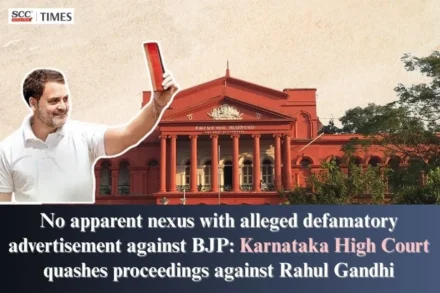
“In absence of any material to show that the advertisement was at the instance of Rahul Gandhi, reliance on advertisement by itself could not lead to the assertion that it was published by him with the requisite intention to defame.”
2025 SCC Vol. 10 Part 1: Explore the latest Supreme Court Cases on Constitution, Waqf Act, NI Act, and Marriage.
The respondents submitted that the sale deed in question had been retained by the Registrar due to insufficiency of stamp and was thus, not in their possession.
“It was inexplicable and incomprehensible how a mother who loved her children and who had a cordial relation with her husband could resort to such a violent act and be attributed with the “intention to cause death” of her beloved children, except for coming under some influence or forces beyond her control as claimed by her.”
Bombay City Improvement Trust Transfer Act, 1925 (16 of 1925) — Ss. 48(a) and 51(2) — Poorer Classes Accommodation Scheme
“Trust forms the bedrock of matrimonial relationships. The spouses must have implicit and total faith and confidence in each other. Snooping on the other destroys the fabric of marital life. One cannot pry on the other.”
The Court stated that the presumption under Section 114-C of the Evidence Act regarding dowry deaths could not be applied without credible evidence of dowry harassment.
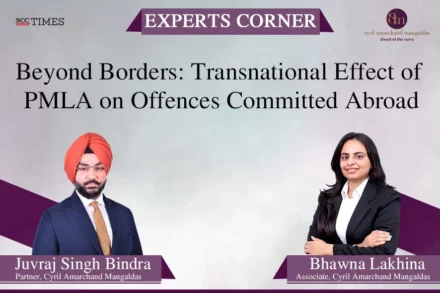
by Juvraj Singh Bindra* and Bhawna Lakhina**
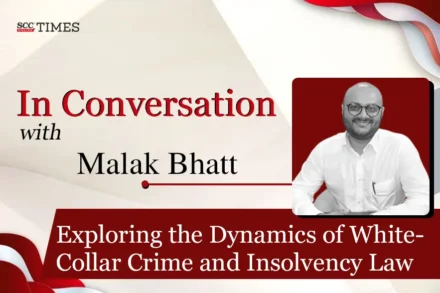
Interviewed by Zoya Ahmad
An update on new additions of case laws to SCC’s High Court Cases volume.