As Day 1 of Gujarat High Court Arbitration Centre’s (GHAC) Arbitration Week 2026 commenced, the session titled “Institutional Arbitration Practices” turned to the practical architecture of institutional arbitration. The session brought together practitioners and representatives of four leading arbitral institutions to examine how institutional mechanisms can improve the quality, efficiency and credibility of arbitration in India.
Chaired by Ritin Rai, Senior Advocate, the session featured:
-
Shashank Garg, Senior Advocate and Court Member, London Court of International Arbitration (LCIA);
-
Vivekananda Neelakantan, Registrar, Singapore International Arbitration Centre (SIAC);
-
Khushboo Deshmukh, Deputy Director, South Asia, International Court of Arbitration of the International Chamber of Commerce (ICC); and
-
Vyapak Desai, Advocate and Member, Mumbai Centre for International Arbitration (MCIA).
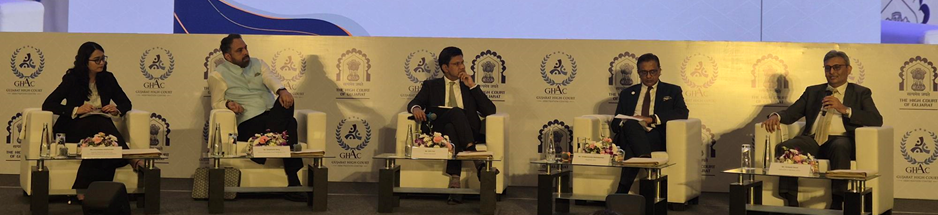
[In picture from left to right: Khushboo Deshmukh, Shashank Garg, Ritin Rai, Vivekananda Neelakantan and Vyapak Desai]
The discussion covered the transition from ad hoc to institutional arbitration, the role of courts and governments in building arbitral institutions, appointment of arbitrators, Section 29A1 Arbitration and Conciliation Act, 1996, scrutiny of awards, case management, technological tools, emergency arbitration and the balance between institutional processes and party autonomy.
India’s shift from ad hoc to institutional arbitration
Opening the session, Ritin Rai said the panel’s larger objective was to understand what an institution brings to arbitration and how those features could inform the development of the GHAC.
Drawing on his experience of appearing before the Gujarat High Court and in Ahmedabad-seated arbitrations, Ritin Rai highlighted the importance of commercial courts in the arbitration ecosystem. He noted that while applications under Section 112 proceed to the High Court, Sections 93 and 344 applications in other matters may come before commercial courts. Building confidence and familiarity with arbitration among these courts, he said, was therefore important for the wider growth of arbitration in Gujarat.
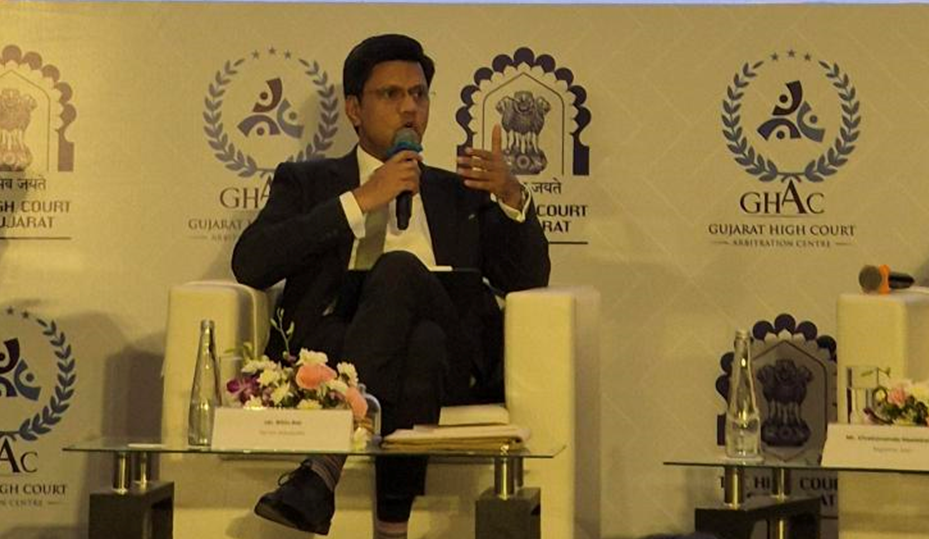
He also emphasised that the development of an arbitral institution required a long-term institutional framework, including appropriate rules and values. He remarked:
“Nothing is possible without men and women, but nothing lasts without institutions.”
Vyapak Desai traced the growth of his own arbitration practice to the period when disputes involving foreign investment in India were increasingly being referred to international institutions. He recalled that, particularly in the pre-BALCO5 era of Indian arbitration law, parties were frequently choosing institutions such as SIAC and LCIA for disputes involving India. He said this led him to question why parties had to travel to London or Singapore for arbitration.
He recalled handling an early SIAC emergency arbitration matter and said that the experience reinforced his view and that it was not merely the city but the institutional and legal ecosystem that made places such as Singapore, London and Paris attractive dispute resolution destinations.
According to Vyapak Desai, concerns over arbitral appointments, the quality of awards and the development of an arbitration Bar were symptoms of a broader institutional problem. He identified the ad hoc-versus-institutional distinction as the more fundamental issue.
He said India had subsequently seen substantial growth in institutional arbitration, with court-annexed institutions, private institutions and institutions established by chambers of commerce emerging across the country. He also referred to the 2019 amendments6 and the policy emphasis on institutional arbitration.

Vyapak Desai suggested that India should consider whether stronger policy measures were required to shift the balance further towards institutional arbitration. Referring to China, he suggested that ad hoc arbitration could potentially be treated as an exception and institutional arbitration as the norm. At the same time, he argued that India did not necessarily require repeated legislative amendments and that the existing framework could yield greater benefits through implementation.
The role of courts in building arbitral institutions
The panel then considered how court-created institutions such as GHAC could develop and how the relationship between the court and the institution should evolve.
Drawing on his experience with the Delhi International Arbitration Centre (DIAC), Shashank Garg said the initial involvement of courts could provide a newly established institution with considerable credibility. He explained that the early flow of matters from Section 11 appointments helped the institution build its initial caseload and establish confidence among users.
He said the credibility associated with judicial supervision also helped the institution attract arbitration clauses in contracts involving State public sector undertakings and micro, small and medium enterprises.
However, Shashank Garg stressed that court support should eventually lead to greater operational independence. A court-created institution could retain its institutional origin while becoming professionally independent of the court.
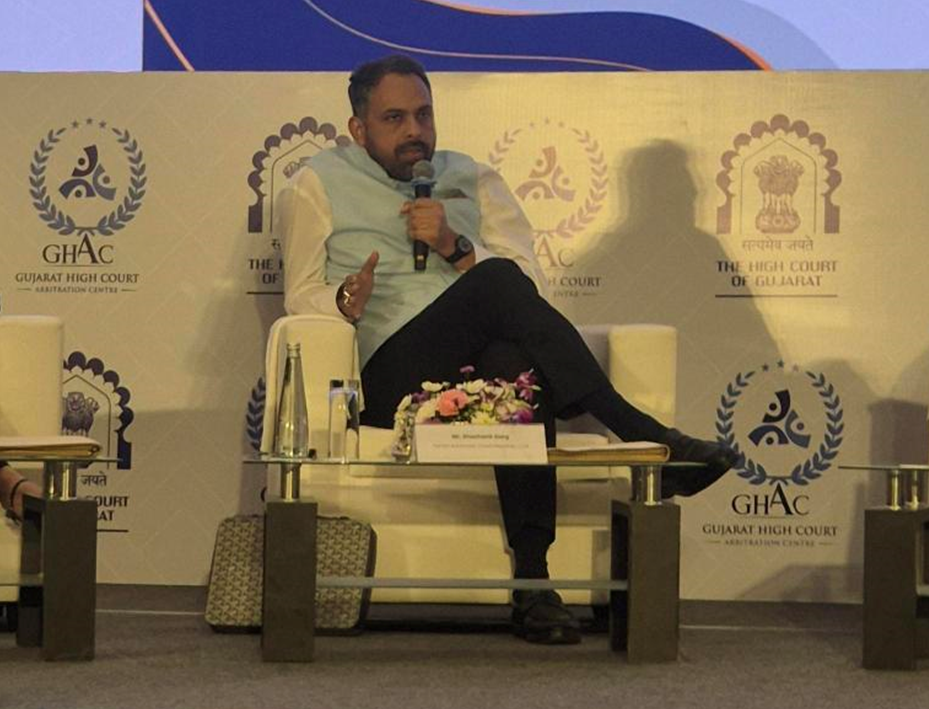
He also referred to the earlier address of Supreme Court Judge Justice P.S. Narasimha, which had emphasised the importance of professional management of arbitral institutions. Shashank Garg said institutions would require continuity and professional management if they were to develop, market themselves and establish a sustained identity in the arbitration community.
Singapore’s experience: institution and ecosystem must grow together
Ritin Rai then referred to the Government of Gujarat’s stated intention to include institutional arbitration clauses in its contracts and invited Vivekananda Neelakantan to discuss the role of government support in the development of the Singapore arbitration ecosystem.
Vivekananda Neelakantan explained that SIAC was established by the Singapore Government in 1991. He said the Government subsequently recognised the importance of the institution being independent and commercially oriented, following which SIAC was established under the Singapore Business Federation.
He described arbitration infrastructure as a combination of several elements. The first was a supportive legislative framework recognising arbitration agreements and awards. The second was the role of courts, particularly their approach to intervention in arbitration. The third was a strong pool of lawyers and arbitrators, including younger practitioners and arbitration secretaries. The fourth was physical infrastructure capable of accommodating international arbitrations.
He pointed to Maxwell Chambers and dedicated hearing facilities as part of Singapore’s arbitration infrastructure. The broader point, he said, was that government could continue to shape an arbitration ecosystem even after an institution itself had become independent.
Section 29A and the case for institutional flexibility
The panel next examined whether Section 29A should operate in the same manner for institutional arbitrations.
Khushboo Deshmukh said the purpose behind Section 29A, i.e., ensuring that arbitrations do not continue indefinitely, was understandable. However, institutional arbitrations already contain mechanisms for fixing procedural timetables and addressing extensions and delays. She therefore questioned whether applying a uniform statutory timeline to disputes of substantially different complexity would result in duplication of institutional and judicial mechanisms.
Vyapak Desai recalled the introduction of the 12-month statutory timeline, with a possible six-month extension, in the 2015 amendments7. He said arbitral institutions had raised concerns that complex international, commercial and construction arbitrations could require greater flexibility.
He argued that the statutory distinction should ideally have been based on the institutional or ad hoc nature of arbitration rather than simply on whether an arbitration was an international commercial arbitration. In his view, institutional arbitration already provided procedural discipline and could therefore have been allowed greater flexibility.
Vivekananda Neelakantan said institutional rules generally calibrate timelines according to the complexity of a case. He referred to different timelines for expedited proceedings and emergency arbitration and noted that parties could also agree on specific periods for completing an arbitration.
The arbitration agreement as the starting point
Connecting the discussion to the three-stage framework discussed by Justice P.S. Narasimha earlier during the event, i.e., initiation, conduct of proceedings and delivery of the award, Ritin Rai asked how institutions approach the appointment of arbitrators.
Vivekananda Neelakantan began with the arbitration agreement itself. He stressed that errors in dispute resolution clauses could create difficulties at the very beginning of the process. Once a case is commenced at SIAC, he explained, the institution guides parties through tribunal constitution, communications, procedural steps, case management and costs.
He also highlighted the value of cost predictability for businesses. Under an ad valorem fee structure, institutions can provide parties with an estimate of maximum institutional and arbitrator fees, while phased deposits can assist parties in managing cash flow.
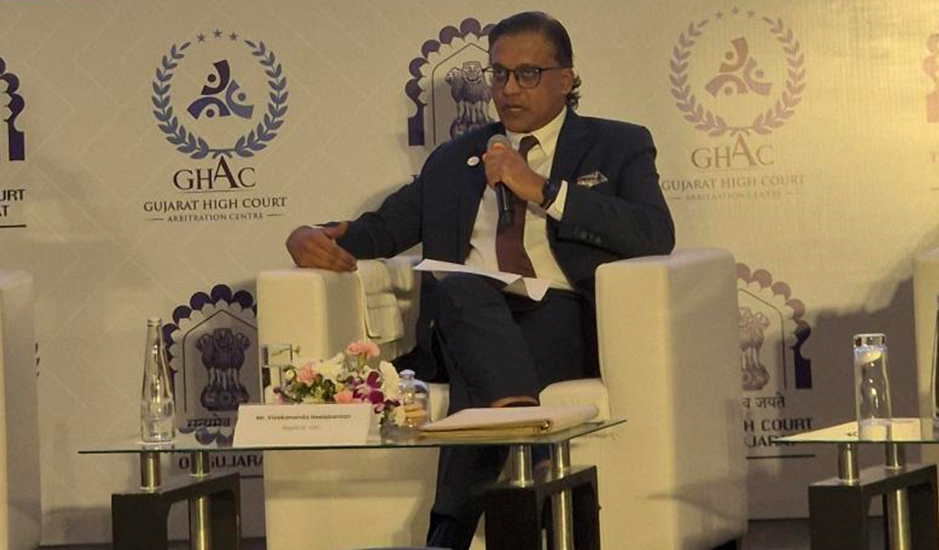
The institutional framework also allows parties to seek mechanisms such as consolidation, joinder, expedited proceedings and streamlined proceedings at the outset. This, he said, creates a structured process that may not be available in the same manner in an ad hoc arbitration.
How institutions select arbitrators
Vivekananda Neelakantan explained that SIAC considers a range of factors in selecting arbitrators. These include the nationality of the parties, the subject matter and complexity of the dispute, the governing law and other jurisdiction-specific considerations.
For example, the needs of a technology, shipping, construction, shareholders’ or cryptocurrency dispute may differ significantly. He said the level of experience required should also correspond to the complexity and value of the dispute rather than every matter being assigned to the most senior available arbitrators.
He further explained that candidates undergo conflict checks and must confirm their independence and impartiality. They are also required to confirm their availability to conduct the arbitration and comply with the applicable duties.
Vyapak Desai explained that MCIA adopted a more interventionist approach to the appointment of the presiding arbitrator. Under its rules, the institution appoints the presiding arbitrator even where the parties’ agreement would otherwise permit the two party-nominated arbitrators to make that appointment.
He acknowledged that the provision had generated questions about party autonomy, but said MCIA considered the quality of the tribunal central to the quality of the award. MCIA also constituted an appointment council bringing together experienced judges and international arbitration practitioners to assist with selecting arbitrators.
Party autonomy versus institutional appointment
An audience member subsequently questioned whether the growth of institutional arbitration amounted to a departure from the traditional understanding of party autonomy, under which parties chose their tribunal, procedure, rules and timeline.
Shashank Garg responded that any movement away from party nomination should be understood as a voluntary shift towards institutional mechanisms rather than a statutory removal of party autonomy. He also raised concerns about the limited practical value of standard-form disclosures in some ad hoc arbitrations.
Vyapak Desai took the view that agreeing to institutional appointment was itself an exercise of party autonomy. Parties could voluntarily choose to entrust the appointment to an institution where they considered the institutional process more likely to produce an appropriate neutral and a stronger award.
He also stressed that institutional arbitration involved much more than appointment. Procedural rules, evidentiary flexibility and structured case management were also part of the institutional model.
Chief Justice Sunita Agarwal asks whether courts should retain appointment functions
Chief Justice Sunita Agarwal, Gujarat High Court, then raised the question of whether the Indian system could operate without the court exercising its appointment function under Section 11.
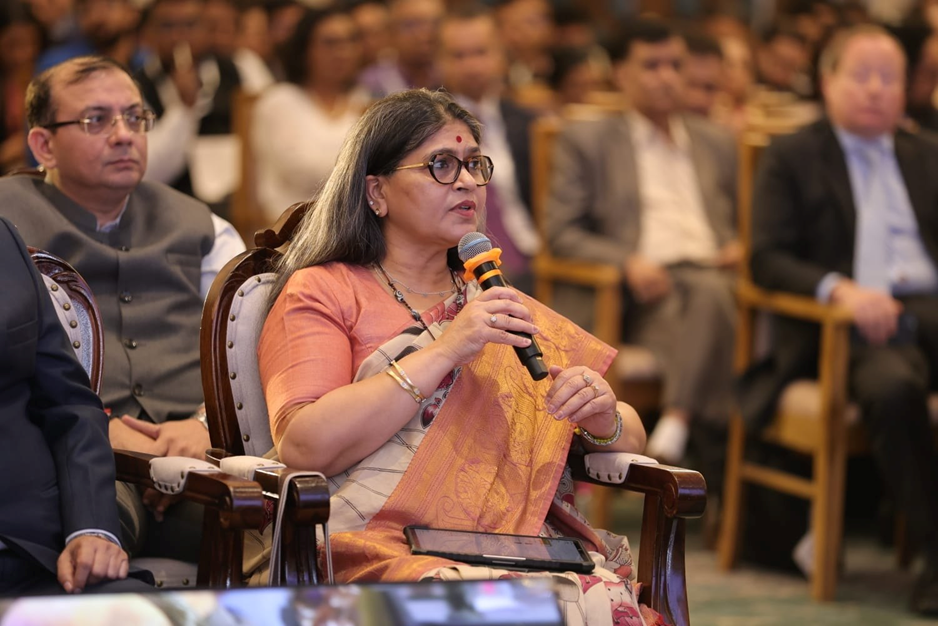
She also asked Vivekananda Neelakantan how SIAC approaches appointments where one party, rather than both parties, approaches the institution.
Vivekananda Neelakantan explained that Singapore provides for an institutional appointing authority and that, where parties have agreed to institutional administration and appointment, one party can invoke that mechanism in accordance with the applicable rules.
The discussion also touched upon the proposed institutional appointment framework under Section 11 and the role contemplated for the Arbitration Council of India.
Scrutiny of awards as institutional quality control
The panel then turned to award scrutiny, a feature through which institutional arbitration can provide an additional quality-control layer.
Khushboo Deshmukh explained that the ICC uses a three-level scrutiny process. A draft award is reviewed by the Secretariat, then at the management level and finally by the ICC International Court of Arbitration.
She stressed that this process does not involve reconsidering the merits of the tribunal’s decision. It addresses matters such as the form of the award, clerical and calculation errors, compliance with mandatory requirements and whether relevant issues raised during the arbitration have been addressed.
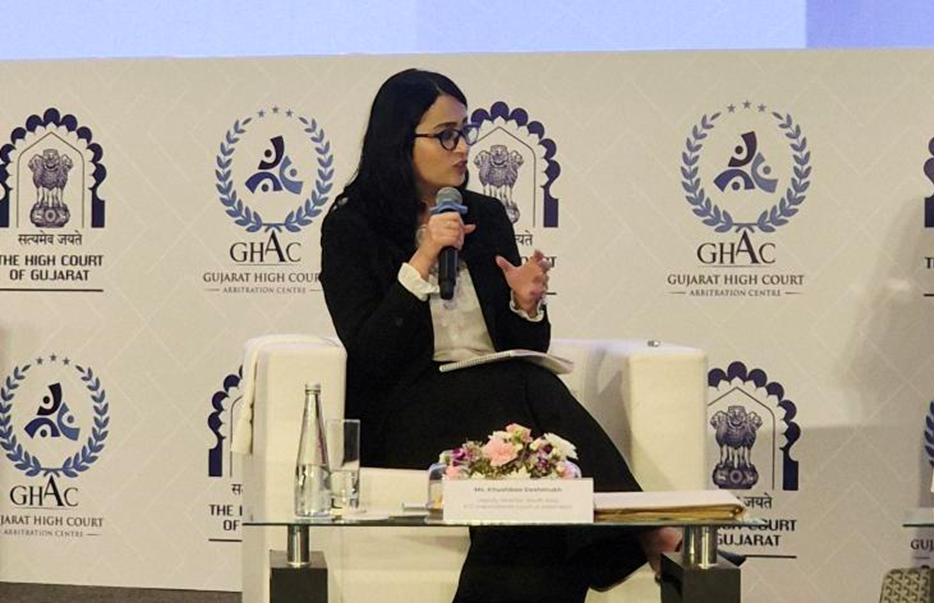
She explained that an award could be approved without comments, approved with comments or sent back to the tribunal for correction. Referring to ICC’s figures, she said approximately 11% of awards submitted for scrutiny in the preceding year had not initially been approved, representing 67 awards.
She clarified that an award being returned did not bring the arbitration to an end. The tribunal could address the comments and resubmit the award for further scrutiny. The institution did not interfere with the tribunal’s substantive findings.
Shashank Garg illustrated the practical value of such scrutiny through an example where ten issues had been framed but only eight appeared in the final award. The omission could result from two issues having been abandoned during the proceedings, and scrutiny could prompt the tribunal to clarify the position in the award.
He also recalled an ad hoc arbitration in which an otherwise well-drafted award provided two possible monetary outcomes without specifying who was to make the choice. He said the example demonstrated how an omission in the final formulation of an award could create difficulties even where the substantive decision was otherwise sound.
Vivekananda Neelakantan described scrutiny as a quality-control mechanism aimed at ensuring the validity and enforceability of an award. He noted that procedural defects, including failure to give parties an opportunity to address an issue or defects in tribunal constitution, may become grounds for challenge or non-enforcement.
He said scrutiny could be particularly useful in cases involving complicated procedural histories, extensive documentary records, non-participating respondents or less experienced arbitrators. He emphasised that institutional scrutiny was ultimately collaborative: the objective was to help produce the strongest possible version of the award without interfering with the tribunal’s adjudicatory mandate.
Technology and the changing role of case management
The panel also considered technology as an institutional tool for improving efficiency.
Khushboo Deshmukh explained that ICC Case Connect is used for document management, case visibility and access to material during proceedings. Parties and arbitrators can access pleadings, monitor deadlines and track the procedural stage of a case through the platform.
She also discussed changes in ICC’s approach to case management conferences under its 2026 Rules8. The case management conference provides an opportunity to design the procedure for an individual dispute within the framework of the institutional rules, including determining whether document production and evidentiary hearings are actually required.
She referred to an ICC study of expedited proceedings in which 79% of 461 awards had been rendered without document production, while evidentiary hearings had taken place in 69 cases. The figures, she said, illustrated the extent to which early procedural decisions could prevent unnecessary steps.
SIAC’s procedural toolbox
Vivekananda Neelakantan said SIAC’s rulemaking over the past 15 years had focused on three basic questions: how long an arbitration would take, how much it would cost and whether the resulting award would be enforceable.
He outlined expedited and streamlined procedures for lower-value and lower-complexity disputes. The streamlined process is designed to proceed primarily on documents and written submissions, with document production, witness evidence and hearings not ordinarily forming part of the default procedure.
He also discussed early dismissal, under which a tribunal can consider whether a claim or defence is manifestly without merit or manifestly outside its jurisdiction at an early stage.
A separate preliminary determination mechanism allows an issue capable of disposing of other issues to be decided earlier. Vivekananda Neelakantan described the express provision in the rules as a “spine-stiffening provision”, because it gives parties a clear basis to request an early determination where doing so may save time and cost.
Emergency arbitration and the Indian experience
Shashank Garg described emergency arbitration as an important feature of institutional arbitration that had considerable scope for further development in India.
Referring to LCIA practice, he said an emergency arbitrator is appointed within three days and an emergency award is to be issued within 14 days. He argued that such a mechanism could be particularly valuable where delay in obtaining interim relief could defeat the purpose of the application.
He suggested that, where parties had chosen institutional arbitration and the applicable rules provided for emergency arbitration, courts should consider directing parties towards the emergency mechanism rather than requiring them to seek equivalent relief through Section 9 proceedings.
Vyapak Desai recalled that MCIA incorporated emergency arbitration into its rules in 2016. He said the Law Commission had recommended introducing emergency arbitration into the Arbitration and Conciliation Act, 1996, but the mechanism was not incorporated into the statute at that time. MCIA nevertheless included emergency arbitration in its institutional framework.
Vivekananda Neelakantan referred to the development of Indian jurisprudence on emergency arbitration, tracing it from early SIAC cases through Raffles Design9 and the subsequent Amazon10 litigation. He said Indian courts had developed substantial jurisprudence supporting the objectives of emergency arbitration, notwithstanding the absence of an express statutory provision.
What should GHAC measure as it grows?
In the final round, Ritin Rai asked the panellists to identify recent institutional developments and offer suggestions for GHAC.
Khushboo Deshmukh said institutional rules must evolve in response both to established practice and to changing user requirements. She referred to the codification of early determination and the development of faster procedures under the ICC framework.
For GHAC, she suggested that performance should not be judged merely by the number of cases administered. Instead, an institution should assess how quickly appointments are made, how efficiently case management conferences are conducted and whether users return to the institution.
Shashank Garg referred to DIAC’s 2023 rule revisions11 highlighting the transfer of decisions on challenges to arbitrators from the tribunal to the DIAC Arbitration Committee. Under the revised mechanism, the tribunal does not determine a challenge against one of its members; instead, the Arbitration Committee considers the challenge after obtaining the arbitrator’s response. He said this had strengthened confidence in the institution.
Vivekananda Neelakantan then offered a framework of seven “E’s”: experience, employ, engage, educate, embrace, expectations and encourage enterprise, with integrity as a further principle.
He stressed the importance of bringing international experience into the institution, employing strong case managers, engaging with transactional lawyers who draft arbitration agreements, educating students and younger practitioners, collaborating with governments, courts and other arbitral institutions, and managing expectations about the time required to build an institution.
Using SIAC’s own development as an example, he noted that the institution had two cases in its first year and around 12 cases after its tenth year, with substantial growth taking place only after a much longer period.
Cost and value of institutional arbitration
Vyapak Desai identified cost as one of the principal perceptions that institutions in India need to address. He said institutional arbitration was often assumed to be more expensive because of institutional and ad valorem fees.
He argued that the cost of the institution should instead be considered alongside the value obtained through procedural discipline, efficiency, timeliness and the quality of the final award. He suggested that outreach and educational initiatives should address the distinction between the fee paid to an institution and the overall value of the institutional process.
Ritin Rai added that the analysis of cost also extended to the eventual award on costs. Where a successful party receives an award of costs, he said, this could form part of the overall economic assessment of institutional arbitration.
The session ended with a broader focus on what institutional arbitration must deliver to its users: credible appointments, efficient administration, procedural flexibility, quality control, technological support and effective interim mechanisms. For GHAC, the discussion pointed towards a model in which court support provides an initial foundation, while professional administration, user engagement, institutional independence and sustained innovation shape its long-term development.
1. Time limit for arbitral award
2. Appointment of arbitrators
3. Interim measures, etc., by Court
4. Application for setting aside arbitral awards
5. Bharat Aluminium Co. v. Kaiser Aluminium Technical Services Inc., (2012) 9 SCC 552
6. Arbitration and Conciliation (Amendment) Act, 2019
7. Arbitration and Conciliation (Amendment) Act, 2015
8. The 2026 ICC Rules of Arbitration define and regulate the management of cases received by the ICC International Court of Arbitration from 1 June 2026 on. Source: 2026 Arbitration Rules – ICC – International Chamber of Commerce
9. Raffles Design International India (P) Ltd. v. Educomp Professional Education Ltd., 2016 SCC OnLine Del 5521
10. Amazon.Com NV Investment Holdings LLC v. Future Retail Ltd., (2022) 1 SCC 209
11. Delhi International Arbitration Centre (Arbitration Proceedings) Rules, 2023