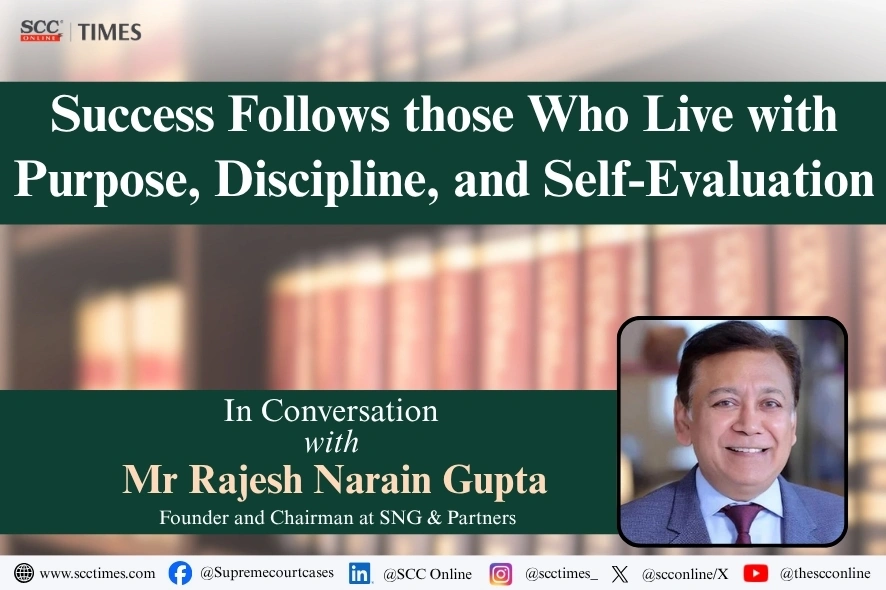
Rajesh Narain Gupta is the Founder and Chairman of SNG & Partners and one of India’s leading corporate and banking lawyers, with nearly four decades of experience since enrolling as an advocate in 1988. His practice spans banking and finance, corporate and commercial law, restructuring, private wealth, environmental, social, and governance (ESG), real estate, and succession planning. He has advised leading Indian and international banks, financial institutions, corporates, and ultra high net-worth families. Rajesh Narain Gupta has also played an important role in policy initiatives, including the implementation of the Securitisation and Reconstruction of Financial Assets and Enforcement of Security Interest Act, 2002 (SARFAESI Act) and the establishment of India’s first Information Utility under the Insolvency and Bankruptcy Code, 2016. Beyond practice, he serves on the Boards of leading financial institutions and has held several prominent industry leadership positions. His work has earned recognition from Forbes India, Chambers & Partners, Legal 500, India Business Law Journal, and Legal Era.
1. What initially drew you towards the legal profession, and at what point did you realise that law was not merely a career choice but a lifelong calling?
I was inclined towards journalism in my younger days and started my career as a journalist, and I have worked with Hindustan Times, and a newspaper called The Observer for about two years. Although The Observer eventually shut down, I still proudly carry my Press Club of India membership card with me.
As my father was in the legal profession, so law was always around me, and I started my career in litigation before setting up my own practice. Over time, clients began placing their trust in me, and being trusted to guide people is both a privilege and a commitment that continues to inspire me every day.
Over the years, I realised that law is far more than a profession. It is a position of trust. Clients entrust you with some of their most important decisions, and honouring that trust through integrity, hard work, and sound judgment is what continues to make this profession deeply meaningful for me.
2. Is there a particular principle or experience from your professional journey that has remained with you over the years and continues to influence your approach to law and leadership?
There is one experience from the early years of my career that has stayed with me and continues to shape the way I approach both law and leadership. A client from Yamunanagar urgently needed a legal opinion for a loan proposal. Since the matter was extremely time-sensitive and had to be completed within six hours, I quoted a fee of Rs 50,000, which was much higher than what I would normally have charged. The client agreed, and I was quite pleased with myself for having earned that amount.
When I shared this with my mentor, Dr N.P. Agrawal, expecting appreciation, he gave me a lesson that I have never forgotten. He told me to go back to the client, return the excess amount, and tell him that I had charged far more than was fair. Initially, I resisted the idea, but his words stayed with me. I eventually went back to return the money, but the client smiled and said, “I knew you had overcharged me, but I won’t take it back.” That client remains one of my closest friends even today.
That incident taught me that integrity, transparency, and fairness create relationships that last far longer than any financial gain. That lesson has guided every important decision I have made, whether as a lawyer, a leader, or while building my firm. In the long run, trust is the most valuable asset you can ever earn. That experience also taught me that while hard work may help build a successful practice, integrity is what builds a lasting reputation.
3. You have laid the foundation of a firm that stands tall today; it must have been accompanied by moments of uncertainty and challenge. Looking back, what were some of the most significant obstacles you encountered, and what principles helped you overcome them?
When one is building and running an enterprise, it is, in many ways, a continuous journey, almost like being on a treadmill. Alongside dreams and vision, there must be a practical and executable strategy, supported by partners, colleagues, staff members, and, very importantly, families. The success of any institution is never the achievement of a founder alone; it is the culmination of a collective effort, shared commitment, and a belief in a common purpose.
When I inherited the firm from my late father during a period when his health was failing, the foremost challenge was to ensure that the firm remained afloat and retained its relevance within an increasingly competitive ecosystem. At that stage, continuity, credibility, and survival were paramount. Beyond the professional responsibility, there was also the emotional obligation of preserving and building upon a legacy that had been painstakingly created over decades.
As the firm gradually gained momentum, the nature of the challenges evolved. Identifying and retaining the right talent, securing adequate working capital to sustain growth, and building a robust institutional framework became pressing priorities. In a knowledge-driven profession, the quality of an organisation is ultimately defined by the quality of its people, and attracting, nurturing, and retaining exceptional talent remains one of the most enduring challenges for any professional services firm.
Another significant challenge was attracting and retaining the right clients who trusted us, remained aligned with our values, and, in many ways, became catalysts for our growth. In professional services, trust is the most valuable currency. My experience has often validated the well-known 80:20 principle, where approximately 20 per cent of a firm’s clientele contributes nearly 80 per cent of its revenue and strategic growth. Preserving and deepening those relationships requires far more than technical competence; it demands consistency, responsiveness, commercial understanding, and an unwavering commitment to excellence. Many of our long-standing clients have not merely remained clients; they have become valued partners in our journey.
Expansion brought with it another set of opportunities and complexities. When I shifted to Mumbai from Delhi in 2005, it marked an important phase in the firm’s growth journey. Thereafter, we established offices in Singapore and Qatar, with the objective of expanding our international footprint and serving clients across jurisdictions. The subsequent decision to wind down those operations and reposition our focus towards GIFT City, Gujarat, was equally significant. Every phase of expansion, recalibration, and transformation offered invaluable lessons in leadership, resilience, adaptability, and strategic decision-making.
Today, the challenges confronting professional services firms are more dynamic than ever. Remaining relevant requires continual investment in knowledge, technology, and human capital. Talent acquisition and retention, artificial intelligence (AI)-driven disruptions, an increasingly competitive marketplace, evolving client expectations, and the remarkable pace at which larger firms are scaling all demand constant vigilance and innovation. At times, both internal aspirations and external expectations can appear formidable. Yet, it is precisely these challenges that enrich one’s experience, sharpen one’s judgment, and drive institutional growth.
Throughout this journey, a few principles have remained constant. Integrity has always been non-negotiable. In a profession built on trust, reputation is the most precious asset one possesses; it takes decades to build and only moments to erode. Equally important has been the value of hard work. There is simply no substitute for perseverance, discipline, and sustained effort, particularly during periods of uncertainty and transition. While strategies evolve, markets change, and technologies disrupt established models, integrity and hard work remain timeless virtues that inspire confidence, foster trust, and ultimately build enduring institutions.
Ultimately, every obstacle carries within it an opportunity to learn, evolve, and emerge stronger. One must have the courage to confront challenges, the humility to learn from them, and the conviction to pursue the right solutions. Looking back, I believe that resilience, adaptability, integrity, and hard work have been the defining pillars of my journey. The challenges were many, but they also proved to be the greatest teachers, shaping not only my own outlook, but also the character and enduring legacy of the firm.
4. You have been recognised internationally for your contributions to ESG and sustainability. What role should lawyers play in shaping responsible and sustainable corporate governance?
The rise of ESG reflects a fundamental shift in the way businesses are expected to operate. Since the early 2000s, global institutions such as the United Nations have encouraged companies to move beyond a singular focus on shareholder value and consider their environmental, social, and governance impact. In India, today, ESG expectations are also cascading through supply chains, with large corporations driving compliance across their business partners and suppliers.
Lawyers have a pivotal role in shaping this transition. Their responsibility is not limited to ensuring technical compliance; they must guide Boards, promoters, and management towards decisions that uphold both the letter and the spirit of the law. Legal advice should not facilitate structures that merely exploit loopholes or circumvent regulatory intent. Instead, lawyers should be the voice that says “no” when a proposed course of action compromises integrity or violates any law or the spirit of laws or regulations. While businesses seek to create value for shareholders, enduring value is built on trust, transparency, and ethical conduct. Lawyers, therefore, are not just legal advisers; they are custodians of corporate governance, helping build institutions that are respected not only for their performance but also for the principles they uphold. Their credibility rests not merely on legal knowledge, but also on the courage to uphold integrity even when commercial pressures may suggest otherwise.
5. After decades of professional success, what continues to drive you every day? Beyond your professional life, are there any interests or hobbies that help you stay inspired and maintain balance?
The world is evolving rapidly, and if we do not evolve with it, we become obsolete. I believe in having a growth mindset, continuously learning, experimenting, and adapting to change.
At the same time, I believe success is meaningful only when the people around you are growing as well. Seeing my team and the people I work with succeed and be happy gives me immense satisfaction. Outside work, I love music and enjoy playing the sitar. I have always enjoyed sports, especially lawn tennis and cricket. Reading is another passion of mine. Books like Man’s Search for Meaning, Midnight’s Children, and the three-volume series on Alexander the Great have left a lasting impression on me.
The philosophy is simple: have a purpose, make a plan, work hard every day towards that plan, keep learning, and never stop evolving. Growth is rarely accidental; it is the product of discipline, persistence, and a willingness to continuously reinvent oneself.
6. What qualities do you look for in a young lawyer entering the profession, and what advice would you give to the next generation of legal professionals?
The first quality I look for in a young lawyer is responsibility. Beyond that, I want to see a genuine commitment to the area of law they wish to work with. Have they invested time in understanding it? Are they keeping pace with developments, or are they relying only on what they learnt in law school?
The first piece of advice I would give to every young lawyer is to be sincere in the profession. Never look for shortcuts and never compromise on integrity. Sustainable success in the legal profession is built through years of hard work, patience, credibility, and consistent delivery — not through momentary achievements. If you consistently do good work with honesty, people will notice, respect, and trust you. Also do not focus on becoming the “best” lawyer, but on becoming a responsible lawyer. Competence is important, but reliability is indispensable. If you are known as the best lawyer but fail to turn up when your client needs you most, that reputation means very little. Clients and colleagues value lawyers they can depend on. A legal career is much like a game of cricket you must stay at the crease. Do not try to hit a six off the very first ball. Success in this profession requires patience, consistency, and perseverance. It is certainly not a two-minute noodle game. There is intense competition, but talent is always recognised in the long run. If the right opportunity does not come immediately, do not get discouraged. Whether it is litigation, a corporate role, or a non-contentious practice, keep yourself engaged, continue learning, and stay updated with legal and regulatory developments. Offer your best before expecting the best in return.
Finally, have a clear purpose. Maintain a diary, set goals, and evaluate yourself every day. Ask yourself whether you are doing what is required to achieve the career you aspire to. If you remain disciplined, patient, and committed, success will follow.
7. Having advised leading banks, financial institutions, and corporate houses for nearly four decades, how have you seen transactional practice evolve in India, and what continues to excite and challenge you about complex financial and commercial transactions today?
The evolution of transactional practice in India over the last two decades has been nothing short of transformational. The scale, sophistication, and frequency of transactions have increased exponentially across virtually every sector of the economy. Whether in manufacturing, infrastructure, financial services, technology, healthcare, energy, or emerging digital businesses, transactions today are taking place on an almost daily basis and at values that would have been unimaginable a few decades ago.
India’s economic growth, regulatory reforms, increasing globalisation, and the deepening of capital markets have significantly expanded the scope of transactional practice. Today, transactions involve a far wider spectrum of stakeholders — from large corporates and multinational enterprises to small and medium enterprises (SMEs), micro, small, and medium enterprises (MSMEs), start-ups, family offices, and a growing base of High Net-worth Individuals (HNIs) and Ultra High Net-worth Individuals (UHNIs). With thousands of listed companies and an increasingly sophisticated investor ecosystem, both the number of transactions, and the value they represent, have witnessed remarkable growth.
As transactional activity has expanded, so too has the ecosystem supporting it. Modern transactions require seamless collaboration among lawyers, tax advisors, accountants, merchant bankers, consultants, and regulatory specialists. The profession itself has undergone significant transformation, with the substantial growth of law firms and advisory practices across the country. The increasing participation of international investors and global institutions has also elevated expectations regarding governance, documentation standards, due diligence processes, and regulatory compliance.
What continues to fascinate me about complex financial and commercial transactions is that no two transactions are ever identical. Every mandate presents a distinct set of legal, commercial, tax, regulatory, and strategic considerations. The real challenge lies not merely in identifying legal issues, but in designing structures that are commercially viable, legally robust, tax-efficient, and capable of withstanding regulatory scrutiny.
Today, many of the most significant transactions are cross-border in nature. They require an intricate understanding of multiple legal systems, taxation regimes, regulatory frameworks, and industry-specific considerations. Such transactions often involve close coordination between Indian and foreign counsel, tax advisors, financial experts, and regulatory authorities across jurisdictions. Success in these engagements depends not only upon technical expertise, but also upon effective collaboration, communication, and project management among diverse professional teams.
Another dimension that makes transactional practice particularly engaging is the increasing complexity of the regulatory landscape. Transactions today frequently involve nuanced interpretation of corporate laws, securities regulations, foreign exchange laws, competition regulations, insolvency frameworks, direct and indirect tax provisions, and sector-specific regulatory requirements. Recent legal and tax developments affecting foreign investments and cross-border structures have further reinforced the need for careful planning and meticulous execution.
In my view, the most successful transactions are those that balance commercial objectives with legal and regulatory prudence. Regardless of how innovative a structure may be, it must be founded upon sound legal principles and complete regulatory compliance. A logical, sustainable, and legally defensible structure is essential in navigating complex commercial situations and mitigating future risks.
What has remained constant throughout my career, despite all the changes in the market, is the importance of integrity and hard work. Complex transactions often involve substantial financial stakes, multiple stakeholders, and intense commercial pressures. In such an environment, integrity is indispensable. Clients seek advisors whom they can trust to provide objective, principled, and commercially sound advice, even when that advice may not always be the easiest to hear. Equally, there is no substitute for hard work. Successful execution of sophisticated transactions demands rigorous analysis, attention to detail, long hours, and an unwavering commitment to excellence.
What continues to excite me, even after nearly four decades in practice, is the intellectual challenge of solving complex problems, creating innovative structures, and helping clients achieve their strategic objectives within the framework of the law. The transactional landscape will continue to evolve, driven by technology, globalisation, AI, and regulatory change. However, the opportunity to combine legal expertise, commercial judgment, and strategic thinking to create value for clients remains as stimulating today as it was when I began my career.
8. If life had taken you on a different path, away from both law and journalism, what profession do you think you would have chosen, and what is it about that role that appeals to you?
If I had to choose a profession other than law or journalism, it would probably be that of an Executive Assistant. I believe they are one of the most influential people in any organisation. They do not just manage the leader’s schedule but the entire ecosystem around the leader. They are exposed to critical decisions, important relationships, and the functioning of the organisation at the highest level. A good Executive Assistant can multiply a leader’s effectiveness many times over.
In fact, I often encourage young lawyers to work closely with managing partners or senior partners, almost like an Executive Assistant, because the kind of exposure they receive, the matters they handle, and the relationships they build are experiences that are difficult to gain otherwise. It gives them a front-row seat to decision-making and accelerates their professional growth. You will often find that even in large institutions, some of the most capable leaders have spent time working closely with the top leadership. For example, in organisations like the State Bank of India, Senior Executives have served as Executive Assistants to the Chairman because of the invaluable learning that role offers.
So yes, if I had not been a lawyer or a journalist, I would have been more than happy to be an Executive Assistant. I genuinely believe it is one of the most impactful and underrated roles in any organisation.
9. In an era increasingly driven by technology, specialisation, and commercial pressures, what do you believe truly matters in the legal profession, and what qualities remain timeless for long-term success?
While technology and specialisation are transforming the legal profession, the qualities that define long-term success remain unchanged, which are responsibility, integrity, curiosity, and a commitment to continuous learning. The first thing I look for in a young lawyer is not just competence, but responsibility, because competence without responsibility has limited value. Clients ultimately place their trust in lawyers who combine knowledge with accountability, integrity, and a strong work ethic. Clients place their trust in lawyers, and that trust is earned through reliability, accountability, and consistent delivery.
There are many new areas of law emerging in the western world, in the US and many other places, and these are creating entirely new opportunities. What is happening globally today will eventually become relevant in India, so lawyers must stay informed, anticipate change, and develop expertise in emerging practice areas rather than waiting for the market to catch up. Initially, the generation gap used to be 10 years, but now, because of the technology it has reduced to six months, so it is very important to keep up with the pace, and if you can create something new, clients are very happy to look at it. Equally important is the ability to innovate. Clients value lawyers who can identify problems and create practical solutions.
I would like to share an experience, so when I was doing my real estate practice, I noticed there was no reliable way to verify whether a property had been the subject of legal notices published in newspapers. We built our own repository, which has since grown to over 10 lakhs legal notices with a robust filtering system. It has become a valuable resource for our clients and a key differentiator for our practice. So, the legal profession will continue to evolve, but opportunities will always exist for those who can identify gaps and fill them. Do not just practice law, innovate around your legal services. Lawyers who combine strong values with adaptability and a solution-oriented mindset will always remain relevant, regardless of how the profession changes.
1. Founder and Chairman, SNG & Partners.
2. EBC-SCC OnLine Student Ambassador, KIIT School of Law, Bhubaneswar, Odisha.