The Asian International Arbitration Centre (AIAC) is hosting the eighth edition of its flagship Asia ADR Week from 12th to 16th October 2026 in Kuala Lumpur.
Hosted under the theme “Kainos: Where Vision Transforms Future”, the Asia ADR Week 2026 brings together practitioners, arbitrators, mediators, academics, businesses and stakeholders from Malaysia, Asia and beyond to exchange perspectives on the developments shaping the future of dispute resolution.
As part of the ADR Week, Lee Hishammuddin Allen & Gledhill (LHAG) Advocates and Solicitors, in collaboration with AIAC, held a panel discussion titled “The Changing Energy Landscape”, examining the electricity demand, renewable energy procurement, gas market reform and the evolving commercial framework for Malaysia’s power sector.
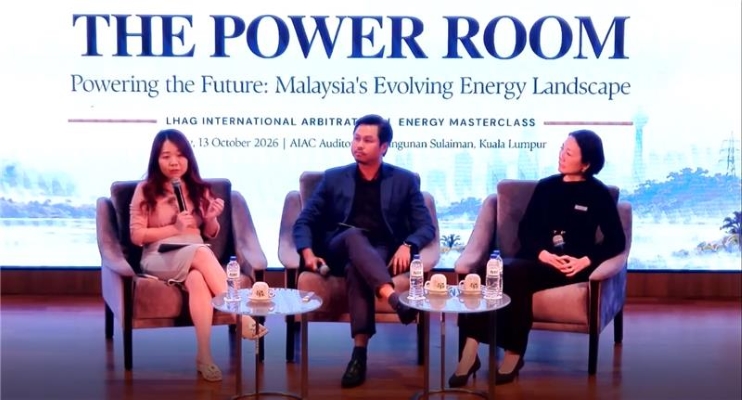
[In picture from left to right: Ms. Joyce Ong Kar Yee, Mr. Arif Hazwan Ab Wahab, and Ms. Khoo Yu Lin]
Moderated by Ms. Joyce Ong Kar Yee, Partner, LHAG, the panel consisted of esteemed professionals, namely Ms. Khoo Yu Lin, Partner, LHAG, and Mr. Arif Hazwan Ab Wahab, Manager, Lantau Group.
Kickstarting the session, Ms. Joyce Ong Kar Yee highlighted the structural change being undertaken by the Malaysian power industry. From 6572 megawatts peak demand in 1995 to 21,000 megawatts now, the power demand has exploded in Malaysia. This projected demand, associated with servers and artificial intelligence infrastructure, raised questions about the ability of the existing electricity system to accommodate new consumption while supporting the country’s clean-energy objectives. She also underscored how society now has to cope with newer sources of electricity as well.

Evolution of electricity demand in Malaysia: Mr. Arif Hazwan Ab Wahab
Responding to a question about the evolution of Malaysia’s electricity demand, Mr. Arif Hazwan Ab Wahab explained that this evolution over the preceding three decades could be divided into three phases:
-
Phase 1: During the first phase, from 1995 to 2005, electricity demand grew by approximately 6.63%. He attributed this expansion to industrialisation and urbanisation, which accompanied the development of Malaysia’s economy.
-
Phase 2: The second phase, i.e., 2005 to 2015, recorded slower growth of approximately 3.62%. According to Mr. Wahab, this reflected the increasing maturity of the economy. Although manufacturing and industrial activity continued, the economy was experiencing a shift towards the services sector, moderating the pace of electricity demand growth.
-
Phase 3: The third phase, from 2015 to 2025, witnessed a further slowdown, which he clarified that the lower growth rate did not indicate an absence of economic development. Rather, technological advancement, the industrial revolution, the rise of the Internet, and a greater emphasis on process optimisation and energy efficiency had affected the relationship between economic activity and electricity consumption. Furthermore, the COVID-19 pandemic disrupted demand patterns across the country.
Thus, Mr. Wahab observed that the reduced rate of demand growth was due to the economy maturing and the advancement of technology.
Creation of unprecedented levels of energy demand by AI and Data Centers
Regarding the rise of a new phase of energy demand, he described data centres as a new and distinctive challenge for Malaysia’s energy industry. Unlike many conventional consumers, data centres require substantial and continuous electricity supply, with individual facilities potentially demanding between 100 and 200 megawatts and operating around the clock. He observed that data-centre development was concentrated in particular locations, which added to the complexity of accommodating new demand.
Mr. Arif compared the projected demand from data centres with the growth experienced by the electricity sector over the preceding three decades. While peak demand had increased by approximately 15 gigawatts over that period, data centres alone were projected to add 19.5 gigawatts between 2025 and 2035.
He emphasised that this projection related to a single industry and would have to be accommodated alongside the requirements of commercial, industrial and other electricity consumers. The resulting increase presented a considerable challenge for the sector.

According to Mr. Arif, two issues would be particularly important in addressing this demand. The first was capacity adequacy, which requires sufficient generation capacity to be available to meet electricity requirements. The second was grid readiness, particularly the adequacy and reliability of transmission infrastructure to ensure that the electricity generated could be delivered to consumers.
Adding to the conversation, Ms. Khoo Yu Lin agreed that data centres were not only increasing volume but rather transforming procurement of energy. Historically, Malaysia was used to long-term power purchase agreements (PPAs), but data centers needed reliable and green energy, especially due to their emission commitments. This is why the Malaysian electricity landscape has changed in the last few years.
Mixed generation of electricity in Peninsular Malaysia and the GFA: Mr. Arif Hazwan Ab Wahab
Turning to the future electricity generation mix, Mr. Wahab observed that Malaysia faced two contrary pressures. On the one hand, data centres were expected to create substantial additional demand for electricity. On the other, the country was pursuing a national agenda directed towards cleaner energy and reduced carbon emissions. He remarked that this was concerning as the available options for meeting the anticipated demand while reducing dependence on coal were limited. Solar power and gas-fired generation, particularly combined-cycle gas turbine (CCGT) power plants, were likely to remain important components of the electricity system.
He referred to the National Energy Transition Roadmap (NETR), which sets out Malaysia’s direction towards reducing dependence on coal. He noted that existing coal-fired power plants would eventually retire, and no new coal-fired power plants would be constructed.
Mr. Wahab also acknowledged the potential relevance of emerging technologies, including green, nuclear, and blue hydrogen. However, he indicated that these options did not yet provide an immediate or straightforward solution to the challenges facing the power system.
The discussion then turned to gas procurement, particularly in view of the upcoming expiry of the Gas Framework Agreement (GFA).
Mr. Wahab explained that the Gas Framework Agreement (GFA) is an umbrella agreement that covers individual gas supply agreements between regulators and the suppliers, which are Tenaga Nasional Berhad (TNB) and Petroliam Nasional Berhad (PETRONAS). He identified two principal features of the arrangement.
First, the GFA provides for the allocation and procurement of gas for electricity generation. TNB Single Buyer (an entity within TNB) aggregates the gas requirements of the power sector and purchases gas on behalf of power plants. Second, the agreement establishes a two-tier pricing arrangement. One tier involves a regulated, subsidised price, while the other reflects a price more closely aligned with market conditions.
Navigating risk and contractual realities amid changing energy landscape and policy: Ms. Khoo Yu Lin
Speaking from a contractual and commercial perspective, Ms. Lin observed that discussions about the energy transition frequently focus on renewable generation capacity, particularly solar power, without giving equal attention to the source and security of the gas required to maintain electricity-system reliability. She cautioned against assuming that Malaysia’s domestic gas resources would remain sufficient indefinitely.
She explained that the GFA had provided a centralised mechanism for procuring fuel, managing the volume, as well as managing take-or-pay obligations. She explained that under this arrangement, the central procurement structure was able to coordinate the requirements of different power plants and manage imbalances between the gas procured and the quantities consumed by individual facilities.
If the framework were to change upon expiry of the GFA, some of these risks could return to individual gas supply agreements (GSAs). This would require existing independent power producers (IPPs), as well as developers entering into new projects, to examine their contractual obligations more closely.

Ms. Lin emphasised that gas procurement involves long-term commitments. A power plant or supplier might contract a specified volume of gas, but the actual quantity required will depend on electricity demand and the plant’s dispatch. Where contracted gas volumes do not correspond with actual electricity generation, questions arise about who bears the financial consequences. Under the GFA, these mismatches could be managed across multiple plants. However, as domestic gas resources decline and the industry becomes more dependent on imported LNG, the ability to rebalance volumes might become more complicated and expensive.
She therefore urged existing IPPs to review their take-or-pay obligations and shortfall-compensation mechanisms. New IPPs, she observed, would need to give these provisions greater attention than might previously have been necessary when gas procurement risks were managed centrally.
Ms. Lin further connected the anticipated changes in gas procurement with a broader need to review contractual protections in energy projects. She stressed that parties should identify the provisions in their agreements that might provide relief when the regulatory, commercial or operational circumstances underlying a project change. In particular, she referred to change-in-law clauses, hardship provisions and change-of-circumstances clauses. Their effectiveness depends on how they are drafted and the extent to which they cover the relevant events.
In this regard, she also spoke about Malaysia’s cross-border renewable energy programme, under which renewable electricity could be generated for export to Singapore. She noted that a change in government policy prohibiting renewable energy exports affected the developers who had already entered into contractual arrangements to sell electricity overseas.
She drew a parallel with the COVID-19 pandemic, which prompted parties across industries to revisit force majeure clauses and consider whether their contracts covered pandemics and similar disruptions. Her broader point was that contractual provisions that might appear routine during stable market conditions can become decisive when policy, supply or operational circumstances change.
Renewable electricity procurement in Malaysia: Mr. Arif Hazwan Ab Wahab
The panel next examined the expansion of renewable energy procurement and the increasing participation of private-sector consumers and developers. Ms. Yee asked Mr. Arif to explain the Corporate Renewable Energy Supply Scheme (CRESS) and Community Renewable Energy Aggregation Mechanism (CREAM) programmes and how they differed from traditional electricity procurement.
Mr. Wahab explained that Malaysia was gradually opening its electricity market to greater participation by private renewable energy developers and corporate consumers. Traditionally, electricity consumers generally relied on TNB as their supplier and had limited ability to choose the source from which they procured electricity.
He explained that CRESS enables corporate consumers to procure renewable electricity directly from renewable energy developers while using the national grid to deliver that electricity. CREAM, on the other hand, is a similar but smaller-scale arrangement, with a greater focus on rooftop solar and a more localised area of supply.
Regarding Malaysia’s solar energy, Mr. Wahab observed that the pipeline of solar projects was substantial, but a significant proportion of the proposed capacity had yet to become operational. He referred to a projected solar capacity of 15.4 gigawatts, of which less than 30% had come online at the time of the discussion. The remaining 11.2 gigawatts was still under development or subject to negotiations between corporate buyers and developers.
He attributed the slow progress, in part, to the relative novelty of the programme. Market participants have to assess the risks associated with each arrangement, identify commercial viability, and determine whether the proposed projects are economically attractive to both developers and corporate consumers.
Potential commercial and contractual challenges: Ms. Khoo Yu Lin
Responding to the expansion of direct renewable energy procurement, Ms. Lin identified the creditworthiness of corporate offtakers as a major commercial consideration.
She explained that under the traditional electricity procurement structure, the credit profile of the national utility was central to the bankability of long-term PPAs. TNB’s position as a national utility, supported by revenue from a broad consumer base, offered a different level of assurance from that available under a contract with an individual corporate buyer. By contrast, a corporate offtaker’s ability to meet its payment obligations might depend on its own financial position and cash flows. She added that this difference affects the financing structure of renewable energy projects. Lenders must assess whether contractual and financial protections are sufficient to support the project.
Curtailment and storage of energy: Ms. Khoo Yu Lin
The panel then considered the increasing importance of curtailment in renewable energy projects. Ms. Yee asked why curtailment had become a more prominent issue and who the associated risks are ultimately borne by.
Ms. Lin explained that curtailment occurs when electricity cannot be accepted into the grid, for various reasons like grid congestion, system constraints, or other circumstances affecting the grid operator’s ability to accommodate additional electricity. She clarified that traditional power purchase agreements, including those used in large-scale solar projects, already provided for the grid system operator to curtail electricity in specified circumstances. Under these arrangements, the contractual framework could establish the circumstances in which curtailment was permitted and the compensation payable.
She added that this position becomes more complex when renewable electricity is procured through arrangements between private parties. Where the grid system operator curtails the electricity, the developer and the offtaker might disagree about which party should bear the resulting financial consequences. She argued that neither party could necessarily bear the entire risk without affecting project viability. Instead, the consequences of curtailment would need to be negotiated and allocated through the contractual framework.
Ms. Lin also examined the role of battery energy storage systems (BESS) in supporting the energy transition. She observed that new technologies generally introduce additional complications during the early stages of adoption.
She explained that under conventional large-scale solar projects, developers have traditionally
focused on construction risks, achieving commercial operation date, and meeting performance guarantees. However, the introduction of battery storage expands the range of technical and commercial obligations that must be addressed. Battery storage projects might involve additional parties like suppliers and technology providers, making it necessary to establish clear warranty obligations and performance standards, such as guarantees relating to battery degradation, charging rates, and storage capacity.
She referred to the inclusion of BESS in Malaysia’s Large Scale Solar programme, including LSS 6, as well as the development of BESS projects and the increasing consideration of battery requirements for self-consumption arrangements.
Ms. Lin remarked that as battery storage becomes more common, the industry will become more familiar with the relevant contractual structures. In the meantime, agreements must clearly allocate warranty obligations and performance risks among engineering, procurement, construction and commissioning (EPCC) contractors, battery suppliers, and other stakeholders.
What does energy look like in the next five years: Mr. Arif Hazwan Ab Wahab
Answering a question on which aspect of energy would change the most in the next 5 years, Mr. Wahab identified demand as the most significant expected change. If the projected demand from data centres materialises, the increase would be substantial and could place considerable pressure on the electricity system.
He considered five years a relatively short period in which to transform the overall electricity generation mix. Although additional CCGT plants and solar projects could be developed, the fundamental dynamics of the supply mix were unlikely to change dramatically within such small period.
Similarly, he did not anticipate a significant transformation in how electricity was purchased over the immediate five-year horizon. Changes to the retail electricity market and broader market reforms could take longer, potentially 10 to 15 years.
From a deal-making perspective, Ms. Lin observed that the relatively stable arrangements that had governed Malaysia’s electricity sector for decades could no longer be assumed to continue unchanged.
She highlighted the growing decentralisation of the market and the possibility of new market structures, including capacity and ancillary-services markets alongside the conventional energy market. Greater participation in wholesale electricity markets could also introduce additional commercial opportunities and risks. The electricity sector was consequently moving away from a model in which a central body coordinated and controlled most aspects of procurement and supply.
Final Thoughts
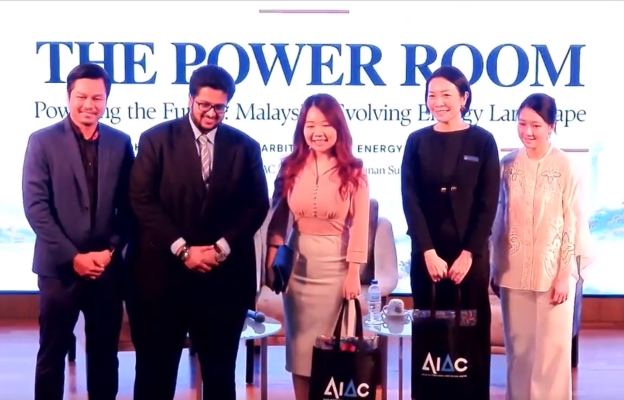
In his concluding remarks, Mr. Wahab returned to the concept of the energy trilemma, comprising reliability, sustainability, and affordability.
He observed that each country faces different challenges in balancing these objectives because national circumstances vary in terms of economic development, available resources, and patterns of electricity demand. For Malaysia, the challenge was particularly significant because the country was experiencing rapidly growing electricity demand while simultaneously pursuing a transition towards a cleaner energy environment.
Mr. Wahab emphasised the need for policy, strategy and system planning to remain aligned. The objective should not merely be to achieve the goals of the energy transition, but to establish a realistic pathway through which those goals could be achieved without compromising the reliability or affordability of electricity.
In her concluding observations, Ms. Lin returned to the question of risk and the wider economic implications of Malaysia’s energy transition. She noted that Malaysia’s longstanding reliance on subsidies had shaped public expectations concerning the cost of energy and other essential goods. Against this background, the introduction of carbon pricing and the broader decarbonisation agenda raised difficult policy questions.
She referred to the prospect of introducing a carbon tax while observing that subsidies for petrol and other goods could reduce the price signals that might otherwise encourage decarbonisation. In her view, the energy transition was no longer a question of whether change would occur, but how it could be implemented in a manner that balanced the competing demands of the energy trilemma.
Conclusion
The panel discussion demonstrated that Malaysia’s changing energy landscape involves far more than an increase in renewable energy capacity. Rapid growth in data-centre demand is placing new demands on generation capacity and transmission infrastructure, while the transition towards cleaner energy requires the system to retain sufficient firm power to ensure reliability.
SCC Times is the official media partner for AIAC Asia ADR Week 2026. Read more about AIAC Asia ADR Week 2026: