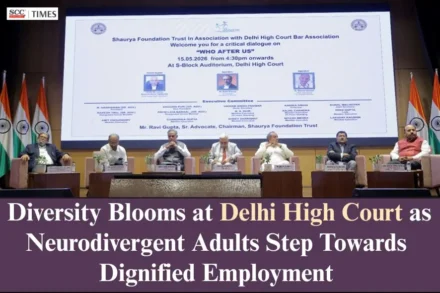
Diversity Blooms at Delhi High Court as Neurodivergent Adults Step Towards Dignified Employment
“What After Us?”: Delhi High Court Chief Justice Calls for Community-Owned Future for Adults with Autism & Intellectual and Developmental Disabilities

Bringing you the Best Analytical Legal News


“What After Us?”: Delhi High Court Chief Justice Calls for Community-Owned Future for Adults with Autism & Intellectual and Developmental Disabilities
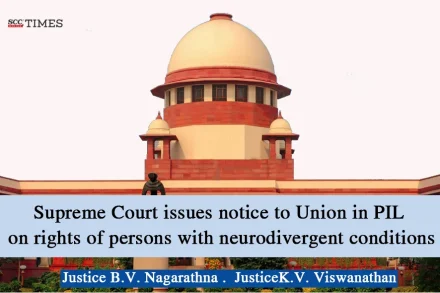
The Public Interest Litigation calls for clear, time-bound judicial directions to ensure India’s disability rights framework aligns with both its legal obligations and moral responsibilities.
“Medical advancements often encompass both known and unforeseen risks, and individual autonomy in making informed decisions about treatment options is the cornerstone of patient rights.”
The mere usage of the word “parent”, “relative” or “any person” in Section 14 of National Trust for the Welfare of Persons with Autism, Cerebral Palsy, Mental Retardation, and Multiple Disabilities Act, 1999 does not convince this Court to conclude that a non-citizen could also claim a right to be appointed as a guardian of a person with a disability. Neither of those three expressions can be possibly understood as constituting a legislative intent to recognise foreign nationals as being entitled to be appointed as guardians.
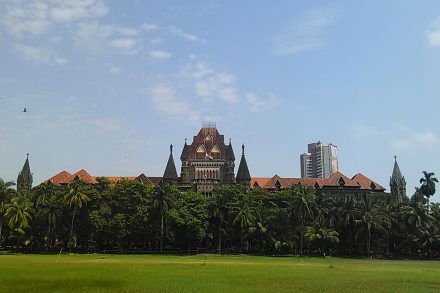
Bombay High Court: The Division Bench of R.D. Dhanuka and R.I. Chagla, JJ., addressed a petition revolving around the Right to Education
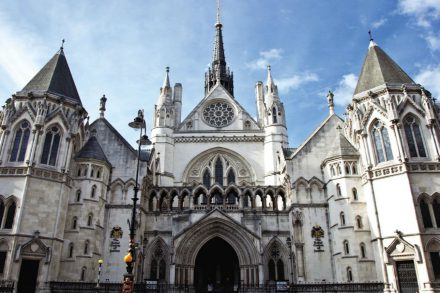
UPDATE: Appeal preferred by the respondent against this decision before the UKSC has been unanimously dismissed.[Khan v. X, [2021] UKSC 21, decided
S.O. 1700(E).— In exercise of the powers conferred by sub-section (4) of the Section 3 of the National Trust for Welfare of