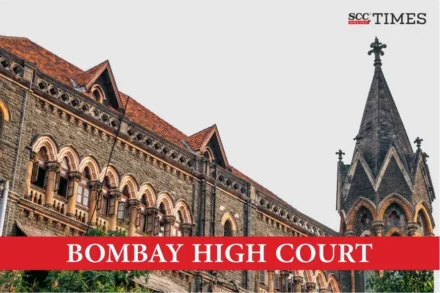
Bombay HC grants bail to woman accused of inflicting burn injuries on her niece for spending Rs 10 on chocolates
The applicant, on earlier occasions also, had harassed, ill-treated, and beaten up the victim.
Continue reading
Bringing you the Best Analytical Legal News


The applicant, on earlier occasions also, had harassed, ill-treated, and beaten up the victim.
Continue reading
“The act of breach of trust involves a civil wrong, in which an aggrieved person may seek redressal for damages in Civil Court, but a breach of trust with mens rea gives rise to criminal prosecution.”
Continue reading
“To determine whether an authority/body would fall under ‘State’ within the meaning of Article 12 would have to be determined on the cumulative facts of financial, functional and administrative dominance and/or control of the Government upon such a body. If such control is factually found, then the body would be treated as ‘State’ within Article 12.”
Continue reading
“Considering the age of the convict at the time of the commission of the offence and the nature of the offence made out from the materials on record, a lenient view can be taken. The interest of justice can be met by adequately compensating the victim.”
Continue reading
Overwriting of the date on the cheque has not been considered as a material interpolation meriting dishonour of the cheque.
Continue reading
Arguing that the LLP is a “third party” to the LLP Agreement is much like arguing that a company is a third party to its own Articles of Association.
Continue reading
The infringing materials found on the site of the defendant are counterfeit goods of the plaintiff’s products, affixed with the plaintiff’s registered marks. A clear indicative of the counterfeiting activity towards the plaintiff’s products, are the observations and photographs as attached by the Local Commissioner in its report.
Continue reading
“The only aim or intention of the petitioner was to get a compassionate appointment for her son in one way or the other, i.e., without disclosing the true and correct facts regarding the financial condition of her family.”
Continue reading
Defendant 3 has taken unfair advantage of the reputation and goodwill of the plaintiff’s trade marks/artistic works and has also deceived the unwary consumers of their association with the plaintiff by dishonestly adopting the plaintiff’s registered marks/labels without any plausible explanation.
Continue reading
The Court directed the State to instruct every applicant to append an annexure to the form, in explanation of the reason: “has become dangerous to life and property”, and show details how the tree has become dangerous to life and property.
Continue reading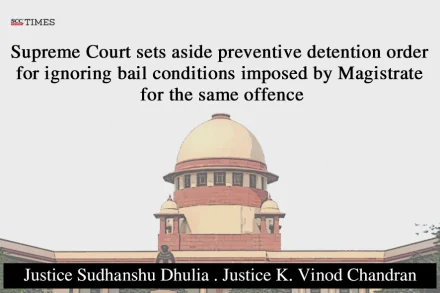
Supreme Court noted that nothing is stated by the detaining authority as to why the conditions are not sufficient to prevent the detenu from engaging in further activities of smuggling; which was the specific ground on which the conditions were imposed while granting bail.
Continue reading
“Forcing wife to live with a person who is neither educated nor eager to improve himself certainly amounts to mental cruelty.”
Continue reading
The present case is a gross case wherein for six years, the contemnor in every possible manner avoided complying with the orders of the Court.
Continue reading
Employment continuity, not fluctuating duties, determines eligibility for permanent status. Employers cannot evade obligations by altering work conditions.
Continue reading
The homebuyers’ case was that almost 70-80% of the loan amounts under subvention schemes were disbursed by the banks to the builders-cum-developers as ‘first tranche’, without due diligence, despite project milestones not having achieved.
Continue reading
“Although the law allows for travelling back of the revisional order of the High Court, yet it is far from ideal to do so after the passage of a substantial period of time. The correct approach to be adopted in cases like this is that the High Court should direct the Trial Court to stay its proceedings till the revision proceedings in respect of Section 319, CrPC are disposed of.”
Continue reading
It is manifest that defendant 1 had direct knowledge of the plaintiffs’ RAMADA brand at the time of adoption of the impugned mark. The defendant’s justification for adopting the mark ‘RAMADA’ is an afterthought, and lacks bona fide intent, as it fails to provide any tenable rationale for its selection.
Continue reading
“The accused persons had no knowledge that by asking the two employees to work on the sign board as part of the work of decoration of the frontage of the shop, such an act was likely to cause the death of the two deceased employees.”
Continue reading
The instant matter pertains to issuance of demolition notices by Bijainagar Municipality to the petitioners, following the arrest of certain accused individuals from their families allegedly involved in sexually exploiting minor girls.
Continue reading
“There is no purpose in blaming the young generation. The society and parents should watch them closely and monitor that their relationship is with good people.”
Continue reading