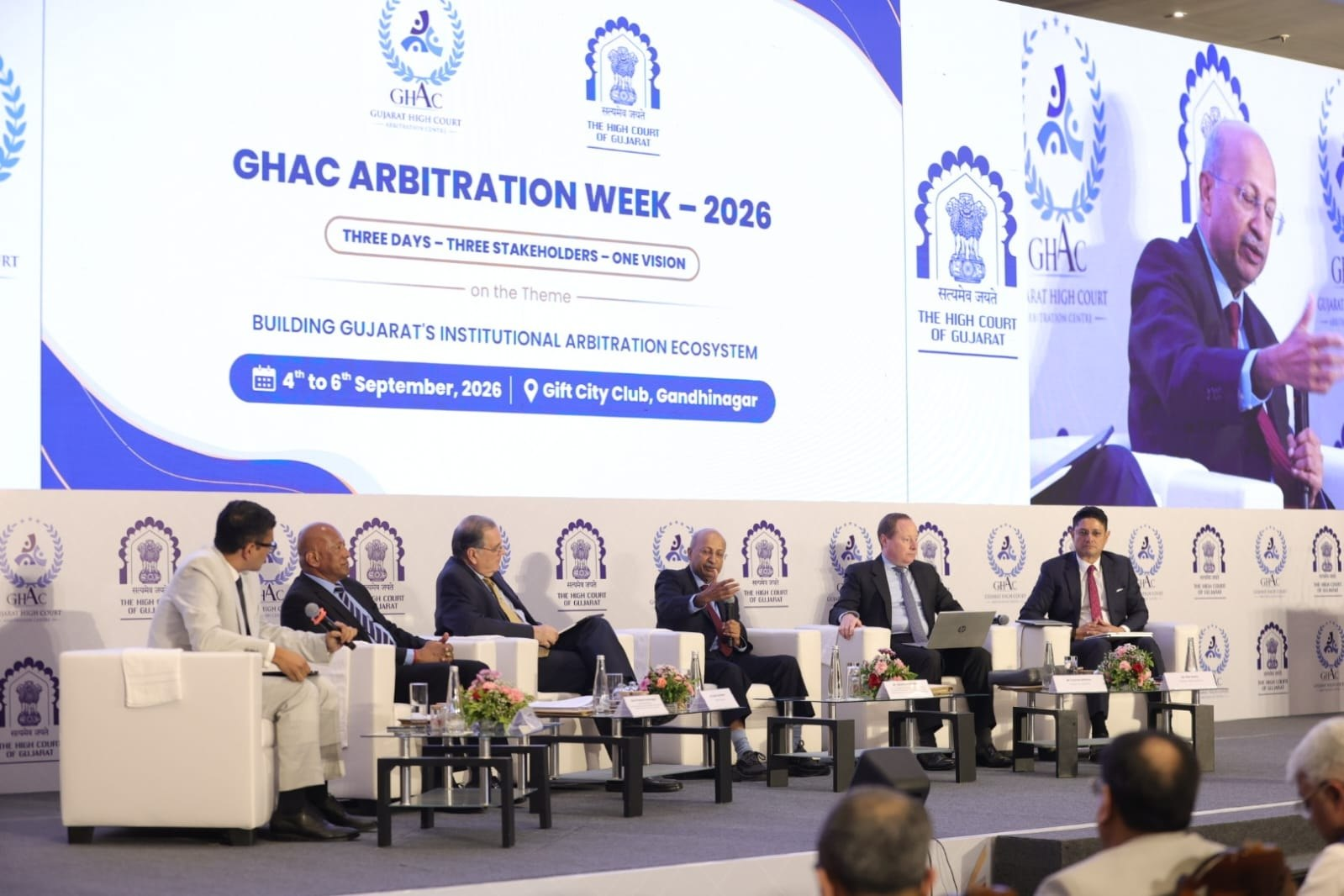
In Picture (Left to Right) : Anirudh Krishnan;
Datuk Professor Sundra Rajoo; Darius Khambata; Vijaya Kumar Rajah SC; Thomas Williams, King’s Counsel (KC); Nish Shetty, Partner, Clifford Chance
The session, titled “Rules of Private International Law Governing International Commercial Arbitration.” Moderated by Anirudh Krishnan, Barrister and Indian Counsel, the session featured:
- Vijaya Kumar Rajah SC, Former Judge, Court of Appeal and Supreme Court, Singapore; Former Attorney General of Singapore; Vice President, ICC International Court of Arbitration;
- Darius Khambata, Senior Advocate;
- Thomas Williams, King’s Counsel (KC);
- Datuk Professor Sundra Rajoo, Chartered Arbitrator; Founding President, Asian Institute of Alternative Dispute Resolution (AIADR), Malaysia; and
-
Nish Shetty, Partner, Clifford Chance.
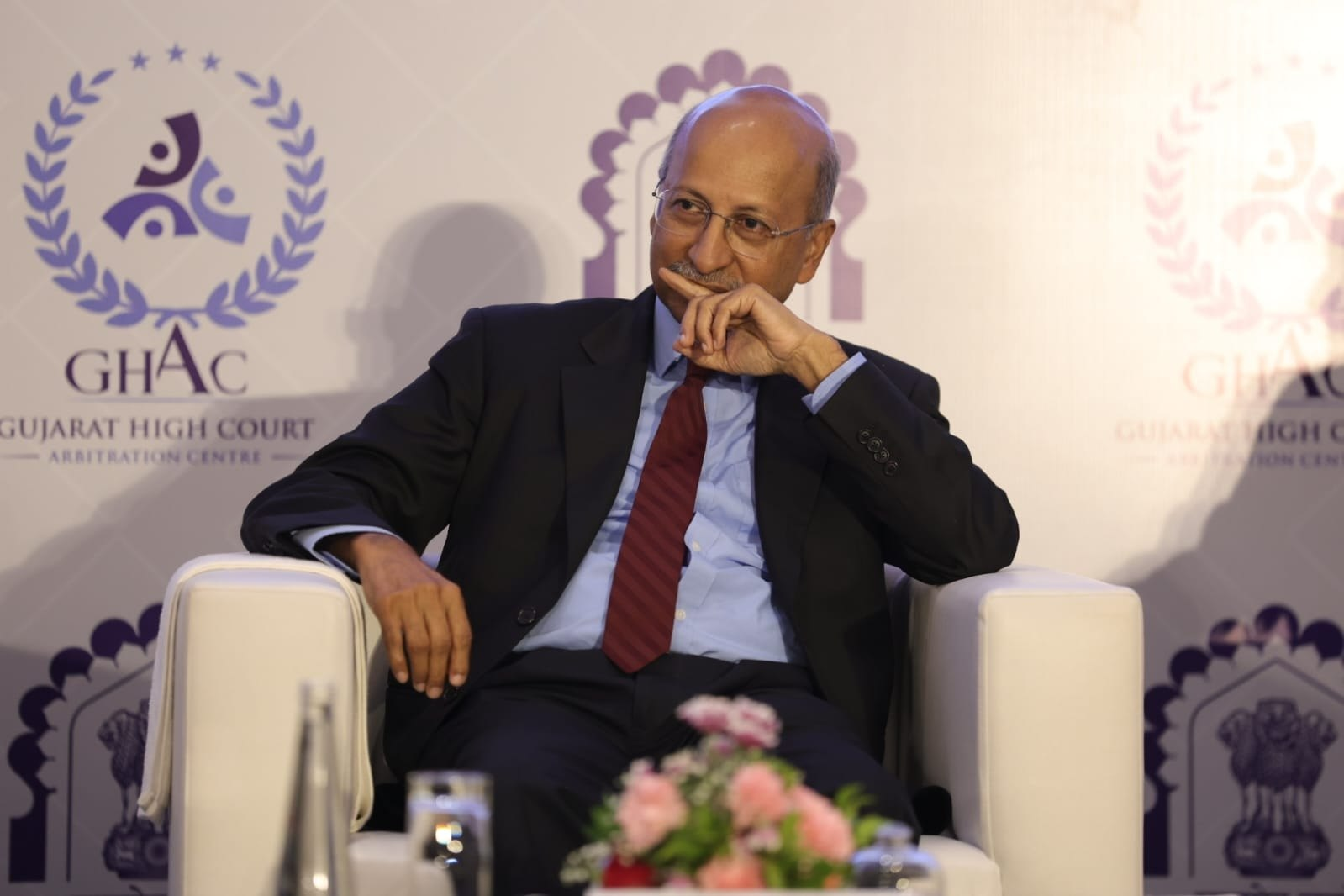
In Picture: Vijaya Kumar Rajah SC
Justice Rajah on capacity-building, technology and specialist courts
Emphasising the importance of finality in arbitration, Justice Rajah observed that parties who agree to arbitrate accept, by contract, that the tribunal’s decision is final even if wrong on fact or law, finality means a great deal to parties at the time of contracting, while noting, as earlier speakers at the event also had, that a party may occasionally arbitrate in bad faith, which causes difficulty unless the tribunal acts firmly.
Turning to India’s pendency numbers, Justice Rajah said India lacks neither people nor talent, but exposure, craftsmanship and organic training in specialised areas like international arbitration, echoing a point he said he had made the previous day that any credible ecosystem needs sustained emphasis on education and capacity-building at every level. He suggested GHAC, alone or with other centres, develop a credible Indian Chartered Institute of Arbitrators, rather than continuing to look to the English or Singapore institutes.
On concrete measures, he pointed to training and specialisation of judges, including routing smaller matters to session or district judges; an Indian equivalent of the UK’s deputy High Court judge model, under which practitioners both practise and sit part-time, clearing backlog while building expertise; Singapore’s 1990s practice of appointing judicial commissioners from the practising bar to help clear backlog; and a Singapore pilot using human-supervised AI, modelled on eBay’s dispute-resolution system, to resolve small claims (under roughly US$20,000) without lawyers.
He referred to having read the report of the High-Level Committee to Review the Institutionalisation of Arbitration Mechanism in India, chaired by Justice B.N. Srikrishna, which submitted its report in 2017, describing ideas such as the Arbitration Council of India as novel, though implementation had taken a long time to gain traction.
Reflecting on why Hong Kong and Singapore succeeded as arbitration hubs, he pointed to their smaller size, fewer legacy issues, long-term planning, and above all, clear ownership of the ecosystem, typically vested in a civil servant (in Singapore, the Permanent Secretary of the Ministry of Law) rather than the Law Minister, so that policy continues regardless of changes in personnel. He suggested that Gujarat should consider creating a dedicated “Permanent Secretary, International Development for Law” to drive this agenda.
Execution of awards, specialty courts, and Singapore’s 1990s backlog reform
When asked whether India should have a distinct, specialised execution regime for arbitral awards, given cases where a successful party had gone unpaid for four years after an award became final, Justice Rajah said he would support this in principle, while recognising India’s competing domestic priorities. His broader recommendation was the creation of specialty courts, not only in arbitration but also technology, IP and taxation, with judges combining broad generalist competence with deep specialisation in a couple of areas, arguing that specialisation drives expedition, provided there is political and judicial will and clear communication about why certain matters are prioritised.
On whether India could borrow legislative deterrents against defaulting award-debtors from Singapore, Justice Rajah said Singapore has no bespoke mechanism; defaulters instead face winding-up or bankruptcy proceedings, so the answer lies in the efficiency of process generally. He then recounted Singapore’s own reform history: in 1990, a High Court case took an average of five years to be heard, and a further three years on appeal. After stepping down as Prime Minister, Lee Kuan Yew turned to judicial reform, appointing a banker with legal training to overhaul the system, including a strict limit on adjournments, deeply unpopular within the profession at the time, on fears that clearing the backlog would leave lawyers without work. Instead, clearing the backlog brought a surge in new filings, as parties who had previously abandoned litigation returned once disputes could be resolved quickly.
He suggested that India’s highest priority should be shortening hearing times collectively, through some combination of technology, additional capacity, and specialisation.
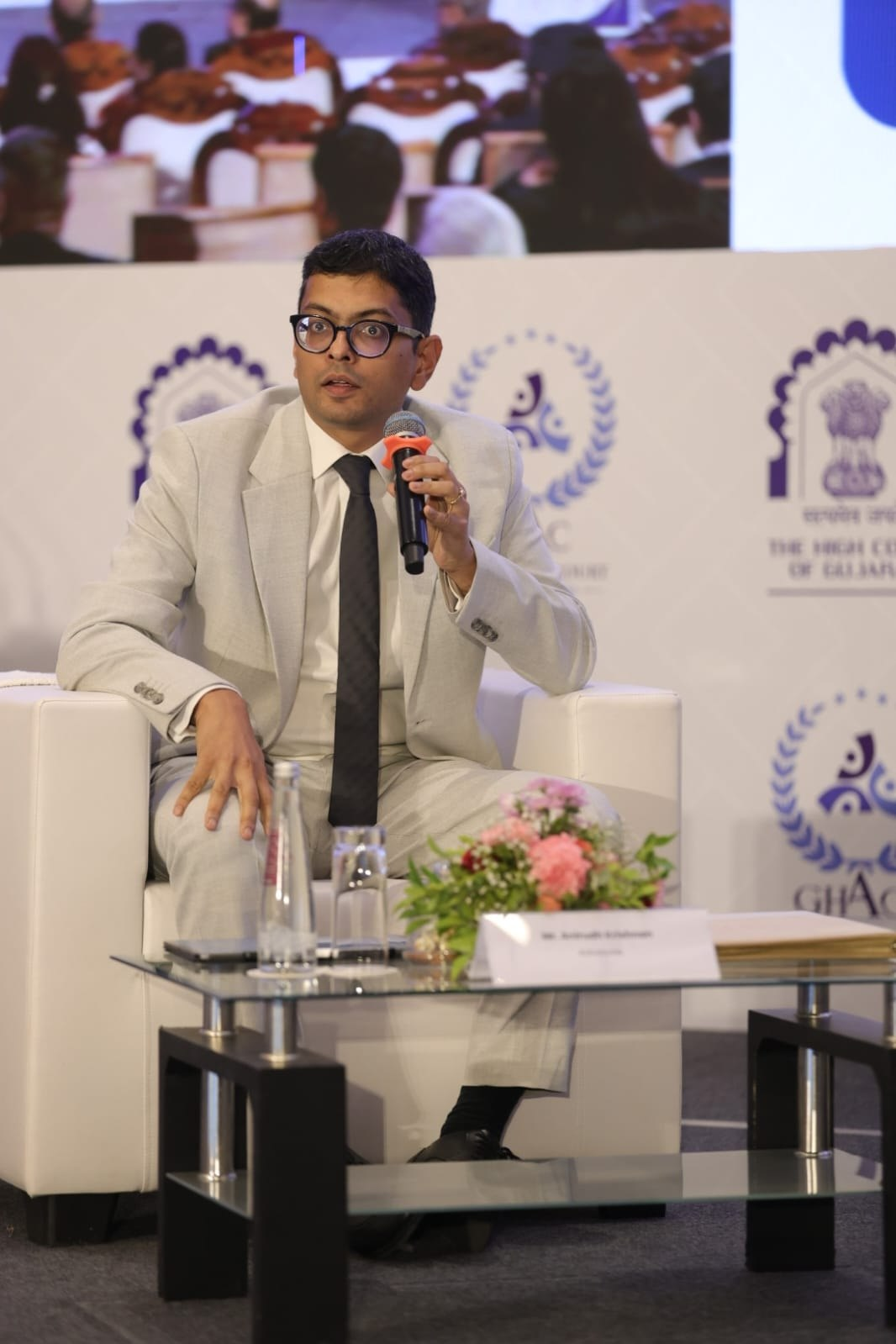
In Picture: Anirudh Krishnan
Three systems of private international law
Introducing the session’s core topic, the moderator, Anirudh Krishnan set out three distinct bodies of private international law that intermingle in international commercial arbitration: the proper law of the contract (governing the substance of the dispute); the law governing the arbitration agreement (governing its construction, validity and arbitrability); and the curial law (the law of the seat, governing procedure).
He stated that contracts often specify the proper law and the seat, but are silent on the law governing the arbitration agreement itself. Where these diverge, the outcome on arbitrability can turn entirely on which law is chosen, his example being that oppression-and-mismanagement disputes are non-arbitrable in India but arbitrable in Singapore. He then invited Thomas Williams KC to trace the English case law, as the jurisdiction where much of this doctrine originated.
England: from a common-law gap to Section 6A
Thomas said that the answer determines whether a binding arbitration agreement exists, who is bound, what falls within its scope, arbitrability, whether an English court will stay proceedings or grant an anti-suit injunction, and critically, enforceability of the eventual award. He noted the English position changed on 1 August 2025, with the Arbitration Act 2025, and set out to trace how the law reached the Supreme Court’s decision in Enka Insaat Ve Sanayi AS v OOO Insurance Company Chubb1, what it decided, and what has since replaced it.
He explained that the Rome I Regulation excludes arbitration agreements from its scope and the Arbitration Act, 1996 is silent on the point, and that the Departmental Advisory Committee chaired by Sir Mark Saville (later Lord Saville) left conflict-of-laws questions to the common law, which produced two divergent answers: the law of the seat XL Insurance Ltd v Owens Corning2; C v D3, which also held the curial court has exclusive jurisdiction over an award’s validity and the law of the main contract, crystallised in Sulamérica CIA Nacional de Seguros SA v Enesa Engenharia SA4, per Lord Justice Moore-Bick, which set out the three-stage inquiry, express choice, implied choice, closest and most real connection, and applied English law at the third stage after Brazilian law would have made the clause unenforceable without the insured’s consent.
Within a year, the same three-stage framework produced opposite results. Indian law in Arsanovia Ltd v Cruz City 1 Mauritius Holdings5, English law in Habas Sinai ve Tibbi Gazlar Istihsal Endustrisi AS v VSC Steel Company Ltd6, outcomes Thomas attributed to drafting minutiae, which meant London-seated arbitrations were routinely litigating foreign law evidence on separability, arbitrability and scope. By early 2020 the Court of Appeal itself had gone both ways within four months, in Kabab-Ji SAL v Kout Food Group7 and then in Enka case8.
Enka v Chubb and its aftermath
Thomas Williams explained that in Enka Insaat Ve Sanayi AS v OOO Insurance Company Chubb9, a fire at a Russian power plant led a subrogated insurer to sue in Moscow under a subcontract with an ICC clause, a London seat, and no governing law. Enka’s anti-suit injunction claim turned entirely on which law governed the arbitration agreement. The Commercial Court refused the injunction and the Court of Appeal granted it. The Supreme Court, deciding in October 2020 by a 3:2 majority, held: (i) a choice of law for the main contract will generally extend to the arbitration agreement, as a matter of contractual construction; (ii) a different seat does not by itself displace that; (iii) the inference can be displaced where the seat’s law says otherwise, or where the “validation principle” requires it to avoid ineffectiveness; and (iv) absent any choice, the arbitration agreement is governed by the law most closely connected to it, generally the seat. English law governed on the facts, and the injunction stood while Lord Burrows and Lord Sales dissented, favouring Russian law.
A year later, in Kabab-Ji SAL v Kout Food Group10 an English-law franchise agreement with a Paris seat and a non-signatory parent produced opposite outcomes in London and Paris, the English courts refused enforcement on the basis of an implied English choice, while the Paris Court of Appeal, applying French law as the law of the seat, bound the parent and refused annulment. Thomas suggested this divergence, the same clause, opposite results in Europe’s two most-used seats, did more to drive reform than any argument of principle, culminating in UniCredit Bank GmbH v RusChemAlliance LLC11: English-law bonds, a Paris seat, and an English anti-suit injunction granted in support of the Paris arbitration because English law governed the arbitration agreement.
Section 6A: the new default rule
Thomas set out the new Section 6A of the Arbitration Act 1996, inserted by the 2025 Act, which came into force on 1 August 2025
- Section 6A(1): the law applicable to an arbitration agreement is (a) the law the parties expressly agree applies to it, or (b) failing such agreement, the law of the seat.
-
Section 6A(2): an agreement that a particular law applies to the contract of which the arbitration agreement forms part does not by itself constitute an express agreement that the same law applies to the arbitration agreement.
In effect, he explained that implied choice is abolished, a governing-law clause for the main contract is never enough, however widely worded, reversing Kabab-Ji case and UniCredit case on their facts, and the default becomes the seat with no closest-connection inquiry, applying even where the seat is abroad. Treaty-based investor-State arbitration agreements are carved out.
Thomas flagged three practical points: first, the transitional rule has no grandfathering by date of the underlying agreement, the trigger is the date the arbitration commenced, so Section 6A does not apply to arbitrations commenced (or connected court proceedings begun) before 1 August 2025, meaning the old Enka case law will keep governing challenges and enforcement for years, and a single clause can yield different answers in successive references. Second, Section 6A sits in Part I of the 1996 Act, while Section 103(2)(b), governing enforcement of Convention awards, sits in Part III and was not amended, leaving open, and flagged but not adopted in Parliament, whether Kabab-Ji case may still survive at the enforcement stage. Third, on drafting he stated that a single sentence, naming the arbitration agreement expressly, now settles what took thirty years of litigation to resolve as a general governing-law clause will not suffice. He added that the intended compensating benefit is that a London-seated arbitration agreement will now almost always be governed by English law, so separability, English arbitrability and the Fiona Trust case approach to scope will apply as a matter of course.
Anirudh Krishnan noted that Section 6A(2)’s extraterritorial reach, applying even where the seat is outside England, could raise its own complications, returning to the point later in the discussion.
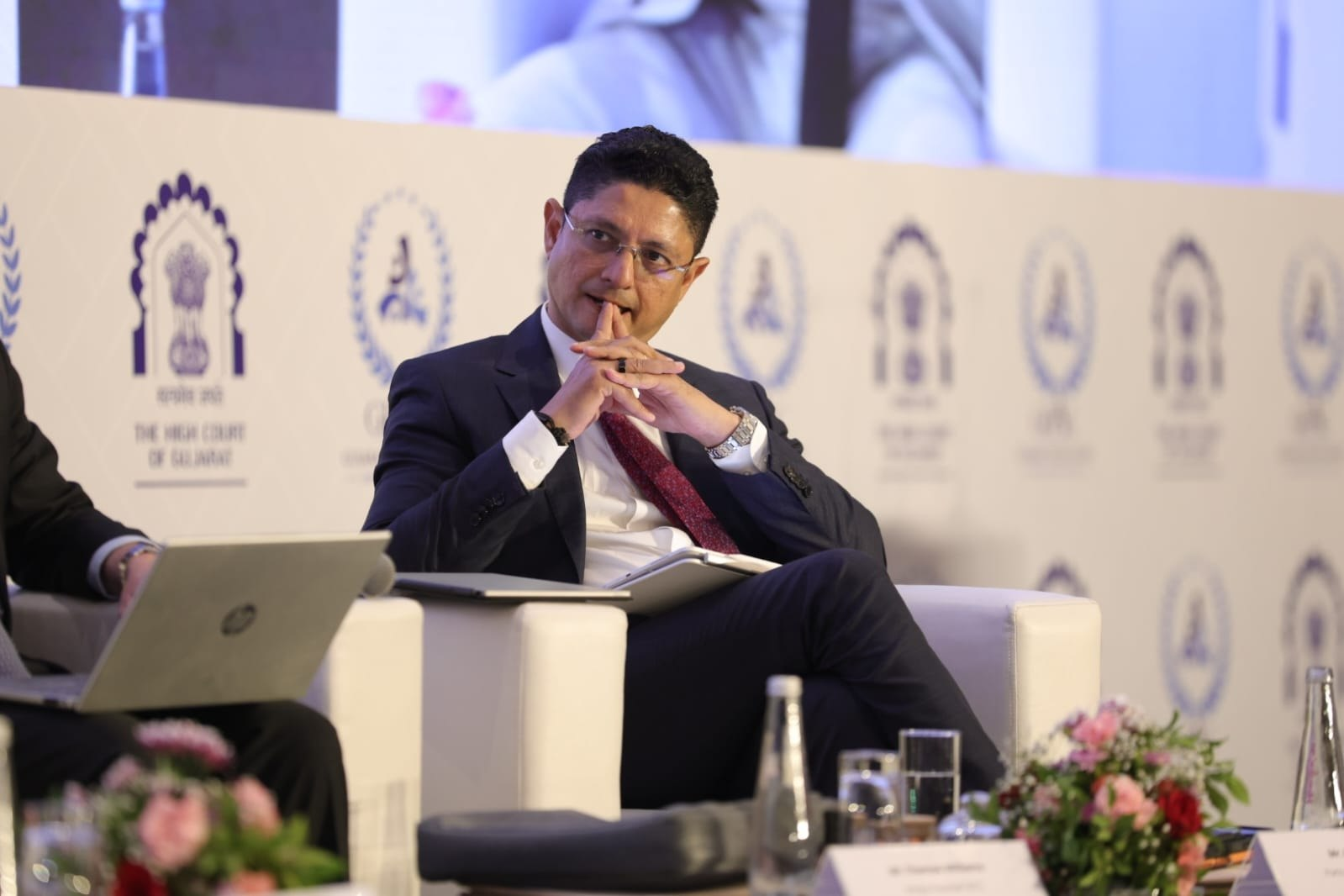
In picture: Nish Shetty
Singapore, Australia, Hong Kong and France: a comparative survey
Turning to Nish Shetty, the Anirudh asked him to address the position in Singapore and beyond. Shetty first observed a broader dynamic he called the “competition of seats”, much of the reaction to legislative reform in the UK and Singapore turns on whether it makes that seat more or less attractive to commercial parties.
Singapore: In Anupam Mittal v Westbridge Ventures II Investment Holdings12, an Indian-law-governed agreement with a Singapore seat, where NCLT proceedings alleging oppression and mismanagement (arbitrable in Singapore, not in India) triggered an anti-suit injunction, the Singapore Court of Appeal articulated a three-stage test mirroring Sulamérica: express choice, implied choice (starting from the governing law of the contract), and failing both, closest and most real connection. Following Anupam Mittal case, in 2024 Singapore’s Ministry of Law commissioned the Singapore International Dispute Resolution Academy (SIDRA) to review the International Arbitration Act, including this issue; SIDRA recommended Singapore not follow England’s new seat-default approach, but instead broadly codify the Anupam Mittal/pre-reform Enka dicta, reasoning that defaulting to the governing law of the main contract, rather than the seat, would keep Singapore attractive as a seat even where a foreign law ultimately governs the arbitration agreement.
Australia: no case law addresses the point in detail, but Dialogue Consulting Pty Ltd v Instagram, Inc13 and a further decision involving an Indian party appear to apply an approach similar to Enka.
Hong Kong: a decision involving a Chinese state-owned railway construction entity appears to take a similarly Enka-aligned approach.
France: French courts apply the “rules approach” to international arbitration law, which forgoes conflict-of-laws methodology such as the closest-connection test altogether, the existence and efficacy of the arbitration clause is assessed by reference to the parties’ common intention, an approach that produced the divergent French outcome in Kabab-Ji case.
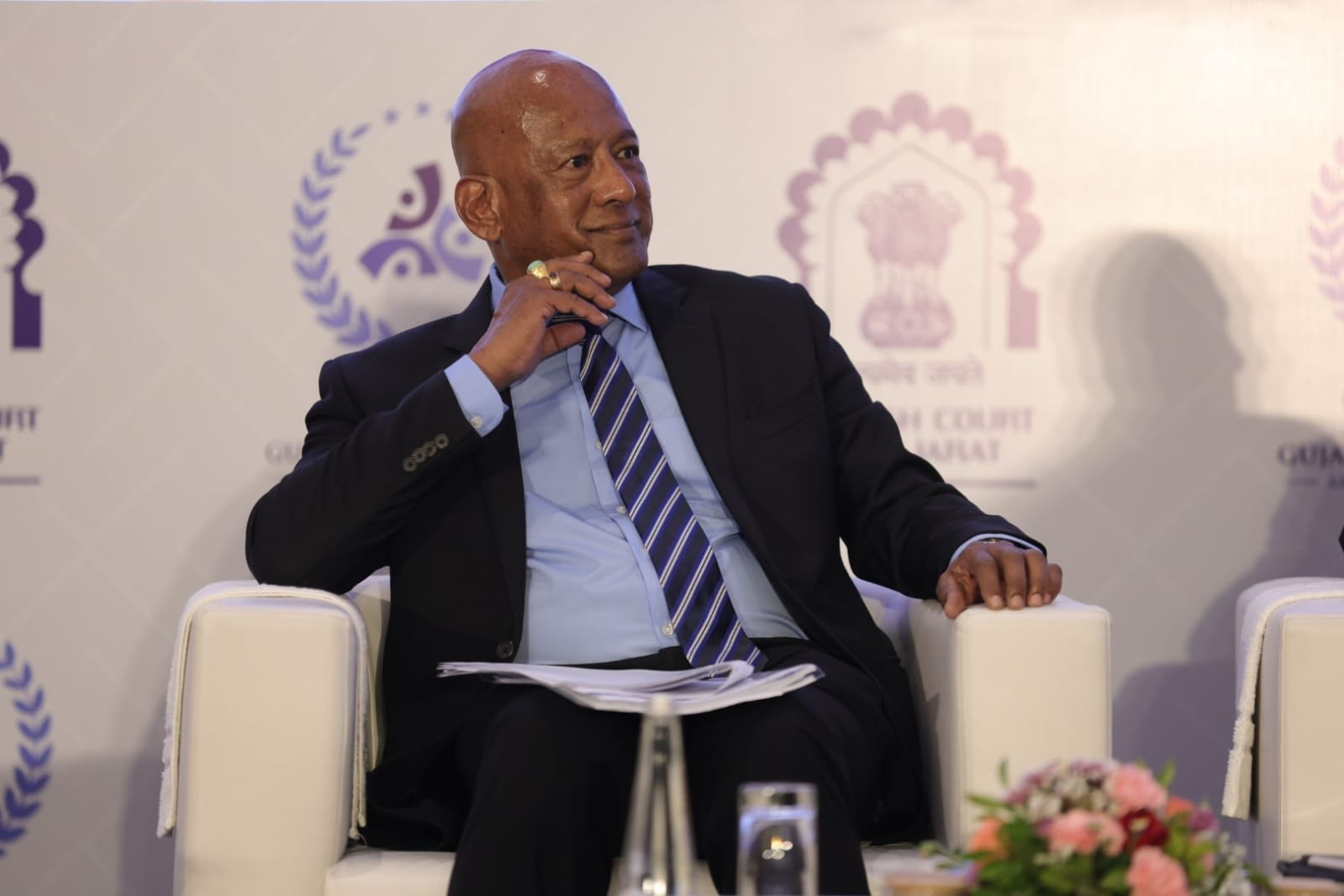
In picture: Datuk Professor Sundra Rajoo
Malaysia: Section 9A and the Federal Court’s early alignment
Inviting Datuk Professor Sundra Rajoo to address Malaysia, he began by observing that legislating the point clearly is, in his view, the better course than waiting for case law to settle it. Malaysia’s Arbitration (Amendment) Act 2024 inserted a new Section 9A into the Arbitration Act 2005, in force from 1 January 2026: parties are free to agree the law applicable to the arbitration agreement; failing agreement, it defaults to the law of the seat; and an agreement on the law applicable to the contract of which the arbitration agreement forms part does not, by itself, amount to an agreement on the law applicable to the arbitration agreement, in substance mirroring England’s Section 6A, though he noted two differences: Malaysia’s provision is prospective only while England’s applies more broadly, including to agreements made before commencement, reflecting a concern about disturbing existing bargains; and Malaysia, unlike England, does not have England’s history and “territoriality.”
He noted Malaysia’s apex court, the Federal Court, had reached a broadly similar destination years earlier in Thai-Lao Lignite Co Ltd & Anor v Government of the Lao People’s Democratic Republic14, applying express choice, then skipping directly to closest-and-most-real-connection to reach its conclusion. He also referred to the UNCITRAL Model Law’s approach to setting aside awardswhich addresses the law governing the arbitration agreement only at the post-award stage, leaving a gap at the pre-award stage, the source of much of the present difficulty, and to a Malaysian case where a 3:2 split at one level was later reversed at the Federal Court, illustrating the resulting uncertainty case law can produce.
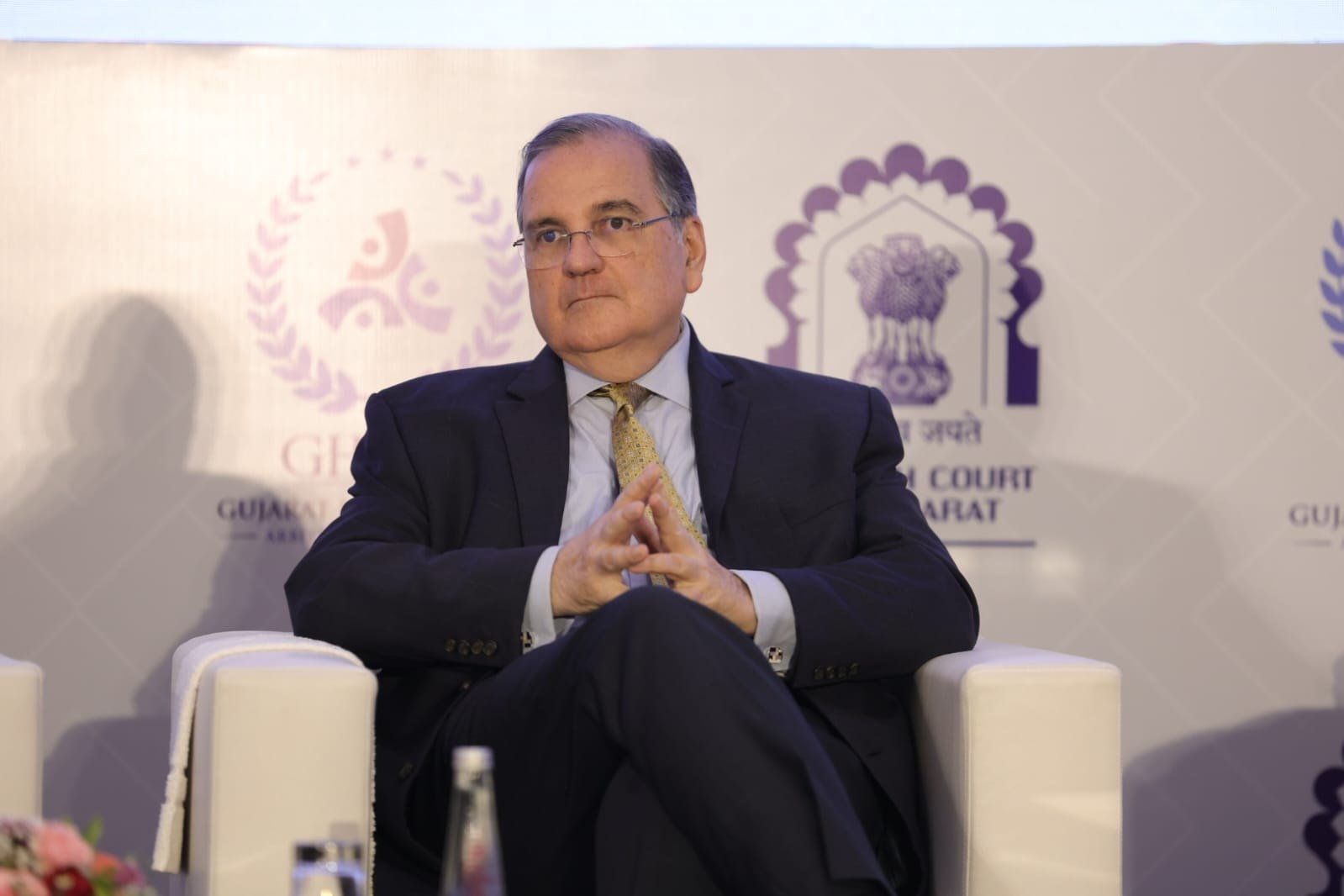
In picture: Darius Khambata
India: from NTPC v Singer to BALCO
Turning to Darius Khambata, the moderator noted India had for decades followed the principles in National Thermal Power Corporation v Singer Company (1992) 3 SCC 551, drawn from Dicey’s Conflict of Laws and Whitworth Street Estates, which held the proper law of the arbitration agreement generally follows the proper law of contract, with a rebuttable presumption, as early as 1992, that absent express choice, both follow the law of the seat.
Darius Khambata explained why the law governing the arbitration agreement matters so much in India: it determines arbitrability, and India carves out large categories of non-arbitrable disputes (trust disputes, matters with exclusive statutory tribunals, and more). The critical provision at the time was Section 9(b) of the Foreign Awards (Recognition and Enforcement) Act, 1961: if Indian law governed the arbitration agreement, the award would not be treated as “foreign” even if the seat was abroad, a factor tied to the law of the arbitration agreement, not the seat, creating tension with Article V(1)(e) of the New York Convention. On this basis, the Supreme Court held in NTPC v Singer that a London-seated ICC clause was nonetheless governed by Indian law where the parent contract stated it was “in all respects governed by Indian law”, language he described as a precursor to the reasoning later adopted in Kabab-Ji case.
The Arbitration and Conciliation Act, 1996 removed Section 9(b)’s language and introduced Section 2(2), which, on its clear wording, confines Part I to India-seated arbitrations. The Supreme Court in Bhatia International v Bulk Trading S.A. (2002) 4 SCC 105 nonetheless held that Part I could extend to foreign-seated arbitrations too, permitting Indian courts to grant interim relief in support of foreign arbitrations. This was extended further in Venture Global Engineering v Satyam Computer Services Ltd (2008) 4 SCC 190, which allowed Section 34 challenges even to foreign-seated awards. Bharat Aluminium Co v Kaiser Aluminium Technical Services Inc (BALCO) (2012) 9 SCC 552, unequivocally adopted the seat doctrine. Part I applies only to India-seated arbitrations, the seat determines the curial law and where an award may be challenged, and, on the law governing the arbitration agreement, BALCO adopted the reasoning of the then newly-delivered first-instance decision in Sulamérica, i.e., the closest-and-most-real-connection test tied to the seat. BALCO applies only to arbitration agreements made after its date.
Asked whether BALCO impliedly overruled NTPC v Singer,Khambata said “overrule” was too strong, the statutory matrix had changed fundamentally, so NTPC v Singer‘s reasoning would no longer hold good law under the 1996 Act, which one could call implied overruling if one wished.
Disortho: India adopts the Sulamérica/Enka framework
Darius Khambata then turned to Disortho S.A.S. v Meril Life Sciences Private Limited (2025) SCC OnLine SC 570,, a three-judge Supreme Court bench decision applying what he described as the Enka v Chubb test. On facts, where the contract was expressed to be governed “in all respects” by Indian law, the Court did not treat that as an express choice for the arbitration agreement, declining to follow the Kabab-Ji case’s approach, but instead applied the three-stage Sulamérica process finding a strong implied choice of Indian law given the whole-agreement clause, and holding that a foreign seat alone would not displace that presumption unless the dispute were non-arbitrable under Indian law, the validation principle in operation. He noted the resulting position is consistent with BALCO, not in conflict with it, and observed that SIAC’s latest model clauses now expressly recommend parties choose the law of the arbitration agreement in their drafting.
Mr. Khambata summarised that Disortho case effectively incorporates the Enka v Chubb test, as Anupam Mittal case does in Singapore, so most of the world now follows the Enka framework, even as England, where it originated, has legislatively overruled it.
A hypothetical and the spectre of renvoi
Anirudh posed a hypothetical: seat in Singapore, contract governed by English law, arbitration agreement silent. Starting from Singapore law (via Anupam Mittal), one arrives at English law governing the arbitration agreement; but starting from English law, given Section 6A(2)’s extraterritorial reach, one arrives at the opposite, Singapore law. Which starting point applies may determine which court or tribunal a party approaches first, raising, he suggested, questions bordering on renvoi, traditionally inapplicable to commercial contracts, but potentially engaged by Section 6A’s extraterritorial design, a complexity he flagged without resolving.
Drafting as the practical answer, and its limits
Asked by Anirudh whether careful contract drafting is the real solution, Nish Shetty said yes in principle, but that commercial parties routinely pay little attention to arbitration clauses, treating them as boilerplate appended after the substantive negotiation is complete, a reality that makes it hard to justify billing for a nuanced discussion of two different governing laws within one contract. He noted that institutions are increasingly building the distinction into their model clauses to pre-empt the issue, though disputes reaching courts today typically stem from contracts drafted years earlier under older models. He added that, under Swiss law, even an express choice of law for the arbitration agreement may still be tested against the contract as a whole.
Datuk Prof. Sundra Rajoo confirmed that the Malaysian position now mirrors England’s, then commended the LCIA Rules, Article 16.415 as a model clause for institutions. He further stated that the law applicable to the arbitration agreement is the law applicable at the seat, unless the parties have agreed in writing on other rules of law not prohibited by the law of the seat. He suggested that GHAC should combine that LCIA-style provision with the codified clarity of civil-law jurisdictions, noting Switzerland’s Private International Law Act 1987 resolved the issue by statute decades ago. He argued that legislative solutions are preferable to case law precisely because courts must engage with the specific and unpredictable facts before them, whereas legislators can target the underlying mischief directly, a debate Malaysia had itself had after the Enka case, driven by concern that a single first-instance decision could later be overturned.
What makes a good arbitral seat?
When asked what makes for a good seat, Darius Khambata identified three pillars, describing Singapore, 30 years young, as the standout success story:
- Judicial ecosystem: he said India’s 2015 amendments had solved most major legislative problems, though he would add an express power to modify awards. He praised the growing judicial discipline around non-interference under Section 34 of the Arbitration and Cociliation Act, 1996, insisting courts require applicants to first frame the precise ground of challenge under Section 34 of the Act before reviewing the record, and quoted Justice Felix Frankfurter’s dictum that “speed is not the test of justice; deliberate speed is,” while noting India’s “deliberate speed” has sometimes taken too much time.
- Legislative ecosystem: broadly in place, but he called for legislative clarity on wider arbitrability (trust, company and IPR disputes) and for the Supreme Court’s recently-recognised, deliberately narrow power to modify awards in Gayatri Balasamy v. ISG Novasoft Technologies Ltd., (2025) 7 SCC 1, a 4:1 majority decision to be placed on statutory footing to prevent misuse.
-
Best practices: he recalled Justice Nageswara Rao referencing the speech by Fali Nariman identifying four practical measures, real-time transcription, firm time limits for pleadings, cross-examination and arguments, exhaustive written submissions filed before the hearing, and clear costs orders, cautioning against inconsistency between how parties conduct themselves in international versus domestic arbitrations.
He added a final, less tangible quality: humility, Singapore’s continual self-scrutiny and willingness to keep improving even at the height of its success.
Before moving on, Khambata offered an aside on Booz Allen & Hamilton Inc v SBI Home Finance Ltd (2011) 5 SCC 532, which set out the rights-in-rem test for non-arbitrability by extracting a passage from Mustill & Boyd’s treatise on English commercial arbitration, observing that the extract as cited omitted the treatise authors’ own view disagreeing with the proposition, and suggesting a fuller citation might have produced a wider arbitrability test in India.
Reflections on Singapore, Malaysia, Hong Kong and China’s arbitration history
Nish Shetty, recalling starting practice in 1994 as SIAC was finding its feet, offered a corrective to the narrative of Singapore’s smooth rise: in the 1990s through the mid-2000s, Singapore’s own judiciary made missteps, including setting aside awards on the basis that judges disagreed with the tribunal’s reasoning, prompting legislative intervention, and Singapore’s arbitration bar itself grew out of a largely litigation-trained profession.
Datuk Prof. Sundra Rajoo, formerly Director of AIAC (previously KLRCA), which he described as Asia’s second-oldest arbitration centre after China’s government-affiliated centre, noted Hong Kong’s centre began in 1987 and Singapore’s (SIAC) in 1991 both since overtaking Malaysia’s institution in volume. He argued there remains room for another Asian hub given the region’s caseload, and that India, rich in talent, capable retired judges, and rapid economic growth but mainly lacks the ability to resolve high-value commercial disputes domestically rather than sending them abroad. He suggested that state-level arbitral centres could build the volume needed to eventually support a genuine international hub, provided the institution is structured for independence and not personal “capture”, recalling AIAC’s own setback around 2018, when a period of rapid caseload growth was followed by controversy, prompting a 2023 restructuring to a more distributed institutional model less dependent on any single leader.
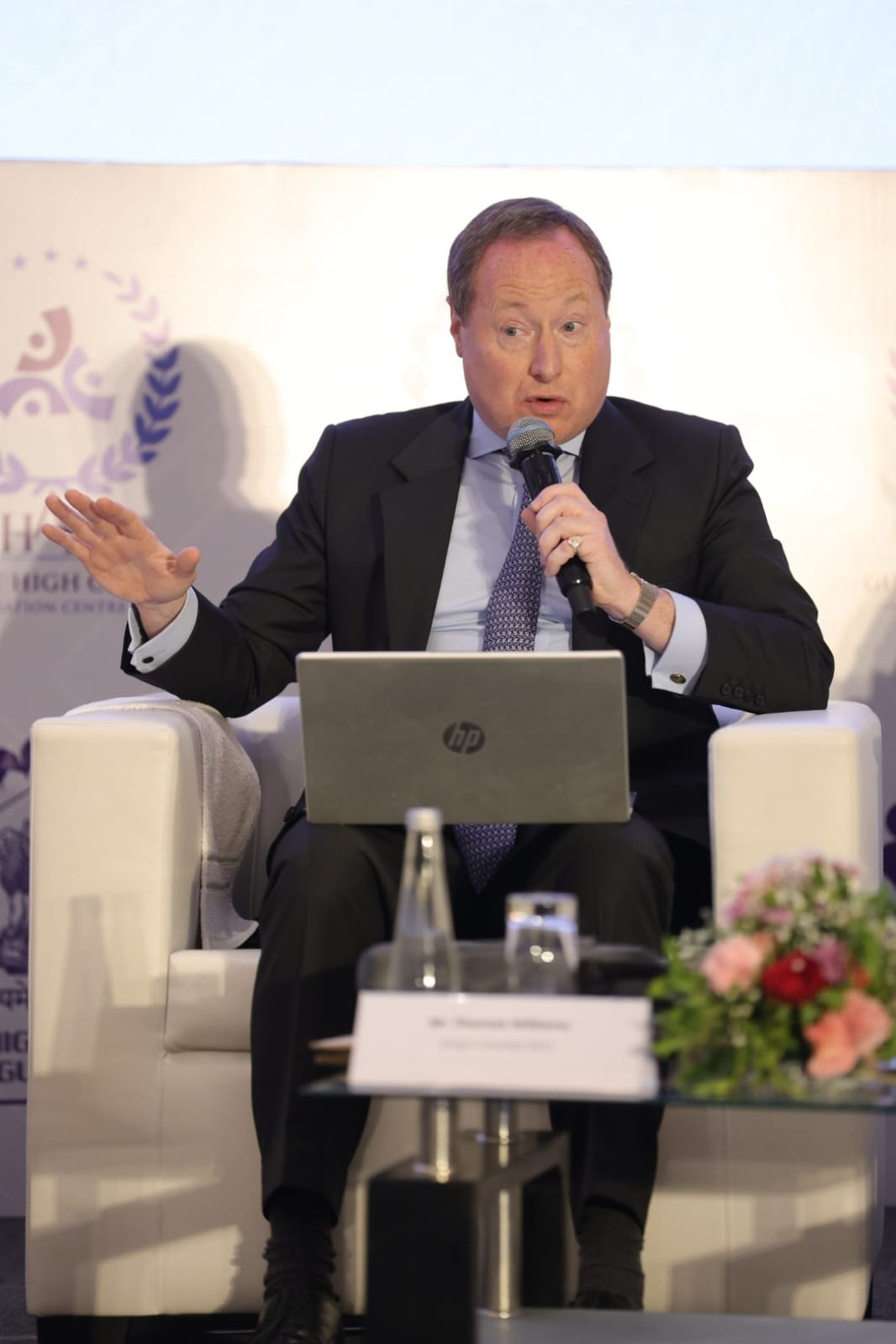
In picture: Thomas Williams
The closest and most real connection test, explained
Before closing the segment, the Anirudh invited Thomas to explain the closest-and-most-real-connection test, the third and residual limb of the Sulamérica sequence, engaged only if express and implied choice both fail. He traced its classic formulation to Lord Simonds in Bonython v Commonwealth of Australia16, applied again by the House of Lords in Amin Rasheed Shipping Corp v Kuwait Insurance Co17 29. Two features distinguish it from the earlier stages- the objective, asking, as a matter of fact, where the contract “belongs,” rather than construing intention, and, as the Enka case confirmed, it is applied to the arbitration agreement itself, not the contract in which it sits.
Relevant connecting factors, non-exhaustively, include the place of performance, the place of contracting, the parties’ places of business, currency and language, the contract’s form and terminology, related contracts and their governing law, and the choice of forum or seat, a connecting factor since Hamlyn & Co v Talisker Distillery18. Rome I’s Article 4 “characteristic performance” concept codifies the same underlying idea, though it does not itself apply to arbitration agreements. Under the Enka case, if any choice is absent, the arbitration agreement is governed by the law with which it is most closely connected, generally the seat, since that is where it falls to be performed legally, an outcome he noted also aligns with Article V(1)(a) of the New York Convention. He contrasted this with the Enka dissent, where Lord Burrows and Lord Sales asked instead where the main contract was most closely connected, same test, different contract, opposite result.
He noted the test is now largely redundant for arbitration agreements commenced after 1 August 2025, given Section 6A’s clean default to the seat, but survives in three settings: pre-commencement arbitrations and connected court proceedings (the “Enka tail”); treaty-based investor-State agreements carved out under Section 6A(3); and the parallel exercise of identifying the seat itself under Section 3, where it is not expressly fixed. He illustrated with a worked hypothetical where there could be a Turkish contractor, Kazakh employer, an ICC clause with a London seat, no governing law, pre-1 August 2025, the third stage would look to the arbitration agreement’s closest connection, its place of performance being London, yielding English law and Fiona Trust-based construction. Post-commencement after that date, Section 6A(1)(b) gives English law directly without any inquiry and a bilateral-investment-treaty claim would instead fall into the carve-out and revert to the closest-connection analysis.
The session brought together six jurisdictions and a central question of international arbitration: who decides the law governing an arbitration agreement, and what should happen when that choice is left unstated? Through the contrasting approaches of England, Singapore, Australia, Hong Kong, France, Malaysia and India, the discussion demonstrated how a seemingly small drafting omission can have significant consequences for the validity, scope, arbitrability and enforceability of an award.
The conversation also made clear that the development of a successful arbitral seat cannot be separated from the wider legal ecosystem in which it operates. Clear legislation, specialised courts, judicial discipline, institutional independence and a strong professional bar must work together to give parties confidence that their disputes will be resolved fairly, efficiently and with meaningful finality. The experience of established centres showed that such confidence is built over time, through sustained investment in expertise and a willingness to learn from both successes and setbacks.
For India, the discussion offered a constructive assessment of the progress already made, while identifying the work that remains. From strengthening institutional capacity and developing specialised expertise to improving the speed of hearings and execution of awards, the emphasis was on building a system that can meet the demands of complex commercial disputes. As the panellists observed, India’s ambition need not be measured by the success of a single institution, but by the strength of the ecosystem as a whole.
Ultimately, the session reinforced that the promise of arbitration lies not merely in the existence of a legal framework, but in the confidence that parties can place in its operation. As India continues to develop its arbitration landscape, clarity in the law, consistency in its application and a sustained commitment to institutional excellence will be central to turning that promise into lasting confidence.
Reported by Lakshya Pratap Yadav, EBC-SCC OnLine Student Ambassador, Gujarat National Law University, Gandhinagar
1. [2020] UKSC 38
2. [2000] 2 Lloyd’s Rep 500
3. [2007] EWCA Civ 1282
4. SA [2012] EWCA Civ 638
5. [2012] EWHC 3702 (Comm)
6. [2013] EWHC 4071 (Comm)
7. [2020] EWCA Civ 6
8. Supra note 1
9. Supra note 1
10. [2020] UKSC 38
11. [2024] UKSC 30
12. [2023] SGCA 1
13. [2020] FCA 1846
14. [2017] 9 CLJ 273
15. LCIA Arbitration Rules (2020), Article 16.4
16. [1951] AC 201
17. [1982] 1 WLR 961
18. [1894] AC 202