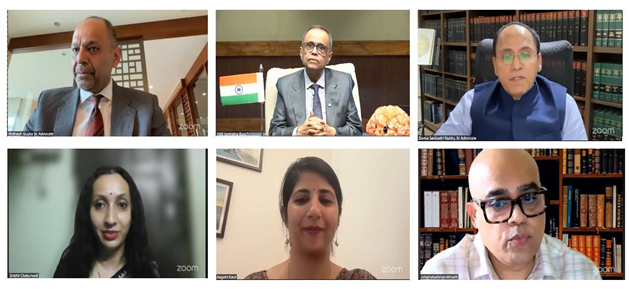
The Confederation of Alumni for National Law Universities Foundation (CAN Foundation) in collaboration with Damodaram Sanjivayya National Law University (DSNLU), Visakhapatnam, and West Bengal National University of Juridical Sciences (NUJS), Kolkata, hosted the 5th Justice H.R. Khanna Memorial National Symposium on 1 August 2026 at the Supreme Court as a tribute to the extraordinary legacy of Late Justice H.R. Khanna. The symposium consisted of engaging speeches focusing on crucial aspects of the judicial system.
The Chief Guest of the Symposium, Justice Augustine G. Masih, Judge, Supreme Court of India, delivered an address that connected the legacy of Justice H.R. Khanna with the contemporary challenges confronting the Indian judiciary. His address explored the meaning of judicial courage, the constitutional foundations of judicial independence, the democratising potential of technology, the risks of social media trials, the presumption of innocence and the importance of judicial restraint in an age of unprecedented visibility.
Furthermore, The Presiding Guest of the Symposium, Justice Joymalya Bagchi, Judge, Supreme Court of India, delivered the Presiding Guest address exploring the constitutional responsibilities of the judiciary and the enduring principles that underpin an independent and resilient judicial institution. He traced the institutional ethos of the CAN Foundation, the profound legacy of the lone dissenter and the true locus of judicial independence not in constitutional architecture, but in the unwavering character of the Judge.
“Without Fear or Favour” — Reimagining Perspectives on an Independent Indian Judiciary in the Digital and Globalised World
Beginning his address with a reflection on the idea of “doing justice”, Attorney General for India R. Venkataramani recalled reading “Doing Justice”, a book authored by an African-American judge in the United States. The author described that people entered his courtroom with “sleeps which are lost, dreams which are broken, and ideals that never took shape“. These people were the mirrors of the life of the nation. Reflecting on this, he emphasised that the discourse should shift from merely protecting the institutional independence of courts to safeguarding the broader process of “doing justice”. He remarked that it is important that we do not confine ourselves to those Bronze Age dimensions of independence of judiciary namely, the financial aspects, age of retirement, and so on and so forth.
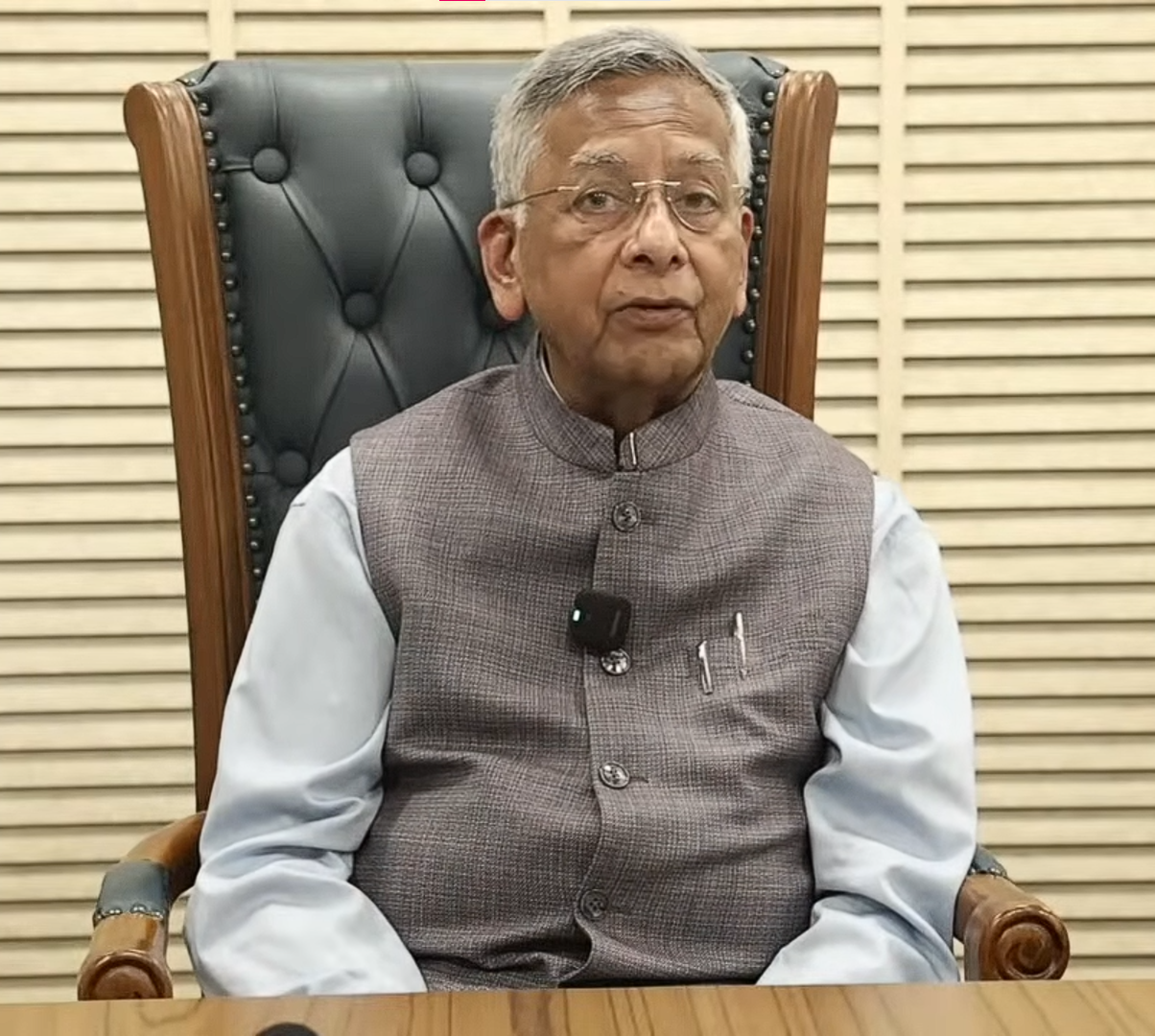
Reflecting on the World Bank’s rule of law programme, he stated that many of these ‘obnoxious’ features of an institution, which could not be characterised as independent, no longer survived. He argued that “doing justice” was no longer merely an action of the courts wielding the highest constitutional power, it was increasingly about the society’s ability to keep peace or maintain order and provide support in many ways to its citizens. This ability was under stress and the only fall back for people was to look at the remedial processes.
He further explained that given this expansion of claims, interests, demands, wishes, and needs of people, the ways of “doing justice” and the structures of institutions “doing justice” also began to change. Nevertheless, the essential thread connecting every institution entrusted with administering justice was independence, be it institutional or individual. However, he questioned whether the traditional vocabulary of judicial independence was adequate in the contemporary era.
Speaking on the topic “Without Fear or Favour”, the Attorney General stated that fear in the judicial context can no longer be understood only in terms of imprisonment, executive pressure, corruption or inducements. He explained that modern forms of fear are often psychological, subtle and invisible. Judges today function in an environment where they are constantly conscious of public scrutiny, criticism, observation, and commentary. According to him, apprehensions arising from being watched, criticised, or judged in the public sphere create pressures fundamentally different from the traditional threats historically associated with judicial independence. He remarked that while Justice H.R. Khanna’s courage during the Emergency represented resistance against a particular form of State power, contemporary challenges require an understanding of newer manifestations of fear.
The Attorney General acknowledged that judges, like all human beings, inevitably carry their own ideas, values, and perspectives.
Drawing from comparative scholarship, including Professor J.A.G. Griffith’s work “The Politics of the Judiciary”, he observed that no judge approaches a dispute as a completely blank slate. Every judge inevitably brings accumulated experiences, principles, perspectives and intellectual predilections into the decision-making process. He added that ideological diversity itself strengthens democratic adjudication because competing viewpoints contribute to the search for what is right.
He noted that social media and contemporary technological ecosystems generate multiple pressures that may subtly influence judicial thinking, even where no direct external interference exists. He remarked, “The universe through which the judges live today is so wide, so complex, and so difficult to fathom that it is difficult for us to say or to know where the fear or the favour part of it can impinge on the independence of a mind in doing justice.”
The Attorney General stated that every dispute before constitutional courts today is embedded in complex social, political, economic and cultural contexts, making judicial decision-making significantly more demanding than before. According to him, judges must continually engage in an internal process of objective self-assessment by asking whether their reasoning remains faithful to the right path rather than being influenced by external expectations. He described this “innermost assessment” as the true meaning of acting “without fear or favour”.
Referring to India’s constitutional journey after the Emergency, he expressed confidence that the country is unlikely to witness a return of the overt forms of executive pressure that characterised that period. He attributed this to constitutional vigilance and the institutional evolution of the Supreme Court over the decades. At the same time, he cautioned that the new social order may become “invisibly dictatorial” by generating unseen forms of stress that affect the administration of justice. Therefore, it was essential to respect and give regards to the institution inherited under the constitution and judges.
“I think we are not understanding the universe in which judges do justice, it is easy to talk from outside, but how does the human mind work is a difficult question to answer.”
Making a strong appeal to the legal fraternity, the Attorney General urged legal fraternity and students to exercise restraint before publicly criticising judicial institutions. He observed that criticism of judgments remains an important feature of constitutional democracy but cautioned against immediate or impulsive reactions that fail to appreciate the complexities of judicial decision-making. He advised members of the Bar not to “jump in with a pen and a piece of paper” to criticise courts at the first instance, urging them instead to be thoughtful, measured, and circumspect while remaining courageous when objective criticism genuinely becomes necessary. He added that, lawyers should first ensure clarity about their own understanding before passing judgment on judges and the legal fraternity must protect the judges.
Concluding his address, he reflected on his experience of appearing before the Supreme Court and stated that advocates often concentrate exclusively on obtaining favourable orders without pausing to consider the internal reasoning process of judges. This process of understanding the judges was equally important in the context of fear or favour in judicial independence.
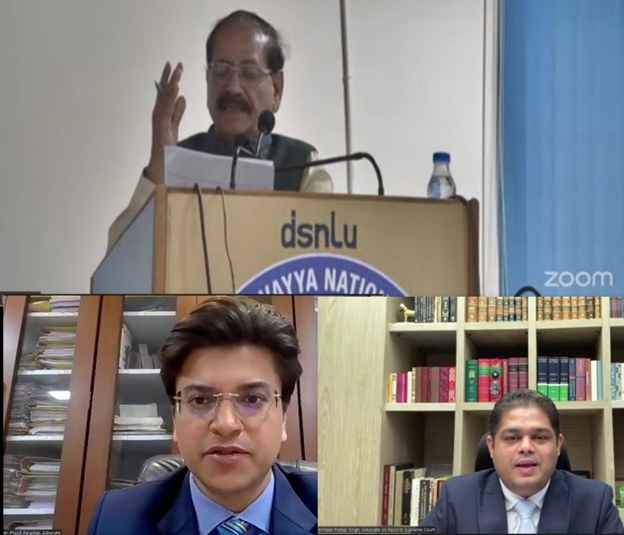
Digital justice, constitutional courage and the future of judicial independence: Nidhesh Gupta
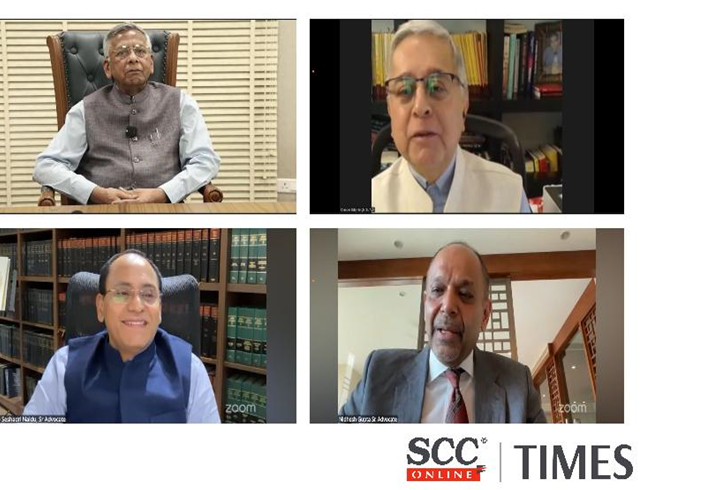
Delivering his address, Mr. Nidhesh Gupta, Senior Advocate, Supreme Court of India, reflected upon the enduring legacy of Justice H.R. Khanna while examining the emerging challenges confronting judicial independence in an increasingly digital world. Drawing upon Justice H. R. Khanna’s life and jurisprudence, Mr. Gupta spoke about constitutional courage, fearlessness, technological transformation and the responsibility of both the Bench and the Bar to preserve the rule of law amidst rapid technological change.
Beginning his address, Mr. Gupta paid tribute to Justice H.R. Khanna, observing that few Judges continue to command the respect and admiration that he does. According to him, Justice H. R. Khanna earned that distinction because he acted without fear or favour, even at great personal cost.
“Justice H. R. Khanna earned that respect because he acted without fear or favour. As we have heard, he paid a price for this in the form of supersession. But in the process, he earned a chair higher than that of any Chief Justice of India.”
Recalling Justice H. R. Khanna’s historic dissent in ADM, Jabalpur v. Shivakant Shukla, (1976) 2 SCC 521, Mr. Gupta highlighted the enduring significance of one of the most memorable observations from that judgment; “What is at stake is the rule of law.”
According to Mr. Gupta, Justice H. R. Khanna’s courage stemmed from his unwavering commitment to constitutional values, enabling him to remain faithful to his oath despite personal consequences. He observed that genuine fearlessness is possible only when individuals are guided by ideals greater than personal ambition, office or material gain.
“This fearlessness comes only when we have a higher ideal, a principle, a goal which is way above the greed of transitory position and possession.”

Drawing from India’s spiritual traditions, Mr. Gupta noted that those who attained greatness invariably acted without what the scriptures describe as bhaya or paralobha, i.e., fear and temptation. Referring to the stories of Dhruva and Parvati, he explained that unwavering commitment to a higher purpose enables individuals to overcome both fear and temptation. In his view, Justice H. R. Khanna’s constitutional journey embodied precisely this ideal.
Turning to the contemporary context, Mr. Gupta observed that the expression without fear or favour has assumed even greater significance in an age where information and opinions spread instantaneously through digital platforms. “In today’s world of digitalization, the importance of the expression ‘without fear or favour’ cannot be overemphasized.”
He identified five emerging frontiers of concern that, in his view, require careful attention if judicial independence is to remain meaningful in the digital age.
Speaking first about informational dependence, Mr. Gupta cautioned that Judges and lawyers are increasingly relying upon information systems whose sources, methodology and limitations are not always visible. While acknowledging the utility of generative technologies, he stressed that they cannot replace the professional responsibilities expected of Judges and lawyers.
“Generative systems produce fluent answers without possessing a lawyer’s duty of candour or a Judge’s responsibility to give reasons.”
Referring to concerns surrounding AI-generated legal citations, he observed that technology cannot substitute judicial verification or careful legal reasoning. A precedent is an authority because a court actually reasoned and decided, not because a machine generated a plausible citation.
Mr. Gupta then turned to algorithmic dependence, observing that while technological systems may assist courts in classifying cases, locating precedents, transcribing proceedings and translating judgments, greater concern arises when they begin influencing judicial outcomes.
“A system may assist in classifying cases, locating precedent, transcribing proceedings or translating judgments. But once a system recommends bail, scores credibility, prioritizes urgency, or even suggests an outcome, it begins to shape the decisional field.”
He warned that historical biases could become embedded within technological systems, thereby affecting constitutional fairness. According to him, every litigant is entitled not merely to an outcome but “to a human process of hearing, of evaluation and reason”. Technology may support adjudication, but independent judicial reasoning must always remain central to the justice delivery process.
Discussing infrastructural dependence, Mr. Gupta observed that digital courts increasingly rely upon technological infrastructure, including servers, software systems and external vendors. He cautioned that where private entities exercise control over system design, training data or audit mechanisms, they may acquire subtle influence over public constitutional functions. Accordingly, he emphasised that judicial independence today extends beyond institutional safeguards and also requires robust data governance, cybersecurity and control over critical digital infrastructure.
“If a private entity controls the systems design, training data or audit trail, it may acquire quiet influence over a public constitutional function.”
Mr. Gupta next addressed dependence on the digital crowd, cautioning that social media has the potential to create pressures capable of influencing judicial discourse. While accountability remains essential in a constitutional democracy, he observed that adjudication cannot become subject to popular approval. He emphasised that public confidence must ultimately rest upon principled reasoning rather than popular sentiment. Referring to Justice Robert Jackson, he reminded the audience that fundamental rights cannot depend upon public opinion or electoral outcomes.
“Judges must not become unaccountable. Equally, adjudication cannot become a live referendum. A viral hashtag is not evidence. A trending opinion is not a precedent.”
Speaking about global dependence, Mr. Gupta acknowledged that modern justice systems increasingly operate within an interconnected technological environment where comparative legal experience is readily available. While such experience can undoubtedly provide valuable guidance, he cautioned against treating foreign practices as binding models. “Comparative experience is a resource, not a command.”
He stressed that India’s constitutional framework must remain the governing standard while evaluating new technologies and institutional innovations.
“The Constitution remains our governing charter and constitutional values must control the adoption of any global technology or institutional model.”
Mr. Gupta also cautioned against three false equivalences that risk weakening constitutional justice in the digital era. The first, he observed, is the assumption that speed equals justice. While delay undoubtedly causes hardship, efficiency can never replace fairness. Technology, he noted, should reduce unnecessary delay without compromising the time genuinely required for careful adjudication.
“A rapidly produced error is not a more efficient form of justice.”
The second false equivalence is that consistency equals fairness. Uniformity alone, he explained, cannot guarantee justice because every dispute must ultimately be decided on its own facts.
“Equality is not achieved by making every person legible to a machine in the same way. It is achieved by applying principled law to the full reality of each case.”
Finally, he observed that transparency does not mean total exposure. While open justice remains fundamental, digitalisation also creates the possibility of permanent exposure of sensitive information.
“Open justice must therefore be reconciled with privacy, with dignity, with statutory protection and the right to meaningful rehabilitation.”
According to Mr. Gupta, courts must continue to balance transparency with the protection of individual dignity and privacy. He emphasised that safeguarding judicial independence is not the responsibility of Judges alone but equally of the legal profession.
“An independent judiciary requires an independent and responsible bar.”
Recalling Justice H. R. Khanna’s own observations on the rule of law, he noted that its effective functioning depends upon a strong bar, an independent judiciary, and an enlightened public opinion. He urged lawyers to exercise responsibility in their use of technology, observing that candour cannot be outsourced and professional judgment cannot be replaced by prompt engineering. Technology, he remarked, should strengthen the quality of legal assistance rather than diminish professional standards.
Bringing his address to a close, Mr. Gupta connected the timeless values embodied by Justice H.R. Khanna with the constitutional challenges of the digital age. While technology may fundamentally transform the methods through which justice is delivered, he reminded the audience that the foundations of justice remain unchanged: fairness, accountability, constitutional values and the enduring commitment to act without fear or favour.
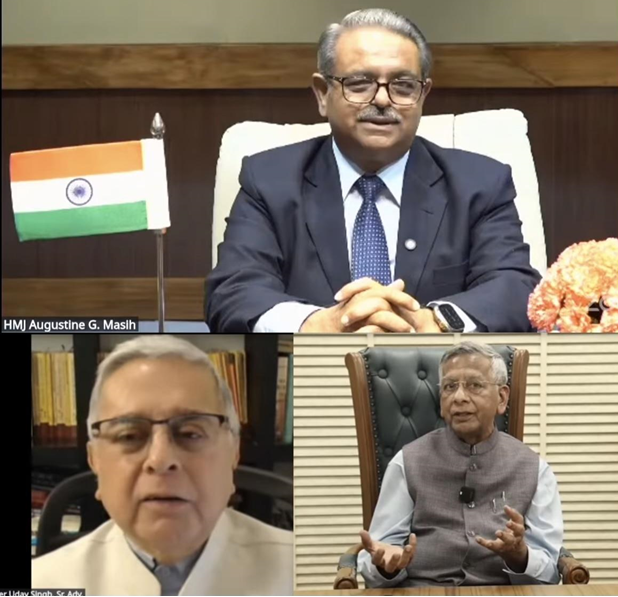
Navigating new technologies and changing evidentiary landscape: Chander Uday Singh
At the outset, Senior Advocate Chander Uday Singh paid tribute to Justice H.R. Khanna and congratulated Justice A.G. Masih for what he described as a candid and deeply insightful address on the judicial role.
Clarifying the scope of his own lecture, he said he would confine his remarks to the impact of emerging digital technologies such as artificial intelligence (AI), virtual reality (VR) and augmented reality (AR), on the criminal justice system, observing that this relatively narrow subject could nevertheless have profound implications for courts and litigants.
“We are now at the cusp. We are at a stage as a nation where it is likely impossible to bury our heads in the sand and avoid the onrush of all kinds of digital interventions in the judicial process.”
According to him, these concepts are no longer futuristic possibilities but immediate realities that will inevitably reshape the manner in which evidence is presented and evaluated in courts. He warned that traditional evidentiary assumptions regarding photographs, videos, audio recordings, and witness identification are being fundamentally challenged by technologies capable of manipulating digital content with remarkable detailing.
Referring to the long-standing evidentiary assumption that visual and auditory evidence is generally true, Mr. Singh remarked that courts may soon confront situations where witnesses honestly identify a person’s voice or appearance while remaining unaware that the underlying digital material itself has been artificially altered. According to him, this presents an entirely new challenge for criminal adjudication because the witness may be truthful even though the digital evidence is fabricated.

Explaining the distinction between virtual reality and augmented reality, Mr. Singh stated that virtual reality can serve as a valuable evidentiary aid by digitally reconstructing crime scenes based on available evidence. However, he cautioned that immersive visual presentations might create a stronger psychological impact on judges than conventional documentary evidence. Even though India no longer follows the jury system, he observed that judges are not immune from the persuasive force of realistic digital reconstructions.
Regarding augmented reality, he explained that it goes beyond visual reconstruction by placing the viewer inside a digitally simulated environment through immersive technologies. Drawing comparisons with interactive experiences commonly found in theme parks, he noted that similar technologies have begun appearing in foreign courtrooms like USA. According to him, immersive technologies can undoubtedly assist courts when responsibly employed, but their use must remain subject to strict safeguards, authentication, and protocols.
On the aspect of authentication, he suggested that certification requirements governing electronic evidence under the Bharatiya Sakshya Adhiniyam, 2023 (BSA) could be used to authenticate digital reconstructions by responsible senior officials who can be held personally accountable for their accuracy. He further argued that deliberate manipulation or fabrication of such evidence should attract serious legal consequences comparable to those applicable for malicious prosecution or fabrication of evidence.
Mr. Singh referred to Miguel Rodriguez Albisu v. State of Florida1, where the defence reportedly employed augmented reality technology to recreate the aftermath of a violent altercation at a wedding venue. According to him, the digital reconstruction was intended to support the accused’s plea of self-defence by depicting the circumstances in which a firearm was allegedly brandished. He noted that the trial judge ultimately declined to permit the reconstruction to be shown to the jury after considering it potentially prejudicial.
Expressing concern about the Indian policing landscape, he warned that digital evidence remains vulnerable to suppression, selective production and manipulation. He mentioned the recurring concerns regarding malfunctioning CCTV systems despite judicial directions requiring surveillance infrastructure in police stations. He observed that allegations regarding destruction or selective reliance upon CCTV footage have periodically surfaced in public discourse, illustrating the broader need for stronger evidentiary safeguards.
“We have situations where the Supreme Court has tried very hard to get every police station to have CCTVs. But CCTVs more often than not are said to be not working or they are out of order. Now, if you have a national situation where digital data is manipulated or suppressed like when the Delhi riots happened in 2020, there were videos because people had phone cameras they could capture policemen standing on top of each other’s shoulders and smashing the CCTV. This is all in the public domain. If the guardians of the law will smash a CCTV and then they will show some other thing. When they want to show a crowd, they will selectively show one CCTV, but they will smash three of them.”
Against this backdrop, he argued that courts must exercise exceptional vigilance whenever digitally generated evidence, reconstructed videos or AI-enhanced materials are relied upon during criminal proceedings.
Mr. Singh acknowledged that courts have already encountered instances where lawyers relied upon AI-generated fictitious judicial precedents. However, he described a far more pressing concern as the deployment of AI during criminal trials, where it may influence evidentiary material rather than merely legal research. According to him, AI may not always fabricate entirely new content; even minor alterations to videos, images or recordings could substantially affect criminal liability. He also noted that existing forensic laboratories may lack the capacity to verify increasing volumes of sophisticated digital evidence without creating substantial delays in criminal adjudication.
“Artificial intelligence can make a small augmentation, a small variation, a small alteration but which for a court of law can mean the difference between acquittal and conviction, or between a higher sentence or lower sentence for the accused.”
Mr. Singh emphasised that he did not claim to possess complete solutions to these emerging problems but believed that the legal system must begin addressing them immediately to keep pace with the speed of changing technology. He remarked, “I believe that these are questions which we need to grapple with on a very urgent basis, we can’t push these off for tomorrow.”
Referring to the draft Supreme Court Regulations for Use of AI in Courts, 2026, he observed that comprehensive regulatory standards were urgently required and all courts must be sensitised about AI related concerns. He urged the judiciary to formulate detailed protocols governing the admissibility, authentication and evaluation of AI-generated material before such technologies become deeply embedded in criminal litigation.
“We need to sensitise courts from the lowest court to the highest court about these issues and we need to do it before mistakes are allowed to be made or to minimize the mistakes that might be made.”
Mr. Singh further stated that controversies involving AI-generated fictitious judgments in high-value commercial disputes often receive significant public attention because they involve well-resourced litigants represented by leading counsel. The greater concern, however, lies in the impact of AI on ordinary criminal prosecutions involving “the smallest man” or ordinary individuals facing allegations of murder, culpable homicide, or other serious offences. He cautioned that unless courts act proactively, vulnerable accused persons may become the first victims of inadequately regulated digital evidence.
He concluded by paying tribute to Justice H.R. Khanna, stating that his memory keeps the legal fraternity grounded and proud of its institutions.
From Edward Coke to John Marshall: Dama Seshadri Naidu explores the character of an independent judge
Among the distinguished speakers, Dama Seshadri Naidu, Senior Advocate, Supreme Court of India, delivered a powerful address tracing the historical foundations of judicial independence through three enduring qualities of judicial character: courage, cunning and commitment. Through the stories of Sir Edward Coke, Chief Justice John Marshall and other historical figures, he highlighted the importance of constitutional loyalty and moral courage in preserving the rule of law.
A blessing from the judicial spirit of justice
Beginning his address, Mr. Naidu expressed gratitude for the opportunity to speak at the Symposium, describing it as:
“For me, this opportunity is a blessing from the ever-present benevolent judicial spirit of justice.”
Reflecting on the theme “Without Fear or Favour,” he examined the forces that can influence judicial decision-making. According to him, fear and favour operate through three human weaknesses:
“Out of fear, the first one: that someone may take away what I have… Out of desire: that someone may give me what I don’t have… Then the third one: out of bias that dogmatically I believe that person is always right because of caste, creed, religion or ideology to which I subscribe.”
Drawing upon Alexander Solzhenitsyn’s novel The First Circle, he observed that these human tendencies continue to test the moral resolve of those entrusted with administering justice. He suggested that the judicial oath requires Judges to consciously resist these impulses and remain steadfast in their constitutional duty.
He observed that the challenge before Judges is to overcome these pressures and remain committed to constitutional principles.
The three characters: courage, cunning and commitment
Mr. Naidu structured his address around three historical figures who represented different approaches to judicial independence:
“I tell this through a story of three characters, and those three characters have displayed three distinct traits in their own way. They are cunning, courage and commitment.”
The first represented courage through Sir Edward Coke, the first Chief Justice of the Court of Common Pleas the second, represented strategic wisdom through Chief Justice John Marshall, while the third represented the enduring commitment required to uphold justice.
Edward Coke and the courage to challenge power
Mr. Naidu took the audience back to 17th-century England, where the judiciary confronted the absolute claims of monarchy. King James I believed royal authority stood above all institutions, while Archbishop Bancroft declared: “The king is the law speaking. The Judges are but delegates under the king.”
Francis Bacon, whom Mr. Naidu described as an intellectual giant who supported royal authority, compared judges to lions, but lions under the throne.
Against this view stood Sir Edward Coke, who asserted a foundational principle of constitutional governance: “The king is under God and the law.”
By invoking the words of the jurist Bracton, Coke established that even the sovereign was bound by law. His stand came at a personal cost, as he eventually lost power due to his confrontation with the Crown.
Mr. Naidu also noted that Coke himself had earlier served as Attorney General to King James and had vigorously defended royal authority. According to him, Coke’s transformation upon becoming Chief Justice demonstrated how judicial office demands complete fidelity to law rather than to the executive.
Mr. Naidu captured the significance of this moment:
“One attained no authority, the other immortality. That is the difference when you stick to your principles.”
Shakespeare’s reminder: Justice beyond status
Mr. Naidu also invoked Shakespeare’s King Lear to highlight the continuing challenge of ensuring equal justice between the rich and the poor:
“Through tattered clothes, small vices do appear; robes and furred gowns hide all. Plate sin with gold, and the strong lance of justice hurtless breaks; arm it in rags, a pygmy straw does pierce it.”
He explained that the passage reflected a timeless concern: minor faults of the powerless are often exposed, while the misconduct of the powerful may remain hidden behind status and privilege.
According to Mr. Naidu, although Shakespeare wrote these words more than four centuries ago, they continue to reflect one of the judiciary’s enduring responsibilities to ensure that justice does not differ depending upon wealth, influence or social standing.
John Marshall and the craft of judicial strategy
Turning to the second character, Mr. Naidu discussed Chief Justice John Marshall of the United States Supreme Court and the landmark case of William Marbury v. James Madison, 5 US 137 (1803).
He observed that when Marshall assumed office, the United States Supreme Court was still a fragile institution with little practical authority and uncertain standing within the constitutional framework.
At the time, the American Supreme Court was a weak institution with limited authority. When William Marbury approached the Court seeking a writ of mandamus after being denied his judicial commission, Marshall faced a difficult choice: confront the executive and risk institutional defeat, or retreat and weaken judicial authority.
Mr. Naidu explained that Marshall adopted a strategic approach. While recognizing that Marbury’s right, he held that the Supreme Court lacked original jurisdiction under the Constitution. At the same time, he declared the relevant provision of the Judiciary Act unconstitutional, establishing the principle of judicial review.
Mr. Naidu described this as a masterstroke:
“That’s how he conceded something so that he could gain the whole future for the nation, for the Constitution.”
He emphasised that Marshall demonstrated “ex ante thinking”, the ability of a Judge to consider not merely the immediate dispute but the long-term consequences for the institution and the Constitution.
Contrasting “ex ante” with “ex post” reasoning, he explained that while litigants seek remedies for past wrongs, constitutional courts must also consider how today’s decision will shape the future of the legal system. He cited landmark Indian constitutional decisions such as Kesavananda Bharati v. State of Kerala, (1973) 4 SCC 225 and Maneka Gandhi v. Union of India, (1978) 1 SCC 248 as illustrations of this forward-looking judicial approach.
The continuing importance of judicial commitment
Mr. Naidu’s third theme was commitment, which he identified with Justice H.R. Khanna’s dissent in ADM Jabalpur v. Shivkant Shukla. he credited this unwavering trait to Justice H.R. Khanna himself, highlighting the inner discipline required to sustain judicial independence. He suggested that judicial courage does not always take the form of direct confrontation. Sometimes it requires strategic wisdom; at other times, unwavering perseverance.
Recalling the Emergency-era decision, he explained that Justice Khanna maintained that the right to life and personal liberty existed independently of Article 21 and could not be extinguished merely because enforcement of fundamental rights had been suspended. He also referred to the well-known episode during the hearings where the Government’s position implied that even unlawful deprivation of life would have no judicial remedy during the Emergency, a consequence that underscored the gravity of the case.
Mr. Naidu further recounted that Justice Khanna knowingly risked, and ultimately sacrificed, the office of Chief Justice of India for adhering to his constitutional convictions. He noted that the dissent was later vindicated by the Supreme Court in K.S. Puttaswamy v. Union of India, (2017) 10 SCC 1, which expressly overruled the majority decision in ADM, Jabalpur v. Shivakant Shukla, (1976) 2 SCC 521
The stories of Coke and Marshall demonstrate that judicial independence may require different responses depending on circumstances. Courage protects principle, strategy strengthens institutions, and commitment sustains both.
The judicial oath: A lifelong constitutional commitment
Moving from history to the present, Mr. Naidu reflected on the constitutional oath taken by every Judge under the Third Schedule of the Constitution of India. He described the promise to act “without fear or favour, affection or ill-will” as the moral centrepiece of judicial office.
He observed that while the oath takes barely a minute to administer, its obligations endure throughout a Judge’s life. The Constitution, he said, does not require Judges to promise infallibility; rather, it requires that every decision be reached honestly, independently and free from external influence.
Quoting Lord Denning’s celebrated observation that “justice must be rooted in confidence”, he emphasised that public trust is the judiciary’s greatest source of authority. Unlike the executive or legislature, courts possess neither armies nor revenue; their legitimacy ultimately rests upon public confidence in judicial impartiality.
Mr. Naidu concluded this discussion by tracing the idea back to Magna Carta’s enduring promise: “To no one will we sell, to no one will we deny or delay right or justice,” describing justice not as an act of generosity by those in power, but as a constitutional obligation.
Lessons for the contemporary judiciary
Mr. Naidu’s address highlighted that the pressures faced by judges today are not entirely new. Executive influence, public opinion, media scrutiny and technological disruption may appear modern, but the underlying challenge remains the same: maintaining fidelity to law over external pressures.
Judicial independence, he emphasised, is not merely protected by constitutional safeguards. Ultimately, it depends on the character of Judges and their commitment to uphold justice without fear or favour.
“The king is under God and the law” remains a timeless reminder that no individual or institution is above the law.
He concluded on an optimistic note, observing that India’s constitutional courts continue to enjoy a reputation for independence, unlike systems where judicial appointments are routinely viewed through political affiliation. He urged the audience to take pride in that tradition while recognizing the continuing responsibility to preserve it.
SCC Times was the Official Information and Documentation Partner of the event.
The entire session 1 can be viewed here:
The entire session 2 can be viewed here:
*Authored by: Sonali Ahuja, Shubra Venkat, and Soumya Yadav
1. SC2026-0142