The CAN Foundation, in collaboration with West Bengal National University of Juridical Sciences (WBNUJS), Kolkata and Damodaram Sanjivayya National Law University (DSNLU), Visakhapatnam, organised the 5th Justice H.R. Khanna Memorial National Symposium on 1 August 2026 (Saturday), in remembrance of the illustrious legacy of Late Justice H.R. Khanna.
The Symposium was organised on the theme, “Without Fear or Favour: Reimagining Perspectives on Independent Indian Judiciary in the Digital and Globalised World.” The Symposium sought to reflect upon the enduring principles of judicial independence while examining the contemporary challenges posed by technology, social media, artificial intelligence and the rapidly changing nature of public discourse.
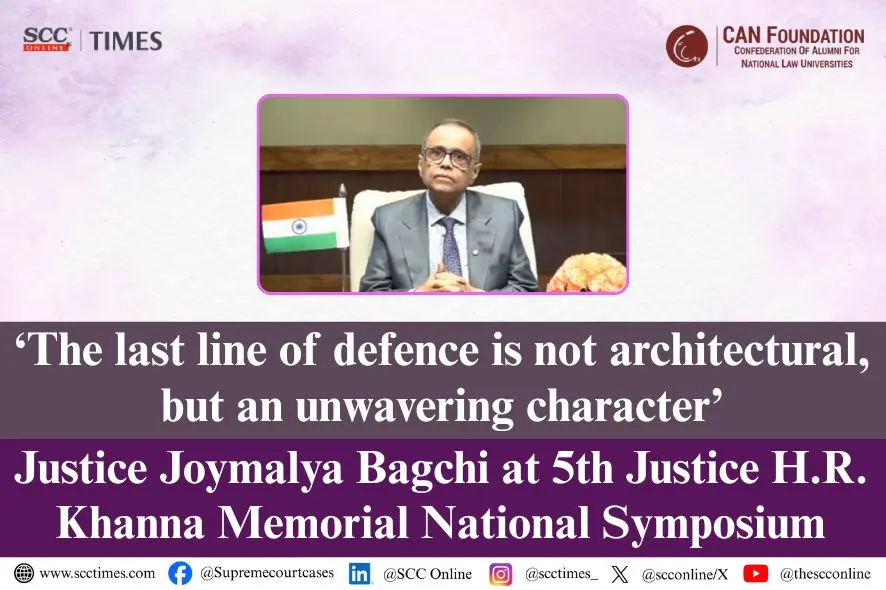
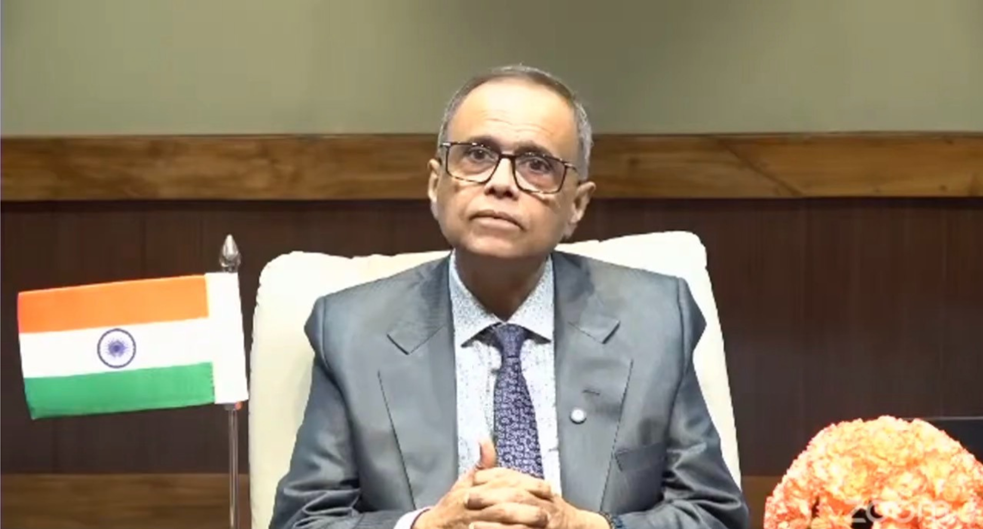
The Presiding Guest of the Symposium, Justice Joymalya Bagchi, Judge, Supreme Court of India, delivered the Presiding Guest address exploring the constitutional responsibilities of the judiciary and the enduring principles that underpin an independent and resilient judicial institution. He traced the institutional ethos of the CAN Foundation, the profound legacy of the lone dissenter and the true locus of judicial independence not in constitutional architecture, but in the unwavering character of the Judge.
As the Justice aptly said:
“The Last Line of Defence is Not Architectural, But an Unwavering Character of the judge”
Through a careful examination of Justice Khanna’s journey, Justice Bagchi reminded the audience that judicial courage is ultimately measured not by the positions one holds, but by the principles one refuses to abandon.
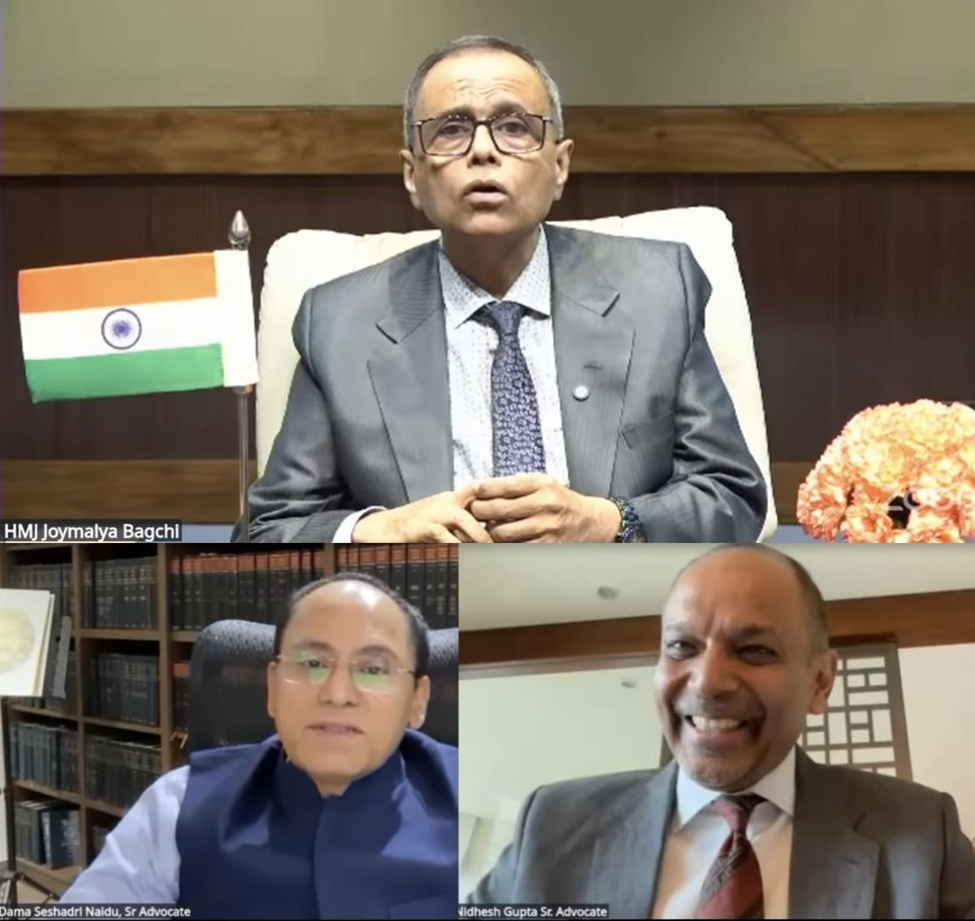
Picture: Justice Joymalya Bagchi, Dama Seshadri Naidu, Senior Advocate and Nidhesh Gupta, Senior Advocate on screen during the progress of the symposium.
The legacy of the sole dissenter
Justice Bagchi then turned to the powerful symbolism of the physical space in which the Symposium was being held ‘Court Number 2’. He evoked a profound historical resonance by reminding the audience that this was the very courtroom where Justice H.R. Khanna once sat, deliberated, and ultimately rendered his most consequential judgment.
He observed that Justice Khanna is celebrated by history not for following the majority, but for having the courage to stand entirely alone in his dissent:
“In Court Number Two, where Justice Khanna once sat, he is celebrated for being alone, the dissenter in ADM Jabalpur.”
In a legal system that prizes consensus and hierarchical discipline, solitary dissent is often viewed with suspicion. Yet, Justice Bagchi argued, it is precisely the solitary dissenter who often proves to be the true guardian of the Constitution. A dissent, he explained, is not an act of rebellion for its own sake; it is an act of constitutional fidelity performed at great personal cost. When a Judge dissents, he is not merely recording an alternative interpretation of the law; he is often placing his own reputation, his prospects for advancement, and his place in history on the line.
Justice Khanna understood this intimately. He understood that the Constitution does not guarantee that the correct interpretation will always be the popular one, or that the path of principle will always be the path of promotion. For Justice Bagchi, the sight of Justice Khanna sitting alone in that courtroom surrounded by colleagues who had chosen a different path stands as one of the most enduring images of judicial courage in Indian constitutional history. It is a reminder that the courtroom is not merely a stage for legal argument, but an arena where conscience and ambition often collide. And in that collision, it is conscience that must prevail.
The measure of a Judge: What he chose to give up and why
Reflecting more deeply on the nature of judicial sacrifice, Justice Bagchi offered one of the most penetrating observations of his address. He posed a fundamental question that goes to the very heart of judicial identity:
“The measure of a Judge lies in what he chose to give up and why.”
He observed that the true worth of a Judge cannot be assessed solely by the volume of his judgments or the length of his tenure. It is assessed by the sacrifices he is willing to make in the service of constitutional principle. The law, he noted, is replete with Judges who achieved great professional success, but history often overlooks them. It is the Judges who surrendered something for career advancement, institutional favour or personal comfort in order to remain faithful to their oath that are remembered and revered.
Justice Bagchi applied this metric directly to Justice H.R. Khanna. He observed that Justice Khanna’s dissent in the ADM Jabalpur case (1976) 2 SCC 5211 was not an abstract intellectual exercise; it was a deliberate act of self-denial. By choosing to dissent, Justice Khanna knowingly placed himself on a collision course with the executive and the prevailing judicial orthodoxy of the time. He was fully aware of the consequences.
“Owing to his dissent, he was superseded for the Chief Justiceship of India.”
In that single sentence, Justice Bagchi encapsulated the tragedy and the triumph of Justice Khanna’s career. The supersession was a grievous personal disappointment, a denial of the highest office a Supreme Court Judge can aspire to. Yet, in Justice Bagchi’s framing, this act of supersession did not diminish Justice Khanna; it defined him. It demonstrated that there are values higher than the Chief Justice’s chair, and that the Constitution is not served by those who climb the ladder of success at the expense of their conscience.
Justice Bagchi paused to let the weight of this historical reality sink in, and then turned directly to the audience, stating:
“That, friends, is the theme of this afternoon.”
For him, the theme of “Without Fear or Favour” was not an abstract legal maxim. It was a lived reality, etched in the career and sacrifice of Justice H.R. Khanna. The afternoon’s deliberations, he suggested, would be hollow if they did not grapple with this uncomfortable truth: that judicial independence requires more than legal acumen; it requires the willingness to pay a personal price.
The true foundation of judicial independence
In one of the most striking and philosophically dense observations of his address, Justice Bagchi reframed the conventional understanding of judicial independence. He argued that independence does not reside in the external safeguards that the Constitution provides, nor in the physical infrastructure of the courts:
“Judicial independence does not live in the building or in the books of the Constitution. But in the character of the Judge.”
This was a deliberate and provocative departure from the standard discourse on judicial independence, which tends to focus on institutional protections security of tenure, fixed salaries, and difficult removal processes. Justice Bagchi did not deny the importance of these protections. He acknowledged that they form a necessary edifice around the judiciary:
“The Constitution raises an edifice around the Judge’s tenure, salaries, and removal that make it too difficult.”
The framers understood that human nature is fallible and that external pressures from the executive, from the legislature, or from public opinion would inevitably be brought to bear upon Judges. To counteract these pressures, they built strong institutional walls. Tenure could not be revoked arbitrarily; salaries could not be reduced punitively; and removal could only occur through a rigorous parliamentary process. These architectural features of the Constitution were designed to give Judges the courage to be independent.
Yet, Justice Bagchi argued, the framers were not naive. They knew that walls could be breached and that protections could be rendered meaningless if the person inside the walls lacked the moral fortitude to resist temptation:
“Yet the framers knew that the last line of defence is not architectural, but an unwavering character.”
This insight is the crux of Justice Bagchi’s address. No constitutional provision can manufacture integrity; no salary protection can purchase conscience. A corrupt or cowardly Judge will find ways to rationalize subservience to power, regardless of the institutional safeguards surrounding him. Conversely, a Judge of unwavering character will remain independent even when the institutional walls are crumbling. The ultimate guarantee of judicial independence, therefore, is not the Constitution on the page, but the Constitution in the heart of the Judge.
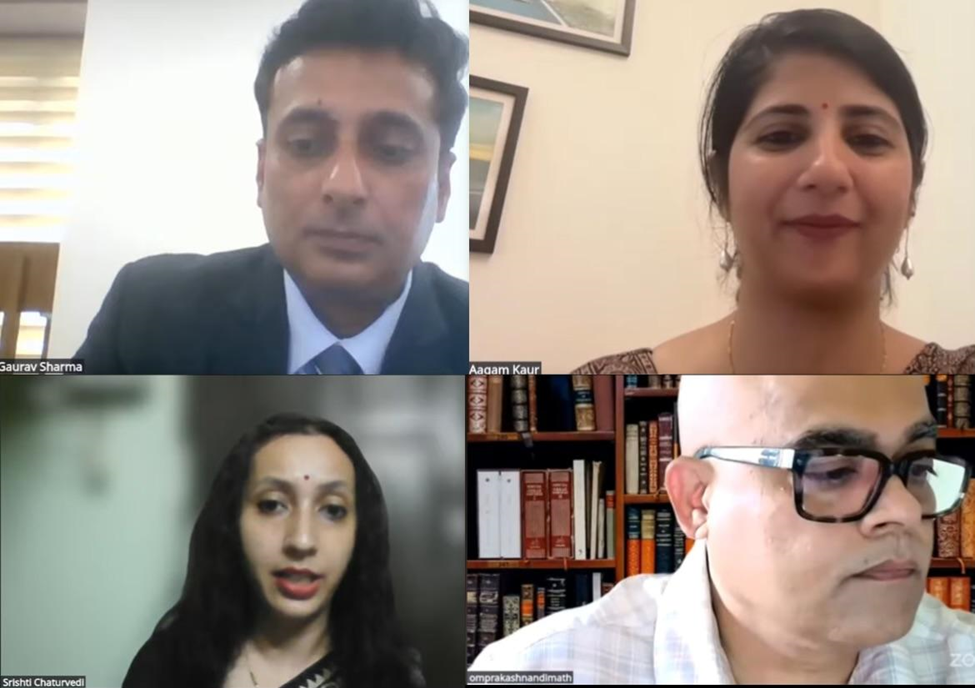
Picture: Mr. Gaurav Sharma (Adv.), Ms. Aagam Kaur (Adv.), Dr. Ms. Srishti Chaturvedi and Prof. Dr. O.V. Nandimath (VC, NUJS) on screen during the progress of the symposium.
Justice Khanna’s three litmus tests
To illustrate this thesis, Justice Bagchi traced the arc of Justice Khanna’s judicial career through what he described as three progressively harder litmus tests each one designed to probe the depth of his character:
“Khanna faced the litmus test thrice. First, when he was elevated to the Supreme Court in 1971. Each time, it got harder. One came in Keshavananda Bharati (1973) 4 SCC 2252. Second came with the Habeas Corpus case (1976) 2 SCC 5213, the Emergency case (1980) 3 SCC 6254. And third, he resigned in 1977.”
The First Test (1971): Elevation to the Supreme Court of India. This was a test of ambition and acceptance. Having reached the apex court, Justice Khanna could have chosen to tread cautiously, to conform to the expectations of the executive that had approved his elevation. Instead, he chose to interpret the Constitution with fidelity, laying the groundwork for his future dissent.
The Second Test: The Kesavananda Bharati case, (1973) 4 SCC 225. In this seminal case, which established the Basic Structure Doctrine, Justice Khanna was part of a bench that grappled with the limits of parliamentary power to amend the Constitution. This was a test of intellectual courage the willingness to engage with the most profound constitutional questions and to take a stand that would define the trajectory of Indian constitutionalism.
The Third Test: The Habeas Corpus case (ADM Jabalpur), (1976) 2 SCC 521 during the Emergency. This was the ultimate test the test of personal and professional survival. When the executive was at its most powerful and individual liberties were at their most vulnerable, Justice Khanna was asked to choose between the government’s will and the Constitution’s command. He chose the Constitution. He chose to be the sole dissenter, refusing to accept that the right to life and liberty could be suspended even during an Emergency.
Justice Bagchi noted that the pressure mounted with each test. The first test required courage; the second required conviction; but the third required martyrdom of ambition. Having failed the third test in the eyes of the executive, Justice Khanna faced the ultimate consequence: his resignation in 1977. His resignation was not a defeat; it was the final act of a principled life. It declared to the world that he would not serve a system that had abandoned the rule of law. For Justice Bagchi, this sequence of events elevation, dissent, supersession, and resignation does not tell a story of loss, but of the ultimate triumph of constitutional conscience over personal ambition.
Justice Khanna knew the price of his dissent
Justice Bagchi then drew upon Justice H.R. Khanna’s own autobiography to underline the deeply personal nature of his decision in ADM Jabalpur. He recalled that Justice Khanna was not unaware of what his dissent could cost him. Before delivering his opinion, he had spoken to his sister and acknowledged that his stand was likely to come in the way of his becoming the Chief Justice of India.
As Justice Bagchi observed, Justice Khanna knew the consequences of choosing constitutional principle over personal advancement:
“He knew the price of such dissent. In his autobiography, he recalls telling his sister that his dissent would cost him the Chief Justiceship. It did.”
The consequence followed soon thereafter. In January 1977, despite being the senior-most Judge, Justice Khanna was superseded for the office of Chief Justice of India. Yet, Justice Bagchi emphasised that Justice Khanna did not respond with bitterness. He resigned from the Supreme Court on the same day, leaving behind not a story of personal defeat, but an enduring example of institutional integrity.
“Though the government of the day was successful in its pursuit of a compliant judiciary and denied the highest office to a non-compliant judge, the dissent remained an appeal to the prudent spirit of the law and to the intelligence of the future.”
For Justice Bagchi, this episode captures the essence of judicial independence: the courage to recognise the cost of doing what is right, and still choose to do it. Justice Khanna’s sacrifice therefore transformed his dissent from a moment of judicial disagreement into a lasting statement of constitutional conscience.
The Basic Structure doctrine: Judicial independence as constitutional safeguard
Justice Bagchi then turned to the Basic Structure Doctrine, locating it within the broader constitutional architecture of judicial independence. Referring to Kesavananda Bharati v. State of Kerala (1973) 4 SCC 225, he explained how the doctrine emerged as an evolutionary response to the possibility of constitutional majoritarianism and the unchecked exercise of parliamentary power.
He observed that the doctrine was not an invention detached from constitutional experience, but a judicial response shaped by the responsibility of preserving constitutional democracy:
“The birth of basic structure was an evolutionary necessity to preserve constitutional democracy, and not a product of eclectic constitutional debate in a vacuum. As Justice Holmes rightly said, the life of law is experience and not logic.”
Justice Bagchi highlighted that judicial review and judicial independence have come to be recognised as integral features of the Constitution that cannot simply be removed through the amending power. He also noted that the Basic Structure Doctrine has generated constitutional conversations beyond India, referring to its varying reception in Bangladesh, Nepal, Afghanistan and Pakistan.
Drawing a connection with Justice Khanna’s role in Kesavananda Bharati, (1973) 4 SCC 225 he emphasised that judicial independence is ultimately meaningful only when courts possess the institutional and constitutional courage to place limits on majoritarian power.
Independence and Accountability: Two sides of institutional legitimacy
Justice Bagchi thereafter examined the often difficult relationship between judicial independence and judicial accountability. He pointed out that the constitutional threshold for removing a superior court Judge is exceptionally high, while the judiciary has nevertheless attempted to address concerns through its in-house mechanisms.
Referring to the limitations exposed in cases concerning judicial misconduct, including the proceedings against Justice Karnan, he argued that the existing framework requires further institutional development:
“The remedy therefore is to complete what is missing. The in-house procedure should be placed on a statutory footing and upon an adverse finding, punitive measures short of impeachment like admonition, transfer, withdrawal of judicial work or even compulsory leave for the Judge may be prescribed.”
Justice Bagchi stressed that such mechanisms should not compromise judicial independence. Rather, accountability, when structured within the judiciary and accompanied by appropriate safeguards, can strengthen public confidence in constitutional institutions.
“Such accountability must not be understood as a dilution of independence but a commitment to earn legitimacy and public trust to further the cause of a robust judiciary. For one black sheep must not mar the herd.”
He referred to comparative models, including the judicial conduct mechanisms in the United States and the United Kingdom, to demonstrate that mature judicial institutions must possess mechanisms to address internal failures without undermining their independence.
When the court meets the digital public square
Turning to the contemporary challenges to judicial independence, Justice Bagchi examined the growing influence of social media, digital platforms and media trials. He cautioned that the challenge today is no longer confined to conventional criticism of courts. A viral clip or hashtag can shape public perception of a case even before the judicial process has reached its conclusion.
He drew a sharp distinction between legitimate criticism and an online trial in which millions become an informal jury:
“A media trial or a viral clip must be tested on this anvil. While fair reporting, fair criticism and truth are protected, the freedom of the press cannot become a licence for media trials where the public becomes a jury of millions impanelled on every phone, bound by no oath and no rule of evidence.”
Justice Bagchi noted that the consequences of such trials can survive even a judicial acquittal. A person may be legally cleared but continue to live under the weight of a verdict already delivered by the digital public.
“They convict even before the trial begins. A man acquitted by the court may walk out in a world which convicted him years ago. Against such media trial verdict lies no appeal and no remission.”
He referred to the Supreme Court’s jurisprudence concerning media trials, including Sahara (2012) 10 SCC 6035 and cases concerning prejudicial reporting, to underline the need to preserve both freedom of the press and the right to a fair trial.
Live-Streaming: Transparency without turning justice into spectacle
Justice Bagchi acknowledged that open justice and transparency remain foundational principles of the judicial process. At the same time, he observed that live-streaming has created a new problem: oral observations made during the course of a hearing may be extracted, edited and presented online as though they were final judicial conclusions.
He cautioned that the courtroom must not become a platform for performance, either by Judges or lawyers:
“Digital space is replete with unauthorized video clips of judicial proceedings extracted or copied from the live-streamed content. Judiciary is trolled by treating tentative oral observations as final verdicts. Dispassionate adjudication is auctioned on the altar of likes.”
He further observed that the immense reach of live-streaming can encourage grandstanding and transform a forensic search for truth into a form of judicial theatre.
As a possible safeguard, Justice Bagchi suggested that live-streaming could, depending upon the circumstances, be made subject to the request of parties or the discretion of the court:
“Openness while being a shield for the litigant should never turn into a spear against him, prejudicing his right to a fair trial. Apart from regulated live streaming, the Supreme Court and the High Courts should become digital courts of records.”
He proposed that live streams and judicial records could be securely preserved in digital repositories, subject to appropriate privacy and data-protection safeguards, ensuring that transparency does not come at the cost of litigants’ rights.
The algorithmic challenge: When technology begins to shape public opinion
Justice Bagchi then identified what he described as an even deeper challenge—the algorithmic architecture of social media. Unlike traditional media, digital platforms can reproduce and amplify content across multiple platforms almost instantaneously, making misinformation difficult to contain.
He warned that the greatest contemporary threat may not necessarily originate from another constitutional organ, but from the manner in which algorithms shape public discourse:
“Today the biggest threat to judicial independence and informed public opinion is not the other organs of the government but the machine learning algorithms of the big tech, trained to tilt the public opinion against judicial process, not as fair comment, but as a curated public outrage for sensationalization and profit maximization.”
Justice Bagchi therefore suggested that Courts must develop institutional capacity to respond to misinformation. He proposed specialised communication mechanisms within court registries, capable of issuing verified and accessible information following important judgments.
“A professional communications office of the Registry is the need of the hour. The office shall issue plain-language summaries immediately after the pronouncement of an important verdict. It would also maintain verified channels and correct misreporting promptly and soberly.”
At the same time, he cautioned that Judges themselves should not attempt to become participants in the social-media ecosystem. Judicial independence, he stressed, requires restraint from both fear and the pursuit of approval.
“A Judge is bound by oath to act without fear of the digital mob, without favour towards the applauding crowd and, above all, without followers. For the new media rarely threatens a Judge with punishment; it tempts him with approval.”
Artificial Intelligence: Assistance, not adjudication
Justice Bagchi subsequently addressed the rapidly expanding role of Artificial Intelligence in the justice system.
He distinguished between three possible models: fully automated adjudication, AI-assisted adjudication and AI functioning merely as an auxiliary tool. For Justice Bagchi, the final model must remain firmly human-centred.
“Everywhere AI may touch the record, offering AI-assisted adjudication, but the core of adjudication must remain human. Responsibility for the final decision remains with the Judge.”
He identified two major dangers: algorithmic bias and AI hallucinations. Referring to concerns surrounding risk-assessment tools and instances of fictitious AI-generated precedents, he emphasised that technological efficiency cannot come at the expense of procedural fairness.
“The bias of AI is simply a digital expression of individual and institutional bias. We must evolve digital guard rails against them. Prejudice must not be laundered by code.”
Similarly, he stressed that AI-generated legal material must always be verified against primary sources, particularly when it concerns judicial precedents.
The conscience cannot be translated into code
In perhaps the most significant part of his discussion on AI, Justice Bagchi drew a direct connection between technological transformation and the legacy of Justice H.R. Khanna. He argued that certain dimensions of judging cannot be delegated to a machine because adjudication ultimately involves constitutional conscience, responsibility and human judgment.
“There is a Lakshman Rekha of dependence upon artificial intelligence which can never be crossed. The final decision can never be delegated to a robo-Judge, for conscience cannot be translated into code.”
For Justice Bagchi, the lesson of Justice Khanna is especially relevant here. The same human conscience that enabled Justice Khanna to dissent despite knowing the personal consequences must remain at the heart of judicial decision-making even in an age of advanced technology.
“The conscience that once wrote a dissent despite its price must remain the ultimate arbiter of justice.”
The way ahead: Independence as a discipline of character
Bringing together his reflections on constitutional structure, accountability, social media and artificial intelligence, Justice Bagchi returned to the central proposition of his address: the enduring strength of judicial independence lies in judicial character.
He suggested that institutional safeguards, accountability mechanisms, digital transparency and technological tools are important, but none of them can substitute for the integrity of the individual Judge.
“The way ahead is not a list of reforms. Everything discussed this afternoon comes back to a single idea: the freedom of the judicial character.”
He emphasised that the digital transformation of courts should make justice more accessible and transparent without turning judicial proceedings into spectacles. Similarly, AI should assist Judges without replacing the human responsibility at the heart of adjudication.
Justice Bagchi concluded by returning to the image of Justice Khanna’s portrait in Court Number 2, presenting it not merely as a memorial to the past but as a continuing reminder to the judiciary:
“The portrait in Courtroom No. 2 does not look back at the past. It keeps watch every morning over us.”
Through this closing reflection, Justice Bagchi brought his address back to the central theme of the Symposium. In an age where judicial decisions are increasingly exposed to digital scrutiny, algorithmic amplification and instant public judgment, the ultimate protection of judicial independence remains the same principle that Justice H.R. Khanna embodied decades ago: the courage to uphold the Constitution, without fear or favour.
Conclusion: The cornerstone of judicial independence
Justice Joymalya Bagchi’s address offered a compelling reflection on judicial independence in the digital and globalised age. By drawing from Justice H.R. Khanna’s life and legacy, he emphasised that independence is ultimately sustained not merely by constitutional safeguards, but by the courage, character and conscience of the Judge.
His remarks on social media, live-streaming and artificial intelligence highlighted the need to embrace technology without allowing it to compromise judicial objectivity, fairness or human judgment. The enduring lesson of Justice Khanna, he reminded the audience, is that “the last line of defence is not architectural, but an unwavering character.”
The CAN Foundation expresses its sincere gratitude to Hon’ble Mr. Justice Joymalya Bagchi for his insightful address, which added depth to the Symposium’s central theme and reinforced the enduring importance of judicial independence, constitutional fidelity and institutional integrity.
Through Justice H.R. Khanna Memorial National Symposium, the CAN Foundation continues to foster meaningful dialogue among the Bench, Bar and young legal fraternity on the evolving challenges before the Indian judiciary.
SCC Times was the Official Information and Documentation Partner of the event.
The entire session 1 can be viewed here:
The entire session 2 can be viewed here:
1. ADM, Jabalpur v. Shivakant Shukla, (1976) 2 SCC 521
2. Kesavananda Bharati v. State of Kerala, (1973) 4 SCC 225
3. ADM, Jabalpur v. Shivakant Shukla, (1976) 2 SCC 521
4. Minerva Mills Ltd. v. Union of India, (1980) 3 SCC 625
5. Sahara India Real Estate Corpn. Ltd. v. SEBI, (2012) 10 SCC 603