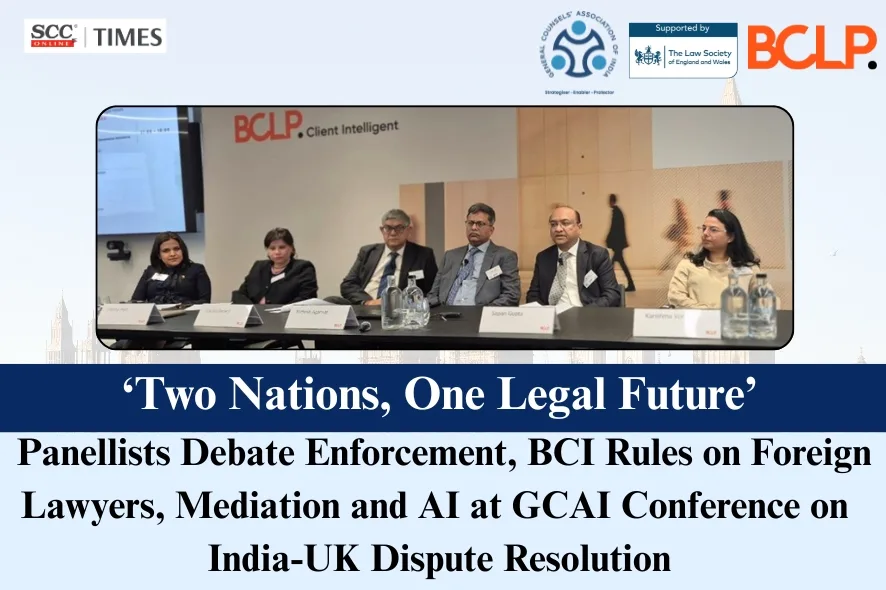
At GCAI Conference on Indo-UK Partnership, as part of the “Two Nations, One Legal Future” programme, a panel discussion on “Dispute Resolution 2.0: Arbitration, Mediation & Technology in a Digital Economy” examined contemporary issues shaping dispute resolution in India and the United Kingdom. The discussion ranged from cross-learning between the two jurisdictions and litigation costs to enforcement of awards, liberalisation of the legal market, mediation, and the role of artificial intelligence (AI) in dispute resolution.
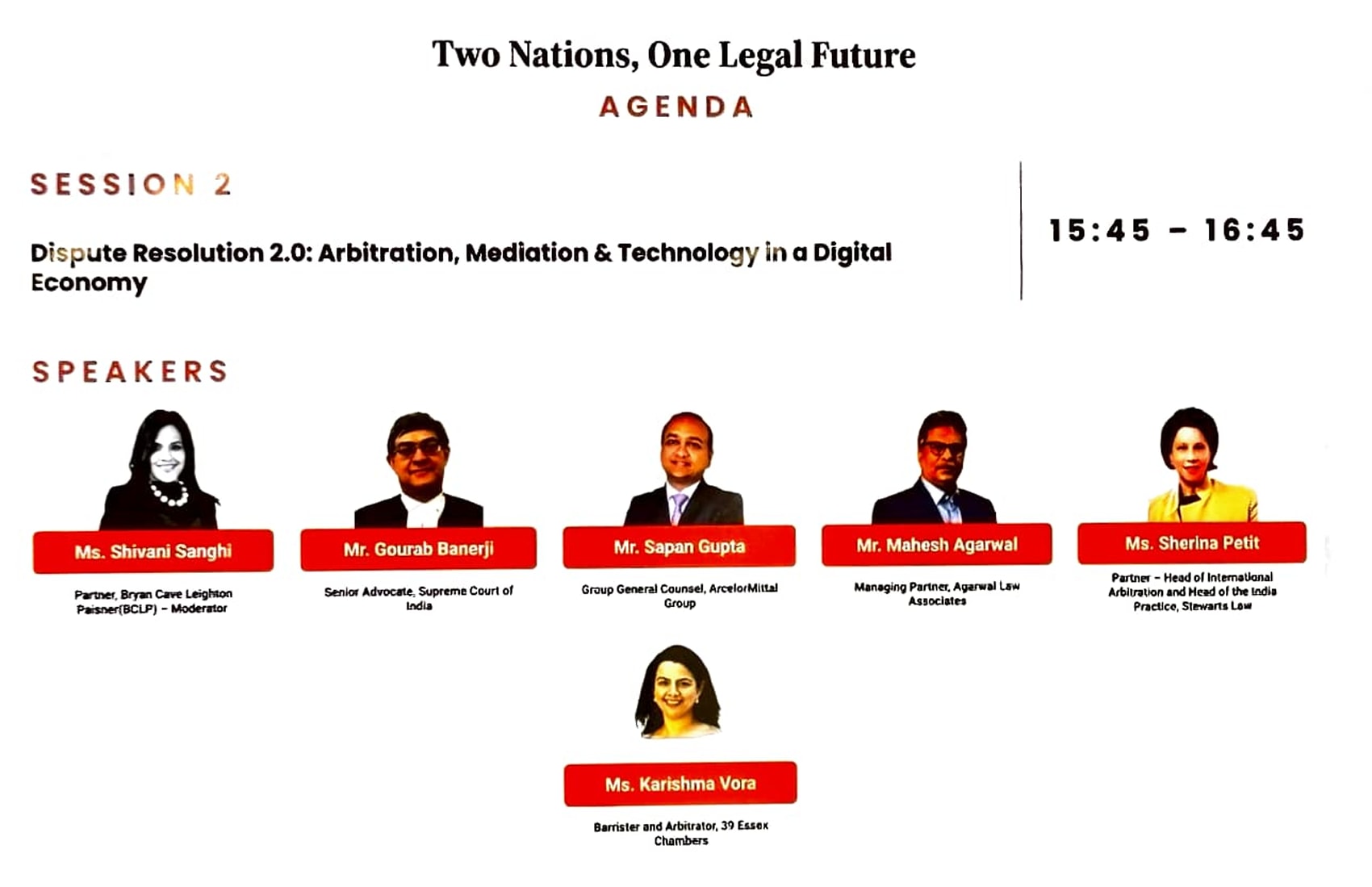
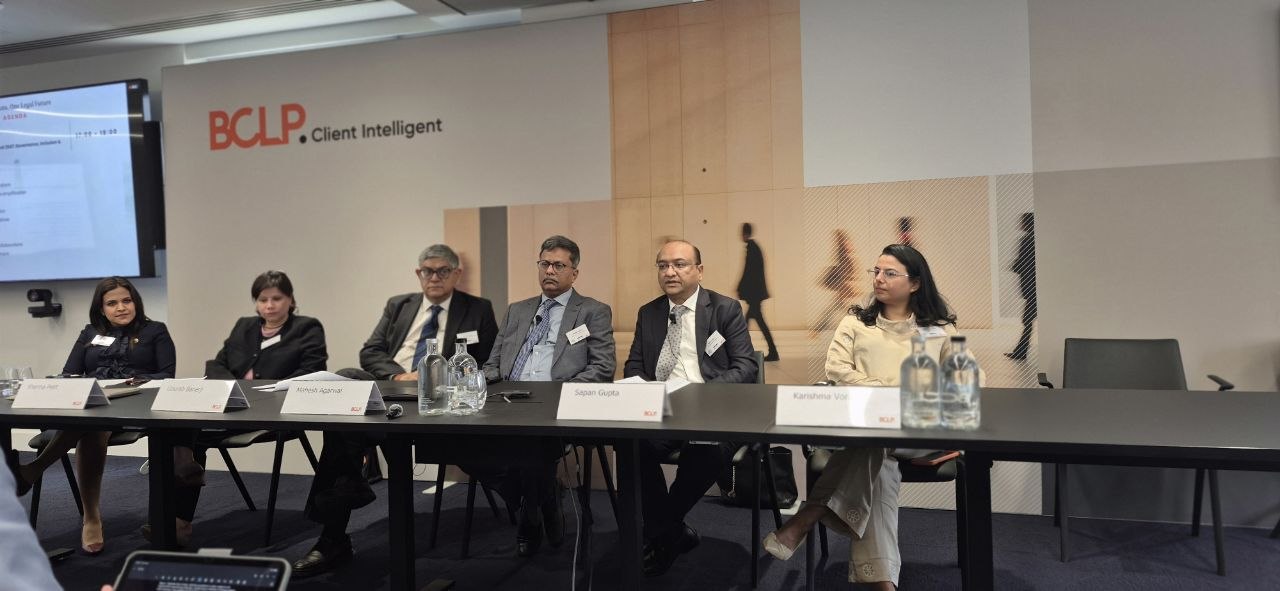
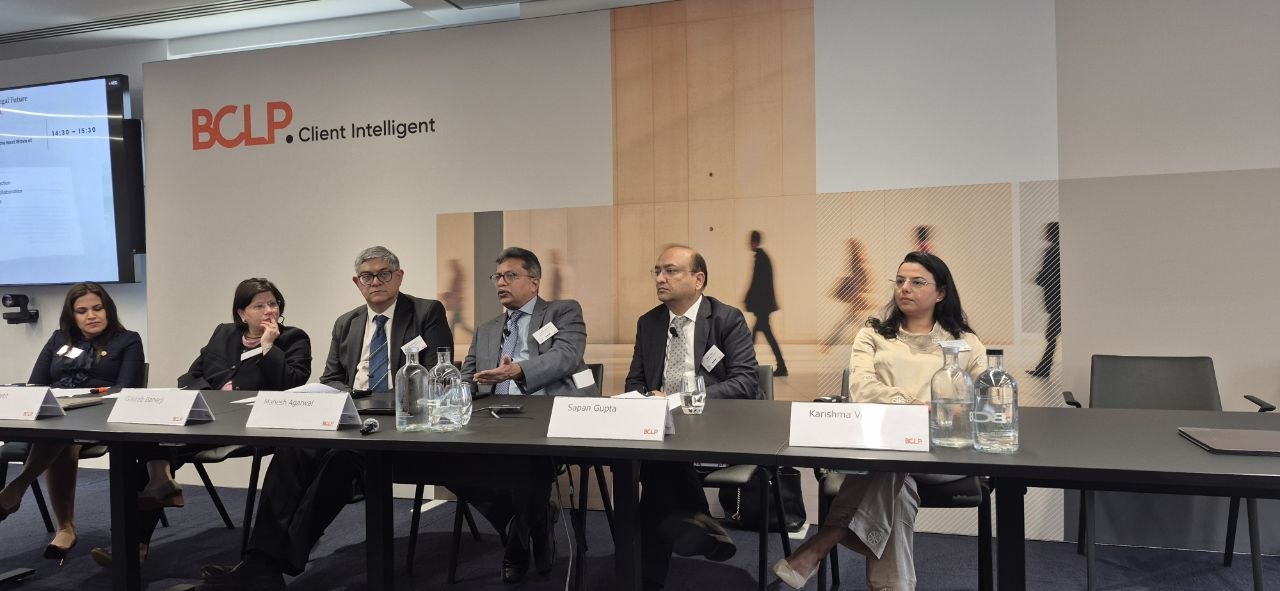
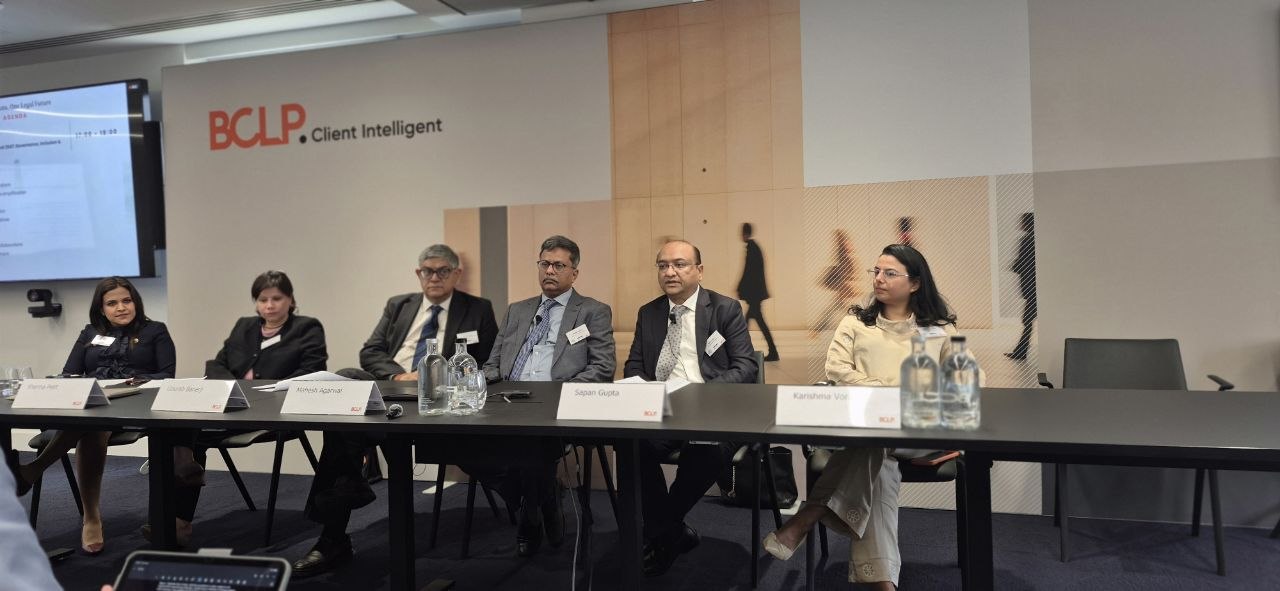
The session featured the following speakers
- Ms. Shivani Sanghi (Moderator), Partner, Bryan Cave Leighton Paisner (BCLP)
- Mr. Gourab Banerji, Senior Advocate, Supreme Court of India
- Mr. Sapan Gupta, General Counsel, ArcelorMittal
- Mr. Mahesh Agarwal, Managing Partner, Agarwal Law Associates
- Ms. Sherina Petit, Partner & Head of International Arbitration & India Practice, Stewarts Law
-
Ms. Karishma Vora, Barrister and Arbitrator, 39 Essex Chambers
Cross-Learning, Litigation Costs and Third-Party Funding in India-UK Dispute Resolution
Opening the discussion, Ms. Sanghi invited the panellists to reflect on the lessons that the Indian and English legal systems could learn from each other, observing that while both jurisdictions share a common law heritage, their practical operation often differs considerably.
Drawing upon his experience across both jurisdictions, Mr. Gupta observed that English proceedings benefit from structured timelines and procedural discipline. He remarked that the briefings and the examination, cross examination, it is very well timed; it does not go on forever, and the filings are limited, and you cannot keep on filing applications after a long period of time.
According to him, such practices could assist in addressing delays and backlog in Indian courts. At the same time, he highlighted what he considered to be a practical strength of Indian lawyers, namely, their ability to ‘think on their feet’ during hearings because of the wide variety and volume of matters they handle.
The discussion then turned to litigation costs and pendency before Indian courts.
Referring to the English system of adverse costs and security for costs, Ms. Sanghi invited the panellists to consider whether similar measures could discourage frivolous litigation in India.
Mr. Agarwal observed that the concept of actual costs had not traditionally developed in India because litigation costs were comparatively low. While legislative changes had been introduced, he noted that actual costs were still not routinely awarded and that courts frequently concluded contested matters with “no order as to costs”.
According to him, the absence of meaningful cost consequences encourages unnecessary proceedings and repeated challenges. He said,
“One way to reduce frivolous litigation is definitely to impose actual costs.”
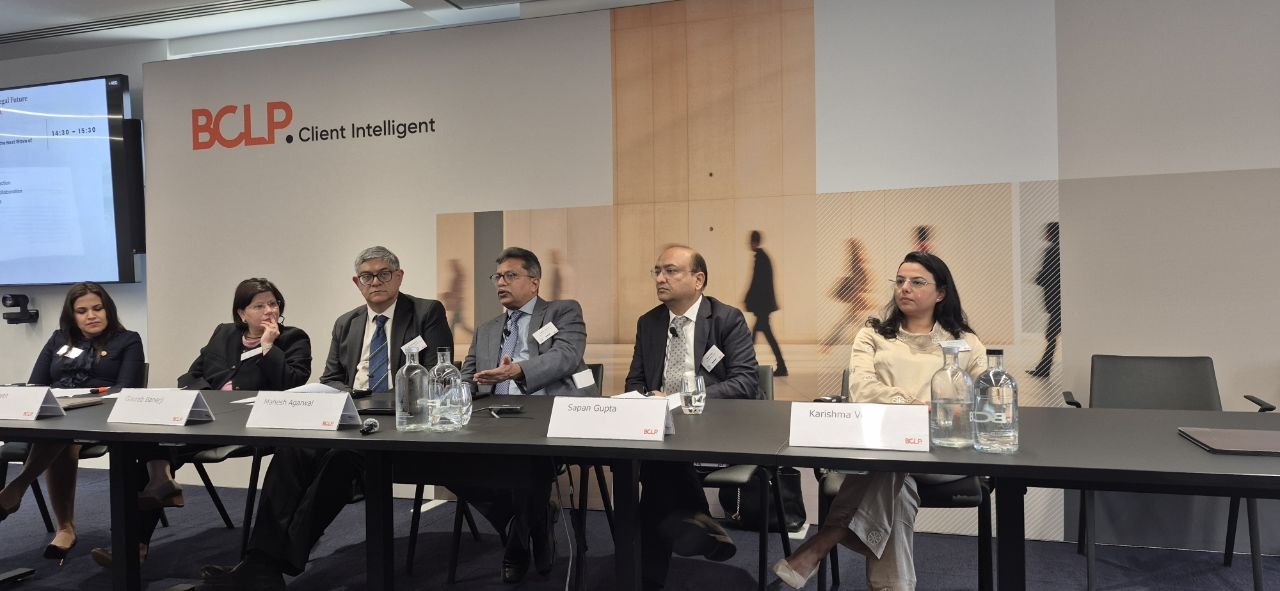
He further discussed the emerging concept of security for costs in India, observing that such a mechanism could assist successful parties in recovering costs where the opposing party is unable to satisfy a costs order.
Continuing the discussion, Ms. Vora agreed that costs could play an important role in reducing unnecessary litigation. She added,
“Imposing costs is an excellent way to reduce litigation or reduce the number of cases in court.”
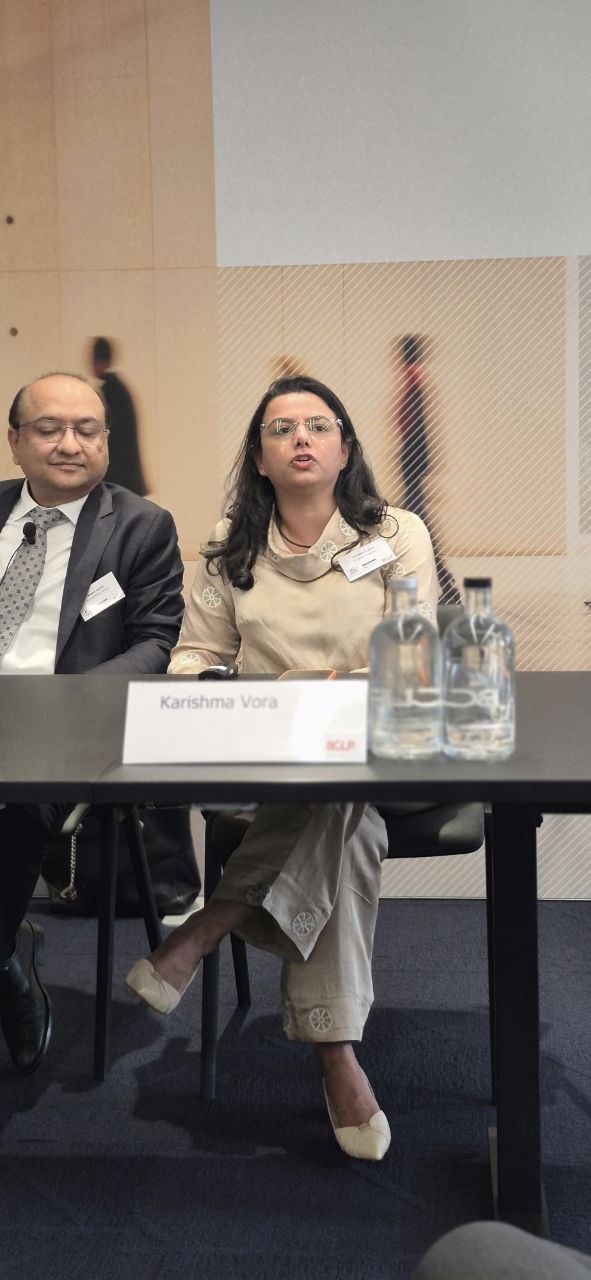
Referring to the English approach, she observed that legal costs are generally expected to be reasonable and proportionate to the sums in dispute and suggested that similar principles could be considered in the Indian context. She also noted that the principle of awarding costs had increasingly been recognised in Indian arbitration.
Ms. Vora identified mediation as another mechanism capable of reducing pendency, particularly in commercial disputes. Referring to developments in other jurisdictions, she observed that mediation had assisted in reducing court backlogs and suggested that greater use of mediation could assist commercial parties in resolving disputes more efficiently.
The discussion subsequently shifted to success fees and third-party funding.
Addressing the issue, Mr. Banerji observed that the Indian approach to litigation costs reflected broader considerations of access to justice and that, despite legislative provisions, actual costs were not routinely awarded in practice. He also noted that substantial cost awards in commercial arbitrations were often reduced when challenged before courts.
The discussion also featured a lighter moment on the practical aspects of litigation costs. Referring to the absence of a structured mechanism for taxation of costs, Gourab Banerji observed that costs often find place in a judgment “in three lines at the end”, prompting a brief exchange among the panellists on the practical realities of commercial litigation.
The discussion also touched upon the absence of a structured mechanism for taxation of costs.
According to Mr. Banerji, developments relating to actual costs were closely connected with the growth of third-party funding, which already exists in practice. He noted that,
“The architecture is there. The people are there. It’s just that the Bar Council of India has to turn around and say, well, this is the reality. We should regulate it.”
The discussion recognised the distinction between litigation funding and the prohibition on lawyers charging success fees.
Responding to the discussion, Mr. Agarwal expressed a different perspective and distinguished litigation funding from the role of lawyers in the legal process. He remarked,
“I personally, I don’t agree with Gourab. I think we still, in India, feel it’s quite a noble profession.”
While acknowledging that litigation funding may develop independently, he expressed the view that lawyers and law firms should not themselves acquire a financial interest in litigation outcomes.
The discussion then moved to the practical challenges associated with enforcing awards and resolving cross-border disputes.
Enforcement of Awards, Anti-Suit Injunctions and Liberalisation of the Legal Market
Turning to the second theme of the discussion, Ms. Sanghi invited the panellists to consider the practical challenges associated with the enforcement of arbitral awards and judgments across jurisdictions, observing that obtaining an award or judgment is often only part of the dispute resolution process.
Speaking from the perspective of a commercial user, Mr. Gupta described enforcement as one of the principal practical issues facing international arbitration. He noted that,
“Enforcement is probably the biggest issue for the future of arbitration globally.”
According to him, enforcement presents challenges across jurisdictions, although the nature of those challenges may differ. Referring to commercial disputes involving private parties, he observed that by the time enforcement proceedings commence, assets may have been transferred across jurisdictions, requiring parties to undertake asset tracing and other protective measures. He also noted that businesses increasingly consider such issues at the contracting stage itself.
Comparing the two jurisdictions, Mr. Gupta observed that while courts in the United Kingdom may provide certain interim protections more readily, enforcement continues to present practical difficulties internationally. At the same time, he noted that assets of international businesses are more likely to be located in jurisdictions such as the United Kingdom than in India.
Responding to the discussion, Mr. Banerji considered the enforcement of foreign arbitral awards in India. Drawing a distinction between older “legacy matters” and more recent proceedings, he observed that courts dealing with foreign awards have become increasingly familiar with the framework of the New York Convention.
According to him, recent enforcement proceedings involving foreign awards have generally progressed at a faster pace and that courts have, by and large, adopted a pro-enforcement approach. He also noted that the number of foreign award enforcement proceedings instituted annually before Indian courts remains comparatively small.
The discussion also touched upon the enforcement of foreign judgments, with Mr. Banerji observing that the position could develop further.
Offering a practical perspective, Mr. Agarwal observed that parties frequently choose to settle disputes after an award rather than engage in prolonged enforcement proceedings. According to him, although the number of enforcement proceedings may be limited, enforcement itself can involve multiple stages of litigation. As a practical matter, parties often prefer a negotiated commercial settlement to waiting for the completion of enforcement proceedings.
Ms. Vora agreed that settlements following arbitral awards frequently occur in practice.
The discussion then turned to anti-suit injunctions and the protection of arbitration agreements.
Invited to comment on the Indian position, Mr. Agarwal observed that Indian courts increasingly respect contractual arrangements providing for arbitration and that the number of anti-suit injunctions granted is comparatively low.
According to him, such injunctions are generally confined to limited circumstances, including cases involving vexatious proceedings or proceedings commenced contrary to contractual arrangements. He also observed that Indian courts are increasingly respecting international arbitration agreements.
From the English perspective, Ms. Vora observed that English courts similarly apply a high threshold before granting anti-suit injunctions.
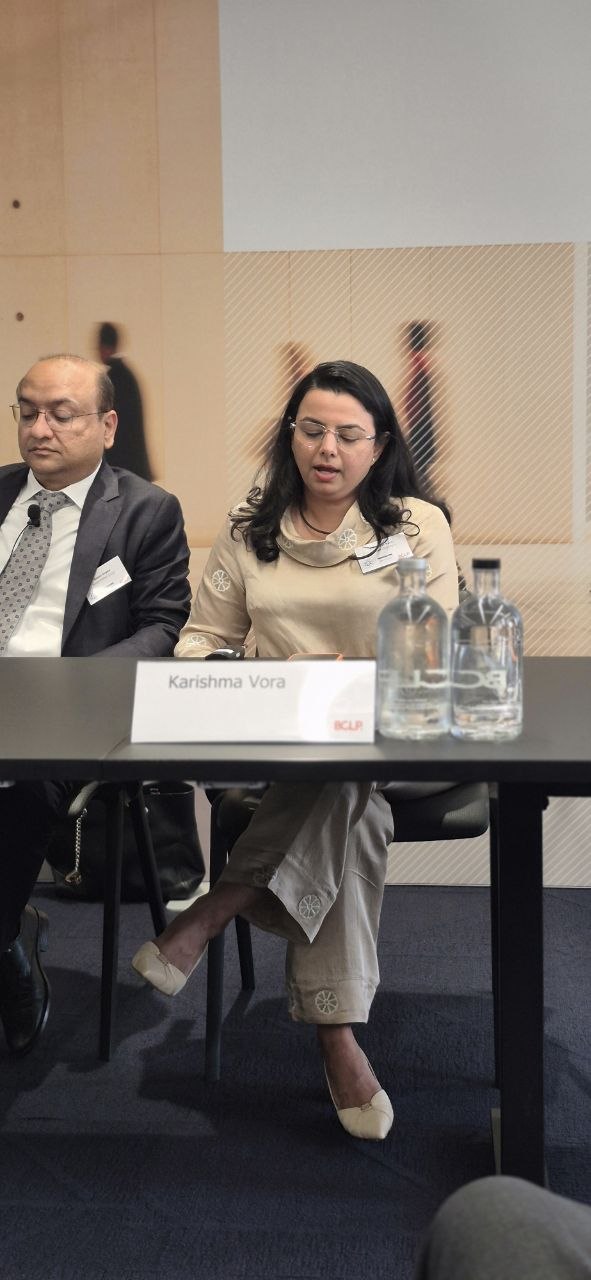
Referring to judicial decisions involving the India-UK corridor, she discussed instances where courts in both jurisdictions respected arbitration agreements and each other’s decisions. At the same time, she also referred to practical situations where parallel proceedings and competing injunctions created procedural difficulties, while observing that such instances were comparatively rare.
The discussion then shifted to the liberalisation of the Indian legal market.
Introducing the theme, Ms. Petit referred to the Bar Council of India’s recent rules and invited the panellists to consider their practical implications for the internationalisation of India’s legal market.
Addressing the issue, Mr. Agarwal observed that while there may be broader support for permitting greater participation by foreign lawyers in India, existing legislative restrictions continue to apply.
According to him, foreign lawyers cannot advise on Indian law or advise Indian clients in India and are presently limited to certain forms of non-litigious work relating to foreign law. He observed that broader liberalisation may require legislative intervention.
The discussion then focused on the implications of the regulatory framework for international arbitration.
Mr. Gupta observed that there had previously been a general understanding regarding the participation of foreign lawyers in certain international commercial arbitrations. Referring to the recent rules and subsequent clarifications, he remarked that uncertainty remained regarding their practical operation. He reacted,
“The 2025 rules, I don’t know… it’s clear as mud.”
He suggested that there should be a carve-out for international commercial arbitration and observed that greater clarity could assist India’s aspiration to strengthen its position in international arbitration.
Responding to a question concerning dual-qualified lawyers, Mr. Agarwal clarified that lawyers enrolled in India remain entitled to advise on Indian law and that the existing restrictions principally concern foreign-qualified lawyers who are not enrolled with an Indian Bar Council.
The broader question of opening the Indian legal market also arose during the discussion.
Speaking from his own perspective, Mr. Gupta observed that greater openness could facilitate knowledge exchange and professional development.
“There is a lot of knowledge sitting outside India which has to go to India.”
He further observed that exposure to different legal systems could benefit both the legal profession and legal education.
The discussion then moved to the future of mediation and the growing role of technology in dispute resolution.
Mediation, Artificial Intelligence and the Future of Dispute Resolution
Introducing the next theme of the discussion, Ms. Petit invited the panellists to consider the future of mediation in cross-border disputes and whether mediation could increasingly become the preferred mode of dispute resolution.
Addressing the issue, Mr. Agarwal observed that mediation had significant potential in the Indian context.
Referring to arbitration, he remarked that while alternative dispute resolution is widely discussed and encouraged, arbitral awards are frequently subjected to judicial scrutiny and challenge. According to him, mediation could provide parties with an effective mechanism for achieving finality in disputes.
Referring to the Mediation Act, Mr. Agarwal observed that certain provisions were expected to be notified and that mediation could develop into a recognised dispute resolution mechanism in India. At the same time, he noted that questions concerning the enforcement of international mediated settlements would continue to require attention.
He also emphasised that the success of mediation would depend upon appropriate institutional safeguards and confidence in the process. According to him, mediation should involve competent and respected mediators, properly conducted proceedings, and adequate checks to ensure that the process is not misused.
He further observed that if appropriate safeguards are maintained, mediation could assist parties in achieving finality and reduce the need for prolonged litigation and arbitration.
The discussion then turned to artificial intelligence and the future of dispute resolution.
Inviting the panellists to consider the growing role of technology, Ms. Petit referred to the increasing attention being paid to artificial intelligence across the legal sector and the potential impact of technological developments on dispute resolution.
Responding to the discussion, Mr. Banerji observed that several institutions and organisations had already developed guidelines governing the use of artificial intelligence.
Referring to these developments, he noted that a number of institutional frameworks and guidance documents had emerged concerning the responsible use of AI.
At the same time, he observed that the legal profession was already making practical use of AI-assisted tools. He put it interestingly as,
“We’re all using it. We’re all using it. And we are all seduced by it.”
The discussion also touched upon practical issues relating to confidentiality, privacy and data protection in the use of artificial intelligence.
Looking ahead, Ms. Petit invited the panellists to consider the kinds of disputes that might emerge as global trade and technology continue to evolve.
Responding to the question, Mr. Gupta observed that, from a commercial perspective, London was likely to continue as an important centre for international dispute resolution because of its established legal infrastructure and international commercial presence.
The discussion also considered the possibility of AI-assisted dispute resolution processes.
Referring to developments in this area, Mr. Banerji observed that certain systems already incorporated technological tools into dispute resolution processes, while also involving human oversight.
Mr. Gupta observed that practical questions would continue to arise concerning the enforcement of AI-assisted decisions and the broader legal framework governing their use. According to him, repetitive and standardised legal processes may be more readily adapted to AI than litigation and arbitration. Since,
“Litigation and arbitration have a very heavy human touch.”
He also referred to practical considerations concerning disclosure obligations, confidentiality, applicable law, data retention and jurisdiction-specific legal requirements.
The discussion further considered the role of AI in resolving lower-value disputes and the extent to which technological developments could reduce time and costs.
Adding to the discussion, Ms. Vora referred to work being undertaken concerning the use of artificial intelligence in legal proceedings and the circumstances in which courts may need to be informed that AI-assisted tools have been used.
She observed that issues concerning expert evidence, witness statements and other aspects of legal proceedings would continue to evolve as the use of AI develops. At the same time, she noted that wider adoption would require continued technological development and confidence in the process.
Rapid-Fire Round
The panel concluded with a rapid-fire round, during which the panellists briefly reflected on possible legal reforms and future developments in dispute resolution.
Mr. Agarwal referred to the question of foreign lawyers, and on a lighter note stated that “there’ll be foreign lawyers defending me,” prompting laughter from the audience.
Ms. Vora suggested that junior advocates need to be given more opportunities to represent before the bench.
Mr. Banerji reflected on developments in arbitration in India, and compared the position to a “snakes and ladders” game, observing that periods of significant progress are often followed by fresh challenges.
Mr. Gupta observed that artificial intelligence was likely to be one of the significant developments shaping the future of international dispute resolution over the coming years.
Q&A Session
The discussion concluded with an interactive question-and-answer session.
Participants raised issues concerning reciprocity in legal practice, written and oral advocacy, the practical implications of opening the legal market, law firm management, conflicts of interest, professional training and litigation costs.
Responding to the discussion, the panellists reflected on practical aspects of cross-border legal practice and the evolving needs of the legal profession. The discussion also touched upon the importance of training and institutional systems within law firms, as well as practical challenges associated with litigation costs and commercial dispute resolution.
Concluding the session, the panellists thanked the audience for their participation and reflected on the opportunities and challenges facing dispute resolution in the India-UK corridor as legal systems continue to evolve alongside commercial and technological developments.