








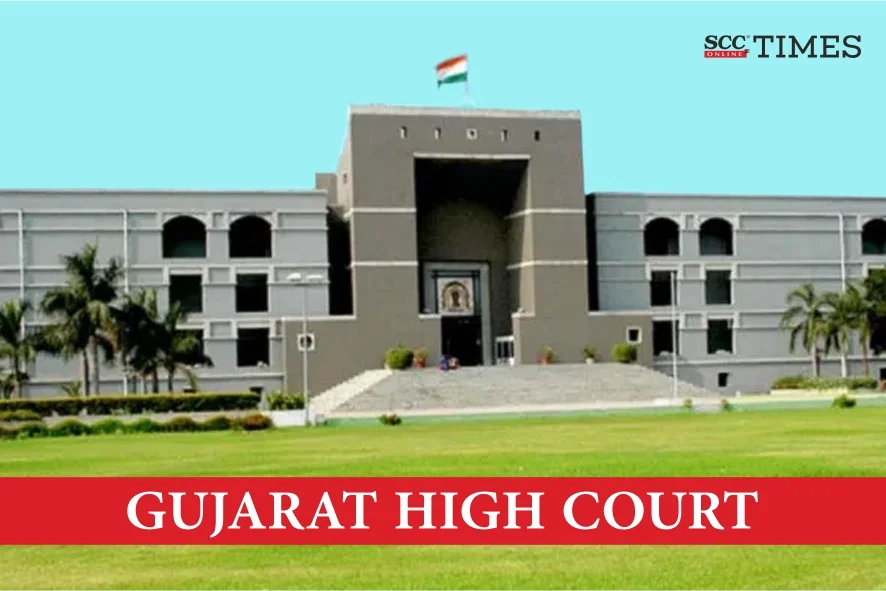
Gujarat High Court: In a petition filed under Articles 21 and 226 of the Constitution by Narayan Sai, son of Asaram Bapu who had been convicted for inter alia rape, unnatural offences, outraging modesty, and criminal intimidation, challenging the rejection of his furlough leave application by the Inspector General of Prison (‘IGP’), a Single Judge Bench of M. R. Mengdey, J., rejected the petition holding that the conduct of him and his disciples indicated that his release on furlough leave could be detrimental to the law and order situation at large, and there was a possibility of an untoward incident happening.
Background
Narayan Sai, son of Asaram Bapu, was involved in religious activities and had a huge following. He was arrested in 2013 and subsequently convicted under Sections 376(2)(c), 377, 354, 504, 506(2), 508 and 323 of the Penal Code, 1860 (‘IPC’), with a life imprisonment sentence.
Analysis
The Court noted that the record indicated that after Narayan’s arrest, several offences were registered against his disciples for threatening or assaulting the witnesses. The record also indicated that Narayan attempted to approach government officials and tried to bribe them. Noting this, the Court stated that such conduct of Narayan and his disciples indicated that his release on furlough leave could be detrimental to the law-and-order situation at large, and there was a possibility of an untoward incident happening due to his release. Moreover, the Court noted that the jail remarks indicated that Narayan’s conduct in jail was not good and he had been given several jail punishments for the same.
Thus, the Court held that in view of the provisions of Section 4(4) and 4(5) of the Bombay Furlough and Parole Rules, the furlough leave application appeared to have been rightly dismissed by the competent authority and no error had been committed in such rejection. The Court also reiterated that the grant of furlough leave was not a matter of right for the convict.
Accordingly, the Court dismissed the petition holding that no case was made out to release Narayan on furlough leave.
[Narayan Sai v. State of Gujarat, 2025 SCC OnLine Guj 1725, decided on 30-04-2025]
Advocates who appeared in this case:
For the petitioner: Gajendra P Baghel
For the respondent: Public Prosecutor Hardik Dave and APP Rohan Raval
Buy Constitution of India HERE

Buy Penal Code, 1860 HERE









0 replies