








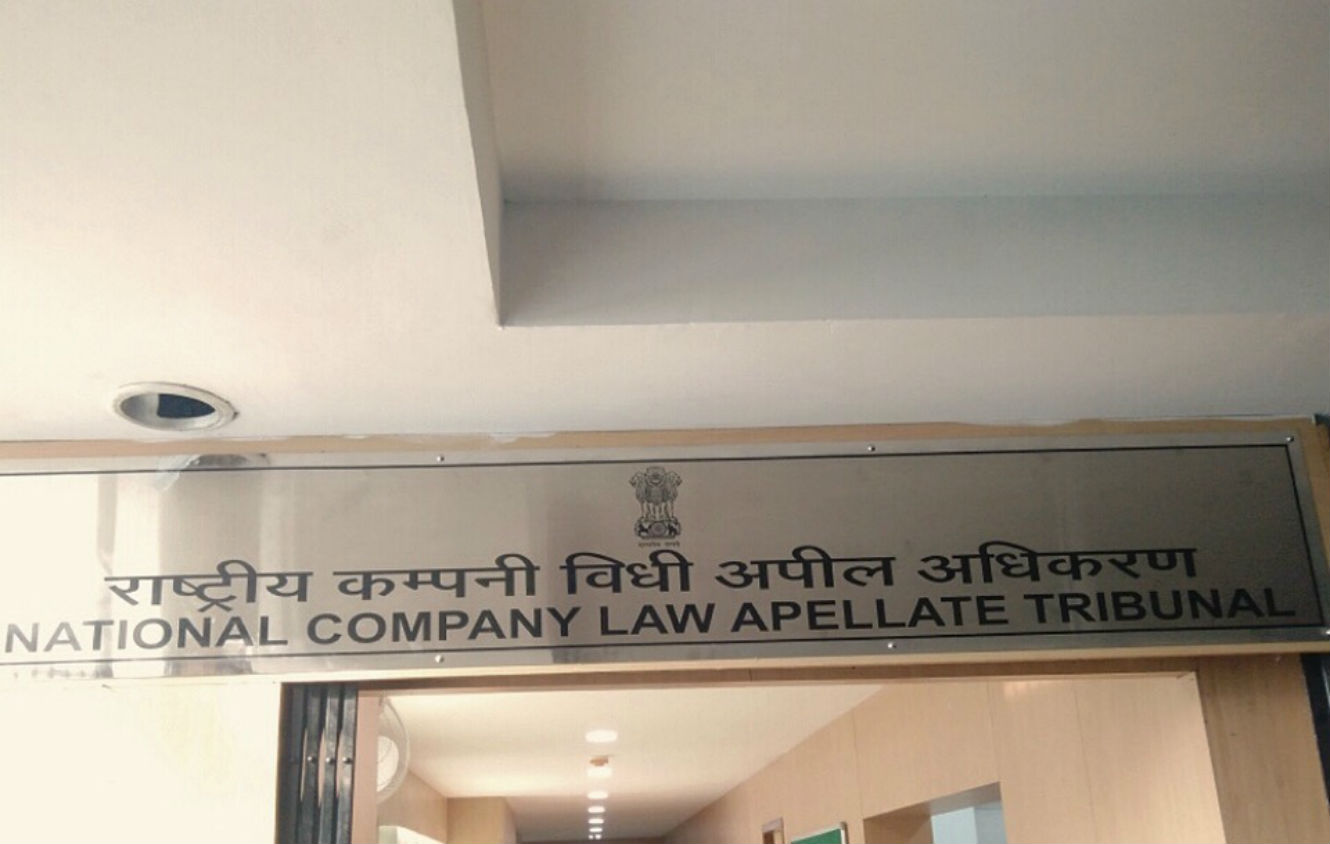
National Company Law Appellate Tribunal (NCLAT): A two-member bench comprising of Justice S.J. Mukhopadhaya, Chairperson and Justice Bansi Lal Bhat, Member (Judicial), dismissed an appeal filed against the judgment of National Company Law Tribunal, New Delhi whereby Respondents 1 and 2 were held to be Financial Creditors.
Factual matrix of the case is that the said respondents were the erstwhile Directors of the Corporate Debtor company. They extended loan to the Corporate Debtor from time to time at an interest of 18% per annum. The question that arose for consideration in this appeal was whether the respondents came within the meaning of Financial Creditors as defined in Section 5(7) and (8) of the Insolvency and Bankruptcy Code, 2016. It is pertinent to note that Section 5(7) defines a Financial Creditor as any person to whom a financial debt is owed and includes a person to whom such debt has been legally assigned or transferred to.
The Appellate Tribunal perused various provisions of the Code and observed that the expression debt defined under Section 3(11) means a liability or obligation in respect of a claim which is due from any person and includes a financial debt and operational debt. Non-payment of such debt which has become due and payable and is not repaid by the Corporate Debtor falls within the mischief default defined under Section 3(12) of the Code. Further, in the present case, the manner and circumstances in which the amount of loan was borrowed by the Corporate Debtor from time to time with stipulated interest, left no room for doubt that the outstanding unsecured debt had all the trappings of a Financial Debt. Hence, the said respondents (erstwhile Directors) were safely held to be Financial Creditors. All the contentions raised by the appellant were repelled holding them sans merit. The appeal was, thus, dismissed. [Rajesh Gupta v. Dinesh Chand Jain,2018 SCC OnLine NCLAT 412, Order dated 09-08-2018]









0 replies