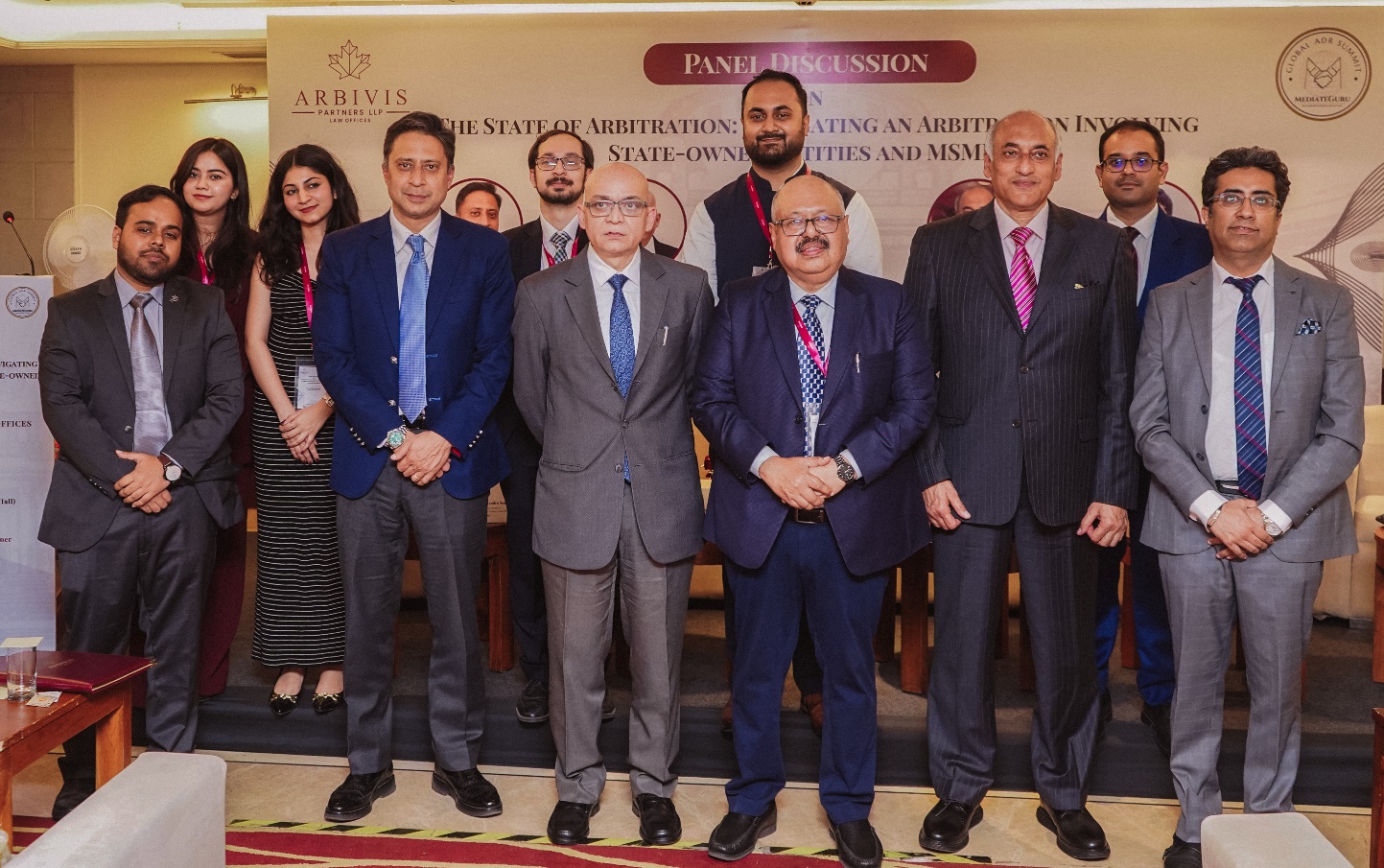
On 20-02-2026, Arbivis Partners LLP hosted a panel discussion on the topic ‘The State of Arbitration: Navigating Arbitrations Involving State-Owned Entities and MSMEs’ at the Global ADR Summit 2026.
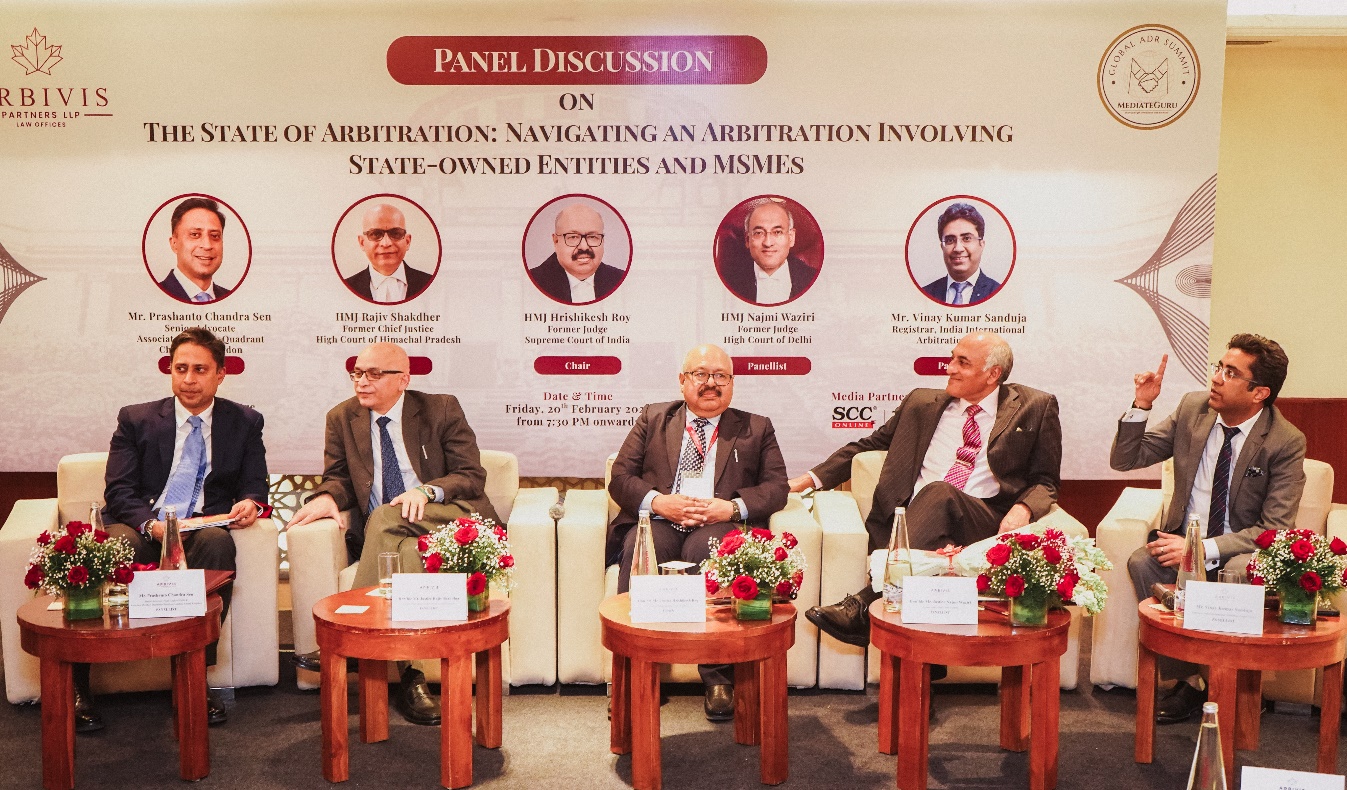
Chaired by Justice Hrishikesh Roy, Former Judge, Supreme Court, the distinguished panel included Justice Rajiv Shakdher, Former Chief Justice, Himachal Pradesh High Court; Justice Najmi Waziri, Former Judge, Delhi High Court; Mr. Prashanto Chandra Sen, Senior Advocate, Delhi High Court and Associate Member, Quadrant Chambers, London, U.K.; and Mr. Vinay Kumar Sanduja, Registrar, Indian International Arbitration Centre (IIAC). The session welcomed Judges, Practitioners, and Institutional Representatives of an Arbitration Centre, In-House Counsels, and Legal Officers from Public Sector Undertakings (PSUs) and private organisations/companies, most deeply involved in such disputes, to promote a constructive and meaningful dialogue with diverse interests being addressed.
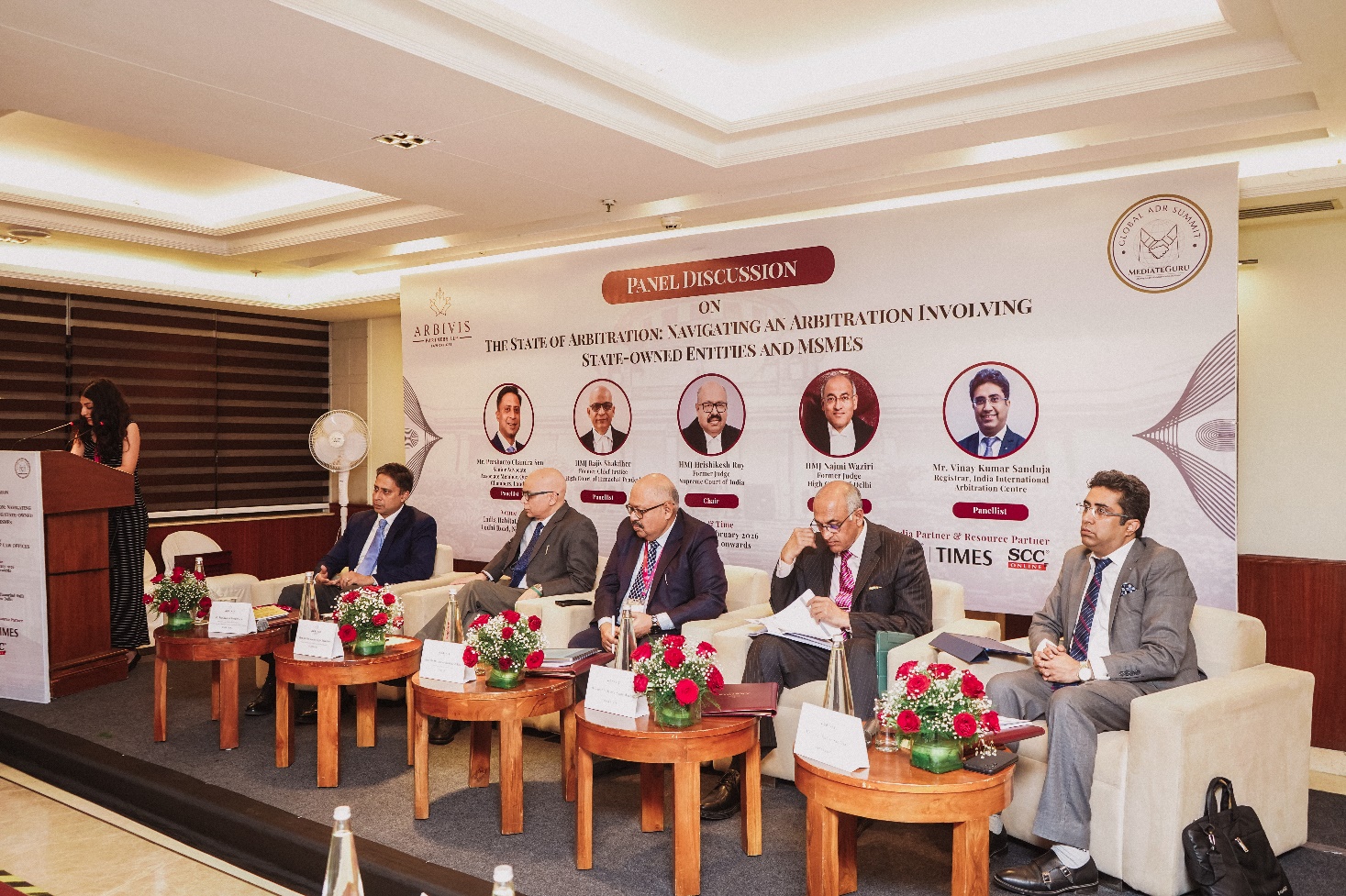
Following the concise introductory remarks by the compères, Ms. Benazir Malik and Ms. Anisha Sharma, Justice Hrishikesh Roy commenced the panel discussion by delineating the topic and affording all panellists an opportunity to present their initial perspectives. Notably, Justice Roy initiated the discourse by emphasizing that the decision-makers in disputes pertaining to State-Owned entities are invariably government representatives responsible for decision-making on the respective day. However, anomalies or issues may arise when audits or other discussions take place after a span of time pertaining to the decision made. On the other hand, the decision makers of Micro, Small, and Medium Enterprises (MSMEs) entities have to keep in mind the organisation’s commercial interests and potential pitfalls when contemplating resorting to dispute resolution mechanisms.
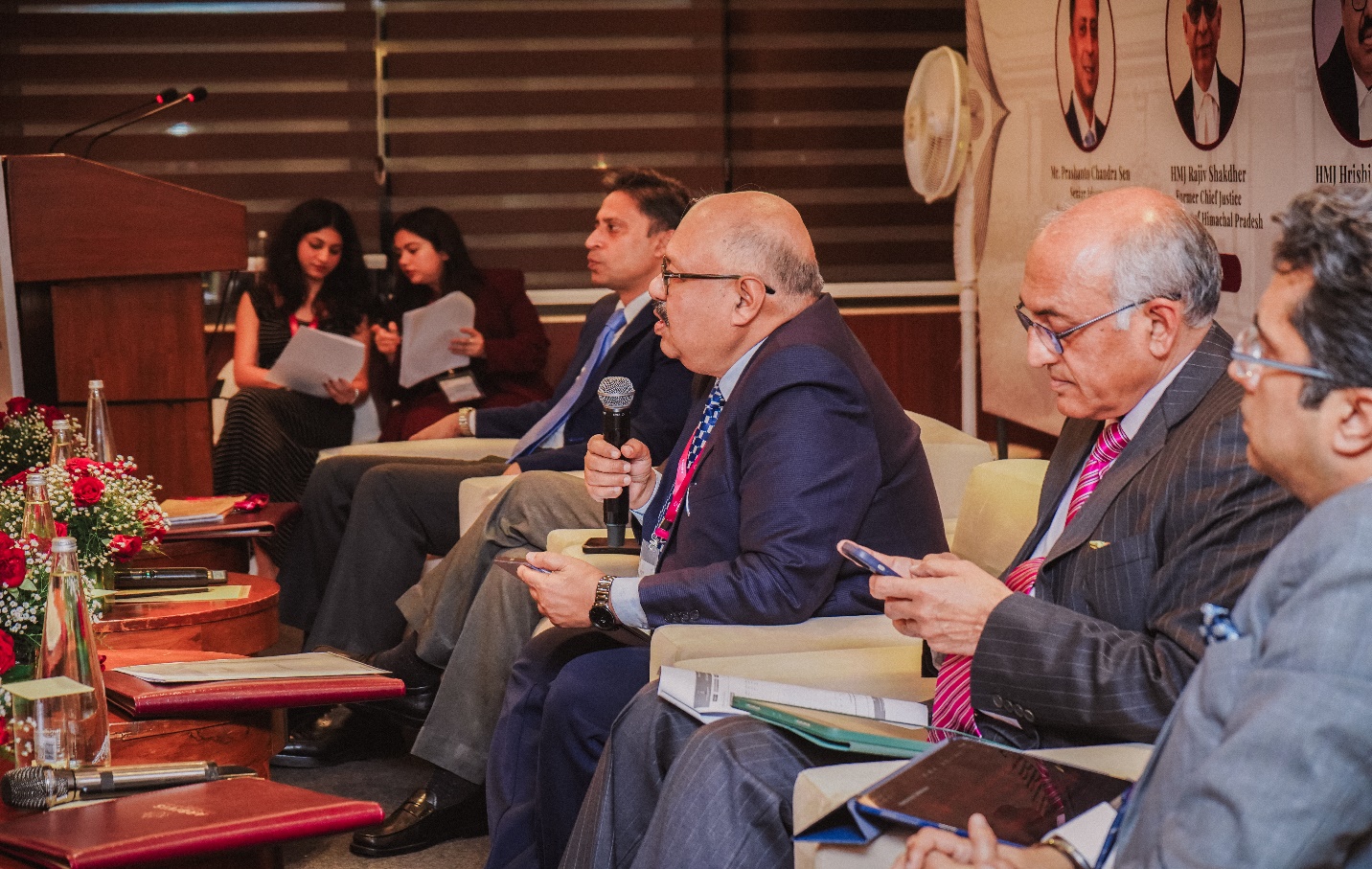
Subsequently, Justice Rajiv Shakdher pointed out that the arbitration regime is not particularly conducive to arbitration proceedings. He emphasized that the recent measure of restricting arbitration to disputes involving amounts of Rs. 10 crore or less, as notified by the Ministry of Finance, presents certain challenges, especially in cases where projects with such entities involve hundreds of crores.
Justice Shakdher also referred to statistics related to disputes involving MSMEs, highlighting the enormous backlog, with unresolved amounts reaching several thousand crores. He reiterated that the primary aim of the Micro, Small and Medium Enterprises Development Act, 2006 (MSMED Act) was to ensure the expeditious resolution of claims by such entities and discussed how the imposition of a Rs. 10 Crore cap on dispute amounts effectively hampers MSMEs, particularly those that are performing well and may have larger claims, thereby undermining the fundamental purpose of supporting MSMEs.
Additional discussions centered around the ongoing ambiguity concerning disputes involving MSMEs, despite judgments by the Supreme Court on this subject matter. Justice Shakdher relied on Silpi Industries v. Kerala SRTC, (2021) 18 SCC 790, and Gujarat State Civil Supplies Corpn. Ltd. v. Mahakali Foods (P) Ltd., (2023) 6 SCC 401, which clarified that the MSMED Act is triggered only when a party is registered as an MSME under Section 8; however, a recent judgment has challenged this reasoning, resulting in uncertainty. He observed that until this issue is adequately addressed, challenges faced by MSMEs and the government will continue, highlighting the necessity for authoritative clarifications.
Following the central theme, Justice Najmi Waziri highlighted that the outstanding payments related to arbitrations in India, including those involving MSMEs, amount to Rs. 10.7 Lakh Crores. The associated financial burden is substantial. He stated that the MSMED Act was enacted to facilitate the expedited resolution of these disputes, however, an examination of the statistics pertaining to pending cases reveals that the Government has not responded in 25% of these cases. He also emphasized the statutory right granted to MSMEs under Section 18 of the MSMED Act to pursue dispute resolution through conciliation and arbitration.
Justice Waziri also discussed the recent government notification that imposes a pecuniary limit of 10 crores, thereby restricting this right for MSMEs. A point for contemplation was raised during the discussion on whether, for the recovery of payments by these entities, Courts should be approached for the execution of awards, or whether, as the MSMED Act is a special statute, a specialised forum should be established to enable swifter payment processes. The ultimate objective of these proceedings is to empower MSMEs, which often lack substantial financial resources, by ensuring the recovery of the amounts owed to them.
Mr Prashanto Chandra Sen stressed upon the importance of mediation and how it differs from conciliation. He referred to Afcons Infrastructure Ltd. v. Cherian Varkey Construction Co. (P) Ltd., (2010) 8 SCC 24, wherein the Supreme Court dealt with the different forms of prevalent Alternative Dispute Resolution Mechanisms. He further emphasized that mediation is a facilitative process wherein the mediator must facilitate consensus ad idem between the parties rather than imposing it upon them. However, the Mediation Act, 2023 has incorporated conciliation into the definition of mediation, thereby somewhat diminishing the role of mediation. He stated that mediation is particularly appropriate for the MSME sector, especially in disputes involving smaller sums, as it is a party-empowered process that may be more acceptable to the parties involved. Internationally, facilitative processes are generally preferred over conciliation, as noted in accordance with the relevant standards.
Mr. Sen quoted Mr. Michael Borre, an internationally accredited arbitrator “The prominent feature of arbitration is mutual understanding so as to solve the conflict that has occurred. The aim of arbitration is not to draw from applicable law a decision against parties involved but to clarify together with the parties what will be done in a given situation to achieve justice with cooperation. That is what I expect from arbitration, whether commercial or diplomatic or international or national.” Thus, mediation should be given a fighting chance de hors of conciliation.
Before passing the baton for the institutional perspective, Justice Roy highlighted the issues regarding the enforcement and execution of awards. He pointed out that many times, challenges to awards are made mechanically rather than after assessing the matter.
Thereafter, Mr. Vinay Kumar Sanduja brought the perspective of the Institutional Arbitration Centres, particularly the IIAC, to the fore. He pointed out that the MSMED Act is applicable to Micro and Small Enterprises only and does not cover Medium Enterprises within its ambit. He further elaborated that the MSMED Act, particularly under Chapter V, accords a significant role to the MSEFC (Micro and Small Enterprises Facilitation Council), initially as a conciliator and subsequently as an arbitrator. Nonetheless, there exists a provision enabling the MSEFC to refer disputes to arbitration through an Institutional Arbitration Centre. This is emphasized, given that the MSEFC may lack the specialized arbitration expertise accumulated over the years by Arbitral Institutions, senior judges, and senior advocates in dispute resolution.
The discussion also encompassed the contrasting timelines, i.e., the 90-day period stipulated by the MSMED Act for arbitration completion versus the timeline under the Arbitration and Conciliation Act, 1996. Emphasis was placed on institutional arbitration as the preferred pathway, as it facilitates arbitration under specific rules, adhered to within defined timelines, and supported by case management systems. It was noted that the IIAC, established in 2023 by legislative enactment, has developed its own set of institutional rules explicitly designed to encourage and promote arbitration within the MSME sector.
Furthermore, Justice Shakdher observed that there exists a trust deficit from the government’s perspective, since approximately 90% of litigations involve the state in some capacity. While efforts are being made to promote arbitration as a dispute resolution mechanism, recent notifications suggest that government entities are hesitant to opt for arbitration. It was proposed that strengthening institutional arbitration could serve as a means to bridge this trust gap. International models such as London Court of International Arbitration and Singapore International Arbitration Centre are available for consideration, whereas the IIAC, which has been established and involves a degree of government participation in its management and operations, could serve as a guiding example. Institutional Arbitration Centres can provide arbitrators with domain and subject matter expertise necessary for adjudicating disputes, supported by rule-based case management systems. Notably, the commercial courts established in India lack some critical features observed in their foreign counterparts, such as specialized divisions. Furthermore, litigation involving the state invariably ascends to the Supreme Court, regardless of the dispute’s nature or merit.
Justice Waziri further addressed the issue of appeals against arbitral awards, which hinders the system; rather than providing finality to arbitral awards, particularly when Government entities are involved. Mediation, conciliation, and the role of arbitral institutions require proactive participation and acceptance of decisions in order to foster growth and acceptance of the process.
Subsequently, Mr. Sanduja elaborated on the efforts undertaken by the IIAC to promote institutional arbitration. He emphasised the importance of the Institutional Rules, which have been developed with the understanding that arbitrators possess subject-matter and domain expertise and are subsequently appointed to facilitate dispute resolution acceptable to the parties. Strict timelines, meticulous case management, and procedures for the review of awards are distinguishing features of IIAC as an institutional arbitration centre.
Following a stimulating discussion, Justice Roy proceeded to initiate the question and answer session, thereby offering law students, practitioners, and representatives of PSUs, an opportunity to pose inquiries to the panellists and gain their insights.
Concluding the day, Arbivis Partners LLP, represented by the partners Mr. Sami Ahmed and Mr. Mohd Yasin, expressed their gratitude to all the dignitaries, delegates, and volunteers who participated in the event.
Reported By: Muhammad Shaghil Ansari, EBC-SCC Online Student Ambassador, Faculty of Law, Jamia Millia Islamia, Delhi