Complaint under S. 498-A, IPC filed by the second wife against the husband and in-laws cannot be maintainable: Karnataka High Court
The Court pointed out that ‘woman’ as per S. 498-A, IPC means and includes a legally wedded wife.

Bringing you the Best Analytical Legal News


The Court pointed out that ‘woman’ as per S. 498-A, IPC means and includes a legally wedded wife.
The Supreme Court called the matter at hand a classic case in which a litigant had been able to mislead the Courts and authorities at different levels to put life into his stale claim.

As there is no provision in the RERA Act giving authority to the RERA Tribunal to deal with the subject matter of the suit, the jurisdiction of this Court cannot be said to be barred in the situation where the plaintiff requested for canceling the allotment.
Madras High Court concurred with the view of Justice D. Bharatha Chakravarthy, that the petition, though maintainable cannot be entertained after remand, and in this case, it can certainly not be entertained.
SAT Mumbai observed that it is not open to a shareholder to complain about the scheme of arrangement before the SEBI or to the Stock Exchange nor is it open to the shareholder to make a representation and /or file an appeal before this Tribunal under Section 15T of the SEBI Act.

ORERA reiterated that the projects which are completed and for which the completion certificate has been issued by the local or competent authority prior to the commencement of the Real Estate (Regulation and Development) Act, 2016, are not covered under the Act and therefore, has no application to such projects.
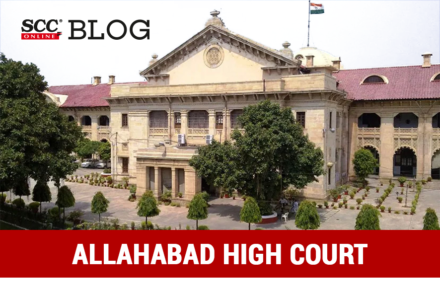
Allahabad High Court said that the cases relied upon by the accused are not applicable to the present case, as they are silent over the issue of maintainability of the petition under Section 482 Cr.P.C. after insertion of Section 14-A of SC/ST Act, 1989 and unless the said issue is decided consciously, any departure from the statutory provision would be a bad precedent.

The Supreme Court observed that availability of an alternative remedy does not operate as an absolute bar to the “maintainability” of a writ petition and that the rule, which requires a party to pursue the alternative remedy provided by a statute, is a rule of policy, convenience and discretion rather than a rule of law.
The recruitment process to any public post should be conducted in a fair and transparent manner. If the candidates are selected by any criterion other than merit and efficiency, the public authority will suffer for all the times to come. It is in the public interest that the process of selection and appointment should be transparent to make it foolproof from corrupt practices.
The view of the Full Bench in Kamla Yadav case, that a Motor Accident Claims Tribunal constituted under the Act is a Court subordinate to the High Court within the meaning of Section 115 of the Code, does not require reconsideration.

Supreme Court: The 3-judge bench of UU Lalit, CJ and S. Ravindra Bhat and Sudhanshu Dhulia*, JJ has set aside the order

The Court held that application filed by minor under Section 12 of Domestic Violence Act cannot be dismissed on the grounds of maintainability especially when she had attained majority before the date of final order.
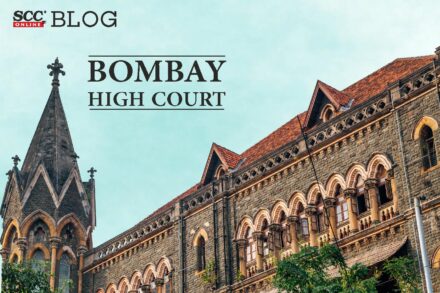
Bombay High Court: In total 4 writ petitions were filed against Air India Ltd./AIL (‘respondent’) by the AIL employees (‘petitioners’),
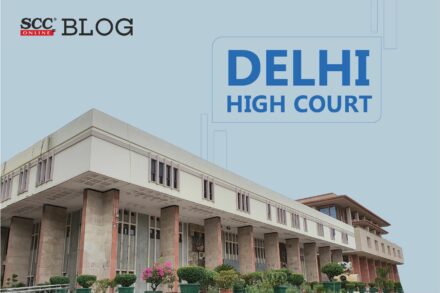
Delhi High Court: In a petition filed under Section 34 of the Arbitration and Conciliation Act, 1996, (‘A&C Act') challenging

by Rahul Agarwal† and Madhav Goel††

Orissa High Court: A Division Bench of SK Sahoo and M S Raman, JJ. disposed of the petition leaving the petitioner with
Rajasthan High Court: A Division Bench of S. Muralidhar, CJ and R.K. Pattanaik J. dismissed the petition and upheld the judgment by
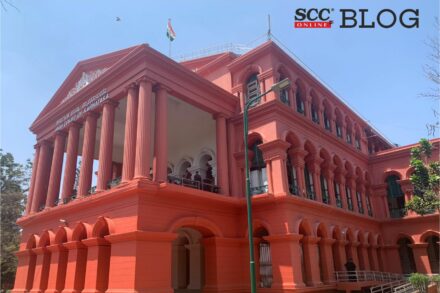
Karnataka High Court: K.S. Mudagal, J., allowed the petition and set aside the impugned award awarding compensation as well as the silver

Supreme Court: The Division Bench of M. R. Shah* and B.V. Nagarathna, JJ., held that where the Arbitrator appointed by the High

“An alternate remedy by itself does not divest the High Court of its powers under Article 226 of the Constitution in an appropriate case though ordinarily, a writ petition should not be entertained when an efficacious alternate remedy is provided by law;.”