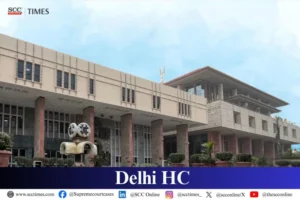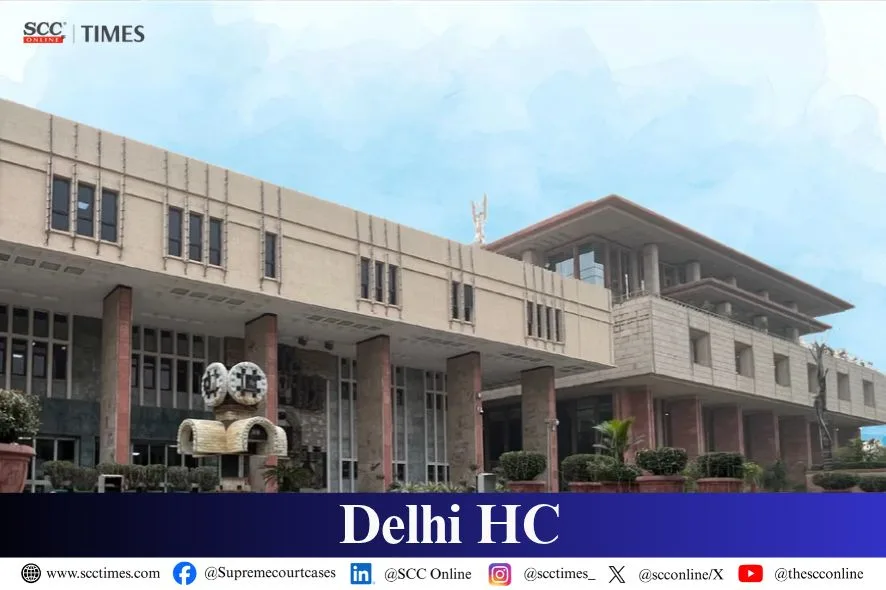
Delhi High Court: While quashing Look Out Circulars (LOCs) opened by Enforcement Directorate (ED) against the non- accused petitioners, a Single Judge Bench of Madhu Jain, J., held that the pendency of an investigation does not, by itself, justify restricting a person’s right to travel abroad, which forms part of personal liberty under Article 21 of the Constitution of India. While upholding its jurisdiction under Article 226, it held that an alternative remedy ordinarily warrants restraint but does not oust its writ jurisdiction. It further held that an LOC is a coercive measure and cannot be continued merely because further investigation is pending, particularly where the person has cooperated and appeared pursuant to summons. The Court also held that the economic-interest exception requires a person-specific satisfaction that the individual’s departure would harm India’s economic interests or larger public interest. It further held that the petitioners’ availability could be secured through undertakings, document production, prior travel intimation, and accessibility conditions, rather than an indefinite LOC.
Also Read: Del HC on Look Out Circulars for debt recovery | SCC Times
Background
The ED through the Bureau of Immigration opened LOCs against the petitioners in connection with alleged financial irregularities in Reliance Commercial Finance Limited (RCFL) and Reliance Home Finance Limited (RHFL) during 2017—2019, when the companies were under their erstwhile management. The petitioners were associated with Authum Investment and Infrastructure Ltd. (Authum), which subsequently acquired RCFL, and through RCFL, an identified business undertaking of RHFL. Petitioner 1 was a Director of Authum from April 2021 to September 2024 and is presently an adviser to its Board; Petitioner 2 has been a Director since September 2020.
The Central Bureau of Investigation (CBI) registered two FIRs in September 2022 and filed a combined charge-sheet in September 2025. The ED recorded its Enforcement Case Information Report (ECIR) in July 2025, conducted searches, and summoned the petitioners under Section 50, Prevention of Money Laundering Act, 2002 (PMLA). Both appeared and their statements were recorded. Neither petitioner was named as an accused in the FIRs, the CBI charge-sheet, or the ED’s June 2026 prosecution complaint. Petitioner 2 was cited as Prosecution Witness No. 130; Petitioner 1 was not cited as a witness.
Petitioner 2 was stopped at Mumbai airport on 16 October 2025, when he first learnt of the LOC. Petitioner 1, apprehending that an LOC had also been issued, sought confirmation and withdrawal but received no response. After proceedings before the Bombay High Court were withdrawn, the Delhi High Court, by order dated 1 September 2026, permitted them to seek temporary travel relief before the Special Court while preserving their substantive challenge to the LOCs.
Contentions
Petitioners’ Contentions
-
No legal foundation for the LOCs: Under the Office Memorandum dated 22 February 2021 and principles laid down in Sumer Singh Salkan v. Asstt. Director,
2010 SCC OnLine Del 2699 , an LOC requires material justifying restriction on travel. Neither petitioner was an accused; Petitioner 1 was not even cited as a witness; and both had complied with ED summons. There was thus no basis to treat them as likely to evade investigation or trial. -
LOC against a witness is exceptional: Petitioner 2, cited only as a prosecution witness, relied on Sudarshan Ramesh v. Union of India, 2023 SCC OnLine Kar 71, to contend that an LOC against a witness is justified only in exceptional circumstances involving non-cooperation. Mere suspicion or dissatisfaction with his statements could not sustain the LOC.
-
No judicial process against Petitioner 1: An LOC is an executive measure issued at an investigating agency’s instance, unlike a non- bailable warrant (NBW) issued by a court. Since no criminal proceedings were pending against Petitioner 1, he could not be relegated to the Special Court. His remedy under Article 226, Constitution of India remained available, particularly where the LOC infringed Articles 14, 19 and 21.
-
Article 226 jurisdiction not excluded: The availability of an alternative remedy does not oust the High Court’s plenary writ jurisdiction, especially where the LOC is challenged for want of foundational jurisdictional facts and infringes fundamental rights. Reliance was placed on Radha Krishan Industries v. State of Himachal Pradesh, (2021) 6 SCC 771.
-
Economic-interest exception misapplied: Clause (L) of the OM permits an LOC only where departure is likely to be detrimental to India’s economic interests or contrary to larger public interest. The alleged diversion of approximately ₹15,933.65 crore concerned the erstwhile promoters and management, not Authum or the petitioners. The scale of allegations against others could not, by itself, justify the exceptional ground against them.
-
Resolution process distinguishes the petitioners: Authum acquired RCFL and the identified RHFL business through an open, regulated Reserve Bank of India (RBI) supervised resolution process involving multiple bidders, lender approval, and regulatory clearance. The Resolution Implementation Memorandum contemplated withdrawal of proceedings, claims, and restrictions against RCFL and its new promoters, directors, and officers. The lenders’ commercial haircut could not itself establish wrongdoing by the incoming management.
-
Fraud classification and erstwhile management: Petitioner 2 relied on the RBI Fraud Risk Management Directions, 2024, to contend that fraud classification must be reconsidered after a resolution plan resulting in a change in management. Penal consequences may continue against erstwhile promoters or persons responsible for the earlier management, but not automatically against the restructured entity or incoming management.
-
Travel restriction disproportionate: Petitioner 1 had complied with all ED summons, the last being dated 22 August 2025, and no non-cooperation was alleged. Petitioner 2 had appeared on eight occasions pursuant to three summons, with his last appearance on 14 May 2026, and no further summons had been issued. Continued LOCs despite cooperation, absent demonstrated flight risk or necessity, were arbitrary, disproportionate, and violative of Articles 14, 19 and 21.
Respondents’ Contentions
-
LOC can extend beyond accused persons: The ED contended that an LOC may be issued or continued even against a person not formally arrayed as an accused, where further investigation is ongoing and material concerning the person requires examination.
-
Special Court is the appropriate forum: Treating an LOC as operating akin to an NBW, the ED argued that the Special Court before which the prosecution complaint was pending was the appropriate forum to examine the necessity and proportionality of the LOCs. Reliance was placed on Sumer Singh Salkan, Shivani Saxena v. Enforcement Directorate, 2022 SCC OnLine Del 785, and Shyam Poddar v. Union of India1. It further argued that Petitioner 2 could not pursue parallel remedies after obtaining temporary travel relief.
-
Economic-interest exception applies: The alleged diversion of approximately ₹15,933.65 crore from RCFL and RHFL through shell and group entities concerned larger public and economic interests. Relying on Income Tax Department v. Vikas Chaudhary, 2026 SCC OnLine Del 5997, the ED submitted that judicial review of the originating authority’s satisfaction is limited to cases of complete absence of material, wholly speculative material, or shockingly disproportionate action. It also relied on the Supreme Court’s order dated 4 February 2026 in EAS Sarma v. Union of India2, concerning the same ECIR.
-
Petitioners’ association is substantive: Petitioner 1’s association with Authum was neither nominal nor passive, given his role as Director from April 2021 to September 2024 and as adviser to the Board. The ED relied on the acquisition values of RCFL and RHFL, the substantial outstanding loans, the lender haircut, and subsequent dealings with acquired assets as matters requiring further investigation. It also alleged a possible role in winding up shell or dummy entities used in the alleged diversion.
-
Further investigation justifies continuation: The ED relied on the Bank of Baroda complaint to the CBI and the possibility of further proceedings, maintaining that the petitioners’ continued presence in India was necessary and that cancellation of the LOCs would be premature.
Issues
-
Whether the petitioners ought to be relegated to the learned Special Court seized of the complaint; and
-
Whether the continued operation of the respective LOCs is justified as per the facts and circumstances that currently exist.
Also Read: Raj HC orders release of Bangladeshi nationals in illegal kidney transplant case | SCC Times
Court’s Analysis
-
Jurisdiction
-
Right to Travel
-
LOC and NBW Analogy
-
Clause 6(L): Economic Interest
The Court examined Clause 6(L), which permits an LOC in exceptional cases where departure may harm India’s sovereignty, security, integrity, bilateral relations, strategic or economic interests, or larger public interest. The inquiry must focus on whether the particular person’s departure would produce such consequences.
Relying on Vikas Chaudhary, the Court held that it cannot sit in appeal over the competent authority’s satisfaction or reassess the material qualitatively or quantitatively. Judicial review is limited to cases where there is no supporting material, wholly speculative considerations, or shockingly disproportionate action.
The Court held that the seriousness of the investigation and the alleged magnitude of fraud are relevant background, but they do not dispense with the requirement of a person-specific satisfaction that the individual’s departure would be detrimental to India’s economic interests or larger public interest.
-
Restraint on Petitioners’ departure
The Court noted that neither petitioner was an accused; Petitioner 1 was not even a cited witness, while Petitioner 2 was cited only as Prosecution Witness No. 130. Both had complied with ED summons and cooperated with the investigation. No non-cooperation, evasion, or flight-risk conduct was shown.
The ED’s reliance on pending investigation and the Bank of Baroda complaint did not establish why summons would no longer secure their attendance or how their departure would frustrate the investigation. Even taking the allegations at their highest, no nexus was shown between their travel and the exceptional ground under Clause 6(L).
In Petitioner 2’s case, the ED itself was not per se opposing his petition, subject to conditions ensuring cooperation and availability. The Court held that the petitioners’ presence could be secured without continuing the LOCs, and their continued operation was not warranted.
The Court held that its earlier order dated 1 September 2026 had only permitted the petitioners to seek temporary travel relief before the Special Court; it did not decide or relegate them on the substantive challenge to the LOCs.
Although Sumer Singh Salkan recognises remedies before the originating authority or competent criminal court, the availability of such a remedy does not exclude the High Court’s jurisdiction under Article 226. The Court distinguished Shivani Saxena and Shyam Poddar, where the petitioners were themselves accused in pending prosecution complaints. Here, neither petitioner was an accused; Petitioner 1 was not even a cited witness, while Petitioner 2 was cited only as Prosecution Witness No. 130.
Relying on Radha Krishan Industries, the Court held that an alternative remedy ordinarily warrants restraint but does not oust writ jurisdiction, particularly where a fundamental right is involved. Petitioner 2’s earlier application before the Special Court concerned only temporary travel permission, not quashing of the LOC; therefore, it did not amount to a parallel remedy.
The Court held that the right to travel abroad is an integral part of personal liberty under Article 21. Any restriction must be just, fair, reasonable, and non-arbitrary under Maneka Gandhi v. Union of India, (1978) 1 SCC 248. An LOC directly restricts this right, and its issuance or continuation must be justified under the applicable OM and the person’s circumstances. Mere pendency of an investigation does not, by itself, justify restricting a person’s right to travel abroad.
The Court accepted that an LOC is a coercive measure intended to secure a person’s presence before the investigating agency or court. However, the analogy with an NBW does not automatically justify its issuance or continuation.
Relying on Tarsem Lal v. Enforcement Directorate, (2024) 7 SCC 61 and Inder Mohan Goswami v. State of Uttaranchal, (2007) 12 SCC 1, the Court noted that even an NBW cannot be issued routinely merely because criminal proceedings are pending. The governing question is whether the person’s presence can be secured through less coercive means. The petitioners’ compliance with summons and cooperation with the ED were therefore directly relevant.
The Court held that an NBW need not precede an LOC, but the exceptional grounds under Clause 6(L) of the OM must be independently established.
Decision
While allowing the writ petitions, the Court quashed the LOCs against both the petitioners along with the following directions to them:
-
Within one month, each petitioner to furnish an affidavit undertaking cooperation, appearance on summons, and production of documents; also to provide and update contact details.
-
Before foreign travel, prior email intimation to the Investigating Officer (IO) with full itinerary, travel dates, flight details, stay address, and foreign contact details; in emergencies, ordinarily at least 48 hours’ notice. It was clarified that requirement is one of prior intimation only, no ED permission required for travel
-
Prompt intimation of itinerary changes; return as per itinerary; remain accessible and responsive during travel.
-
Travel not to be used to evade summons or lawful directions; subsisting court orders to continue.
-
ED free to take lawful steps or seek court directions on fresh material, changed circumstances, or non-cooperation; mere reservation of liberty not a ground for fresh restraint.
-
Further investigation and proceedings unaffected; no opinion on merits, evidence, or culpability.
-
ED to inform Bureau of Immigration, which to implement quashing and update records; direction confined to the impugned LOCs.
[Sanjay Dangi v. Union of India, W.P.(CRL) 2587/2026, decided on 16-10-2026]
Advocates who appeared in this case:
For the Petitioners: Dayan Krishnan, Senior Advocate; Daanish Abbasi, Radhika Yadav, Karan Kadam, Advocates.
For the Respondents: Mahendra Vikram Singh, SPC; Vanshul Pali, GP; Zoheb Hossain, Senior Advocate; Annirudh Sharma, Panel Counsel; Kartik Khullar, Ayushika Mishra, Riya Garg, Nandini Singh, Nidhi Adarsh, Prakhar Bhardwaj, Pranjal Tripathi, Advocates.
1. W.P.(C) 13011/2024, Delhi High Court
2. W.P.(C) 1217/2025, Supreme Court