


The third and final day of GHAC Arbitration Week 2026 culminated in a thought-provoking valedictory session centred on the theme, “What Changes Must India Bring into the Arbitration Regime?” Addressing the gathering, Attorney General for India, R. Venkataramani, offered a broad and forward-looking reflection on the evolution of Indian arbitration and the path ahead.
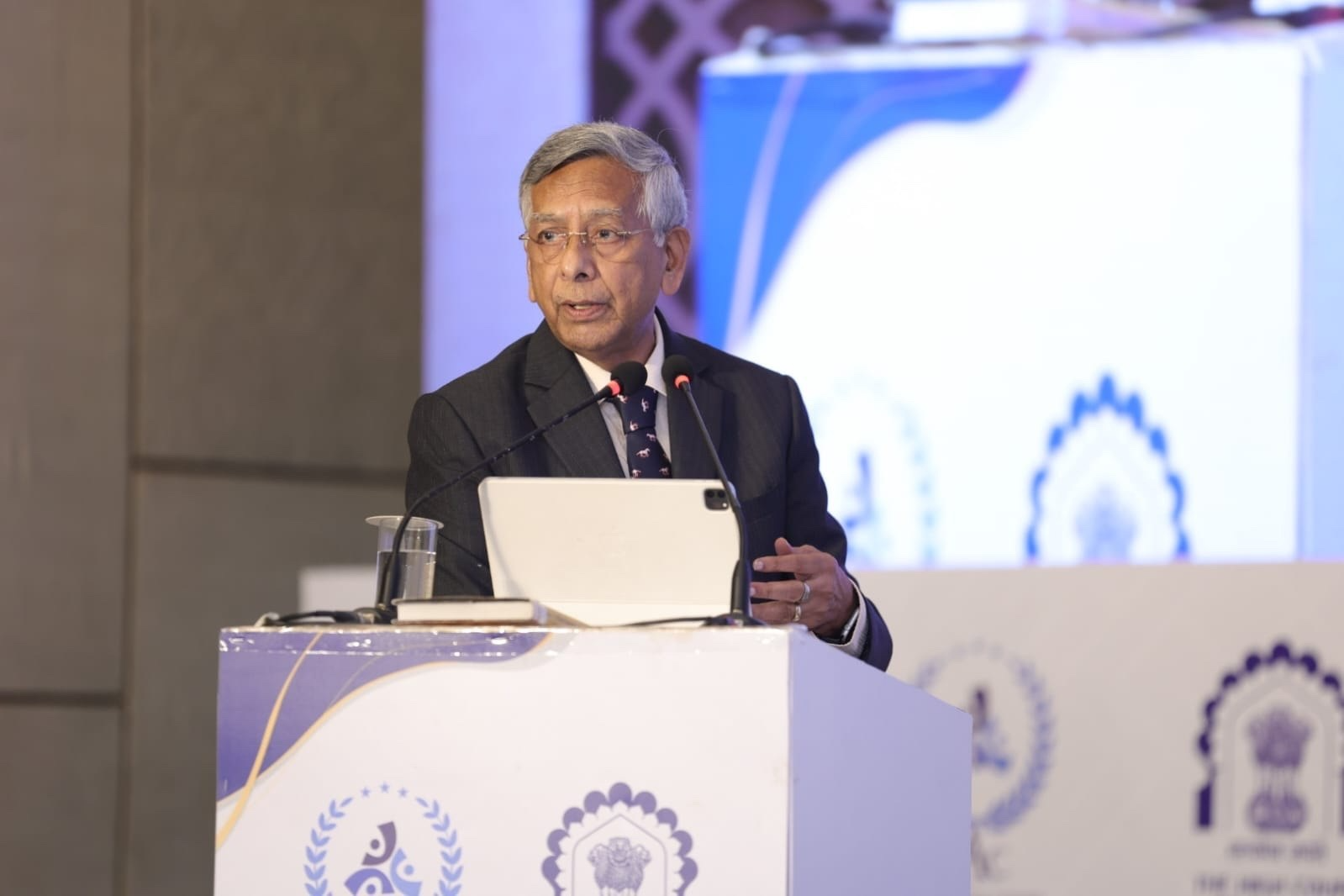
Rather than offering a narrow prescription for statutory amendments, the Attorney General emphasised that the future of Indian arbitration must be viewed within a wider global, economic, social and institutional context. He invited the arbitration community to look beyond the text of the law and consider the institutions, professional practices, ethics, accountability and procedural culture that collectively shape India’s arbitration regime.
Arbitration and India’s changing economic landscape
The Attorney General observed that India is undergoing significant economic and social transformation, alongside other economies across Asia, Africa and South America. The increasing movement of financial, intellectual, and human resources across borders has created a corresponding need for dispute-resolution systems that are efficient, credible, and responsive to the realities of a global economy.
He noted that India is increasingly moving towards a free-market, innovation-driven and creative economy. Such an economy requires strong institutional and infrastructural support, including a dispute-resolution framework capable of providing certainty while protecting legitimate public and constitutional interests.
At the same time, he cautioned against viewing regulation merely as an obstacle to economic activity. Regulation remains necessary to ensure that constitutional objectives and public interests are not sacrificed in the pursuit of commercial efficiency. The challenge, therefore, is to strike an appropriate balance between ease of doing business, investor confidence, public accountability and the protection of legitimate domestic interests.
Looking beyond the Arbitration Act
A central theme of the address was that the future of arbitration cannot be determined merely by examining individual provisions of the Arbitration and Conciliation Act.
The Attorney General emphasised that the term “arbitration regime” must be understood more broadly. It includes not only legislation, but also judicial interpretation, procedural practices, institutional structures, professional attitudes, ethics, accountability, and the manner in which all participants engage with the arbitral process.
He therefore urged the arbitration community to move beyond a narrow debate about statutory amendments and undertake a comprehensive assessment of what has worked, what has failed and what has resisted change during the nearly three decades since the present legislative framework came into force.
He suggested that India should undertake a systematic exercise of examining the evolution of individual provisions and identifying which aspects of the law have successfully adapted, which have resisted transformation and which require further development.
From ad hocism to institutional arbitration
The Attorney General identified the persistence of ad hoc arbitration as one of the significant structural challenges facing India.
While acknowledging the efforts being made towards institutionalising arbitration, including the creation of the Arbitration Bar of India, he observed that the transition from an ad hoc culture to a mature institutional arbitration ecosystem has been slower than anticipated.
He stressed that institutionalisation is not simply a matter of establishing institutions. It requires the development of a genuine culture of arbitration, supported by trained professionals, specialised practitioners, effective procedural systems, and a shared commitment to efficiency, ethics, and accountability.
The Bar, in his view, has a particularly important role to play in this transition. He called upon lawyers practising in arbitration to participate actively in building the Arbitration Bar of India and to contribute to the development of a more professional and institutionalised arbitration ecosystem.
The need for an arbitration culture
One of the strongest messages of the address was the need to develop a deeper culture of arbitration in India.
The Attorney General explained that such a culture encompasses much more than knowledge of the law. It includes:
-
specialised and continuously trained arbitration practitioners;
-
full-time and serious engagement with arbitration;
-
flexible procedures suited to the nature of individual disputes;
-
efficient truth-finding mechanisms;
-
ethical standards and professional accountability;
-
transparency in the conduct of proceedings; and
-
a genuine commitment to resolving disputes expeditiously.
He cautioned that merely importing procedural models from other jurisdictions would not be sufficient. India must internalise international best practices while also recognising its own legal, social, economic and institutional realities.
The transition from an adversarial litigation culture to an effective dispute-resolution culture, he observed, cannot happen in a linear manner. It requires changes in professional attitudes, institutional practices, and judicial approaches alongside legislative reform.
Speed, efficiency and the importance of ethics
The Attorney General acknowledged the importance of speedy dispute resolution and the need to address delays. However, he cautioned against treating speed as the sole measure of a successful arbitration regime.
He emphasised that commercial disputes frequently involve substantial financial interests, and that legitimate claims must be resolved efficiently. At the same time, arbitration cannot be designed on the assumption that every claim is genuine or straightforward. Issues of excessive claims, unfounded allegations, and fraudulent or questionable claims must also be appropriately addressed.
Accordingly, he argued that efficiency cannot come at the cost of ethics, accountability, and procedural fairness.
In his view, greater institutionalisation provides an opportunity to address these concerns more effectively. A mature arbitration regime must therefore combine speed with integrity.
Arbitration as a distinct legal order
The Attorney General also raised a broader jurisprudential question concerning the relationship between the arbitral legal order and the domestic legal order.
This tension, he observed, becomes particularly visible in international commercial arbitration and investment treaty arbitration. The development of arbitration as a specialised dispute-resolution system raises questions about how its autonomy should be balanced against fundamental principles of domestic law and justice.
He suggested that India’s arbitration framework must recognise this tension rather than attempting to resolve it through simplistic approaches. The objective should be to develop a system that respects arbitral autonomy while ensuring that fundamental legal and public-interest considerations are not compromised.
The role of the judiciary
Reflecting on the evolution of Indian arbitration jurisprudence, the Attorney General referred to important judicial developments and acknowledged that courts have sometimes had to intervene to correct serious arbitral errors.
In this context, he spoke candidly about his own involvement in the DMRC arbitration matter, explaining that his concerns regarding the arbitral award arose from his understanding of the underlying proceedings and what he considered to be serious issues affecting the integrity of the award.
He clarified that, in his view, the decision in that matter should not be understood as a reversal of India’s broader commitment to arbitration. Rather, it represented a particular judicial intervention arising from the circumstances of that case.
His broader message was that judicial intervention and arbitral autonomy must be carefully balanced, and that isolated cases should not necessarily be treated as defining the trajectory of Indian arbitration law.
A practical approach to procedural reform
One of the most practical suggestions emerging from the address was the development of a handbook or comprehensive procedural framework for arbitration practice.
The Attorney General illustrated the value of procedural innovation by referring to an arbitration in which evidence and cross-examination had been delayed for several years. By agreeing upon a structured pre-evidence procedure and identifying procedural steps in advance, the parties and tribunal were able to complete the evidentiary process within a much shorter period.
He suggested that similar approaches could be developed more systematically through procedural rules, regulations or a handbook that would provide guidance to tribunals and practitioners without unnecessarily burdening the principal statute with excessive detail.
Such a framework could address issues including evidence, multi-party arbitrations, procedural management, case timelines and other practical aspects that cannot always be adequately dealt with through statutory provisions alone.
Rethinking the approach to law-making
The Attorney General also called for a broader approach to delegated rule-making.
Rather than attempting to place every procedural answer directly into the primary legislation, India could consider providing broader statutory principles and enabling more flexible procedural rules and regulations.
Such an approach, he suggested, would allow the arbitration regime to evolve in response to changing commercial practices without requiring constant legislative amendments.
This would be particularly important in emerging areas such as third-party funding, multi-party arbitration and international investment arbitration, where the existing statutory framework may not always provide direct answers.
Government litigation and arbitration
The Attorney General also addressed the question of government participation in arbitration and litigation.
He recognised the importance of reducing unnecessary government litigation and referred to efforts towards developing a national litigation policy. However, he cautioned that government litigation cannot be understood simply as a matter of institutional reluctance.
Government decision-making involves complex accountability requirements, particularly where public finances are concerned. The interests of the State and the expectations of private investors therefore need to be balanced carefully.
He emphasised that public finance and public accountability are as important as private commercial interests, and that reforms should not undermine the government’s responsibility to protect public resources.
International investment arbitration and India’s global role
The address also placed India’s arbitration policy within the changing landscape of international investment.
The Attorney General observed that India is no longer merely a recipient of foreign investment. It has increasingly become an exporter of investment, including investments across developing economies in Asia and Africa.
This changing position requires India to reconsider its approach to investment treaty arbitration. The country must protect legitimate domestic interests while also recognising the legitimate expectations of investors.
He argued for a more balanced approach in which investors are not treated as an “unruly horse”, while States are also willing to adapt and provide reasonable protections for investment.
The next generation of investment treaties, he suggested, may need to reflect this balance more effectively by accommodating both investor interests and legitimate domestic regulatory concerns.
India and the global arbitration landscape
The Attorney General further observed that the future of international dispute resolution should not be viewed merely as a competition between established centres such as Singapore, London, Paris or Dubai.
Instead, the global arbitration ecosystem should evolve towards multiple centres of excellence, with different jurisdictions developing credible and specialised dispute-resolution capabilities.
India, he suggested, has the potential to develop such centres of excellence across different parts of the country. Cities such as Gandhinagar and Bengaluru, among others, could play an important role in this development if the necessary institutional ecosystem is created.
The emergence of new international dispute-resolution centres around the world, including new approaches to investment and commercial disputes, should be viewed as part of a broader transition in the global distribution of economic and institutional power.
A 20—30 year roadmap for Indian arbitration
Rather than advocating a series of immediate or isolated statutory amendments, the Attorney General called for a long-term roadmap for Indian arbitration.
He cautioned against knee-jerk legislative reactions and argued that reforms should be informed by India’s expected economic and financial engagement with the global economy over the next 20 to 30 years.
The central question, therefore, should not simply be “What amendment should be made to the Arbitration Act?” but rather, what kind of arbitration regime does India need for the next generation of its economic and global engagement?
This requires studying international experience, evaluating India’s own three decades of arbitration practice and identifying the institutional, procedural, ethical and substantive reforms necessary to build a mature system.
The way forward
The Attorney General concluded by emphasising that there may not be a single legislative solution capable of transforming India’s arbitration landscape.
Instead, the next stage of arbitration reform requires a collective effort involving the judiciary, the Bar, arbitral institutions, government, and the wider legal community.
He called upon the Bar to take greater ownership of the transition and stressed that lawyers and arbitration practitioners are among the most important engines of change.
He also indicated that discussions were already taking place within government and expressed hope that a more comprehensive working framework for reform could emerge in the coming months. Such a framework, he suggested, should examine both substantive and procedural reforms while retaining the fundamental principles of ethics, accountability and fairness.
Conclusion
The valedictory address offered a vision of Indian arbitration that extends well beyond amendments to existing legislation. The Attorney General’s central message was that India must move from an ad hoc, procedure-driven approach towards a mature arbitration culture built on institutionalisation, professional excellence, ethical accountability, procedural flexibility and long-term thinking.
As India assumes a larger role in global commerce and investment, its dispute-resolution institutions will increasingly become an important component of its economic infrastructure. The task ahead, therefore, is not merely to make arbitration faster, but to make it credible, ethical, internationally respected and capable of serving India’s economic and constitutional objectives.
The address ended on an optimistic note: India has the opportunity to shape the next phase of global arbitration rather than merely follow models developed elsewhere. The challenge now is for the judiciary, government, institutions and particularly the Bar to convert that vision into a sustained programme of reform.





