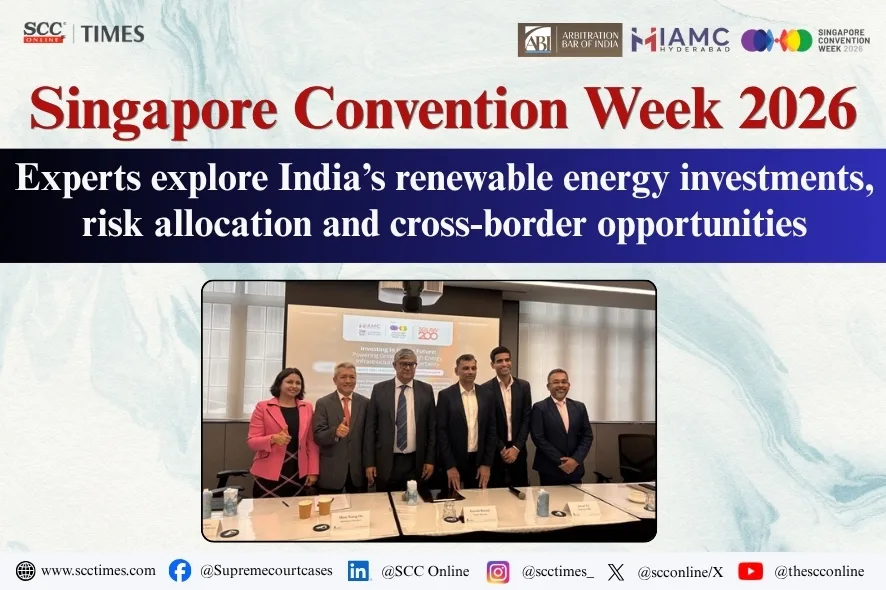
Singapore Convention Week 2026 brought together the international dispute resolution community through a series of events held from 24 to 28 August 2026. As part of the week’s programme, the International Arbitration and Mediation Centre (IAMC), Hyderabad, and the Arbitration Bar of India (ABI) hosted an event titled “Investing in India’s Future: Powering Growth Through Energy, Infrastructure & Legal Certainty”.
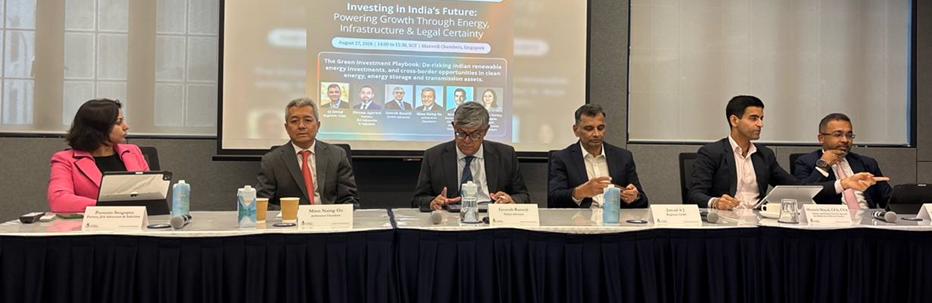
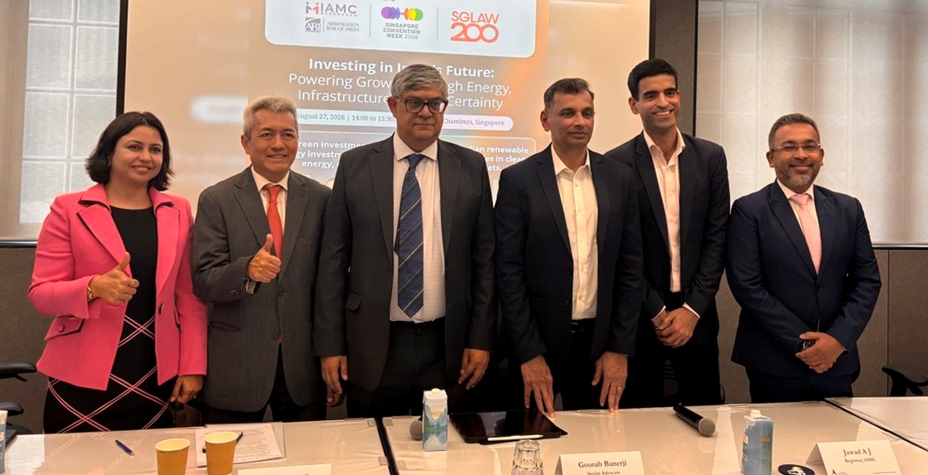
[In Picture Left to Right: Poonam Verma Sengupta, Minn Naing Oo, Gourab Banerji, A.J. Jawad, Montek Mayal and Divyam Agarwal]
The event’s second panel, titled “The Green Investment Playbook: De-risking Indian renewable energy investments, and cross-border opportunities in clean energy, energy storage and transmission assets,” brought together experts from arbitration, legal practice, dispute resolution and quantum assessment. Poonam Verma Sengupta, Partner, JSA Advocates and Solicitors, moderated the discussion, which featured:
- Senior Advocate Gourab Banerji, President, ABI;
- A.J. Jawad, CEO and Registrar, IAMC;
- Divyam Agarwal, Partner, JSA Advocates and Solicitors;
- Minn Naing Oo, Independent Arbitrator and Mediator; and
-
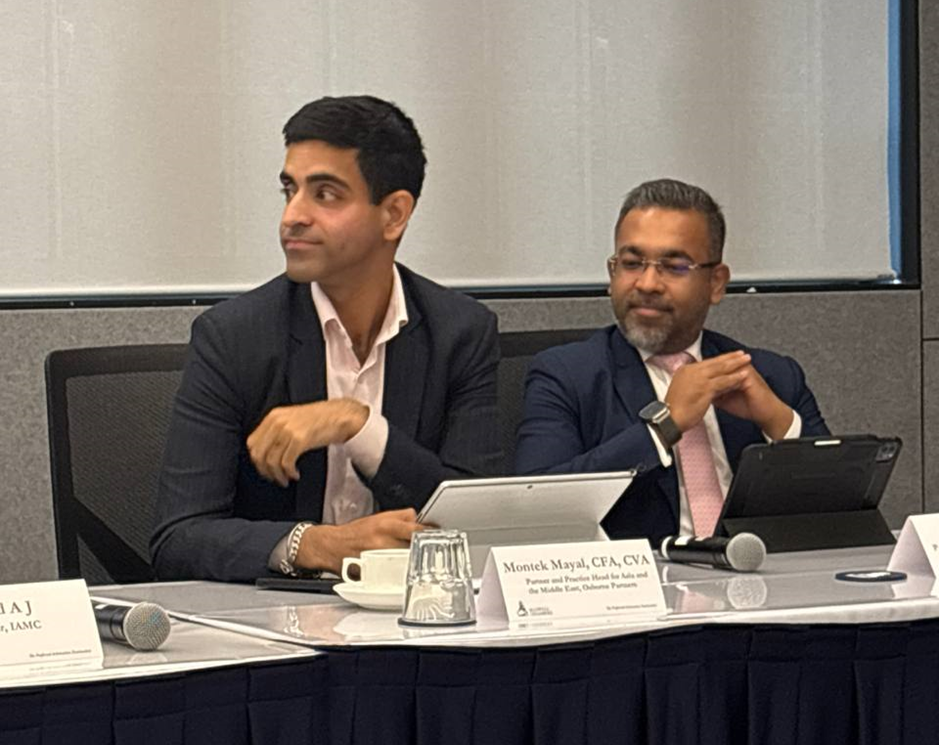
Montek Mayal, Partner and Practice Head for Asia and the Middle East, Osborne Partners.
The discussion examined the risks confronting renewable energy projects before and during their operational life. It also considered how those risks should be allocated contractually, how they should be reflected in valuation and damages analysis, and how dispute-resolution mechanisms can be structured for projects involving multiple contracts, parties and technical issues.
Renewable energy projects present a different risk profile
Opening the discussion, Poonam Verma Sengupta noted the shift from conventional power-sector disputes towards disputes arising from renewable energy projects. She pointed to issues involving grid connectivity, intermittency, battery degradation and the technical performance of assets as examples of the changing dispute landscape.
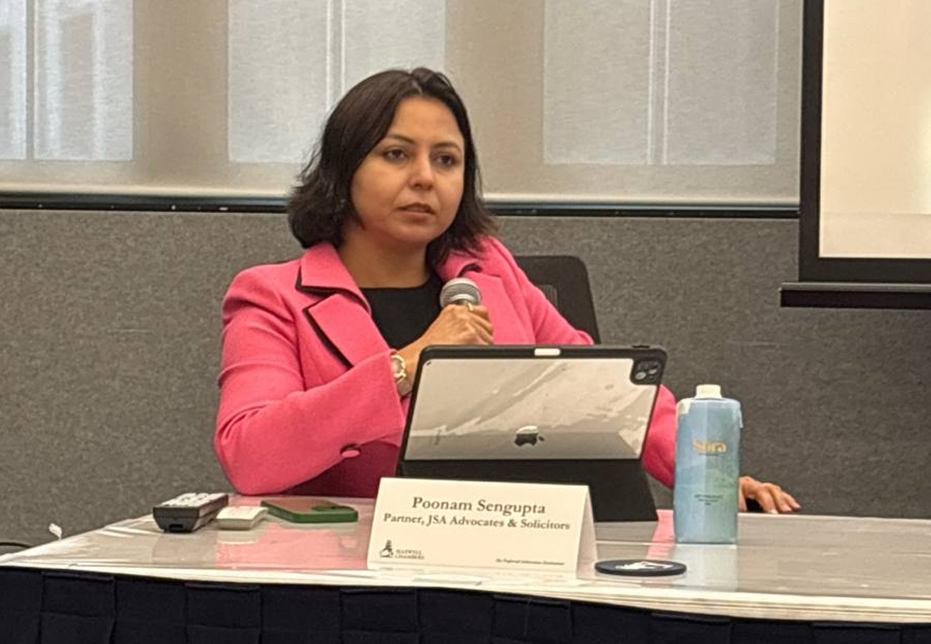
Minn Naing Oo identified payment risk as one of the significant risks confronting large infrastructure projects. He explained that even where a project has been successfully established, uncertainty over whether payments will actually be received can affect the wider financing structure. Currency risk can compound that problem where financing is raised in one currency while project revenues are earned in another. He also referred to the implications of changes in law and restrictions on moving funds across borders.
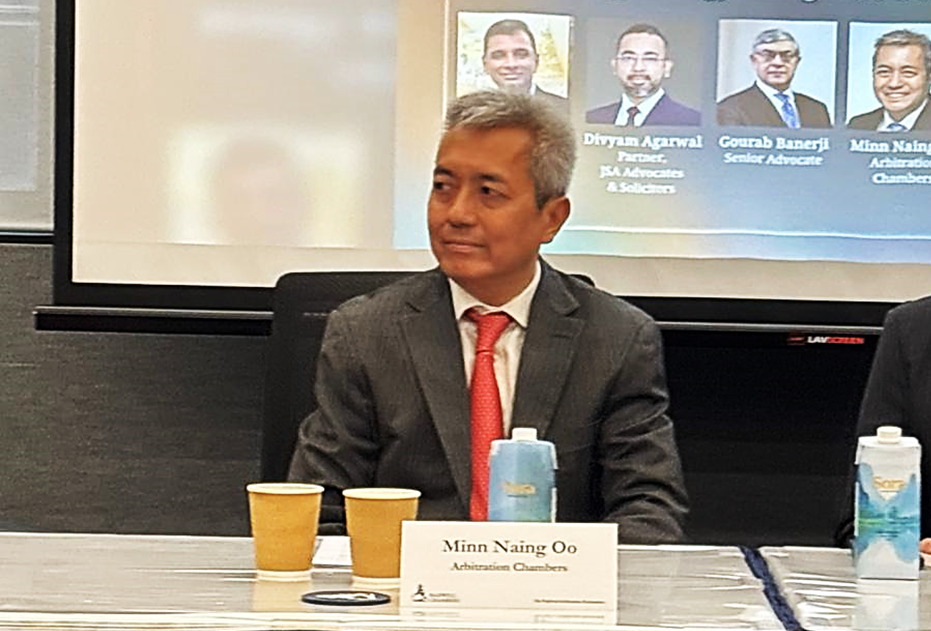
The discussion then turned to how these risks should be allocated between parties. Senior Advocate Gourab Banerji contrasted renewable energy projects with conventional thermal power projects. In his view, renewable projects involve multiple risks at different stages, including force majeure, change in law, commercial hardship, land acquisition, grid connectivity, curtailment and climate-related risks.
Risk allocation must consider who can control the risk
Gourab Banerji referred to the Abrahamson principles1, under which risk should be placed with the party best able to control, foresee, mitigate, benefit from or absorb it, rather than simply with the party holding the stronger bargaining position. He said this could provide a framework for considering contractual allocation of risk.
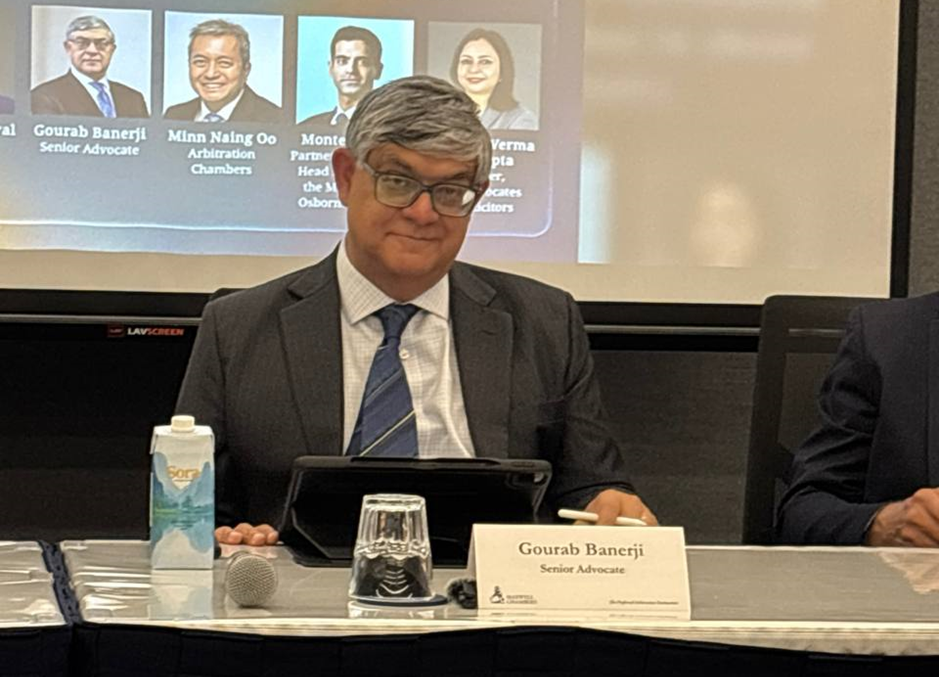
On change in law, he observed that the issue was increasingly becoming a recurring feature rather than an exceptional event. He said contractual allocation could depend on factors such as the relevant cut-off date, but there was no single answer applicable to every project. He similarly noted that grid connectivity presented relatively newer questions concerning allocation of risk.
Montek Mayal approached the issue from the perspective of investment and financial modelling. He said investors could no longer simply rely on the face value of a power purchase agreement. State-level curtailment issues, actual production and credit risk also needed to be considered when assessing an investment.
Energy transition is changing valuation assumptions
Montek Mayal also examined the effect of the energy transition on the valuation of traditional power assets. He noted that the scale and speed of the transition were changing the assumptions historically used to value long-term energy assets.
He referred to assumptions concerning the operating life of assets and their future load factors. In his view, valuation exercises increasingly need to consider how the transition may affect the life of an asset and its future operating conditions. Potential future costs, including carbon-related and decommissioning costs, may also need to be considered.
The same issue arose in relation to long-term oil and gas valuations. Montek Mayal explained that short-term price movements should be distinguished from assumptions concerning long-term prices. Emission targets and different future scenarios can affect those long-term assumptions and, consequently, damages and valuation exercises in disputes involving energy assets.
Foreign investors and the “three Cs”
Divyam Agarwal framed the concerns of foreign investors around what he described as the “three Cs”, i.e., certainty, clarity and consistency. He illustrated the first through an example involving a solar power project where delayed land allocation by a state entity affected project implementation and subsequently became connected with tariff and liability issues.
He said that clarity was also important in determining the mechanisms available to an investor if a contractual or governmental decision affected the project. He referred to questions surrounding treaty protection and the appropriate forum for resolving disputes. Consistency, in his formulation, included concerns arising from changes in government and changes in policy or regulation.
The discussion on foreign investment also brought differing views on the role of investment treaties. Montek Mayal emphasised the importance of treaty protections for attracting foreign capital, particularly protections against expropriation and regulatory changes. Gourab Banerji took a different view of the practical importance investors presently attach to treaty protections in India and emphasised the importance of recovery and effective dispute resolution.
Minn Naing Oo added that a UNIDROIT-ICC project was working on a model international investment contract addressing issues including change in law, hardship and force majeure.
Where regulation ends and arbitration begins
A substantial part of the discussion concerned the relationship between regulatory proceedings and arbitration in the electricity sector.
Gourab Banerji distinguished tariff disputes, which he said fall within the regulatory framework, from other disputes that may arise in renewable energy projects. He identified disputes involving EPC contractors, supply, operation and maintenance, battery storage, performance and shareholders as examples of matters that may raise different questions concerning arbitrability.
A.J. Jawad observed that renewable energy disputes can involve a bundle of interconnected contractual and regulatory issues. He said the complexity of such disputes made the decision-maker’s expertise particularly relevant and expressed support for institutional arbitration in this context.
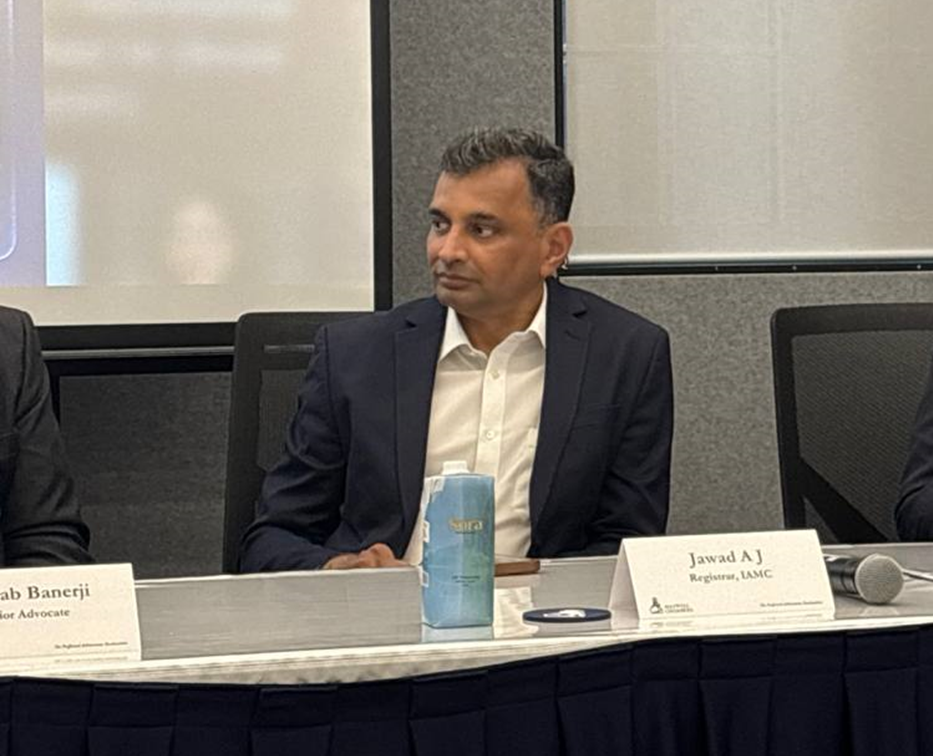
He also shared an earlier experience involving an EPC contract for a wind farm. Despite a substantial claim and considerable arbitration expenditure, the claimant was ultimately left without recovery after the opposing company disappeared around the time the award was received. He used the example to underline the importance of considering dispute resolution and settlement mechanisms alongside the eventual enforcement of an award.
Seat selection must account for enforcement
The panel also considered the selection of the arbitral seat for cross-border renewable energy projects.
Divyam Agarwal stressed that selecting a seat is not merely about where the arbitration will be conducted. The eventual enforceability of the award must also be considered. He referred to reciprocity between jurisdictions as one factor that should be examined when selecting a seat and contrasted jurisdictions where reciprocal arrangements exist with situations where enforcement may present additional difficulties.
The point was particularly relevant to projects involving Indian entities and counterparties in other jurisdictions, where the contractual choice of seat may have consequences beyond the conduct of the arbitral proceedings itself.
Multi-contract projects require coordination at the drafting stage
The panel next considered the difficulties created by projects involving multiple contracts. A renewable energy project may involve separate Engineering, Procurement, and Construction (EPC), Power Purchase Agreement (PPA), transmission, billing, financing, joint venture and consortium agreements, each potentially containing different dispute-resolution provisions.
A.J. Jawad suggested that tribunals dealing with such disputes may benefit from a combination of cross-contract experience and technical expertise. He also suggested that appointment mechanisms should anticipate multi-contract disputes at the drafting stage rather than waiting until a dispute arises.
He further referred to the possibility of using compatible arbitration clauses, seats and, where permissible, overlapping arbitrators across related contracts to facilitate consolidation or coordinated proceedings.
Gourab Banerji noted that consolidation can be difficult to achieve in an ad hoc setting and regarded institutional arbitration as one possible means of addressing the problem.
Contract management and record keeping remain critical
Minn Naing Oo emphasised that dispute preparedness begins during the life of the project rather than when a dispute has already arisen.
He stressed the importance of maintaining proper records, particularly where a developer is dealing simultaneously with an off-taker, financiers and other contractual counterparties. Notices, project records and other documentation should be maintained so that the relevant material is available if a dispute subsequently develops.
He also connected contract management with dispute-resolution drafting. Where different agreements contain different arbitration arrangements, parties may later face difficulties in coordinating disputes arising from the same project. He therefore emphasised the need to consider the scope and structure of dispute-resolution provisions from the outset.
Valuation must avoid double-counting risk
Montek Mayal then addressed how legal and commercial risks should be reflected in damages models.
He said valuation assumptions must reflect the current market environment, particularly when modelling long-term cash flows. Inflation, interest rates and other assumptions need to be appropriate to the period being assessed.
He also cautioned against incorporating the same risk multiple times. For example, operational risks relating to grid constraints, land availability or transmission may already be reflected in projected cash flows. Adding another risk premium to the discount rate for the same factor could result in the risk being counted twice.
Montek Mayal further emphasised the importance of causation in damages analysis. He distinguished factual, legal and economic causation and said that establishing the link between the alleged breach, the resulting effects and the claimed loss requires coordination between counsel, fact witnesses and quantum experts.
Battery storage introduces new technical questions
The panel also turned to battery energy storage systems and the dispute risks associated with newer technologies.
Gourab Banerji identified battery degradation, grid fluctuations and augmentation as examples of issues that can raise questions about contractual risk allocation. He noted that degradation is difficult to predict over the long operating life of an asset, creating questions concerning which party should bear the resulting risk.
Montek Mayal explained that these technical uncertainties can affect the assessment of damages. Degradation curves and round-trip efficiency losses can make loss assessments less deterministic. He therefore referred to the use of scenario analysis and Monte Carlo simulations2 to present a range of possible outcomes rather than relying on a single point estimate.
Divyam Agarwal added that contracts should, where appropriate, provide mechanisms for addressing technical questions before they become full-scale disputes. He referred to the use of technical experts and agreed testing mechanisms where issues such as asset degradation arise.
Gourab Banerji similarly suggested that projects could benefit from agreed testing procedures, independent engineers and staged remedies to address technical issues before they reach a full arbitral hearing.
Cross-border renewable energy will multiply the points of risk
The discussion then moved to cross-border electricity trade, including India’s renewable energy relationships with neighbouring countries.
Minn Naing Oo noted that cross-border projects introduce additional layers of risk because more than one legal and regulatory system is involved. These can include changes in law, grid and transmission reliability, currency fluctuations and restrictions affecting cross-border payments.
Gourab Banerji distinguished the position of the Indian Government in domestic projects from its role in cross-border energy relationships. He referred to examples involving Bhutan and Bangladesh in discussing situations where political considerations could interact with commercial disputes.
Building expertise into the dispute-resolution framework
In the closing part of the discussion, the panellists were asked what legal or structural reform could help facilitate further clean-energy investment in India.
Divyam Agarwal pointed to tiered dispute-resolution clauses and expert intervention. Gourab Banerji emphasised the need for more professional expertise among arbitrators dealing with technically complex energy disputes and referred to the need for greater training. Minn Naing Oo broadened the point to the wider dispute-resolution ecosystem, including counsel, experts and judges with sufficient understanding of commercial and technical issues.
Montek Mayal returned to the question of foreign capital and argued for effective investment protections, while Gourab Banerji expressed a different view on the practical importance of treaty protection for investors coming to India. Their exchange underscored that the question remains contested rather than presenting a single agreed position among the panellists.
Conclusion
The discussion ultimately brought together several stages of the renewable energy investment cycle: structuring the investment, allocating contractual risks, valuing potential losses, managing technical and regulatory issues, and designing an effective dispute-resolution mechanism.
The panellists repeatedly returned to the need to address these questions before disputes arise. Contract drafting, project records, technical expertise, appropriate valuation assumptions and consideration of enforcement can all become relevant when a long-term energy project encounters difficulty. The session therefore provided a practical discussion of the legal and commercial issues that arise as India’s renewable energy and cross-border power infrastructure continues to develop.
1. Max Abrahamson’s principles for risk allocation
2. Probability based technique used to predict outcomes