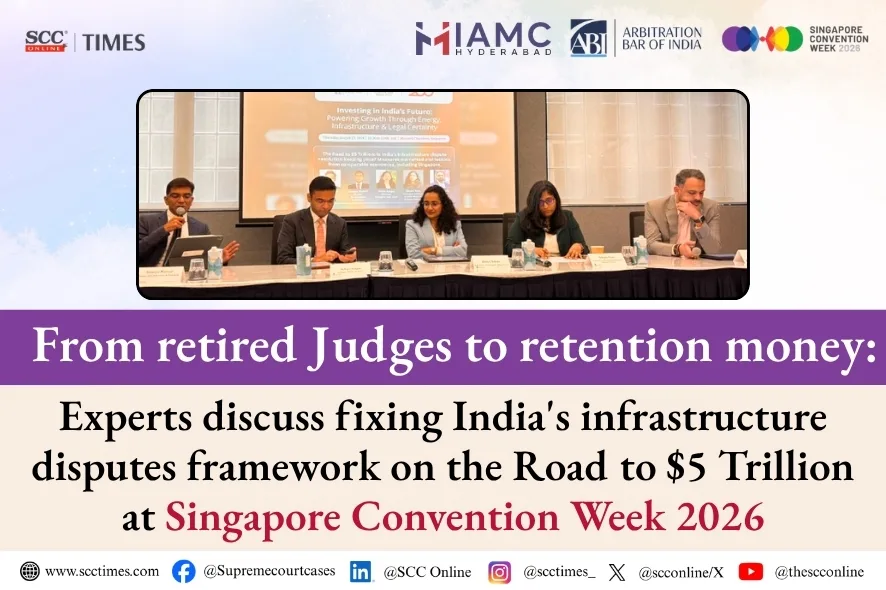
On the occasion of the Singapore Convention Week 2026, the International Arbitration and Mediation Centre, Hyderabad, (IAMC) and Arbitration Bar of India (ABI) conducted an event on the theme “Investing in India’s Future: Powering Growth Through Energy, Infrastructure & Legal Certainty”, on 27 August, 2026 at the Maxwell Chambers, Singapore.
In a session titled “The Road to $5 Trillion: Is India’s Infrastructure dispute resolution keeping pace? Measures warranted and lessons from comparable economies, including Singapore”, the panellists explored issues that plague modern infrastructure disputes, such as managing the number of disputes, lack of authority of government officials, delays and strict timelines, etc., as well as key solutions that India could implement soon.
Moderated by Mr. Ananya Kumar, Partner, JSA Advocates & Solicitors, the session consisted of esteemed panellists namely, Mr. Aditya Singh, Partner, White & Case, Ms. Divya Adepu, Advocate, Telangana High Court, Ms. Ishani Vora, Principal and Head of Disputes, Osborne Partners, and Mr. Shashank Garg, Senior Advocate and Secretary, ABI.
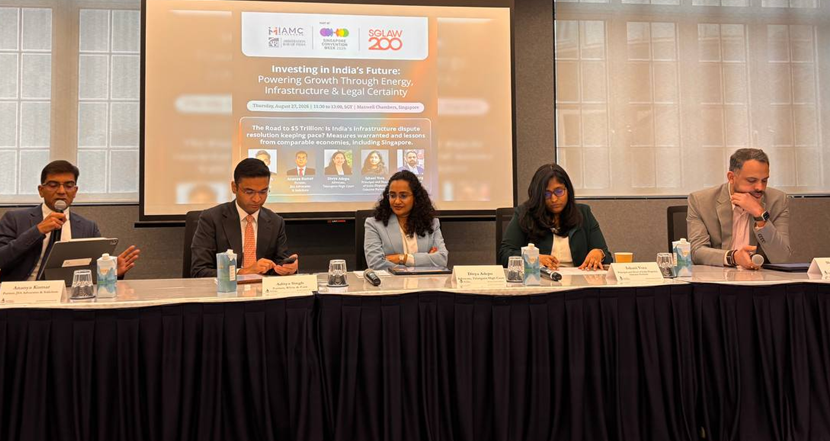
In frame (left to right): Ananya Kumar, Aditya Singh, Divya Adepu, Ishani Vora and Shashank Garg.
Kickstarting the session, Mr. Ananya Kumar underscored that India’s infrastructure sector is one of the primary engines of economic growth and is playing a large part in driving the country’s trajectory towards a $5 trillion economy. The total infrastructure spending over the last few years has substantially increased, and capital expenditure has exceeded 125 million USD. Furthermore, he stated that India was not short of ambition as its plan between 2024 and 2030 was to invest trillions of dollars in this sector.
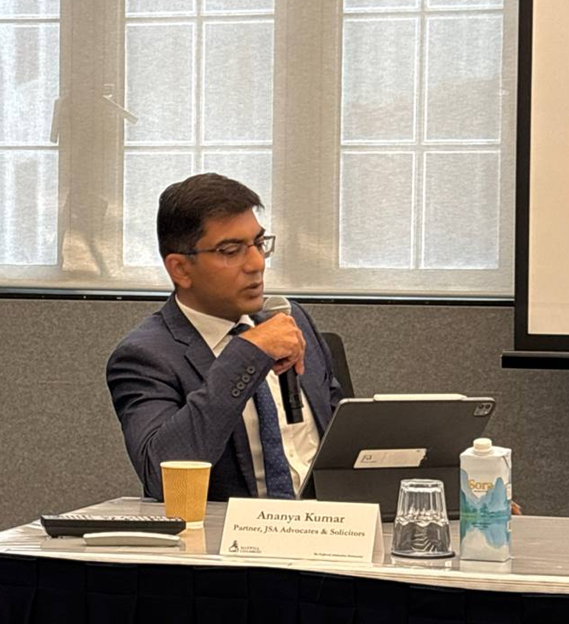
However, for India’s infrastructure growth plans to succeed in the long term and for it to attract foreign investments in these sectors, he believed that it was necessary to showcase the ease of doing business in the country. A key metric, according to him, particularly in a sector where liquidity and cash flow are paramount considerations, was how well the dispute resolution systems are geared to deal with project-related issues.
With this background, he introduced the panellists and hoped to answer the following questions:
-
Is India’s dispute resolution model fit for infrastructure as we see it today?
-
What does a dispute really cost?
-
Since the government is a party in many infrastructure disputes in India, does this make early resolution difficult?
-
What realistically can India learn from Singapore?
Problem lies in management, not capacity: Mr. Shashank Garg
Answering whether India’s issue was the huge amount of arbitration interest, Mr. Shashank Garg replied in the negative. He stated that there were sufficient arbitration disputes, but they were within India’s capacity to manage; instead, the problem lay in the management of arbitration disputes. To substantiate his point, he gave an analogy of a car that works well on Singapore roads might not work as well on Indian roads; the issue here could be the roads and the driver. He remarked, “The same model seems to be working elsewhere. Effectively, people are able to get their disputes articulated in a very timely fashion, but when we look at India, and we look at the domestic market, the same formula is just not fitting.”
Mr. Garg flagged the problems arising from several knee-jerk reactions by stakeholders, such as the issuance of the 2024 Office Memorandum1 and subsequent circulars by various public sector undertakings, which stated that the threshold for arbitration would be 10 crores, which is meagre for infrastructure disputes. He added that India did not have sufficient jurisprudence on the new asset class being developed, such as the 12-gigawatt data centers being invested in by 2030 and the national high-speed railway infrastructure.
Mr. Garg India was looking at projects that it had not seen in the past decade, so it needed to identify factors that it can address, like the number of arbitrators trained in infrastructure disputes, appointment of arbitrators with technical expertise, etc. He suggested that the arbitral tribunal should have at least one expert in the field to ensure the tribunal’s awareness of a dispute’s complexity at the outset, efficient case management, division of quantum liability issues, etc.
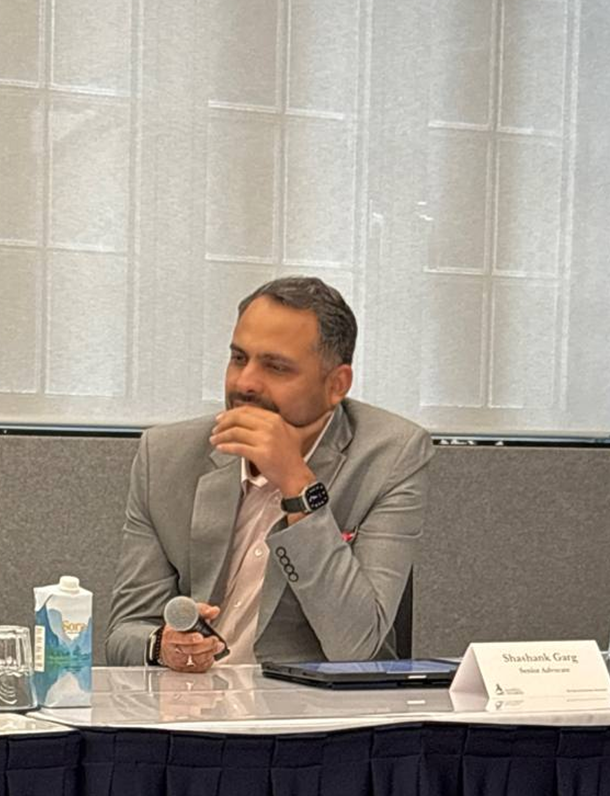
Regarding appointment he remarked, “There is no problem with retired judges, but can you look at these complex infrastructure disputes with the same set of people who may not have the technical expertise, who are overwhelmed with the number of disputes they accept/ the arbitral appointments they accept, their diaries are overflowing, but yet as law firms, as clients, we keep appointing the same set of people. So, we keep blaming the same people, we appoint the same people, and then we cry that there is a problem.”
Thus, he suggested that India needed to discipline its adjudication of disputes wherein the biggest strain would be capacity due to lack of investment in the correct arbitration infrastructure.
Delay and procedural issues: Mr. Aditya Singh
Regarding the time sensitivity and nuances of infrastructure disputes, Mr. Aditya Singh disagreed that the Indian dispute resolution process was effective. He stated that the delay in deciding the dispute often changes the nature of the dispute itself. However, this was not a uniquely Indian issue.
“A process can be legally sound, and it can be commercially entirely ineffective.”
He stated that construction disputes everywhere take a long time. They are the largest, most complex matters with extensive submissions and the maximum number of witnesses and technical experts. Furthermore, due to due process paranoia, which now pervades all jurisdictions, arbitrators are often hesitant to impose discipline on parties and counsels, whether it is about the volume of submissions or the time that the parties have.
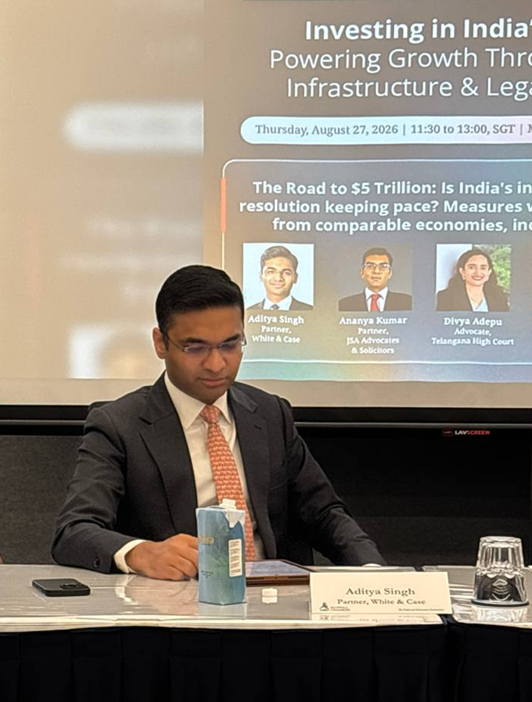
Mr. Singh added that there is also a fear that their award will be set aside, or it will not be enforced, despite significant empirical evidence to demonstrate that in an overwhelming majority of cases, courts do not interfere with arbitral awards. Thus, he suggested that such behaviour needed to change across jurisdictions.
Infrastructure disputes with government parties: Ms. Divya Adepu
At the outset, Ms. Divya Adepu stated that all infrastructure disputes were often in a public-private partnership model, especially in India, and the government is invariably the most important party. In such disputes with government parties, she expressed that the biggest obstacle is the government’s litigious approach for various reasons.
Underlining the lakhs of pending cases with the government as a party, she stated that being the biggest litigator or party, even in ADR proceedings, the government had to reconsider its litigation policy to decide which matters it would appeal and which ones it would not. She added that the fear of reproach while representing a government entity had to be addressed too.
“Being the biggest litigator in courts, the government if it takes a very proactive stand, this docket explosion can be reduced to a great extent.”
Referring to the Expert Committee Report 2024 on Arbitration2, Ms. Adepu mentioned the recommendation of mandatory implementation of not challenging an award if there is a bona fide recommendation. She added that despite guidelines recommending exhaustion of all judicial avenues before challenging an award, a government entity suffering an adverse order would hold the officers or whoever accountable, and there is pressure to challenge. Thus, there was a need for a mindset change- from a litigious party to a proactive party which decides which awards it would challenge or accept. Furthermore, Queen Mary University of London’s 2025 International Arbitration Survey mentioned that an award is better accepted by a private party and less prone to challenge than a government entity.
“Infrastructure is ultimately the backbone of development of the country. If you’re stalling this, the entire economy is going to collapse.”
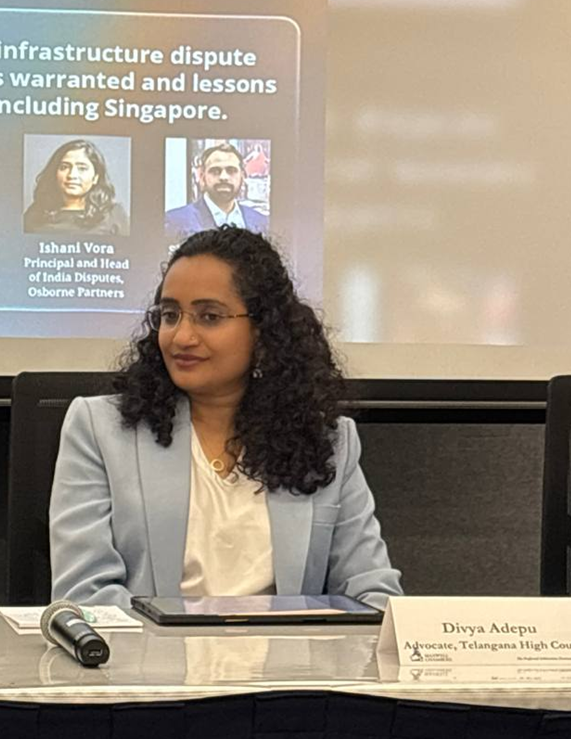
She suggested that when a contract is entered into, whether it’s a government party or it’s a private party, as long as it’s a contracting party and when the object is for a lawful purpose and not against public policy, one had to view themself as just a party to the contract. There should not be any garb or any extra weight of being a government entity.
Regarding the argument of public money being involved in government litigation, Ms. Adepu opined that there could not be a concept of ‘public money’ as the government too is a contracting party which must stick to the contract. She remarked, “Once you shed this, once you think, once a government entity in India or elsewhere, once it loses this garb of that additional public money or the protection, and once this litigious approach is reduced, then there can be a shift.”
Adding to the conversation and agreeing with Ms. Adepu, Mr. Garg stated that the roadblock arises after an award has been passed. He also recounted a case wherein a public sector undertaking’s (PSU) chief legal advisor asked whether they should challenge an award despite having no claims or counterclaims. This demonstrated the mechanical manner of operating PSUs; however, he observed that this was changing. He stated, “I now see most infrastructure sector PSUs wanting to win the arbitration. They are not going with the mindset to participate and put responsibility on some officer. They are doing whatever it takes to get the best legal representation. The more uptake of experts in arbitration by PSUs has really started in the last 5-7 years. They now know it’s a new normal, and without it, they would have a significant disadvantage. So, there is that mind shift happening.”
Regarding shifting gears from dispute resolution to dispute avoidance, he stated that lawyers would not encourage the same, but it was invariably the way forward. He added that a dispute does not only impact the employer and the contractor, but also various subcontractors, lenders, etc., who do not find value in or trust the dispute resolution clauses anymore. Thus, he suggested the formulation of a standing dispute avoidance board or something that is not ad hoc, mentioned in the contract, and includes a trusted set of people by both parties; then the parties could approach the board with a limited aspect of the dispute for resolution.
He further suggested mandatory mediation after the discovery of documents stage so all parties could assess the real strength of their case and have an honest mediation before arbitration begins.
Cost of delay in infrastructure disputes: Ms. Ishani Vora
At the outset, Ms. Ishani Vora opined that if India wants to become an infra hub and reach $5 trillion, dispute resolution must be viewed as a part of the ecosystem itself. We should also think about the cost of capital that gets stuck in disputes, and especially in infrastructure, the risk of having disputes along the way is much higher than other contracts. “The time between dispute and resolution isn’t just a legal question, it becomes an economic question for the project itself.”
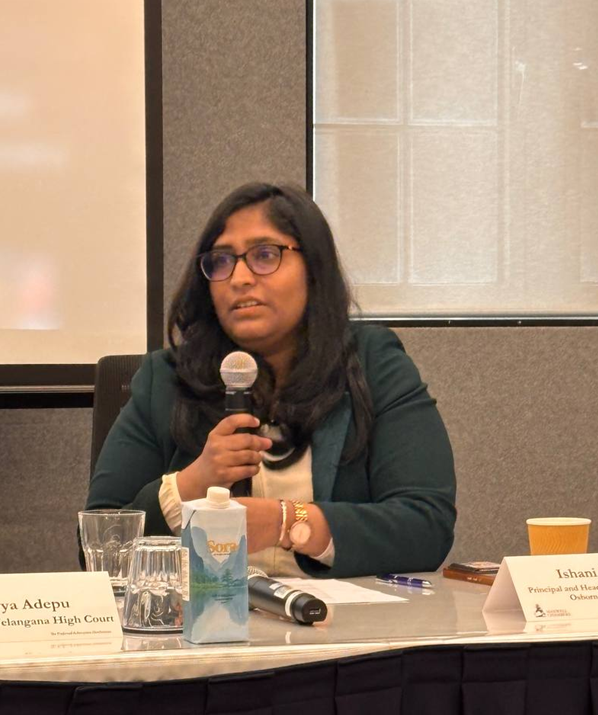
Regarding damages, she remarked that damages do not arise only upon breach, but rather they keep building till the day of the resolution, and often the cost of delay surpasses the value of the breach. She underscored the intense impact of delay in infrastructure cases such as financial instability, opportunity cost, contractors needing to borrow money, suppliers getting delayed payment, divided management attention, and reduced ability to bid for more projects. These implications are often not considered during the dispute resolution process.
She added that the cost assessment by courts was improving slowly, but it depended on the complexity of the matter and issues at hand, along with the tribunal’s appetite for complication.
Payment Disputes: Can we have interim resolution?
Ms. Vora underscored the importance of recognizing genuine claims and creating a credible mechanism to identify the same. Looking at Singapore, she mentioned that they had specific regulations where they allow for both interim payments and early resolution, especially of contested cash and stagnant projects. “In infrastructure, the speed of payment is really not just a contractor issue; it is a project issue, and if this is kept in mind right at the beginning of the dispute resolution, then that mindset flows into the process.”
She also suggested early onboarding of lawyers who could identify those aspects of the project which are getting affected due to an ongoing dispute, where payments could still be received, and how the project could be carried on.
Mr. Garg added that most infrastructure contracts envisage a constant cash flow from the contractor. The running accounts are paid subject to verification that takes place later on, and then there is a 5-10 per cent contractual deduction from each bill as retention money. The real issue arises when there are variations in timelines or work. Thus, there was a need to determine variations in the prolongation of a clause wherein the contractor has some certainty on how to proceed.
Government pulling back from Arbitration
From the Indian perspective, Ms. Adepu opined that the issuance of the 2024 Office Memorandum was a regressive step as it reflected the mindset of treating a government entity differently than a usual contracting party. She stated that the Rs 10 crore threshold obliterates the entire arbitration ecosystem, and instead the government could opt for a hybrid model like ARB-MED-ARB.
“The caseload in India would take more than 300 years to adjudicate. There is no other option but to use ADR. ADR can’t just survive on mediation alone. If there are problems in the system, there has to be a treatment for it. You do not amputate the system because it’s very well essential for the entire functioning of the body.”
Regarding the creation of a high-level committee, she opined that the high-stakes requirement for a dispute to reach the committee has not been defined and the committee too had been vaguely placed.
From an international perspective, Mr. Singh stated that if any state is progressively removing arbitration from its largest domestic contracts, then it undermines that State’s efforts to attract foreign investors to believe that the arbitration system in that country is effective. It sends a message that arbitration is not institutionally trusted.
He questioned why the 2024 Office Memorandum was formulated. The government was evidently not satisfied with consumers of the service, and the arbitration community required introspection. Therefore, he suggested that the reform initiative must focus on ensuring that the large domestic arbitrations in India, whether it’s moving them from ad hoc to institutional, or making them more efficient.
Adding to this, Mr. Garg stated that the reasons for the government to opt out of arbitration needed to be addressed, as that was the only way to restore faith in arbitration. Two of these reasons were doubts over the integrity of arbitrators and the cost of losing arbitrations.
A push for Mediation or an arm-twisting mechanism?
Turning to the increasing emphasis on mediation, Mr. Garg expressed reservations regarding whether merely recommending mediation would necessarily produce meaningful settlements involving government entities. Referring to the Vivad se Vishwas scheme, he pointed out that although claims worth approximately Rs 20,000 Crores had reportedly been raised under the scheme, settlements represented less than 16 per cent of those claims. This demonstrated that even where institutional mechanisms encouraged or required settlement, achieving actual resolution was difficult.
His other concern was that, from the perspective of contractors, mediation could become an exercise in economic pressure rather than a genuine attempt to resolve disputes. Contractors would be presented with a choice between accepting a substantially reduced amount immediately or pursuing resolution against the State for years without certainty of success.
“From the contractor’s point of view, this doesn’t seem to be a genuine effort to mediate. It rather is an arm-twisting mechanism because whose money is blocked? It’s the contractor’s money.”
For mediation to succeed, Mr. Garg stressed that it had to be structured as a genuine settlement process. It required properly qualified mediators, appropriate timing, and government representatives who possessed the actual authority to settle disputes. He cautioned against symbolic mediation exercises in which representatives attended without decision-making authority while lawyers and parties expected the process to fail.
India’s journey so far and what we can learn from Singapore
While many conferences and discussions focused on the shortcomings of India’s dispute resolution system, Mr. Singh commended India’s growth over the last decade. India had a sophisticated arbitration Bar, broadly modern arbitration legislation and courts which, in an overwhelming number of cases, respected party autonomy and the integrity of the arbitral process. Although aberrations continued to occur and required correction, those instances should not obscure either the scale of India’s progress or the overall direction of its arbitration jurisprudence.
Regarding what feature of Singapore’s dispute resolution system India should adopt, he rejected the premise that Singapore’s success could be attributed to one feature. India, unlike Singapore, is a very complex country with a federal system on a scale and size that cannot be matched in terms of public procurement and with the diversity of commercial activity in courts that makes it very hard to ensure consistency.
Singapore’s arbitration ecosystem, he explained, functioned because its various components, “It is like an orchestra. You have the courts, the government, the practitioners, the users, a very prominent arbitral institution all working together and having spent decades learning to play from the same score. And every time there is something that is not working, they’ll quickly get down to retuning the instrument.”
Therefore, he stated that the lesson for India was less about importing a single Singaporean feature and more about developing consistency in institutional practice and building institutional muscle memory.
One change needed in India’s infrastructure dispute resolution framework
Regarding changes needed in the Indian infrastructure dispute resolution framework, Ms. Adepu called for speedy disposal of challenges under Sections 34 and 37. She proposed strict timelines, effective enforcement of limitation periods, and specialised commercial benches capable of dealing with arbitration-related proceedings efficiently.
Judges with relevant expertise and dedicated benches could substantially reduce the time spent in adjudicating matters relating to appointment of arbitrators and challenges to awards. Furthermore, strict disposal within a period of one or two years should be followed.
Mr. Garg proposed a more controversial reform, i.e., reducing or eliminating party autonomy in the appointment process after the appointment mechanism had been triggered. He suggested that arbitrators could instead be appointed through courts or arbitral institutions. Such a system, it was argued, could reduce concerns that arbitrators might feel dependent upon parties, law firms or sources of repeat appointments.
Speaking from a non-legal and expert perspective, Ms. Vora emphasised the importance of ensuring that arbitral tribunals were equipped to understand the complex technical and financial issues at the heart of infrastructure disputes. She noted that the fight is ultimately about a sum of money, which is forgotten, and procedure takes over. She also suggested onboarding experts early on or as part of the arbitral tribunal, or training the tribunal on concepts of quantum and delay, to reduce delay.
Lastly, Mr. Singh suggested institutionalisation of a significant proportion of domestic arbitrations that were being conducted on an ad hoc basis.
Questions and Answers
As part of the audience, Prof. (Dr.) Ajar Rab, Founding Partner, ANR Law LLP, questioned whether the panel was focusing excessively on dispute resolution mechanisms without examining the commercial and institutional structures that generated infrastructure disputes.
Using the analogy of a car that Mr. Garg used, he argued that the car appeared identical externally but had a fundamentally different engine. In India, when a Detailed Project Report for an infrastructure project is prepared, the government has a 35—37-month timeline to complete the project. Contractors might bid aggressively with the expectation of recovering losses through subsequent claims or escalation, while institutional and commercial incentives could sometimes make delays economically advantageous for the government. Therefore, this was not a mechanism wherein parties wanted dispute resolution; instead, they had more money to make the longer a project is delayed.
Referring to McDermott International Inc. v. Burn Standard Co. Ltd., (2006) 11 SCC 181, he stated that since 2006, several protocols had been issued, but no Court has attempted to address any commercial jurisprudence outside Section 34 or 37 of the Arbitration Act, 1996, like delays or management approaches. Thus, the problem was systemic.
He also highlighted that a contract may be terminated not because of a change in management, and this raises concerns about an officer’s authority to settle a dispute. An officer might be instructed by one managing director to settle a dispute but may subsequently face scrutiny when the management changes. Such uncertainty created an institutional disincentive against settlement. He compared India’s challenges with Singapore, which does not have corruption-related issues and does not need to deal with such concerns in the dispute resolution process.
He questioned whether arbitration reform alone could resolve problems in the infrastructure sector, or were we addressing the symptoms instead of the disease?
Answering the question, Mr. Garg agreed that the current focus was largely on symptoms rather than underlying causes. He stated that lawyers were being asked to provide solutions for dispute avoidance, even though the deeper answers require engagement with policymakers. According to him, many of the reforms introduced in recent years had focused on managing symptomatic issues rather than restructuring the policy framework that allowed them to arise. He emphasised the need to protect lawyers and public officials who make honest assessments regarding the merits of claims before disputes escalate into arbitration.
He also highlighted the segmented functioning of many PSUs. Commercial teams, legal teams, and project teams often operate independently, with insufficient communication between them. He suggested a centralised decision-making structure, under which senior management could bring the relevant teams together, assess the best-case and worst-case scenarios, and make an informed decision regarding settlement or continued litigation. Such coordination could make dispute management more commercially rational and reduce the tendency to simply pass responsibility to another department.
The discussion further delved into the composition of arbitral tribunals and the continuing preference for retired judges, the need for meaningful reform rather than criticism of arbitrators, having better processes, etc.
Conclusion
From mediation to incentivised delays, the panel pointed towards a more comprehensive understanding of dispute resolution in the infrastructure industry, and what issues plague it. While the panellists identified urgent measures such as faster disposal of proceedings under Sections 34 and 37, greater institutionalisation of arbitration, specialised mediators and tribunals, and effective protection for government officials entering into settlements, the broader discussion revealed a deeper, more structural problem, which admittedly required way more than just arbitration reforms.
1. Guidelines for Arbitration and Mediation in Contracts of Domestic PublicProcurement — reg, No.F. 11212024-PPD
2. Report of the Expert Committee to Examine the Working of the Arbitration Law and Recommend Reforms in the Arbitration and Conciliation Act 1996 to make it alternative in the letter and spirit.